
Alt. of Ache
Word of the Day: Catachrestical
Achaia
Encyclopedia Britannica
ACHAIA. in Ancient Geography, a name differently applied at different periods. In the earliest times the name was borne by a small district in the south of Thessaly, and was the first residence of the Achaeans. At a later period Achaia Propria was a narrow tract of country in the north of the Peloponnesus, running 65 miles along the Gulf of Corinth, and bounded by the Ionian Sea on the W., by Elis and Arcadia on the S., and by Sicyonia on the E. On the south it is separated from Arcadia by lofty mountains, but the plains between the mountains and the sea are very fertile. Its chief town was Patrae. The name of Achaia was afterwards employed to denote collectively the states that joined the Achaean League. When Greece was subdued by the Romans, Achaia was the name given to the most southerly of the provinces into which they divided the country, and included the Peloponnesus, the greater part of Greece Proper, and the islands....
Achaeans and the Achaean League.— The early inhabitants of Achaia were called Achaeans. The name was given also in those times to some of the tribes occupying the eastern portions of the Peloponnesus, particularly Argos and Sparta. Afterwards the inhabitants of Achaia Propria appropriated the name. This republic was not considerable, in early times, as regards either the number of its troops, its wealth, or the extent of its territory, but was famed for its heroic virtues. The Crotonians and Sybarites, to re-establish order in their towns, adopted the laws and customs of the Achaeans. After the famous battle of Leuctra, a difference arose betwixt the Lacedaemonians and Thebant, who held the virtue of this people in such veneration, thai they terminated the dispute by their decision. The government of the Achaeans was democratical. They preserved their liberty till the time of Philip and Alexander; but in the reign of these princes, and afterwards, they were either subjected to the Macedonians, who had made themselves masters of Greece, or oppressed by domestic tyrants. The Achaean commonwealth consisted of twelve inconsiderable towns in Peloponnesus. About 280 years before Christ the republic of the Achaeans recovered its old institutions and unanimity. This was the renewal of the ancient confederation, which subsequently became so famous under the name of the Achaean League —having for its object, not as formerly a common worship, but a substantial political union. Though dating from the year b.c. 280, its importance may be referred to its connection with Aratus of Sicyon, about 30 years later, as it was further augmented by the splendid abilities of Philopoemen. Thus did this people, so celebrated in the heroic age, once more emerge from comparative obscurity, and become the greatest among the states of Greece in the last days of its national independence. The inhabitants of Patrae and of Dyme were the first assertors of ancient liberty. The tyrants were banished, and the towns again made one commonwealth. A public council was then held, in which affairs of importance were discussed and determined; and a register was provided for recording the transactions of the council. This assembly had two presidents, who were nominated alternately by the different towns. But instead of two presidents, they soon elected but one. Many neighbouring towns, which admired the constitution of this republic, founded on equality, liberty, the love of justice, and of the public good, were incorporated with the Achaeans, and admitted to the full enjoyment of their laws and privileges. The Achaean League affords the most perfect example in antiquity of the federal form of government; and, allowing for difference of time and place, its resemblance to that of the United States government is very remarkable. (See Arts. Amphictyony and Federal Government; also Freeman’s Federal Government, 2 vols. 8vo. 1863, and Comparative Politics, Svo. 1873; Droysen, Geschichte des Hellenismus, 2 vols.; Helwing, Geschichte des Achaiischen Bundes.)
9th ed. Encyclopædia Britannica, vol. 1, p. 93
[651 words — estimated reading time: 4 minutes]
[651 words — estimated reading time: 4 minutes]
Achaia
Watson's Biblical & Theological Dictionary
This name is used to denote the whole of Greece, as it existed as a Roman province; or Achaia Proper, a district in the northern part of the Peloponnesus, on the bay of Corinth, and in which the city of that name stood. It appears to have been used in the former sense in 2 Cor. xi, 10; and in the latter, in Acts xix, 21.
Watson's Biblical & Theological Dictionary
[66 words — estimated reading time: 1 minute]
[66 words — estimated reading time: 1 minute]
Achan
Encyclopedia Britannica
ACHAN, the son of Carmi, of the tribe of Judah, at the taking of Jericho concealed two hundred shekels of silver, a Babylonish garment, and a wedge of gold, contrary to the express command of God. This sin proved fatal to the Israelites, who were repulsed at the siege of Ai. In this emergency Joshua prostrated himself before the Lord, and begged that he would have mercy upon his people. Achan was discovered by casting lots, and he and his children were stoned to death. This expiation being made, Ai was taken by stratagem. (Josh. vii. viii.)
9th ed. Encyclopædia Britannica, vol. 1, p. 94
[97 words — estimated reading time: 1 minute]
[97 words — estimated reading time: 1 minute]
Achan
Watson's Biblical & Theological Dictionary
the son of Carmi, of the tribe of Judah, who having taken a part of the spoils of Jericho, against the injunction of God, who had _accursed_ or devoted the whole city, was, upon being taken by lot, doomed to be stoned to death. The whole history is recorded, Joshua vii. It would appear that Achan’s family were also stoned; for they were led out with him, and all his property, “And all Israel stoned him with stones, and burned them with fire, after they had stoned them with stones.” Some of the critics have made efforts to confine the stoning to Achan, and the burning to his goods; but not without violence to the text. It is probable, therefore, that his family were privy to the theft, seeing he hid the accursed things which he had stolen in the earth, in his tent. By concealment they therefore became partakers of his crime, and so the sentence was justified.
Watson's Biblical & Theological Dictionary
[159 words — estimated reading time: 1 minute]
[159 words — estimated reading time: 1 minute]
Achard
Encyclopedia Britannica
ACHARD, Franz Carl, a Prussian chemist, born at Berlin on the 28th April 1753, was the first to turn Marggraff’s discovery of the presence of sugar in beet-root to commercial account. He erected a factory on an estate in Silesia, granted to him about 1800 by the king of Prussia, and produced there large quantities of sugar to meet the scarcity occasioned by the closing of the West Indian ports to continental traders. In 1812 a similar establishment was erected by Napoleon at Rambouillet, although the Institute of France in 1800, while honouring Achard for his researches, had declared his process to have little practical value. At the close of the war the manufacture of beet-root sugar was protected by duties on other sugars that were almost prohibitive, so that the real worth of Achard’s discoveries could not be tested. Achard was a frequent contributor to the Memoirs of the Academy of Berlin, and published in 1780 Chymisch-Physische Schriften, containing descriptions and results of his very numerous and carefully conducted experiments on the adhesion of bodies. He died in 1821.
9th ed. Encyclopædia Britannica, vol. 1, p. 94
[185 words — estimated reading time: 2 minutes]
[185 words — estimated reading time: 2 minutes]
Acharius
Encyclopedia Britannica
ACHARIUS, Erik, a Swedish physician and botanist, born at Gefle in 1757. The son of a comptroller of customs, he studied first in his native town, and then in 1773 at the University of Upsal, where Linnaeus was one of his teachers. In 1782 he took the degree of M.D. at the University of Lund, and practised thereafter in various districts of Sweden. But the direction of his studies had been determined by his contact with Linnaeus, and he found his appropriate sphere when he was appointed Professor of Botany at the Wadstena Academy in 1801. Five years before he had been admitted a member of the Academy at Stockholm. He devoted himself to the study of the cryptogamic orders of plants, and especially of the family of lichens. All his publications were connected with this subject, the Lichenographia Universalis (Göttingen, 1804) being the most important. Acharius died of apoplexy in 1819. His name has been given by botanists to more than one species of plants.
9th ed. Encyclopædia Britannica, vol. 1, p. 94
[168 words — estimated reading time: 1 minute]
[168 words — estimated reading time: 1 minute]
Savage fierceness; ferocity.
Achates
Encyclopedia Britannica
ACHATES, the faithful friend and companion of Aeneas, celebrated in Virgil's Aenid as fidus Achates.
9th ed. Encyclopædia Britannica, vol. 1, p. 94
[16 words — estimated reading time: 1 minute]
[16 words — estimated reading time: 1 minute]
A genus of land snails, often large, common in the warm parts of America and Africa.
1. ake. [Gr. to ache or be in pain. The primary sense is to be pressed. Perhaps the oriental to press.]
2. To suffer pain; to have or be in pain, or in continued pain; as, the head aches.
3. To suffer grief, or extreme grief; to be distressed; as the heart aches.
1. Continued pain, as distinguished from sudden twinges, or spasmodic pain. "Such an ache in my bones."
2. To suffer pain; to have, or be in, pain, or in continued pain; to be distressed.
Pertaining to Achaia in Greece, and a celebrated league or confederacy established there. This State lay on the gulf of Corinth, with Peloponnesus.
Acheen
Encyclopedia Britannica
ACHEEN. See Ach í n.
9th ed. Encyclopædia Britannica, vol. 1, p. 94
[4 words — estimated reading time: 1 minute]
[4 words — estimated reading time: 1 minute]
Achelous
Encyclopedia Britannica
ACHELOUS, the largest river in Greece, rises in Mount Pindus, and dividing Aetolia from Acarnania, falls into the Ionian Sea. In the lower part of its course the river winds in an extraordinary manner through very fertile but marshy plains. Its water descends from the mountains, heavily charged with fine mud, which is deposited along its banks and in the sea at its mouth, where a number of small islands have gradually been formed. It was formerly called Thoas, from its impetuosity in its upper portion, and Homer gave it the name of king of rivers. It has a course of 130 miles. The epithet Acheloius is used for aqueus (Virgil), the ancients calling all water Achelous, according to Ephorus. The river is now called Aspro Potamo.
9th ed. Encyclopædia Britannica, vol. 1, p. 94
[127 words — estimated reading time: 1 minute]
[127 words — estimated reading time: 1 minute]
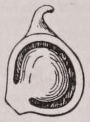
A small, dry, indehiscent fruit, containing a single seed, as in the buttercup; -- called a naked seed by the earlier botanists.
No thesaurus entries found for "ACH".
King James Bible KJV Bible
Berean Standard Bible BSB Bible
87 KJV and 60 BSB verses contain “ACH” — showing the first 20. Show all 92 verses (searchable)
But the children of Israel committed a trespass in the accursed thing: for Achan, the son of Carmi, the son of Zabdi, the son of Zerah, of the tribe of Judah, took of the accursed thing: and the anger of the LORD was kindled against the children of Israel.
The Israelites, however, acted unfaithfully regarding the things devoted to destruction. Achan son of Carmi, the son of Zabdi, the son of Zerah, of the tribe of Judah, took some of what was set apart. So the anger of the LORD burned against the Israelites.
And Joshua said unto Achan, My son, give, I pray thee, glory to the LORD God of Israel, and make confession unto him; and tell me now what thou hast done; hide it not from me.
And it came to pass, when Jabin king of Hazor had heard those things, that he sent to Jobab king of Madon, and to the king of Shimron, and to the king of Achshaph,
Now when Jabin king of Hazor heard about these things, he sent word to Jobab king of Madon; to the kings of Shimron and Achshaph;
The king of Shimron-meron, one; the king of Achshaph, one;
the king of Shimron-meron, one; the king of Achshaph, one;
And their border was Helkath, and Hali, and Beten, and Achshaph,
Their territory included Helkath, Hali, Beten, Achshaph,