Conjugate
[Adjective]
Webster's Dictionary 1828
1. In botany, a conjugate leaf is a
pinnate leaf which has only one pair of leaflets; a conjugate
raceme has two racemes only, united by a common
peduncle.
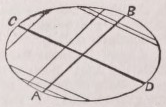
2. CONJUGATE diameter or axis, in geometry, a right line
bisecting the transverse diameter; the shortest of the two diameters of an
ellipses.
1. A word agreeing in
derivation with another word, and therefore generally resembling it in signification.
2. We have learned in logic, that conjugates are sometimes in name only, and not in deed.
Conjugate
[Verb transitive]
Webster's Dictionary 1828
1. To join; to unite in marriage. [Not now used.]
2. In grammar, to distribute the parts or inflections of a verb, into the several voices, modes, tenses, numbers and persons, so as to show their connections, distinctions, and modes of formation. Literally, to connect all the inflectious of a verb, according to their
derivation, or all the variations of one verb. In English, as the verb undergoes few variations,
conjugation consists chiefly in combining the words which unitedly form the several tenses in the several persons.
Conjugate
[Adjective]
Webster's Dictionary 1913
1. United in pairs; yoked together; coupled.
2. In single pairs; coupled.
3. Containing two or more radicals supposed to act the part of a single one.
4. Agreeing in
derivation and radical signification; -- said of words.
5. Presenting themselves simultaneously and having reciprocal properties; -- frequently used in pure and applied mathematics with reference to two quantities, points, lines, axes, curves, etc.
1. A word agreeing in
derivation with another word, and therefore generally resembling it in signification.
2. A complex radical supposed to act the part of a single radical.
Conjugate
[Verb intransitive]
Webster's Dictionary 1913
To unite in a kind of sexual union, as two or more cells or individuals among the more simple plants and animals.
Conjugate
[Verb transitive]
Webster's Dictionary 1913
1. To unite in marriage; to join.
2. To
inflect (a verb), or give in order the forms which it assumed in its several voices, moods, tenses, numbers, and persons.