
Exo
Webster's Dictionary 1913
Word of the Day: Catachrestical
Alt. of Exocardial
Situated or arising outside of the heat; as, exocardial murmurs; -- opposed to endocardiac.
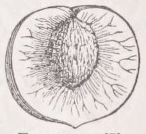
The outer portion of a fruit, as the flesh of a peach or the rind of an orange. See Illust. of Drupe.
Pertaining to a bone or region on each side of the great foremen of the skull.
The exoccipital bone, which often forms a part of the occipital in the adult, but is usually distinct in the young.
A genus of fishes, including the common flying fishes. See Flying fish.
To deprive of eyes.
In the Greek drama, the concluding part of a play, or the part which comprehends all that is said after the last interlude.
1. Departure; exodus; esp., the exodus of the Israelites from Egypt.
2. The final chorus; the catastrophe.
1. EX'ODUS
2. EX'ODY, noun [Gr. way.] Departure from a place; particularly, the departure of the Israelites from Egypt under the conduct of Moses.
3. The second book of the Old Testament, which gives a history of the departure of the Israelites from Egypt.
4. Ex officio, [Latin] By virtue of office, and without special authority. A justice of the peace may ex officio take sureties of the peace.
1. A going out; particularly (the Exodus), the going out or journey of the Israelites from Egypt under the conduct of Moses; and hence, any large migration from a place.
2. The second of the Old Testament, which contains the narrative of the departure of the Israelites from Egypt.
Exodus
Encyclopedia Britannica
EXODUS. See Pentateuch,
9th ed. Encyclopædia Britannica, vol. 8, p. 806
[3 words — estimated reading time: 1 minute]
[3 words — estimated reading time: 1 minute]
Exodus
Watson's Biblical & Theological Dictionary
from ἐξ, _out_, and ὁδὸς, _a way_, the name of the second book of Moses, and is so called in the Greek version because it relates to the departure of the Israelites out of Egypt. It comprehends the history of about a hundred and forty-five years; and the principal events contained in it are, the bondage of the Israelites in Egypt, and their miraculous deliverance by the hand of Moses; their entrance into the wilderness of Sinai; the promulgation of the law, and the building of the tabernacle. See PENTATEUCH.
Watson's Biblical & Theological Dictionary
[90 words — estimated reading time: 1 minute]
[90 words — estimated reading time: 1 minute]
Exodus; withdrawal.
Relating to exogamy; marrying outside of the limits of one's own tribe; -- opposed to endogenous.
A plant belonging to one of the greater part of the vegetable kingdom, and which the plants are characterized by having c wood bark, and pith, the wood forming a layer between the other two, and increasing, if at all, by the animal addition of a new layer to the outside next to the bark. The leaves are commonly netted-veined, and the number of cotyledons is two, or, very rarely, several in a whorl. Cf. Endogen.
Arising or growing from without; exogenous.
1. Pertaining to, or having the character of, an exogen; -- the opposite of endogenous.
2. Growing by addition to the exterior.
3. Growing from previously ossified parts; -- opposed to autogenous.
A genus of Cretaceous fossil shells allied to oysters.
No thesaurus entries found for "Exo".
King James Bible KJV Bible
Berean Standard Bible BSB Bible
1 KJV and 3 BSB verses contain “Exo”
Because thou hast forgotten the God of thy salvation, and hast not been mindful of the rock of thy strength, therefore shalt thou plant pleasant plants, and shalt set it with strange slips:
By faith Joseph, when he died, made mention of the departing of the children of Israel; and gave commandment concerning his bones.
By faith Joseph, when his end was near, spoke about the exodus of the Israelites and gave instructions about his bones.