1. A disease characterized by livid spots on the skin from extravasated blood, with loss of muscular strength, pain in the limbs, and mental dejection; the purples.
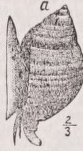
2. A genus of marine gastropods, usually having a rough and thick shell. Some species yield a purple dye.
PURPURA, a disease characterized by the occurrence of purple-coloured spots upon the surface of the body, due to extravasations of blood in the skin, accompanied occasionally with haemorrhages from mucous membranes. Difference of opinion has prevailed among physicians as to whether these symptoms are to be regarded as constituting a disease per se, since they are frequently seen in connexion with various morbid conditions. Thus in persons suffering from such diseases as rheumatism, phthisis, heart disease, cancer, Bright’s disease, jaundice, as well as from certain of the infectious fevers, extravasations of the kind above-mentioned are not unfrequently present. But the term “purpura” is, strictly speaking, applicable only to those instances where the symptoms exist apart from any antecedent disease. In such cases the complaint is usually ushered in by lassitude and feverishness. This is soon followed by the appearance on the surface of the body of the characteristic spots in the form of small red points scattered over the skin of the limbs and trunk. They are not raised above the surface, and they do not disappear on pressure. Their colour soon becomes deep purple or nearly black; but after a few days they undergo the changes which are observed in the case of an ordinary bruise, passing to a green and yellow hue and finally disappearing. When of minute size they are termed “petechiae” or “stigmata,” when somewhat larger “vibices,” and when in patches of considerable size “ecchymoses.” They may come out in fresh crops over a lengthened period.
The form of the disease above described is that known as “purpura simplex.” A more serious form of the malady is that to which the term “purpura haemorrhagica” is applied....
Here, in addition to the phenomena already mentioned as affecting the skin, there is a tendency to the occurrence of haemorrhage from mucous surfaces, especially from the nose, but also from the mouth, lungs, stomach, bowels, kidneys, &c., sometimes in large and dangerous amount. Great physical prostration is apt to attend this form of the disease, and a fatal result sometimes follows the successive haemorrhages, or is suddenly precipitated by the occurrence of an extravasation of blood into the brain.
The causes of purpura are not well understood. The condition of the blood has been frequently investigated, but no alteration in its composition detected. The view most commonly held is that the disease depends on an abnormalfragility of the minute blood-vessels owing to their mal-nutrition. It would seem sometimes to arise in persons enjoying perfect health; but in a large proportion of instances it shows itself among those who have been exposed to privation or insanitary conditions, or whose health has become lowered. Young persons suffer more frequently than adults, and repeated attacks may occur. Purpura has some points of resemblance to scurvy, but a clear distinction both as to causation and symptoms can be established between the two diseases.
The treatment will bear reference to any causes which may be discovered as associated with the onset of the disease, such as unfavourable hygienic conditions, and nutritive defects should be rectified by suitable diet. The various preparations of iron seem to be the best medicinalremedies in this ailment, while more direct astringents, such as gallic acid, ergot of rye, turpentine, or acetate of lead, will in addition be called for in severe cases and especially when haemorrhage occurs.
9th ed. Encyclopædia Britannica, vol. 20, p. 116 [565 words — estimated reading time: 4 minutes]
This site uses cookies to remember your display preferences (search sources and editions, Bible version, auto-link, images, light/dark theme). No personal data whatsoever is collected. Privacy Policy