
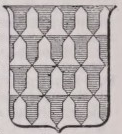
In heraldry, a kind of fur or doubling, consisting of divers little picees, argent and azure, resembling a bell-glass.
VAIR, Guillaume du (1556-1621), one of the fathers of French prose, and at the same time one of the most brilliant ornaments of the great school of French lawyers in the 16th and 17th centuries, was born at Paris on 7th March 1556. Du Vair was in orders, and, though during the greater part of his life he exercised only legal functions, he in 1617 accepted the see of Lisieux and died bishop thereof. His reputation, however, is that of a lawyer, a statesman, and a man of letters. He was for a considerable time a member (councillor) of the parlement of Paris, and it was in this capacity that he pronounced his most famous politico-legal discourse, an argument nominally for the Salic Law, but in reality directed against the alienation of the crown of France to the Spanish infanta, which was advocated by the extreme Leaguers. It was also during his tenure of the same post that he published (in 1595) a Traité de l'Éloquence Française, which both advocates and exhibits a great improvement on the ordinary prose style of the day. In 1599 he became first president of the parlement of Provence (Aix), and in order not to give up this position he refused the see of Marseilles. In 1616 he received the highest promotion open to a French lawyer and became keeper of the seals. His death took place at Tonneins (Lot-et-Garonne) on 3d August 1621. Both as speaker and writer he holds a very high rank, and his character was equal to his abilities. Like other political lawyers of the time, Du Vair busied himself not a little in the study of philosophy (of a Christian stoical cast) and in that of classical antiquity, translating Cicero, Demosthenes, and Epictetus, and writing various treatises, on which Charron, a general plagiarist, is held to have drawn freely. Du Vair’s works were ...published in folio at Paris in 1641.