
Among the Romans, a kind of demigod, or rural deity, called also sylvan, and differing little from satyr. The fauns are represented as half goat and half man.
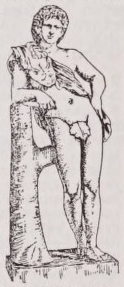
FAUN. In Latin mythology, this name denoted a class of rural deities, who fostered the productive powers of the earth and of animals, and had their dwelling in woods and groves, where they sported with the nymphs. In the later traditions of the people, Faunus was said to have succeeded Picus and Saturnus as king of the Laurentes; but these names may, like many others in the mythology of Italy, be referred to processes or phenomena in the natural world, Saturnus or Seviternus being the god of the seed time and the harvest, and Picus the deity who cleaves the trees of the forest with the stroke of the lightning or the fury of the storm. There is much likeness between the characteristics of Faunus and those of the Greek Pan, and the two names may have a common origin, although the Latin Faunus has been regarded as an euphemistic name (from the root of the verb faveo') applied to deities whose anger was dreaded. As revealing the secrets of the future, whether by dreams or by strange sounds, the male Faunus and the female Fauna or Faula were known as fatuus and fatua, from the verb fari, to speak, which reappears in the Latin Fatum. In honour of these rural gods the festival of the Faunalia was celebrated yearly in December.