
Word of the Day: Catachrestical
Condamine
Encyclopedia Britannica
9th ed. Encyclopædia Britannica, vol. 6, p. 244
[10 words — estimated reading time: 1 minute]
[10 words — estimated reading time: 1 minute]
1. To pronounce to be utterly wrong; to utter a sentence of disapprobation against; to censure; to blame. But the word often expresses more than censure or blame, and seems to include the idea of utter rejection; as, to condemn heretical opinions; to condemn ones conduct.
2. We condemn mistakes with asperity, where we pass over sins with gentleness.
3. To determine or judge to be wrong, or guilty; to disallow; to disapprove.
4. Beloved, if our heart condemn us not, we have confidence towards God. 1ÃÂ JohnÃÂ 3:21 .
5. To witness against; to show or prove to be wrong, or guilty, by a contrary practice.
6. The men of Nineveh shall rise in judgment with this generation, and shall condemn it. MatthewÃÂ 12:41 .
7. To pronounce to be guilty; to sentence to punishment; to utter sentence against judicially; to doom; opposed to acquit or absolve; with to before the penalty.
8. The son of man shall be betrayed to the chief priests, and to the scribes, and they shall condemn him to death. Matthew 20:18 .
9. He that believeth on him is not condemned. JohnÃÂ 3:18 .
10. To doom or sentence to pay a fine; to fine.
11. And the king of Egypt--condemned the land in a hundred talents of silver. 2 Chronicles 36:3 .
1. To pronounce to be wrong; to disapprove of; to censure.
2. To declare the guilt of; to make manifest the faults or unworthiness of; to convict of guilt.
3. To pronounce a judicial sentence against; to sentence to punishment, suffering, or loss; to doom; -- with to before the penalty.
4. To amerce or fine; -- with in before the penalty.
Condemnable
Webster's Dictionary 1913
1. The act of condemning; the judicial act of declaring one guilty, and dooming him to punishment.
2. For the judgment was by one to condemnation Romans 5:16 .
3. The state of being condemned.
4. Dost thou not fear God, seeing thou art in the same condemnation Luke 23:40 .
5. The cause or reason of a sentence of condemnation John 3:19 .
2. The act of judicially condemning, or adjudging guilty, unfit for use, or forfeited; the act of dooming to punishment or forfeiture.
3. The state of being condemned.
4. The ground or reason of condemning.
Condemning; bearing condemnation or censure; as a condemnatory sentence or decree.
Condemning; containing or imposing condemnation or censure; as, a condemnatory sentence or decree.
1. Pronounced to be wrong, guilty, worthless, or forfeited; adjudged or sentenced to punishment, destruction, or confiscation.
2. Used for condemned persons.
One who condemns or censures.
One who condemns or censures.
Censuring; disallowing; pronouncing to be wrong, guilty, worthless or forfeited; sentencing to punishment.
of Condemn
Capability of being condensed.
Made dense; condensed; made more close or compact.
To become more dense, close or hard.
of Condensate
of Condensate
The act of making more dense or compact; or the act of causing the parts that compose a body to approach or unite more closely, either by mechanical pressure, or by a natural process; the state of being condensed. Dew and clouds are supposed to be formed by the condensation of vapor. It is opposed to rarefaction and expansion. condensation is applicable to any compressible matter; and from condensation proceeds increased hardness, solidity, and weight.
2. The act or process of reducing, by depression of temperature or increase of pressure, etc., to another and denser form, as gas to the condition of a liquid or steam to water.
3. A rearrangement or concentration of the different constituents of one or more substances into a distinct and definite compound of greater complexity and molecular weight, often resulting in an increase of density, as the condensation of oxygen into ozone, or of acetone into mesitylene.
Having a power or tendency to condense.
Having the property of condensing.
Close in texture or composition; compact; firm; dense; condensated. [ See Dense , which is generally used.]
1. To become close or more compact, as the particles of a body; to approach or unite more closely; to grow thick.
2. Vapors condense and coalesce into small parcels.
1. To make more close, thick or compact; to cause the particles of a body to approach, or to unite more closely, either by their own attraction or affinity, or by mechanical force. Thus, vapor is said to be condensed into water by the application of cold; and air is condensed in a tube by pressure. Hence the word is sometimes equivalent to compress.
2. To make thick; to inspissate; applied to soft compressible substances.
3. To compress into a smaller compass, or into a close body; to crowd; applied to separate individuals. Thus we say to condense ideas into a smaller compass.
1. To become more compact; to be reduced into a denser form.
2. To combine or unite (as two chemical substances) with or without separation of some unimportant side products.
3. To undergo polymerization.
1. To make more close, compact, or dense; to compress or concentrate into a smaller compass; to consolidate; to abridge; to epitomize.
2. To reduce into another and denser form, as by cold or pressure; as, to condense gas into a liquid form, or steam into water.
Made dense, or more close in parts; made or become compact; compressed into a narrower compass.
1. One who, or that which, condenses.
2. An instrument for condensing air or other elastic fluids, consisting of a cylinder having a movable piston to force the air into a receiver, and a valve to prevent its escape.
3. An instrument for concentrating electricity by the effect of induction between conducting plates separated by a nonconducting plate.
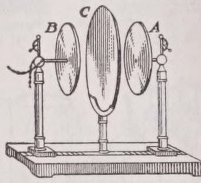
4. A lens or mirror, usually of short focal distance, used to concentrate light upon an object.
5. An apparatus for receiving and condensing the volatile products of distillation to a liquid or solid form, by cooling.
6. An apparatus, separate from the cylinder, in which the exhaust steam is condensed by the action of cold water or air. See Illust. of Steam engine.
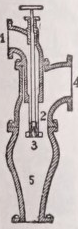
Capable of being condensed; as, a gas condensible to a liquid by cold.
No thesaurus entries found for "Cond".
King James Bible KJV Bible
Berean Standard Bible BSB Bible
99 KJV and 107 BSB verses contain “Cond” — showing the first 20. Show all 157 verses (searchable)
But in this will we consent unto you: If ye will be as we be, that every male of you be circumcised;
We will consent to this on one condition, that you become circumcised like us—every one of your males.
Only herein will the men consent unto us for to dwell with us, to be one people, if every male among us be circumcised, as they are circumcised.
But only on this condition will the men agree to dwell with us and be one people: if all our men are circumcised as they are.
And give occasions of speech against her, and bring up an evil name upon her, and say, I took this woman, and when I came to her, I found her not a maid:
and he then accuses her of shameful conduct and gives her a bad name, saying, “I married this woman and had relations with her, but I discovered she was not a virgin.”
And, lo, he hath given occasions of speech against her, saying, I found not thy daughter a maid; and yet these are the tokens of my daughter’s virginity. And they shall spread the cloth before the elders of the city.
And now he has accused her of shameful conduct, saying, ‘I discovered that your daughter was not a virgin.’ But here is the proof of her virginity.” And they shall spread out the cloth before the city elders.
And Nahash the Ammonite answered them, On this condition will I make a covenant with you, that I may thrust out all your right eyes, and lay it for a reproach upon all Israel.
And Barzillai the Gileadite came down from Rogelim, and went over Jordan with the king, to conduct him over Jordan.
Now Barzillai the Gileadite had come down from Rogelim to cross the Jordan with the king and send him on his way from there.
Then hear thou in heaven, and do, and judge thy servants, condemning the wicked, to bring his way upon his head; and justifying the righteous, to give him according to his righteousness.
then may You hear from heaven and act. May You judge Your servants, condemning the wicked man by bringing down on his own head what he has done, and justifying the righteous man by rewarding him according to his righteousness.
And Solomon numbered all the strangers that were in the land of Israel, after the numbering wherewith David his father had numbered them; and they were found an hundred and fifty thousand and three thousand and six hundred.
Solomon numbered all the foreign men in the land of Israel following the census his father David had conducted, and there were found to be 153,600 in all.
Then hear thou from heaven, and do, and judge thy servants, by requiting the wicked, by recompensing his way upon his own head; and by justifying the righteous, by giving him according to his righteousness.
then may You hear from heaven and act. May You judge Your servants, condemning the wicked man by bringing down on his own head what he has done, and justifying the righteous man by rewarding him according to his righteousness.
And when he humbled himself, the wrath of the LORD turned from him that he would not destroy him altogether: and also in Judah things went well.
Because Rehoboam humbled himself, the anger of the LORD turned away from him, and He did not destroy him completely. Indeed, conditions were good in Judah.
And I commanded, and search hath been made, and it is found that this city of old time hath made insurrection against kings, and that rebellion and sedition have been made therein.