
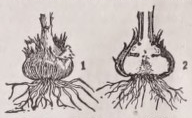
2. Same as Cormus, 2.
CORMENIN, Louis Marie de la Haye, Viscount de (1788-1868), a French jurist and political pamphleteer, was born at Paris, January 6, 1788. His father and his grandfather both held the rank of lieutenant-general of the admiralty. In consequence of the suppression of the colleges he received his early education at a private school at Paris, and afterwards studied in the school of law. At the age of twenty he was received advocate, and about the same time he gained some reputation as a writer of piquant and delicate poems. In 1810 he received from Napoleon I. the appointment of auditor to the council of state; and after the restoration of the Bourbons he became master of requests. During the period of his connection with the council he devoted himself zealously to the study of administrative law, and acquired those stores of exact knowledge which afterwards furnished the material for his principal work as a jurist. He was selected to prepare some of the most important reports of the council. Among his separate publications at this time are noted,— Du Conseil d’Etat envisage coìnme conseil et comme juridiction dans notre monarchie constitutionelle (1818), and De la responsabilité des agents du gouvernement. In the former he claimed, for the protection of the rights of private persons in the administration of justice, the institution of a special court whose members should be irremovable, the right of oral defence, and publicity of trial. In 1822 appeared his Questions de droit administratif, in which he for the first time brought together and gave scientific shape to the scattered elements of administrative law. These he arranged and stated clearly in the form of aphorisms, with logical deductions, establishing them by proofs drawn from the archives of the council of ...state. This is recognized as his most important work as a jurist, and has become the chief authority on its subject. It has passed through five editions, the fifth, which was published in 1840, being thoroughly revised. In 1828 Cormenin entered the Chamber of Deputies as member for Orleans, took his seat in the Left Centre, and began a vigorous opposition to the Government of Charles X. As he was not gifted with the qualifications of the orator, he seldom appeared at. the tribune; but in the various committees he defended all forms of popular liberties, and at the same time delivered, in a series of powerful pamphlets, under the pseudonym of “Timon,” the most formidable blows against tyranny and all political and administrative abuses. The ministerialists named him “Γ homme du contentieux.” After the revolution of July 1830, Cormenin was one of the 221 who signed the protest against the elevation of the Orleans dynasty to the throne; and he resigned both his office in the council of state and his seat in the chamber. He was, however, soon re-elected deputy, and now voted with the extreme Left. The discussions on the budget in 1831 gave rise to the publication of his famous series of Lettres sur la liste civile, which in ten years ran through twenty-five editions. In the following year he had the distinction of being elected by four arrondissements; he took his seat for Belley. In 1834 he was elected by two arrondissements, and sat for Joigny, which he represented till 1846, In this year he lost his seat in consequence of the popular prejudice aroused against him by his trenchant pamphlet Oui et non (1845) against attacks on religious liberty, and a second entitled Feu! Feu! (1846), written in reply to those who demanded a retractation of the former. In this he re-asserted his principles still more relentlessly. Sixty thousand copies were rapidly sold. One inevitable penalty which he had to suffer for these incisive manifestoes was exclusion from the French Academy and the Academy of Moral and Political Sciences. Cormenin was an earnest advocate of universal suffrage before the revolution of February 1848, and had remorselessly exposed the corrupt practices at elections in his pamphlet— Ordre du jour sur la corruption électorale. After the revolution he was elected by four departments to the constituent assembly, and became one of its vice-presidents. He was also member and president of the constitutional commission, and for some time took a leading part in drawing up the republican constitution. But the disputes which broke out among the members led him to resign the presidency. He was soon after named member of the council of state and president of the comité du contentieux, It was at this period that he published two pamphlets— Sur V independence de V Italie. After the coup dfétat of December 2, 1851, Cormenin, who had undertaken the defence of Prince Louis Napoleon after his attempt at Strasburg, accepted a place in the new council of state of the empire. Four years later, by imperial ordinance, he was made a member of the Institute. One of the most characteristic works of Cormenin, not yet mentioned is the Livre des orateurs, a series of brilliant studies of the principal parliamentary orators of the restoration and the monarchy of July, the first edition of which appeared in 1838, and the eighteenth in 1860. In 1846 he published his Entretiens de village, which procured him the Montyon prize, and of which six editions were called for the same year. His last work was Le droit de tonnage en Algérie (1860). Cormenin was distinguished also as a practical philanthropist, and is said to have established more charitable institutions than any layman of his time in France. He was admitted to the Legion of Honour in 1821, and was promoted commander in 1865. He died at Paris, May 6, 1868.
CORMONTAIGNE, Louis de (1696-1752), a French military engineer, was born at Strasburg. He was present as a volunteer at the sieges of Friburg and Landau, and in 1715 he entered the Engineers. From 1733 to 1745 he took part in several of the most important sieges in the Polish and Austrian wars. Having gained the rank of maréchal de capιp he received charge of the line of fortifications from Calais to the Rhone; and he built new defences at Strasburg, Metz, and Thionville, at which last place he died. i
With the exception of the Architecture militaire, printed at the Hague in 1741, and reprinted at Paris in 1809 as the Mémorial pour la fortification permanente et passagère, and extracts published and used as text-books, the works of Cormontaigne remained in MS. till the beginning of the present century. First published at Berlin in 1803, the Mémorial pour V attaque des places was printed at Paris in 1806, as also was the Mémoire pour la defense des places. All three treatises were republished, with a preface, by Bousmard in 1809.
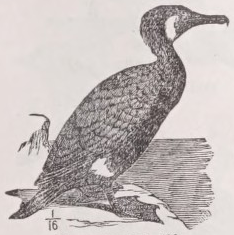
שלך, Levit. xi, 17; Deut. xiv, 17; a large sea bird. It is about three feet four inches in length, and four feet two inches in breadth from the tips of the extended wings. The bill is about five inches long, and of a dusky colour; the base of the lower mandible is covered with a naked yellowish skin, which extends under the throat and forms a kind of pouch. It has a most voracious appetite, and lives chiefly upon fish, which it devours with unceasing gluttony. It darts down very rapidly upon its prey; and the Hebrew, and the Greek name, καταράκτης, [a cataract,] are expressive of its impetuosity. The word קאת, which in our version of Isaiah xxxiv, 11, is rendered _cormorant_, is the pelican.