
A yew.
Word of the Day: Catachrestical
Ewald
Encyclopedia Britannica
EWALD, Heinrich Georg August von (1803-1875), Orientalist, biblicist, and theologian, was born, November 16, 1803, at Göttingen, where his father followed the occupation of a linen-weaver. After receiving the usual preliminary training, he entered the university of his native town in 1820; and there, with Eichhorn as teacher, he at once began to devote himself specially to the study of Hebrew and its cognates. At the close of his academical career in 1823 he was appointed to a mastership in the gymnasium at Wolfenbüttel; but soon afterwards (in the spring of 1824) he was, at the instance of Eichhorn, recalled to Gottingen as repetent, or theological tutor, and in 1827 (the year of Eichhorn’s death) he became professor extraordinarius in philosophy, and lecturer in Old Testament exegesis. In 1831 he was promoted to the position of professor ordinarius in philosophy; and in 1835 he entered the faculty of theology, taking the chair of Oriental languages. Two years later occurred the first important episode in his studious life, which until then had been uninterrupted in its even tenor except by journeys in 1826, 1829, and 1836 to Berlin, Paris, and Italy, for the purpose of consulting rare and important oriental manuscripts. In 1837, on the 18th November, along with six of his colleagues (Dahlmann the historian, Weber the electrician, Gervinus the critic, the brothers Grimm, and W. E. Albrecht) he signed a formal protest against the arbitrary proceeding of King Ernst August (duke of Cumberland) in abolishing the liberal constitution of 1833, which had been granted to the Hanoverians by his predecessor William IV. This bold action of the seven professors made them very popular and famous in the country; but it led to their speedy expulsion from the university (14th ...December). Early in 1838 Ewald received a call to Tübingen, and there for upwards of ten years he held a chair as professor ordinarius, first in philosophy and afterwards, from 1841, in theology. To this period belong some of his most important works, and also the commencement of his bitter feud with F. C. Baur and the Tübingen critical school. In 1848, “the great shipwreck-year in Germany,” as he has called it, he was invited back to Göttingen on honourable terms,—the liberal constitution having been restored. He gladly accepted the invitation, for though well treated in Würtemberg (he had been ennobled by the king in 1841), he had never learned to regard his sojourn there as anything else than a period of exile. In 1862-63 he took an active part in a movement for reform within the Hanoverian church, and he was a member of the synod which passed the new constitution. He had an important share also in the formation of the Protestantenverein, or Protestant association, in September 1863. But the. chief crisis in his life arose out of the great political events of 1866. His loyalty to King George (son of Ernst August) would not permit him to take the oath of allegiance to the victorious king of Prussia, and in consequence of his refusal to da so he was ultimately placed on the retired list, though with the full amount of his salary as pension. Perhaps even this degree of severity might have been held by the Prussian authorities to be unnecessary, had Ewald been less exasperating in his language. The violent tone of some of his printed manifestoes about this time, especially of his Lob des Königs u. des Volkes, led to his being deprived of the venia legendi (1868), and also to a criminal process, which, however, resulted in his acquittal (May 1869). Then, and on two subsequent occasions, he was returned by the city of Hanover as a member of the North German and German parliaments. In June 1874 he was found guilty of a libel on Prince Bismarck, whom he had compared to Frederick II. and Napoleon III. —to the former in “his unrighteous war with Austria and his ruination of religion and morality,” to the latter in his way of “picking out the best time possible for robbery and plunder.” For this offence he was sentenced to undergo three weeks’ imprisonment. He died in his 72d year, of heart-disease, May 4, 1875.
From the above brief sketch it will be seen that, even apart from his contributions to philological and biblical βcience, Ewald was no common man. In the whole course of his public life he displayed in a very high degree many noble characteristics,—perfect simolicity and sincerity, intensest moral earnestness, sturdiest independence, absolute fearlessness. It would be difficult to say whether the intellectual or the emotional side of his nature was most highly developed. He loved with peculiar intensity, loved freedom and truth in every domain, in politics as well as in science and in religion; and just because he loved them with all his great might, he could not help hating all that he believed to be opposed to them. It was impossible for him to be a mere critic; no reader can understand Ewald’s position who allows himself to forget that his whole being was possessed with a passionately devoted faith. It was natural that such a man should be frequently engaged in controversy, and equally natural that in these circumstances the “defects of his qualities” should often become painfully apparent. It cannot be denied that in his manner of speaking about his opponents he often overstepped the limits of charity and even of justice. The peculiar character of his intellect, which was rather intuitive than inductive, made him neither a very fair nor a very effective controversialist. No one equalled him in the power of comprehending in a single survey a vast circle of complicated facts, and almost instinctively divining their scientific unity; but the results attained in this way presented themselves to his mind with such intuitive conviction that he was impatient of all objection, and little able to do justice to scholars of a different mental habit. Yet in controversy he probably received injustice more often than he inflicted it; even his extremest views have generally been found to contain much that is true and valuable; and the great Arabist Fleischer is almost the only scholar who gained a conspicuous victory over him on an unambiguous philological issue. As a teacher he had a remarkable power of kindling enthusiasm; and he sent out many distinguished pupils, among whom may be mentioned Hitzig Schrader, Nöldeke, Diestel, and Dillmann. His disciples have not been all of one school, any more than were those of Socrates; but many eminent moderns who are apparently farthest removed from his influence are only developing some of the fruitful ideas which in the exuberance of his wealth he was wont to fling out by handfuls.
Of no writings more truly than of his could it be said that they are the reservoirs into which, without any waste, the entire energy of a life has been stored. For more than half a century his pen was never idle; from 1823 onwards hardly a year passed which was not marked by the appearance of some highly important contribution to the sciences he loved. By the publication of his Hebrew Grammar he inaugurated a new era in biblical philology. All subsequent works in that department have been avowedly based on his. It has already been superseded in parts, especially in its accidence; but the syntax still remains unexcelled for the sagacity with which dry rules are made intelligible and interesting by continued reference to the fundamental laws of language and thought. But even when his Lehrbuch shall have become entirely antiquated, to him will always belong the honour of having been, as Hitzig has called him, “the second founder of the science of Hebrew language.” As an exegete and biblical critic no less than as a grammarian he has left his abiding mark. It is hardly an exaggeration to say that the publication of his Geschichte des Volkes Israel was epoch-making in that branch of research, as much as was the work of Niebuhr in relation to the history of Rome. In its final form, the result of thirty years’ labour, it is a noble monument to the genius of its author. No one can fail tobe struck with the profundity of insight and patience of research which it displays. While in every line it bears the marks of Ewald’s intense individuality, it is at the same time a highly characteristic product of the age, and even decade, in which it first appeared. If it is obviously the outcome of immense learning on the part of its author, it is no less manifestly the result of the speculations and researches of many laborious predecessors in all departments of history, theology, and philosophy. Especially is it indebted to the so-called “destructive” criticism. The Reformation had destroyed that mediaeval conception of the Bible which took no account of literary history or doctrinal development at all; and subsequent researches, especially since those of Astruc, had made it abundantly clear that the conditions under which the Old Testament books had come into being were much more complicated than had been at one time supposed. Criticism, however, could not possibly rest satisfied with these purely negative results. If for a time it seemed as if the sacred literature had been reduced to a mere chaos of fragments, which men might well despair of ever being able to reduce to harmony and order, the historical sense had been developing no less remarkably than the spirit of criticism. Taught by some of the more modern schools of philosophy, men had been learning to take larger, and therefore juster, views of the principles that underlie all national histories and the general history of the human race. It was impossible that such a phenomenon as the Jewish people and their literature should be permanently set aside as wholly incomprehensible. The world was only waiting for a bold and vigorous constructive genius like that of Ewald to bring together the scattered fragments, and construe them into an intelligible unity; to show, for example, that, if the Psalter could no longer be regarded as the record of the spiritual experience of the individual to whom it had been traditionally ascribed, it became all the more precious when known to embody all the highest aspirations and purest joys and noblest sorrows of many centuries of national life; and that if the legislation of the Pentateuch was not indeed, as had once been supposed, the work of a few quiet months, it gained in interest and instructiveness when known to be the slow growth of many busy generations. Taking up the idea of a divine education of the human race, which Lessing and Herder had made so familiar to the modern mind, and firmly believing that to each of the leading nations of antiquity a special task had been providentially assigned, Ewald felt no difficulty about Israel’s place in universal history, or about the problem which that primitive and highly endowed race had been called upon to solve. The history of Israel, according to him, is simply the history of the manner in which the one true religion really and truly came into the possession of mankind. Other nations, indeed, had attempted the highest problems in religion; but Israel alone had, in the providence of God, succeeded, for Israel alone had been inspired. Such is the supreme meaning of that national history which began with the exodus and culminated (at the same time virtually terminating) in the appearing of Christ, the supremely perfect revelation or self-manifestation of God. The historical interval that separated these two events is treated as naturally dividing itself into three great periods, —those of Moses and the theocracy, of David and the monarchy, of Ezra and the hagiocracy. The periods are externally indicated by the successive names by which the chosen people were called—Hebrews, Israelites, Jews. The events prior to the exodus are relegated by Ewald to a preliminary chapter of primitive history; and the events of the apostolic and post-apostolin age are treated as a kind of appendix. The entire construction of the history is based, a3 has already been said, on a critical examination and chronological arrangement of the available documents. So far as the results of criticism are still uncertain with regard to the age and authorship of any of these, Ewald’s conclusions must of course be regarded as unsatisfactory; and it cannot be denied that later investigations have shown that in many important points his firm faith that finality had been attained was illusory. These admissions, however, hardly affect the permanent value of his work. It will continue to be a storehouse of learning for all subsequent investigators in the field of sacred history, and it will be increasingly recognized as a work of rare genius. It would be impossible to praise too highly the conscientiousness with which the minutest features of the history have been carefully scanned; the marvellous power of combination which, at even the most unlikely points, can draw the most graphic illustrations from contemporary prophets and poets; the vividness with which, not only the politics, but also the religion, the arts, the literature, the domestic life, of each sucesssive period are depicted; the loving enthusiasm of the student who believes that those only are the enemies of the Bible who fail to investigate it, or who fail to investigate it thoroughly.
In his work on biblical theology, he can hardly be said to have been so successful as in some of his earlier efforts. Though a suggestive and therefore a useful book, its conclusions are vitiated in many cases by a glaring departure from the inductive method, the interpretations being often speculative rather than biblical, and unduly dominated by a preconceived metaρhysico-religious system of the universe.
Subjoined is a list of the more important of his works :— Brie Com· positionier Genesis kritisch untersucht (1823) [an acute and able attempt to account for the use of the two namesol’ God without recourse to the document-hypothesis; he was not himself, however, permanently convinced by it]; Be metris carminum Arabicorum (1825); Das Hohelied Salomos übersetzt u. erklärt (1826; 3rd ed. 1866); Kritische Grammatik der hebr. Sprache (1827) [this afterwards became the Ausführliches Lehrbuch der lcebr. Sprache (8th ed. 1870); and it was followed by the Hebr. Sprachlehre fur Anfänger (4th ed. 1874)]; lieber einige ältere Sanskritmetra (1827); Liber Vakedii de Mcsopiotamiae expugnaloe historia (1827); Commentarius in A})ocalypsin Johannis (1828); Abhandlungen zur biblischen u. orientalischen Literatur ( 1832); Grammatica critica linguce Arabicae (1831-33); Die poetischen Bücher des alten Blindes (1835-37, 3rd ed. 1866-67); Die Propheten des alten Bundes (1840-41, 2nded., 1867-68); Geschichte des Volkes Israel (1843-59, 3rd ed. 1864-68); Alterthiimer Israels (1848); Die drei ersten Evangelien übersetzt u. erklärt (1850); lieber das äthiopische Buch Henoch (1854); Die Sendschreiben des Apostels Paulus übersetzt u. erklärt (1857); Die Johanneischen Schriften übersetzt u. erklärt (1861-62); lieber das vierte Esrabueh (1863); Sieben Sendschreiben des neuen Bundes (1870); Das Sendschreiben an die Hebräer u. Jakobos' Rundschreiben (1870); Die Lehre der Bibel von Gott, oder Theologie des alten u. neuen Bundes (1871-75). The Jahrbücher der biblischen Wissenschaft (1849-65) were edited, and for the most part written, by him. He was the chief promoter of the Zeitschrift f ür die Kunde des Morgenlandes, begun in 1837; and he frequently contributed on various subjects to the Gotting, gelehrte Anzeigen. He was also the author of many pamphlets of an occasional character.
The following have been translated into English :— Hebrew Grammar, by Nicholson (from 2nd German edition), Lond. 1836; Zn- troductory Hebrew Grammar (from 3rd German edition), Lond. 1870; History of Israel, 5 vols, (corresponding to vols, i.-iv. of the German), by Russell Martineau and J. Estlin Carpenter, Lond. 1867- 74; Antiquities of Israel, by H. S. Solly, Lond. 1876; Commentary on the Prophets of the Old Testament, by J. Frederick Smith, 2 vols., Lond. 1876-77; Isaiah the Prophet, chaps, i.-xxxiii., by O. Glover, Lond. 1869; Life of Jesus Christ, also by O. Glover, Lond. 1865.
EWALD, Johannes (1743-1781), the greatest lyrical poet of Denmark, was the son of a melancholy and sickly chaplain at Copenhagen, where he was born on the 18th of November 1713. At the age of eleven he was sent to school at Schleswig, his father’s birth-place, and returned to the capital only to enter the university in 1758. His father was by that time dead, and in his mother, a frivolous and foolish woman, he found neither sympathy nor moral support. At fifteen, he fell passionately in love with “the delicate, noble, majestic Arense,” a girl whose father, later on, married the poet’s mother; and the romantic boy resolved on various modes of making himself admired by the young lady. He began to learn Abyssinian, for the purpose of going out as a missionary to Africa, but this scheme was soon given up, and he persuaded a brother, four years older thau himself, to run away that they might enlist as hussars in the Prussian army. They managed to reach Hamburg just when the Seven Years’ War was commencing, and were allowed to enter a regiment. But the elder brother soon got tired and ran away, while the poet, after a series of extraordinary adventures, deserted to the Austrian army, where from being drummer he rose to being sergeant, and was only not made an officer because he was a Protestant. In 1760 he was weary of a soldier’s life, and deserted again, getting safe back to Denmark. For the next two years he worked with great diligence at the university, but the Arense for whom he had gone through so much hardship and taken so much pains married another man almost immediately after Ewald’s final and very successful examination. The disappointment was one from which he never recovered. He plunged into dissipation of every kind, and gave his serious thoughts only to poetry. Iu 1763 his first work, a perfunctory dissertation De Pyrologia Sacra, first saw the light. In 1764 he made a considerable success with a short prose story, Lykkens Tempel (The Temple of Fortune), which was translated into German and Icelandic. On the death of Frederick V., however, Ewald first appeared prominently as a poet; he published in 1766 three Elegies over the dead king, which were received with universal acclamation, and of which one, at least, is a veritable masterpiece. But his dramatic poem Adam og Eοa (Adam and Eve), by far the finest imaginative work produced in Denmark up to that time, was rejected by the Society of Arts in 1767, and was not published until 1769. At the latter date, however, its merits were perceived. In 1770 Ewald attained success with Philet, a narrative and lyrical poem, and still more with his splendid Rolf Krage, the first original Danish tragedy. For the next ten years Ewald was occupied in producing one brilliant poetical work after another, in rapid succession. In 1771 he published De brutale Klαppers (The Brutal Clappers), a tragi-comedy or parody satirizing the dispute then raging between the critics and the manager of the Royal Theatre; in 1772 he translated from the German the lyrical drama of Philemon and Baucis, and brought out his comedy of Harlequin Patriot, a satire on the passion for political scribbling created by Struensee’s introduction of the liberty of the press. In 1773 he published Pebersυendene (Old Bachelors), a comedy. In 1771 he had already collected some of his lyrical poems under the title of Adskilligt af Johannes Ewald (Miscellanies). Iu 1774 appeared the heroic opera of BaldeTs D'od (Balder’s Death), and in 1779 the finest of his works, the lyrical drama Eiskerne (The Fishers), which contains the Danish National Song, “King Christian stood by the high Mast,” his most famous lyric. Iu the two poems last mentioned, however, Ewald passed beyond contemporary taste, and these great works, the pride of Danish literature, were coldly received. But while the new poetry was slowly winning its way into popular esteem, the poet did not lack admirers, and at the head of these he founded in 1775 the Danish Literary Society, a body which became influential, and which made the study of Ewald a cultus. But the poet’s health had broken; when he was writing Rolf Krage he was already an inmate of the Consumptive Hospital, and when he seemed to be recovering, his health was shattered again by a night spent in the frosty streets. He embittered his existence by the recklessness of his private life, and finally, through a fall from a horse, he ended by becoming a complete invalid. His last ten years were full of acute suffering; his mother treated him with cruelty, his family with neglect, and but few even of his friends showed any manliness or generosity towards him. In 1774 he was placed in the house of an inspector of fisheries at Rungsted, where Anna Hedevig Jacobsen, the daughter of the house, tended the wasted poet with infinite tenderness and skill. He stayed in this house for three years, and wrote there some of his finest later lyrics. Meanwhile he had fallen deeply in love with the charming solace of his sufferings, and won her consent to a marriage. This step, however, was prevented by his family, who roughly removed him to their own keeping near Kronborg. Here he was treated so infamously that he insisted on being taken back to Copenhagen in 1777, where he found an older, but no less tender nurse, in Madame Schouw. Here he wrote Fiskerne, with his imagination full of the familiar shore at Hornbaek, near Rungsted. In 1780 he was a little better, and managed to be present at the theatre at the first performance of his poem. But this excitement destroyed him, and after months of extreme agony, he died on the 17th of March 1781, and was carried to the grave by a large assembly of his admirers, since he was now just recognized by the public for the first time as the greatest national poet. Among his papers were found fragments of three dramas, two on old Scandinavian subjects, entitled Frode and Helyo, and the third a tragedy on the story of Hamlet, which he meant to treat iu a way wholly distinct from Shakespeare’s.
Ewald belongs to the race of poetical reformers who appeared in all countries of Europe at the end of last century; but it is interesting to observe that in point of time he preceded all of them. He was born six years earlier than Goethe and Alfieri, sixteen years before Schiller, nine years before André Chénier, and twenty-seven years earlier than Wordsworth, but he did for Denmark what each ofthese poets did for his own country. Ewald found Danish literature given over to tasteless rhetoric, and without art or vigour. He introduced vivacity of style, freshness and brevity of form, and an imaginative study of nature which was then unprecedented. But perhaps his greatest claim to notice is the fact that he was the first person to call the attention of the Scandinavian peoples to the treasuries of their ancient history and mythology, and to suggest the use of these in imaginative w riting. With a colouring more distinctly modern than that of Collins and Gray, his lyrics yet resemble the odes of these his English contemporaries more closely than those of any Continental poet; from another point of view his ballads remind us of those of Schiller, which they preceded. His dramas, which had an immense influence on the Danish stage, are now chiefly of antiquarian interest, with the exception of “The Fishers,” a work that must always live as a great national poem. In personal character and in fate Ewald seems to have been not unlike Heinrich Heine.
The first collected edition of Ewald’s works began to appear in his life-time. It is in four volumes, 1780-1784. They have constantly been reprinted, but the standard edition is that by Liebenberg, in 8 vols., 1850-1855.
9th ed. Encyclopædia Britannica, vol. 8, p. 773 — signed J. S. BL.
[2,716 words — estimated reading time: 16 minutes]
[2,716 words — estimated reading time: 16 minutes]
The female of the sheep, and of sheeplike animals.
Having a neck like a ewe; -- said of horses in which the arch of the neck is deficent, being somewhat hollowed out.
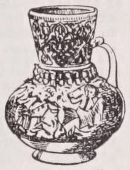
Ewing
Encyclopedia Britannica
EWING, Alexander (1814-1873), a clergyman of the Scotch Episcopal Church, bishop of Argyll and the Isles, was descended from an old Highland family, and was born in Aberdeen 25th March 1814. After spending two sessions at the university of that city, where he manifested a special bent towards the study of natural history, he studied for a time at a private school in Chelsea, and in 1831 he attended the classes of chemistry, natural philosophy, and natural history in the university of Edinburgh. His uncertain health, however, compelled him for a time to suspend all systematic study. The property inherited from his father rendered it unnecessary for him to adopt a profession from pecuniary considerations, and his delicate health counselled at least delay in taking such a step. Accordingly, for some time after his marriage be occupied himself chiefly in the cultivation of his literary and artistic tastes, residing at first in the north of Scotland, and in October 1838 journeying to Italy, where he remained till April 1841. As early as 1836, however, he had begun to look to the church as a profession; and in October 1838 he was admitted to deacou’s orders with the object of pledging himself to his future profession before leaving Scotland,—the Episcopalian Church being preferred by him to the Presbyterian, chiefly on account of its comprehensive statements regarding the subject of human redemption. Soon after his return from Italy he was requested to take the charge of the Episcopal congregation at Forres, and on accepting it he was ordained a presbyter in the autumn of 1841. He remained at Forres till 1846, when he was elected first bishop of the newly restored diocese of Argyll and the Isles, the duties of which position he discharged till his death, 22d May 1873. In ...1851 he received the degree of D.C.L. from the university of Oxford.
Though the work accomplished by Ewing was necessarily modified and circumscribed by the fact that throughout his whole life he was fettered by a delicate bodily con stitution, he yet battled with the vices and religious perplexities and difficulties of his time in a spirit of buoyant cheerfulness. Perhaps his strength lay chiefly in the charm of his personal manner, in his fine tact, and his catholic sympathies; and these gradually secured him, not only the admiration and love of the people and clergy of his diocese, but a prominent position among the ecclesiastics of his own time, both in Scotland and England. In all theological discussions he contended for the exercise of a wide tolerance and charity, shrinking from condemning with ecclesiastical censure even opinions which he feared might be fraught with evil and danger to the church. He did not, indeed, attach much importance to mere ecclesiastical authority and organization, and was more solicitous about the inward than the outward unity of Christianity. His own theological position resembled very closely that of Thomas Erskine of Linlathen, and Frederick Denison Maurice; but his relation to these theologians was rather that of a friendly sympathiser than a disciple, for his opinions were the fruit of his own meditation, and were coloured by his own idiosyncracy, and their perspective was determined by his individual stand-point. Unlike theirs, his teaching was never presented in the form of a complete and elaborate theological treatise, and its purport is only to be gathered from fragmentary publications,—letters to the newspapers, pamphlets, special sermons, essays contributed to the series of Present Day Papers, of which he was the editor, and a volume of sermons entitled Revelation considered as.Light, which he only lived to see through the press. The title of this volume may be taken as indicating the characteristic feature of his theology. He dwelt specially upon the illuminating power of Christianity as revealing the fatherhood of God, and thus “rolling back the clouds of human sin and sorrow,” so as even ultimately to “exhaust hell of its darkness.” To him each attribute of God was equally light, and therefore he did not believe that any compromise had ever been effected between them. Christ was the supreme manifestation of that light, and the Bible was but the medium of its revelation, the means for enabling it to stream in upon the soul from sources beyond the mere letter of the truths which the written word contained. One of the chief of these external sources of light, specially welcomed by Ewing, was science, to the discoveries of which he looked forward as destined to lead to the manifestation of other and higher aspects of Christianity than were yet fully realized.
Besides his strictly theological writings, Ewing is the author of the Cathedral or Abbey Church of Iona, 1865, the first part of which contains drawings and descriptive letterpress of the ruins by Messrs Bucklers, architects, Oxford, an<l the second a history of the early Celtic church and of the mission of St Columba. See Memoir tf Alexander Ewing, D.C.L.,>oy A. J. Ross, B.D., 1877.
9th ed. Encyclopædia Britannica, vol. 8, p. 776
[841 words — estimated reading time: 5 minutes]
[841 words — estimated reading time: 5 minutes]
An office or place of household service where the ewers were formerly kept.
No thesaurus entries found for "Ew".
Type at least 3 letters to search the Bible, or a reference such as John 3:16.