
Fro.
Word of the Day: Catachrestical
Fra bartolommeo
Encyclopedia Britannica
9th ed. Encyclopædia Britannica, vol. 9, p. 504
[7 words — estimated reading time: 1 minute]
[7 words — estimated reading time: 1 minute]
Fra diavolo
Encyclopedia Britannica
FRA DIAVOLO is the popular name given by his countrymen to the most notorious and dreaded of modem Italian brigands; and the name, associated during his lifetime with the political revolutions of southern Italy, has acquired a world-wide celebrity since it became the title of a favourite French opera. His real name was Michele Pezza. It would be as hopeless to fix the precise dates in his career as to determine those in the lives of Rob Roy or Jonathan Wild. He is stated, however, to have been born at ItrL His crimes became invested with a more general and political interest in 1799. At that time, from the frequency and audacity of his robberies and murders along the frontier of the Terra di Lavoro, he became known as Fra Diavolo, the popular superstition investing him with the blended attributes of a monk and a demon. When the kingdom of Naples was overrun by the troops of the French Republic, Fra Diavolo, acting in concert with the head of the Bourbon partisans, Cardinal Ruffo, waged a fierce aud untiring war against the French soldiers, whenever his superior knowledge of the localities afforded the prospect of his being able to do so with effect. He continued for a considerable period in absolute possession of the line of communication from the Garigliano to Portello, falling upon and massacring the French Government couriers, and all whom he suspected of conveying information to the military or civil functionaries of the Republic. At one moment he succeeded in completely interrupting all communication between Naples and Rome. Like his fellow agents under Cardinal Ruffo—like Mammone, Pronio, Sciarpa Guar-riglia—he styled himself “the faithful servant and subject of his Sicilian Majesty.” As the turning point in Fra Diavolo’s career must be regarded the ...arrival in Naples of Joseph Bonaparte, and the establishment of the extraordinary tribunals charged with the repression of this half civil half political brigandage. Fra Diavolo was sentenced to death, and a price was set on his head. After spreading terror through Calabria by his deeds of cruelty he had passed over into Sicily, but soon returned to the mainland at the head of 300 liberated convicts placed at his disposal by the Bourbon Government. His landing at Spelonza with these ruffians was marked by unusual excesses, but the French troops were everywhere on the alert to capture him, and he was compelled to seek refuge amongst the woods and mountains of Lenola. During a period of two months he succeeded in evading his pursuers, always in the hope of making his way back to Sicily. A t length, exhausted by hunger and requiring medical aid, he repaired in disguise to the village of Baronissi, but was there recognized and put to death. It is stated that on his person were found papers from Queen Caroline of Naples and Admiral Sidney Smith, those from the former recognizing his rank as colonel in the Bourbon army, and that in his last moments he cursed both his employers and his own folly which had led him to engage in such a reckless enterprise. The most authentic source for the career of Fra Diavolo is Colletta’s History of Naples, which the English reader may consult in the version, equally faithful and spirited, of Miss Horner.
9th ed. Encyclopædia Britannica, vol. 9, p. 504
[553 words — estimated reading time: 4 minutes]
[553 words — estimated reading time: 4 minutes]
Fraas
Encyclopedia Britannica
FRAAS, Karl Nikolas (1810-1875), a German botanist and agriculturist, was born at Stettelsdorf, near Bamberg, 8th September 1810. After receiving his preliminary education at the gymnasium of Bamberg, he in 1830 entered the university of Munich, where he took his doctor’s degree in 1834. Having devoted great attention to the study of botany, he went to Athens in 1835 as inspector of the court garden; and in April 1836 he became professor of botany at the university. In 1842 he returned to Germany and became teacher at the central agricultural school at Schleissheim. In 1847 he was appointed professor of agriculture at Munich, and in 1851 director of the central veterinary college. For many years he was secretary of the Agricultural Society of Bavaria, but resigned in 1861. He died at his estate of Neufreimann near Munich, 9th November 1875. Besides his important contributions to the sciences of botany and agriculture, Fraas devoted much of his effort to improve the condition of the peasants.
His principal works are—∑τo<χ∈7α τηs Boτavικηs, Athens, 1835; Synopsis florae classicae, Munich, 1845; Klima und Pflanzenwelt in der Zeit, Landsh., 1847; Histor-cncyklopäd. Grundriss der Land- vñrthschaftslehre, Stuttgart, 1848; Geschichte der Landicirthschaft, Prague, 1851; Die Schule des Landbaues, Munich, 1852; ßaierns Rinderrassen, Munich, 1853; Die Künstliche Fischerzeugung, Munich, 1854; Die Natur der Landwirthschaft, Munich, 1857; Buch der Natur für Landwirthe, Munich, 1860; Die Ackerbaukrisen und ihre Heilmittel, Munich, 1866; Das IFurzcllcbenderCzilturytflanzen, Berlin, 1872; and Geschichte der Landbau und Forstwissenschaft seit dem 16 tera Jahrh., Munich, 1865. He also founded and edited a weekly agricultural paper, the Schranne.
9th ed. Encyclopædia Britannica, vol. 9, p. 504
[271 words — estimated reading time: 2 minutes]
[271 words — estimated reading time: 2 minutes]
Fracastorio
Encyclopedia Britannica
FRACASTORIO, Hieronymo (1483-1553), a learned physician and poet, was born at Verona in 1483. It is related of him that at his birth his lips adhered so closely that a surgeon was obliged to divide them with his incision knife, and that during his infancy his mother was killed by lightning, while he, though in her arms at the moment, escaped unhurt. Fracastorio became eminently skilled, not only in medicine and belles-lettres, but in most arts and sciences. It was by his advice that Pope Paul III., on account of the prevalence of a contagious distemper, removed the council of Trent to Bologna. He was the author of many works, both poetical and medical, and was intimately acquainted with Cardinal Bembo, Julius Scaliger, and most of the great men of his time. He died of apoplexy at Casi, near Verona, on the 8th of August 1553; and in 1559 the town of Verona erected a statue in his honour.
The principal work of Fracastorio is a kind of medical poem entitled Syphilidis, sive Morbi Gallici, libri tres, Verona, 1530, which has been often reprinted, and also translated into French and Italian. Among his other works (all published at Venice) are De Vini Temperatura, 1534; Homocentricorum, 1535; De Sympathy et Antipathia Rerum, 1546; and Dc Contagionibus, 1546. His complete works were published at Venice in 1555, and his poetical productions were collected and printed at Padua in 1728.
9th ed. Encyclopædia Britannica, vol. 9, p. 504
[239 words — estimated reading time: 2 minutes]
[239 words — estimated reading time: 2 minutes]
To break. [Not used.]
Having a part displaced, as if broken; -- said of an ordinary.
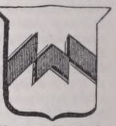
1. The act of breaking or state of being broken, especially by violence.
2. In arithmetic and algebra, a broken part of an integral or integer; any division of a whole number or unit, as 2/5, two fifths, 1/4, one fourth, which are called vulgar fractions. In these, the figure above the line is called the numerator, and the figure below the line the denominator. In decimal fractions, the denominator is a unit, or 1, with as many cyphers annexed, as the numerator has places. They are commonly expressed by writing the numerator only, with a point before it by which it is separated from the whole number; thus .5, which denotes five tenths, 5/10, or half the whole number; .25, that is 25/100, or a fourth part of the whole number.
1. The act of breaking, or state of being broken, especially by violence.
2. A portion; a fragment.
3. One or more aliquot parts of a unit or whole number; an expression for a definite portion of a unit or magnitude.
To separate by means of, or to subject to, fractional distillation or crystallization; to fractionate; -- frequently used with out; as, to fraction out a certain grade of oil from pretroleum.
Belonging to a broken number; comprising a part or the parts of a unit; as fractional numbers.
1. Of or pertaining to fractions or a fraction; constituting a fraction; as, fractional numbers.
2. Relatively small; inconsiderable; insignificant; as, a fractional part of the population.
By fractions or separate portions; as, to distill a liquid fractionally, that is, so as to separate different portions.
To separate into different portions or fractions, as in the distillation of liquids.
Apt to break out into a passion; apt to quarrel; cross; snappish; as a fractious man.
A cross or snappish temper.
No thesaurus entries found for "Fra".
King James Bible KJV Bible
Berean Standard Bible BSB Bible
48 KJV and 114 BSB verses contain “Fra” — showing the first 20. Show all 144 verses (searchable)
And he said unto him, My lord knoweth that the children are tender, and the flocks and herds with young are with me: and if men should overdrive them one day, all the flock will die.
Two tenons shall there be in one board, set in order one against another: thus shalt thou make for all the boards of the tabernacle.
Two tenons must be connected to each other for each frame. Make all the frames of the tabernacle in this way.
And thou shalt make the boards for the tabernacle, twenty boards on the south side southward.
Construct twenty frames for the south side of the tabernacle,
And thou shalt make forty sockets of silver under the twenty boards; two sockets under one board for his two tenons, and two sockets under another board for his two tenons.
with forty silver bases under the twenty frames—two bases for each frame, one under each tenon.
And for the second side of the tabernacle on the north side there shall be twenty boards:
For the second side of the tabernacle, the north side, make twenty frames
And their forty sockets of silver; two sockets under one board, and two sockets under another board.
and forty silver bases—two bases under each frame.
And for the sides of the tabernacle westward thou shalt make six boards.
Make six frames for the rear of the tabernacle, the west side,
And two boards shalt thou make for the corners of the tabernacle in the two sides.
and two frames for the two back corners of the tabernacle,
And they shall be eight boards, and their sockets of silver, sixteen sockets; two sockets under one board, and two sockets under another board.
So there are to be eight frames and sixteen silver bases—two under each frame.
And the middle bar in the midst of the boards shall reach from end to end.
The central crossbar in the middle of the frames shall extend from one end to the other.
And thou shalt overlay the boards with gold, and make their rings of gold for places for the bars: and thou shalt overlay the bars with gold.
Overlay the frames with gold and make gold rings to hold the crossbars. Also overlay the crossbars with gold.
And the LORD said unto Moses, Take unto thee sweet spices, stacte, and onycha, and galbanum; these sweet spices with pure frankincense: of each shall there be a like weight:
The LORD also said to Moses, “Take fragrant spices—gum resin, onycha, galbanum, and pure frankincense—in equal measures,
And thou shalt make it a perfume, a confection after the art of the apothecary, tempered together, pure and holy: