
The urus.
Word of the Day: Catachrestical
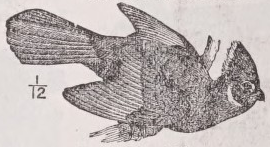
Any one of several species of plantain eaters of the genus Turacus, native of Africa. They are remarkable for the peculiar green and red pigments found in their feathers.
Turanian
Encyclopedia Britannica
TURANIAN. This word means etymologically no more than “not Iranian,” and in this sense the word Turan was used by Sasanian monarchs to cover those parts of their realm that did not belong to Iran. The application of the word to denote the Ural-Altaic family of languages is extremely unfortunate and seems to be falling out of use. See Philology, vol. xviii. p. 779.
9th ed. Encyclopædia Britannica, vol. 23, p. 625
[65 words — estimated reading time: 1 minute]
[65 words — estimated reading time: 1 minute]
1. An extensive division of mankind including the Mongols and allied races of Asia, together with the Malays and Polynesians.
2. A group of races or tribes inhabiting Asia and closely related to the Mongols.
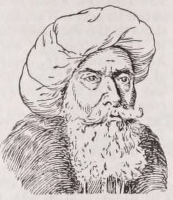
1. A head dress worn by the orientals, consisting of a cap, and a sash of fine linen or taffeta artfully wound round it in plaits. The cap is red or green, roundish on the top, and quilted with cotton. The sash of the Turks is white linen; that of the Persians is red woolen.
2. In conchology, the whole set of whirls of a shell.
1. A headdress worn by men in the Levant and by most Mohammedans of the male sex, consisting of a cap, and a sash, scarf, or shawl, usually of cotton or linen, wound about the cap, and sometimes hanging down the neck.
2. A kind of headdress worn by women.
3. The whole set of whorls of a spiral shell.
In natural history, a genus of shells, or rather of sea urchins, (echinodermata, ) of a hemispheric or spheroidal shape, the Cidaris of Klein.
An extensive group of worms which have the body covered externally with vibrating cilia. It includes the Rhabdoc/la and Dendroc/la. Formerly, the nemerteans were also included in this group.
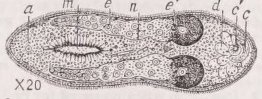
One of the Turbellaria. Also used adjectively.
Properly, having the lees disturbed; but in a more general sense, muddy; foul with extraneous matter; thick; not clear; used of liquids of any kind; as turbid water; turbid wine. Streams running on clay generally appear to be turbid This is often the case with the river Seine.
1. Having the lees or sediment disturbed; roiled; muddy; thick; not clear; -- used of liquids of any kind; as, turbid water; turbid wine.
2. Disturbed; confused; disordered.
No thesaurus entries found for "TUR".
King James Bible KJV Bible
Berean Standard Bible BSB Bible
723 KJV and 653 BSB verses contain “TUR” — showing the first 20. Show all 1,002 verses (searchable)
And they returned, and came to En-mishpat, which is Kadesh, and smote all the country of the Amalekites, and also the Amorites that dwelt in Hazezon-tamar.
Then they turned back to invade En-mishpat (that is, Kadesh), and they conquered the whole territory of the Amalekites, as well as the Amorites who lived in Hazazon-tamar.
And he said unto him, Take me an heifer of three years old, and a she goat of three years old, and a ram of three years old, and a turtledove, and a young pigeon.
And the LORD said to him, “Bring Me a heifer, a goat, and a ram, each three years old, along with a turtledove and a young pigeon.”
And he pressed upon them greatly; and they turned in unto him, and entered into his house; and he made them a feast, and did bake unleavened bread, and they did eat.
But Lot insisted so strongly that they followed him into his house. He prepared a feast for them and baked unleavened bread, and they ate.
And now if ye will deal kindly and truly with my master, tell me: and if not, tell me; that I may turn to the right hand, or to the left.
Now if you will show kindness and faithfulness to my master, tell me; but if not, let me know, so that I may go elsewhere.”
Until thy brother’s anger turn away from thee, and he forget that which thou hast done to him: then I will send, and fetch thee from thence: why should I be deprived also of you both in one day?
until your brother’s rage against you wanes and he forgets what you have done to him. Then I will send for you and bring you back from there. Why should I lose both of you in one day?”
And it came to pass at that time, that Judah went down from his brethren, and turned in to a certain Adullamite, whose name was Hirah.
About that time, Judah left his brothers and settled near a man named Hirah, an Adullamite.
And he turned unto her by the way, and said, Go to, I pray thee, let me come in unto thee; (for he knew not that she was his daughter in law.) And she said, What wilt thou give me, that thou mayest come in unto me?
Not realizing that she was his daughter-in-law, he went over to her and said, “Come now, let me sleep with you.” “What will you give me for sleeping with you?” she inquired.
And he said unto his brethren, My money is restored; and, lo, it is even in my sack: and their heart failed them, and they were afraid, saying one to another, What is this that God hath done unto us?
And the LORD said unto Moses, Put forth thine hand, and take it by the tail. And he put forth his hand, and caught it, and it became a rod in his hand:
Get thee unto Pharaoh in the morning; lo, he goeth out unto the water; and thou shalt stand by the river’s brink against he come; and the rod which was turned to a serpent shalt thou take in thine hand.
Go to Pharaoh in the morning as you see him walking out to the water. Wait on the bank of the Nile to meet him, and take in your hand the staff that was changed into a snake.
Thus saith the LORD, In this thou shalt know that I am the LORD: behold, I will smite with the rod that is in mine hand upon the waters which are in the river, and they shall be turned to blood.
This is what the LORD says: By this you will know that I am the LORD. Behold, with the staff in my hand I will strike the water of the Nile, and it will turn to blood.