3. A branch of a tree fixed or hung out as a tavern sign. Hence, since the branch has been discontinued, a coronated frame of wood hung out as a tavern sign, is so called. Hence the English proverb, 'Good wine needs no bush '
4. [I know not that this word is thus used in the U. States.]
5. A circle of metal let into the sheaves of such blocks as have iron pins, to prevent their wearing.
6. This word when applied to sheaves is called bush but when applied to the circular iron of a cart wheel is, in America, called a box.
1. A thicket, or place abounding in trees or shrubs; a wild forest.
2. A shrub; esp., a shrub with branches rising from or near the root; a thick shrub or a cluster of shrubs.
3. A shrub cut off, or a shrublike branch of a tree; as, bushes to support pea vines.
4. A shrub or branch, properly, a branch of ivy (as sacred to Bacchus), hung out at vintners' doors, or as a tavern sign; hence, a tavern sign, and symbolically, the tavern itself.
6. A lining for a hole to make it smaller; a thimble or ring of metal or wood inserted in a plate or other part of machinery to receive the wear of a pivot or arbor.
7. A piece of copper, screwed into a gun, through which the venthole is bored.
סנה. This word occurs in Exod. iii, 2, 4, and Deut. xxxiii, 16, as the name of the bush in which God appeared to Moses. If it be the χιονὸς mentioned by Dioscorides, it is the white thorn. Celsius calls it the _rubus fructicosus_. The number of these bushes in this region seems to have given the name to the mountain Sinai. The word נהללים, found only in Isa. vii, 19, and there rendered “bushes,” means _fruitful pastures_.
1. A dry measure, containing eight gallons, or four pecks. The standard English bushel by Stat.12 . Henry VII., contains eight gallons of wheat, each gallon eight pounds of wheat, troy weight, the pound, twelve ounces troy, the ounce, twenty sterlings, and the sterling, thirty two grains of wheat growing in the middle of the ear. The contents are 2145.6 solid inches, equivalent to 1131 ounces and 14 pennyweights troy.
2. The English bushel is used also in the U. States.
3. Bushel signifies both the quantity or capacity, and the vessel which will contain the quantity.
4. In popular language, a large quantity indefinitely.
5. The circle of iron in the nave of a wheel; in America, called a box. [ See Bush .]
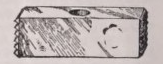
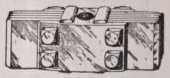
A hammer with a head formed of a bundle of square bars, with pyramidal points, arranged in rows, or a solid head with a face cut into a number of rows of such points; -- used for dressing stone.
BUSHIRE, or Abuschehr, a town of Persia, in the province of Fars, situated in the Persian Gulf. The surrounding country is a parched and barren desert, consisting of brown sand or grey clay and rock, unenlivened by any kind of vegetation. The town, which is of a triangular form, occupies the extremity of a peninsula eleven miles long and four broad, and is encircled by the sea on all sides except the south. It is fortified on the land side by a mud wall with round towers. The houses being mostly built of white stone gives the city, when viewed from a distance, a rather clean and handsome appearance, but on closer inspection the streets are found to be narrow, irregular, ill-paved, and filthy. Almost the only handsome buildings arc the sheikh’s palace and the British residency. Ships of 300 tons are obliged to lie in the roads six miles from the town. The water immediately east of the town is deep, but its navigation is impeded by a bar, which can only be passed by vessels drawing not more than 8 or 9 feet of water, except at spring-tides, when there is a rise of from 8 or 10 feet. Bushire carries on a considerable trade, particularly with Calcutta, Bombay, and Java. Its imports are indigo, sugar, rice, spices, steel, cotton and woollen goods, coffee, <fcc.; and its principal exports artraw silk, opium, Kerman wool, shawls, silk goods, carpets, horses, dried fruits, wine, grain, copper, turquoises, pearls, asafoetida, and gall-nuts. The climate is excessively hot, particularly in the months of June, July, and August, The water is very bad; that fit for drinking requires to be brought in goat-skins from wells, distant 1∣ mile from the city walls. The population is variously estimated at from 10,000 to 20,000....
The importance of Bushire has muchincreased of late years. It is now not only the headquarters of the English naval squadron in the Persian Gulf, and the land terminus of the Indo-European line of telegraph, but it also forms the chief station in these seas of the British Indian Steam Navigation Company, which runs its vessels weekly between Bombay aridBussorah, and it is further expected that, if our Foreign Jurisdiction Act should be applied to Persia, an appellate court will be formed at Bushire. In the meantime several European mercantile houses have been established in the town, and there can be no doubt that if the means of communication with the interior were improved, trade would rapidly increase, Notwithstanding, indeed, the drawbacks of bad roads, insufficient means of transport (wheeled carriages being unknown and beasts of burthen being few and dear), want of security, and illegal exactions, the annual value of the Bushire trade is now estimated at £600,000, of which one-quarter represents the exports and three-quarters the imports, the balance of trade against Persia at this single port thus amounting to about £300,000 a year, which is met by a constant drain of the precious metals to India. During the late war with Persia (1856-57) Bushire surrendered to a British force, and remained in our occupation for some months. The town yields a yearly revenue of about £15,000, mainly derived from customs, and is the chief place of a district, extending for 300 miles along the sea-coast from Dilem to Congoon, which is assessed in the Shiràz register at about £25,000 per annum. At Rishire, in the vicinity of Bushire, there are extensive ruins, among which bricks stamped with cuneiform legends have been found, showing that the place was a very old Elamite settlement under the kings of Susa. It continued also t<* flourish under the name of Riv-Ardeshir, during the Sassanian period, and only fell into decay after the Arab conquest, its place as the great emporium of trade being successively taken by SirAf (the modern Tâhiri), Kcis, and Ormuz. The British commercial factory was transferred from Gombroon (modern Bander AbbAss) to Bushire during the last century; but the duties of the B½sħire resident at present are exclusively political. (h. c. κ.)
9th ed. Encyclopædia Britannica, vol. 4, p. 574 [694 words — estimated reading time: 4 minutes]
BUSHMEN, or Bosjesmans, so named by the British and Dutch colonists of the Cape, but calling themselves Saab or Saan, are an aboriginal race of South Africa, allied in some respects to the Hottentots, but differing from them in several essential points, and along with these having nothing whatever in common with the Kaffre 0r the Negro. The area in which they are found in nomadic families may be described as extending from the inner ranges of the mountains of Cape Colony, through the central Kalahari desert to near Lake Ngami, and thence north-westward to the districts about the Ovambo River north of Damara Land, in about 18° S. lat., or only over the most barren portions of the South African deserts, into which they have been pressed by the encroachments of the Kaffre, Hottentots, and Europeans, a few also remaining in the most inaccessible clefts of tho Drakenberg range about the sources of tho Vaal. They rank with the savages of Australia as the lowest existing type of mankind, human nature being nowhere seen in a more destitute or degraded condition. The Bushmen with whom tho colonists of the south have come most in contact are of very small stature, of a dirty yellow colour, and generally repulsive countenance. In type they somewhat resemble the Mongolians; the cheek-bcres are large and prominent, the eyes deeply set and crafty in expression, the nose small and depressed; tho hair appears in small woolly tufts with spaces between. Among 150 of their number measured by the traveller Barrow, tho tallest man was 4 feet 9 inches, the tallest woman 4 feet 4 inches. A hollowed back and protruding slcmach, with thick hinder parts and small limbs, are frequent characteristics of their figure, but many of them are well-proportioned, all being active and capable of enduring...great privations and fatigue. Northward the Bι.shmen appear to improve both in general condition and in stature. Those met with towards Lake Ngami by Dr Livingstone are described by him as differing from those of the thirsty plains of the Kalahari, being of darker colour and of good proportions; some of those seen by the traveller Baines in this region are also noticed as being taller, some 5 feet 6 inches in height. Their clothing consists of a mantle of skins, termed a kaross; but they are fond of ornament, and decorate the arms and legs with beads and iron or copper rings, and the women sometimes stain their faces with red colour. For dwellings in the plains they have low huts formed of reed mats, or may simply occupy a hole in the earth; in the mountain districts they make a shelter among the rocks by hanging mats on the windward side. They do not possess cattle, and have no animals of any sort excepting a few half-wild dogs, nor have they the smallest rudiments of agriculture. Living by hunting, they are thoroughly acquainted with the habits Und movements of every kind of wild animals following the antelope herds in their -migrations. Theiι weapon is a small bow, strung with twisted sinew, used with arrows, which are neatly made of a reed with a barbed head of bo» o, sometimes tipped with a triangular piece of iron, and always coated with a gummy poisonous compound, which is variously made in different localities. The chief sources of the poison are the milky juice of the Amaryllis toxicaria, which is abundant in South Africa, or of the Euphorbia arborescens, generally mixed with the venom of snakes or of a large black spider of the genus Mygale ; or the entrails of a very deadly caterpillar, called N’gwa or ’ Kaa, are used alone. From their use of these poisons the Bushmen are held in great dread by the neighbouring races. A rude implement, called the gragf stock or digging-stick by the boers,-—consisting of a sharpened spike of hardwood over which a stone, ground to a circular form and perforated, is passed and secured by a wedge,— is used by the Buβhmen in uprooting the succulenttuberous roots of the several species of creeping plants of the desert. These perforated stones have a special interest in indicating the former extension of the race of the Bushmen, since tbey are found far beyond the area now occupied by their families.
There does not appear to be the least approach to any tribal unity in the wandering groups of the Bushmen; they have no chiefs, bodily strength alone forming a distinction among them. Their language, which exists in several dialects, is not intelligible to the Hottentots, but has in common with it the nasal, snapping, hissing, or grunting’sounds, only used more numerously. The Hottentot language is more agglutinative, the Bushman’s more monosyllabic; the former recognizes a gender in names, the latter does not; the Hottentots form the plural by a suffix, the Bushmen by repetition of the name; the former count up to twenty, the latter can only number two, all above that being “many.” The Bushmen possess a remarkable faculty which is not known in any other South African natives, that of graphic illustration; the rocks of the mountains of Cape Colony and of the Drakenberg have everywhere examples of Bushman drawings of men, women, children, and animals characteristically sketched. Rings, crosses, and other signs drawn in blue pigment on some of the rocks, and believed to be some centuries old, have given rise to the speculation that these may be remains of a hieroglyphic writing; and the discovery of drawings of men and women, with antelope heads, in the recesses of the Drakenberg in 1873 (Orpen in Cape Monthly Magazine, July 1874), also very ancient, recalls the mythological figures of Egypt. The Bushmen are not deficient in a certain intelligence, and are valued as servants by the boers, being much more energetic than the Hottentots; of all the South African races they have the greatest aptitude for music and the dance. A regularly planned and wholesale destruction of this race on the borders of the colony in the earlier years, reduced their numbers to a great extent; and though this cruel hunting of the Bushmen has ceased, their children are still captured by the boers as servants. In retaliation, the Bushmen have loug been the scourge of the farms on the outer borders of the colonies, making raids on the cattle and driving them off in large numbers. On the western side of the deserts they are generally at enmity with the Koranna Hottentots, but on the eastern border of the Kalahari they have to some extent become tributary to the Bechwana Kaffres. Formerly occupying a much larger area, it appears probable that the Bushmen are the earliest remaining aborigines of South Africa, and that they existed there before the Kaffres, and perhaps also anterior to the Hottentots. The discoveries of the dwarf race of the Akka by Dr Schweinfurth beyond the Upper Nile basin, of the little Bushman-like Obongo on the western equatorial coastland by Du Chaillu, and of the Okota, an undersized people leading a miserable existence in bark huts on a branch of the Ogowé River, by De Compiègne in 1874, point to a former more general distribution of this primitive race.
BUSHNELL, Horace, D.D. (1802-1876), an American theologian, was born at Litchfield in Connecticut, in April 1802, and died on the 17th of February 187G. He studied at Yale College, where he graduated in 1827, after which he was for eleven months editor of the Journal of Commerce, and then teacher in a school in Norwich (Connecticut). In 1829 he became tutor in Yale College. His first study was law, but in 1831 he resolved to devote himself to theology, and in 1833 he was chosen pastor of the North Congregational Church in Hartford (Connecticut), where he remained twenty-four years. During the remainder of his life he had no settled charge, but he continued to be diligently employed both as a preacher and as an author. He took an active part in the establishment of the university of California, and was asked to become its president. Having determined to value truth more highly than peace or consistency, Bushnell thought, and expressed his conclusions, with such freedom as to bring on himself a charge of false doctrine. In 1849 he published God in Christ, with an introductoryDissertation on Language as related to Thought, in which, it was said, he expressed heretical views as to the Trinity. He was acquitted by seventeen votes to three, but his influence with his church was such that it withdrew from the “Consociation” by which he had been tried, and thenceforward stood alone, a true “congregational” church, whose minister was amenable to no external authority. Bushnell formally replied by writing Christ in Theology, in which he employs the important argument that spiritual facts can only be expressed in approximative and poetical language, and concludes that an adequate dogmatic theology cannot exist. That he did not deny the divinity of Christ he proved in The. ...Character of Jesus, forbidding his possible classification with Men. He has also published Christian Nurture, (1847); Seιmons for the New Life, (1858); Nature and the Supernatural, (1858); Christ and his Salvation, (1864); Work and Play, (1864); The Vicarious Sacrifice, grounded on Principles of Universal Obligation, (1865); Moral Uses of Dark Things, (1868); Sermon on Living Subjects; Women's Suffrage, the lieform against Nature, (1869); and Forgiveness and Law, (1874).
9th ed. Encyclopædia Britannica, vol. 4, p. 576 [371 words — estimated reading time: 3 minutes]
Adv. partly, in part, partially, piecemeal, part by part, by installments, by snatches, by inches, by driblets, bit by bit, inch by inch, foot by foot, drop by drop, in detail, in lots
And the angel of the LORD appeared unto him in a flame of fire out of the midst of a bush: and he looked, and, behold, the bush burned with fire, and the bush was not consumed.
There the angel of the LORD appeared to him in a blazing fire from within a bush. Moses saw the bush ablaze with fire, but it was not consumed.
And for the precious things of the earth and fulness thereof, and for the good will of him that dwelt in the bush: let the blessing come upon the head of Joseph, and upon the top of the head of him that was separated from his brethren.
with the choice gifts of the land and everything in it, and with the favor of Him who dwelt in the burning bush. May these rest on the head of Joseph and crown the brow of the prince of his brothers.
And as touching the dead, that they rise: have ye not read in the book of Moses, how in the bush God spake unto him, saying, I am the God of Abraham, and the God of Isaac, and the God of Jacob?
But concerning the dead rising, have you not read about the burning bush in the Book of Moses, how God told him, ‘I am the God of Abraham, the God of Isaac, and the God of Jacob’?
No man, when he hath lighted a candle, putteth it in a secret place, neither under a bushel, but on a candlestick, that they which come in may see the light.
No one lights a lamp and puts it in a cellar or under a basket. Instead, he sets it on a stand, so those who enter can see the light.
Now that the dead are raised, even Moses shewed at the bush, when he calleth the Lord the God of Abraham, and the God of Isaac, and the God of Jacob.
Even Moses demonstrates that the dead are raised, in the passage about the burning bush. For he calls the Lord ‘the God of Abraham, the God of Isaac, and the God of Jacob.’
This Moses whom they refused, saying, Who made thee a ruler and a judge? the same did God send to be a ruler and a deliverer by the hand of the angel which appeared to him in the bush.
This Moses, whom they had rejected with the words, ‘Who made you ruler and judge?’ is the one whom God sent to be their ruler and redeemer through the angel who appeared to him in the bush.
Woe be unto them that are bound with their sins, and covered with their iniquities like as a field is covered over with bushes, and the path thereof covered with thorns, that no man may travel through!
This site uses cookies to remember your display preferences (search sources and editions, Bible version, auto-link, images, light/dark theme). No personal data whatsoever is collected. Privacy Policy