Emu
[Noun]
Webster's Dictionary 1828
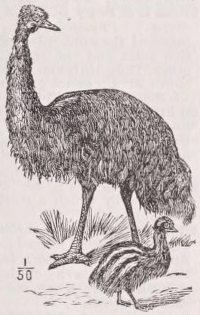
1. A large fowl of S. America, with wings unfit for flight.
2. This name properly belongs to the
Cassowary, but has been erroneously applied, by the Brazilians, to the
Rhea or S. American
ostrich.
Emu
[Noun]
Webster's Dictionary 1913
A large Australian bird, of two species (Dromaius Novae-Hollandiae and D. irroratus), related to the
cassowary and the
ostrich. The emu runs swiftly, but is unable to fly.
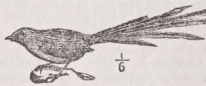
A small wrenlike Australian bird (Stipiturus malachurus), having the tail feathers long and loosely
barbed, like
emu feathers.
Emulate
[Adjective]
Webster's Dictionary 1828
Ambitious. [Little used.]
Emulate
[Verb transitive]
Webster's Dictionary 1828
1. To
strive to equal or
excel, in qualities or actions; to
imitate, with a view to equal or
excel; to
vie with; to rival. Learn early to emulate the good and the great. emulate the virtues and
shun the vices of distinguished men.
2. To be equal to.
3. Thy eye would emulate the
diamond.
4. To
imitate; to resemble. [Unusual.]
Emulate
[Verb transitive]
Webster's Dictionary 1913
To
strive to equal or to
excel in qualities or actions; to
imitate, with a view to equal or to
outdo, to
vie with; to rival; as, to emulate the good and the great.
Emulating
[Participle present tense]
Webster's Dictionary 1828
1. The act of attempting to equal or
excel in qualities or actions;
rivalry; desire of superiority, attended with effort to attain to it; generally in a good sense, or an attempt to equal or
excel others in that which is praise-worthy, without the desire of
depressing others.
Romans 11:14 . In a bad sense, a
striving to equal or do more than others to obtain
carnal favors or honors. Val.5.
3. A noble emulation heats your breast.
5. Such
factious emulations shall arise.
Emulative
[Adjective]
Webster's Dictionary 1828
Inclined to
emulation; rivaling; disposed to competition.
Emulative
[Adjective]
Webster's Dictionary 1913
Inclined to
emulation;
aspiring to competition; rivaling; as, an emulative person or effort.
Emulator
[Noun]
Webster's Dictionary 1828
Emulator
[Noun]
Webster's Dictionary 1913
One who emulates, or strives to equal or
surpass.
A female who emulates another.
Emulgent
[Adjective]
Webster's Dictionary 1828
Milking or
draining out. In anatomy, the emulgent or
renal arteries are those which supply the
kidneys with blood, being sometimes single, sometimes double. The emulgent veins return the blood, after the
urine is secreted. This the ancients considered as a milking or straining of the
serum whence the name.
Emulgent
[Adjective]
Webster's Dictionary 1913
Pertaining to the
kidneys;
renal; as, emulgent arteries and veins.
Emulgent
[Noun]
Webster's Dictionary 1913
2. A medicine that excites the flow of
bile.
Emulous
[Adjective]
Webster's Dictionary 1828
1.
Desirous or eager to
imitate, equal or
excel another;
desirous of like excellence with another; with of; as emulous of another's example or virtues.
2. Rivaling; engaged in competition; as emulous Carthage.
Emulous
[Adjective]
Webster's Dictionary 1913
1. Ambitiously
desirous to equal or even to
excel another; eager to
emulate or
vie with another;
desirous of like excellence with another; -- with of; as, emulous of another's example or virtues.
With desire of equaling or
excelling another.
Emulsic
[Adjective]
Webster's Dictionary 1913
Pertaining to, or produced from,
emulsin; as, emulsic acid.
Emulsify
[Verb transitive]
Webster's Dictionary 1913
To convert into an
emulsion; to form an
emulsion; to reduce from an
oily substance to a
milky fluid in which the fat globules are in a very finely divided state, giving it the
semblance of solution; as, the
pancreatic juice emulsifies the
oily part of food.