
HERRERA, Fernando de (1534-1597), lyrical poet, born at Seville in 1534. Although an ecclesiastic, he addressed his verses to an Andalusian lady, said to have been the countess of Gelves, under different names ∙, but his love was as Platonic as Petrarch’s, and served only to lend additional beauty and tenderness to his poems. Herrera has been celebrated in a sonnet by Cervantes; and his poems were taken as models by the later poet, Lope de Vega. He died at Seville in 1597. Flourishing at a time when the Castilian language was not yet ripe for the higher lyrical efforts, Herrera endeavoured to remedy the defects of his native tongue by expelling from poetry the more vulgar and trivial words, by introducing words in their place from Greek, Latin, and Italian, and by employing unfamiliar inflexions and inverted constructions so as to approach more nearly the model of the classical tongues. His system, however, was theoretical and artificial, and not inspired by any genuine impulse of taste, so that in many instances where he strives to be elevated and correct, he succeeds only in being affected and formal....
Herrera published his critical views in 1580, in able notes to the works of Garcilaso, whose Italian style he followed in a volume of poems which appeared in 1582. Of these the sonnets are poor, the elegies good, and the sixteen canzones or odes best of all. The finest of these last are perhaps the two on the battle of Lepanto and on the overthrow of Sebastian of Portugal. The Pindaric ode on sleep has been frequently praised. Pacheco, the painter, published additional poems of Herrera in 1619; and Fernandez added still more in the fourth and fifth volumes of his Pοeslαs Castellanas, in 1808. The Battle of the Giants, The Rape of Proserpine, The Amadis, and The Loves of Laurino and Caerona are among the titles of longer poems of Herrera which are now lost. Of his prose works the chief are the Relation de la Guerra de Chipre y batalla de Lepanto, 1572; and the Vida y muerte de Tomas Moro, 1592, translated from Stapleton’s Latin Lives of the Three Thomases. His History of Spain till the time of Charles V., said by Rioja to have been completed about 1590, has not come down to our time.
HERRERA, Francisco (1576-1656), surnamed el Viejo (the old), historical and fresco painter, studied under Luis Fernandez in Seville, his native city, where he spent the most of his life. Although so rough and coarse in manners that neither scholar nor child could remain with him, the great talents of Herrera, and the promptitude with which he used them, brought him abundant commissions. He was also a skilful worker in bronze, an accomplishment that led to his being charged with coining base money. From this accusation, whether true or false, he sought sanctuary in the Jesuit college of San Hermenegildo, which he adorned with a fine picture of its patron saint. Philip IV., on his visit to Seville in 1624, having seen this picture, and learned the position of the artist, pardoned him at once, Warning him, however, that such powers as his should not be degraded. In 1650 Herrera removed to Madrid, where he lived in great honour till his death in 1656. Herrera was the first to relinquish the timid manner of the old Spanish school of painting, and to initiate the free, vigorous touch and style which reached such perfection in Velazquez, who had been for a short time his pupil. His pictures are marked by an energy of design and freedom of execution quite in keeping with his bold, rough character. He is said to have used very long brushes in his painting; and it is also said that, when pupils failed, his servant used to dash the colours on the canvas with a broom under his directions, and that he worked them up into his designs before they dried. The drawing in his pictures is correct, and the colouring original and skilfully managed, so that the figures stand out in striking relief. What has been considered his best easel-work, the Last Judgment, in the church of San Bernardo at Seville, is an original and striking composition, showing in its treatment of the nude how ill-founded the common belief was that Spanish painters, through ignorance of anatomy, understood only the draped figure. Perhaps his best fresco is that on the dome of the church of San Buenaventura; but many of his frescos have perished, some by the effects of the weather, and others by the artist’s own carelessness in preparing his surfaces. He has, however, preserved several of his own designs in etchings. For his easel-works Herrera often chose such humble subjects as fairs, carnivals, ale-houses, and the like.
See Stirling’s Annals of the Artists of Spain, 3 vols., 1848.
HERRERA, Francisco (1622-1685), surnamed el Mozo (the young), historical and fresco painter, son of the subject of last notice, was also a native of Seville. Unable to endure his father’s cruelty, the younger Herrera, seizing what money he could find, fled to Rome. There, instead of devoting himself to the antiquities and the works of the old Italian masters, he gave himself up to the study of architecture and perspective, with the view of becoming a frescopainter. He did not altogether neglect easel-work, but became renowned for his pictures of still-life, flowers, and fruit, and from his skill in painting fish was called by the Italians Lo Spagnuolo degli pesci. In later life he painted portraits with great success. He returned to Seville on hearing of his father’s death; and in 1660 was appointed subdirector of the new academy there under Murillo. His vanity, however, brooked the superiority of no one; and throwing up his appointment he went to Madrid. There he was employed to paint a San Hermenegildo for the barefooted Carmelites, and to decorate in fresco the roof of the choir of San Felipe el Real. The success of this last work procured for him a commission from Philip IV. to paint in fresco the roof of the Atocha church. He chose as his subject for this the Assumption of the Virgin. Soon afterwards he was rewarded with the title of painter to the king, and was appointed superintendent of the royal buildings. He died at Madrid in 1685. Herrera el Mozo was of a somewhat similar temperament to his father, and offended many people by his inordinate vanity and suspicious jealousy. His pictures are inferior to the older Herrera’s both in design and in execution; but in some of them traces of the vigour of his father, who was his first teacher, are visible. He was by no means an unskilful colourist, and was especially master of the effects of chiaroscuro. As his best picture Sir Edmund Head in his Handbook names his San Francisco, in Seville Cathedral. An elder brother, known as Herrera el Rubio (the ruddy), who died very young, gave great promise as a painter.
See Stirling’s Annals of the Artists of Spain, 3 vols., 1848.
[391 words — estimated reading time: 3 minutes]
HERRERA Y TORDESILLAS, Antonio de (1549- 1625), Spanish historian, was born in 1549, at Cuellar, in the province of Segovia in Spain. His father, Roderigo de Tordesillas, and his mother, Agnes de Herrera, were both of good family. After studying for some time in his native country, Herrera proceeded to Italy, and there became secretary to Vespasian Gonzago, with whom, on his appointment as viceroy of Navarre, he returned to Spain. Gonzago, sensible of his secretary’s abilities, commended him on his death-bed to Philip II. of Spain; and that monarch, no less discerning, appointed Herrera first historiographer of the Indies, and one of the historiographers of Castile. Placed thus in the enjoyment of an ample salary, Herrera devoted the rest of his life to the peaceful pursuit of literature, retaining his offices till the reign of Philip IV., by whom he was appointed secretary of state, very shortly, however, before his death, which took place at Madrid on March 29, 1625. Of Herrera’s writings, the most valuable is his Historia General de los Hechos de los Castellanos en las Islas y Tierra Firme del Mar Oceano (Madrid, 1601- 15, 4 vols, fol.), a work which relates the history of’the Spanish-American colonies from 1492 to 1554. The author’s official position gave him access to the state papers and to other authentic sources not attainable by other writers, while he did not scruple to borrow largely from other MSS., especially from that of Las Casas. He used his facilities carefully and judiciously; and the result is a work on the whole accurate and unprejudiced, and quite indispensable to the student either of the history of the early colonies, or of the institutions and customs of the aboriginal American peoples. Although it is written in the form of annals, ...mistakes are not wanting, and several glaring anachronisms have been pointed out by Quintana. “If,” to quote Dr Robertson, “by attempting to relate the various occurrences in the New World in a strict chronological order, the arrangement of events in his work had not been rendered so perplexed, disconnected, and obscure that it is an unpleasant task to collect from different parts of his book and piece together the detached shreds of a story, he might justly have been ranked among the most eminent historians of his country.”
Herrera’s other works are the following ∙.-IIistoriα de lo Sueedido en Eseoeiα é Inglaterra en quarenta y quatre anos que ννήό la reyna Maria Estuarda (Madrid, 1589); Cinco Libros de la Historia de Portugal, y Conquista de las Islas de los Açores, 1582 y 1583 (ib., 1591); Historia de lo Sueedido en Francia, 1585-1594 {jb., 1598); Historia General del Mundo del tiempo del Schor Rey Don Felipe II., desde 1559 hasta su muerte (ib., 1601-12, 3 vols, fol.); Τratado, Relation, y Discurso historico de los movimientos de Aragon (ib., 1612); Comentarios de los Hechos de los Espaholes, Franceses, y Venecianos en Italia, &c., desde 1281 hasta 1559 (ib., 1624, fob).
[502 words — estimated reading time: 3 minutes]
HERRICK, Robert (1591-1674), English poet, was born in Cheapside, London, and baptized on the 24th of August 1591. He was the seventh child of Nicholas Herrick, goldsmith, of the city of London, who died in 1592, under suspicion of suicide. The children w ere brought up by their uncle, Sir William Herrick, one of the richest goldsmiths of the day, to whom in 1607 Robert was bound apprentice. In 1613 he proceeded to Cambridge; and it was no doubt between these dates that the young poet was introduced to that circle of wits which he was afterwards to adorn. He seems to have been present at the first performance of The Alchemist in 1610, and it was probably about this time that Ben Jonson adopted him as his poetical “son.” He entered the university as fellow-commoner of St John’s College, and he remained there until, in 1616, upon taking his degree, he removed to Trinity Hall; in 1620 he became master of arts. From this date until 1629 we entirely lose sight of him; it has been variously conjectured that he spent these nine years preparing for the ministry at Cambridge, or in much looser pursuits in London. In the latter year his mother died, and, taking orders, he was presented to the rural living of Dean Prior, not far from Totnes in Devonshire. He entered upon this new career on October 2, 1629, being in his thirtyninth year. At Dean Prior he resided quietly until 1648, when he was ejected by the Puritans. The solitude there oppressed him at first; the village was dull and remote, and he felt very bitterly that he was cut off from all literary and social associations; but soon the quiet existence in Devonshire soothed and delighted him. He was pleased with the rural and semi-pagan customs that survived in the village, and in some of his most charming verses he has ...immortalized the morris-dances, wakes, and quintains, the Christmas mummersand the Twelfth Nightrevellings, that diversified the quiet of Dean Prior. Herrick never married, but lived at the vicarage surrounded by a happy family of pets, and tended by an excellent old servant named Prudence Baldwin. His first appearance in print was in some verses lie contributed to A Description of the King and Queen of Fairies, in 1635. In 1640 a volume of Wit’s Recreations contained sixty-two small poems afterwards acknowledged by Herrick in the Hesperides, and one not reprinted until our own day. These partial appearances make it probable that he visited. London from time to time. We have few hints of his life as a clergyman. Anthony Wood says that Herrick’s sermons were florid and witty, and that he was “beloved by the neighbouring gentry.” A very aged woman, one Dorothy King, stated that the poet once threw his sermon at his congregation, cursing them for their inattention. The same old woman recollected his favourite pig, which he taught to drink out of a tankard. In 1648 he published his celebrated collection of lyrical poems, entitled Hesp>erides, or the Works both Human and Divine of Robert Herrick, only a few weeks, it would seem, after his ejection from his living by the Puritans. That he was reduced to great poverty in London has been stated, but Dr Grosart shows this to be very unlikely. In August 1662 Herrick returned to Dean Prior, supplanting his own supplanter, Dr John Syms. He died in his eightyfourth year, and was buried at Dean Prior, October 15, 1674. A monument was erected to his memory in the parish church in 1857.
As a pastoral lyrist Herrick stands first among English poets. His genius is limited in scope, and comparatively unambitious, but in its own field it is unrivalled. His tiny poems—and of the thirteen hundred that he has left behind him not one is long—are like jewels of various value, heaped together in a casket. Some are of the purest water, radiant with light and colour, some were originally set in false metal that has tarnished, some were rude and repulsive from the first. Out of the unarranged, heterogeneous mass the student has to select what is not worth reading, but, after he has cast aside all the rubbish, he is astonished at the amount of excellent and exquisite work that remains. Herrick has himself summed up, very correctly, the themes of his sylvan muse when he says :—
I sing of brooks, of blossoms, birds and bowers, Of April, May, of June and July flowers, 1 sing of May-poles, hock-carts, wassails, wakes, Of bridegrooms, brides, and of their bridal-cakes.
He saw the picturesqueness of English homely life as no one before him had seen it, and he described it in his verse with a certain purple glow of Arcadian romance over it, in tones of immortal vigour and freshness. His love poems are still more beautiful; the best of them have an ardour and tender sweetness which give them a place in the forefront of modern lyrical poetry, and remind us of what was best in Horace and in the poets of the Greek anthology.
After suffering complete extinction for more than a century, the fame of Herrick was revived by Mr Nichols (Sylvanus Urban), who introduced his poems to the readers of the Gentleman’s Magazine of 1796 and 1797. Dr Drake followed in 1798 with considerable enthusiasm. By 1810 interest had so far revived in the forgotten poet that Dr Nott ventured to print a selection from his poems, which attracted the favourable notice of the Quarterly Review.. In 1823 the Hesperides and the Noble Numbers were for the first time edited by Mr T. Maitland, afterwards Lord Dundrennan. Other editions followed in 1839, 1844, 1846, 1850, 1852, and 1859. A more complete collection, by Mr W. C. Hazlitt, was brought out in 1869. In 1876 followed Dr Grosart’s exhaustive and authoritative edition in three vols., and in 1877, under the title of Chrysomela, a very elegant selection by Mr F. T. Palgrave, with a prefatory essay. There are therefore few English poets of the 17th century whose writings are now more accessible to every class of readers than those of Herrick.
[1,044 words — estimated reading time: 6 minutes]
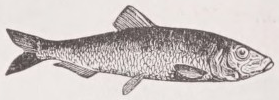
HERRING(Clupea harengτιs, Häring in German, Le Hareng in French, Sill in Swedish), a fish belonging to the genus Clupea, of which more than sixty different species are known in various parts of the globe. The sprat, pilchard or sardine, and shad are species of the same genus. Of all sea-fishes Clupeoe are the most abundant; for although other genera may comprise a greater variety of species, they are far surpassed by Clupea with regard to the number of individuals. The majority of the species of Clupea are of greater or less utility to man; it is only a few tropical species that acquire, probably from their food, highly poisonous properties, so as to be dangerous to persons eating them. But no other species equals the Common Herring in importance as an article of food or commerce. It inhabits in incredible numbers the German Ocean, the northern parts of the Atlantic, and the seas north of Asia. The herring inhabiting the corresponding latitudes of the North Pacific is another species, but most closely allied to that of the eastern hemisphere. Formerly it was the general belief that the herring inhabits the open ocean close to the Arctic Circle, and that it migrates at certain seasons towards the northern coasts of Europe and America. This view has been proved to be erroneous, and we know now that this fish lives throughout the year in the vicinity of our shores, but at a greater depth, and at a greater distance from the coast, than at the time when it approaches land for the purpose of spawning....
Herrings are readily recognized and distinguished from the other species of Clupea by having an ovate patch of very small teeth on the vomer (that is, the centre of the palate). In the dorsal fin they have from 17 to 20 rays, and in the anal fin from 16 to 18; there are from 53 to 59 scales in the lateral line, and invariably 56 vertebrae in the vertebral column. They have a smooth gill-cover, without those radiating ridges of bone which are so conspicuous in the pilchard and other Clupeoe. The sprat cannot be confounded with the herring, as it has no teeth on the vomer, and only 47 or 48 scales in the lateral line.
Herrings grow very rapidly; according to H. A. Meyer’s observations, they attain a length of from 17 to 18 mm. during the first month after hatching, 34 to 36 mm. during the second, 45 to 50 mm. during the third, 55 to 61 mm. during the fourth, and 65 to 72 mm. during the fifth. The size which they finally attain and their general condition depend chiefly on the abundance of food (which consists of crustaceans and other small marine animals), on the temperature of the water, on the season at which they have been hatched, &c. Their usual size is about 12 inches, but in some particularly suitable localities they grow to a length of 15 inches, and instances of specimens measuring 17 inches are on record. In the Baltic, where the water is gradually losing its saline constituents, thus becoming less adapted for the development of marine species, the herring continues to exist in large numbers, but as a dwarfed form, not growing either to the size or to the condition of the North-Sea herring. The herring of the American side of the Atlantic is specifically identical with that of Europe. A second species (Clupea leachu) has been supposed to exist on the British coast; but it comprises only individuals of a smaller size, the produce of an early or late spawn. Also the so-called “white-bait” is not a distinct species, but consists chiefly of the fry or the young of herrings, and. is obtained “in perfection” at localities where these small fishes find an abundance of food, as in the estuary of the Thames. The important subject of herring-fishing has already been treated in the article Fisheries (see vol. ix. pp. 251, 257, <fcc.).
Several excellent accounts of the herring have been published, as by Valenciennes in the 20th vol. of the Histoire naturelle des Poissons, and morα especially by Mr J. Μ. Mitchell, The Herring, its Natural History and National Importance, Edin., 1864. Older treatises are—P. Neucrantz, De Harengo, Liibeck, 1654; J. S. Dodd, Essay towards a Natural History of the Herring, Lond., 1768; J. Sola, Essay towards a Natural History of Herrings·, Bock, Versuch einer vollständigen Natur-und Handels-Geschichte des Härings, Königsberg, 1769.
[762 words — estimated reading time: 5 minutes]
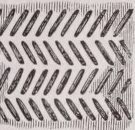
HERRNHUT, a town of Saxony, in the circle and 18 miles south-east of the town of Bautzen, and situated on the Löbau and Zittau Railway, is chiefly known as the principal seat of the Moravian or Bohemian Brotherhood, styled on the Continent Herrnhuter, a colony of whom, fleeing from persecution in their own country, settled at Herrnhut in 1722, on a site presented by Count Zinzendorf. The buildings include houses for the brethren, the sisters, and the widowed of both sexes. The town is remarkable for its regularity, cleanness, and stillness. Linen, paper (to varieties of which Herrnhut gives its name), tobacco, and various minor articles are manufactured. The Hutberg commands a pleasant view. The population in 1875 was 1128. Berthelsdorf, a village about a mile distant, has been the seat of the directorate of the community since about 1789.
[142 words — estimated reading time: 1 minute]