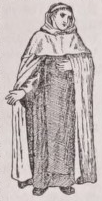
CARMEL, a mountain promontory of Palestine which runs out into the Mediterranean to the south of the bay of Acre, in 32° 50' N. lat. and 35° E. long. Gradually retiring from the coast it stretches south-east for a distance of sixteen or eighteen miles, and then sinks abruptly to form a con nection with the mountains of Samaria. Composed almost entirely of oolitic formations, it is furrowed externally with numerous ravines and other irregularities, while within it is eaten out into countless caves. Its greatest height is about 1750 feet. By the Biblical authors it is celebrated for its fertility; and its very name, which signifies the “vineyard of the Lord,” bears witness to its repute. At present there are only a few unimportant patches subjected to cultivation; and most of the mountain is covered with a thick brushwood of evergreens which rises at some parts into forest. The tree which more than any other gives its character to the scenery is the Quercus Ilex, or prickly oak; but the lentisk and myrtle are also abundant, and the profusion of lesser shrubs and aromatic herbs and flowers is altogether remarkable. The vine is almost extinct except in the neighbourhood of the village of Esfia; but winepresses hewn out of the rock show that its cultivation must at one time have been common. In the poetical books of the Scriptures allusions to Carmel are frequent; and it is especially celebrated in Biblical story as the scene of the sacrifice by Elijah which decided the claims of Jehovah aud Baal. The exact site of the prophet’s altar is fixed by tradition at El Muhrakah at the eastern extremity of the ridge, where a rough structure of hewn stones is still visited <s a place of sacrifice by the Druses. Various other places in the neighbourhood are connected with his ...name in one way or other, and the mountain itself, as well as the convent dedicated to the Virgin Mary, is familiarly known in the East as Mar Elyas. The origin of certain fruit-like fossils which occur in some of the rocks is explained by the legend that the keeper of a garden, having scornfully refused to let Elijah share in its produce, was punished by his melons and plums being instantly cursed into stone. At a slightly later period the mountain afforded an asylum to the prophet Elisha; and, according to Jambb’chus, Pythagoras sought the inspiration of its solitudes. In the time of Vespasian it was the seat of an oracle; and Pliny speaks of its inhabitants as gens sola et toto in orbe pτoeter coderas mira. The sanctity and seclusion of the place attracted a number of Christian hermits as early as the 4th century; and here in the 12th century originated the order of the Carmelites. In 1209 the convent of St Brocardus was founded at the fountain of Elijah; but the monks were massacred in 1238 and the building fell into decay. Another convent was erected in 1631; but it was destroyed in 1821 by Abd-ullah of St Jean d’Acre, who employed the ruins to build the walls of his city. A few years later the building was restored by command of the Porte, the expense being defrayed partly by Abd-ullah and partly by the contributions procured by the monk John Baptist who wandered through a part of Europe, Asia, and Africa in pursuit of his mission. The building is large and commodious, and hospitable entertainment is freely rendered by the fraternity to travellers of any nation or religion whatever. The mountain was at one time dotted with hamlets; but these have been almost all depopulated by the warlike Druses. An attempt to establish American colonists in some of the villages resulted in failure; but in quite recent years considerable success has attended the efforts of a body of German Protestant dissenters, who call themselves Templars. Their principal settlement, founded in 1869, is at Haifa or Caipha, a town of from 2000 to 3000 inhabitants, at the northern end of the promontory, which is usually identified with the Roman Sycamina. (See the works of Irby and Mangles, Van de Velde, Thomson, Robinson, Tristram, and Stanley; and for legendary details, Mislin, Les Saints Lieux, 1851-57.)
[715 words — estimated reading time: 5 minutes]