
A species of skate fish.
Word of the Day: Catachrestical
2. A man who has not had sexual intercourse.
3. A female servant.
Maid's hair
Webster's Dictionary 1913
The yellow bedstraw (Galium verum).
A female servant.
1. Pertaining to a young woman or virgin; as maiden charms.
2. Consisting of young women or virgins.
3. Amid the maiden throng.
4. Fresh; new; unused.
5. He fleshed his maiden sword.
1. An unmarried woman, or a young unmarried woman; a virgin.
2. A female servant.
1. Of or pertaining to a maiden, or to maidens; suitable to, or characteristic of, a virgin; as, maiden innocence.
2. Never having been married; not having had sexual intercourse; virgin; -- said usually of the woman, but sometimes of the man; as, a maiden aunt.
3. Fresh; innocent; unpolluted; pure; hitherto unused.
4. Used of a fortress, signifying that it has never been captured, or violated.
1. An unmarried woman; a girl or woman who has not experienced sexual intercourse; a virgin; a maid.
2. A female servant.
3. An instrument resembling the guillotine, formerly used in Scotland for beheading criminals.
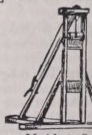
4. A machine for washing linen.
To act coyly like a maiden; -- with it as an indefinite object.
A plant of the genus Adiantum.
2. The state of being unused or uncontaminated; freshness; purity.
Maidenhead
Encyclopedia Britannica
MAIDENHEAD, a municipal borough and markettown in Berkshire, England, in the diocese of Oxford, 22∣ miles from London, 13⅛ from Reading, and 6 from Windsor. It was formerly called Maidenhythe, a wharf for timber and a wooden bridge across the Thames having existed there from very early times. In 1352 Edward III. incorporated a guild to keep the bridge in repair. In 1400 the duke of Surrey and the followers of Richard II. held the bridge against the new king, Henry IV., and at nightfall made good their retreat. In July 1647 a meeting took place at the Greyhound Inn between Charles I. and his three children. The church, dedicated to St Andrew and St Mary Magdalene, was originally founded by Margaret of France in 1270, and it was rebuilt on the same site in 1724; but in 1826 it was entirely taken down, and a new church was erected at the east end of the High Street. A church dedicated to St Luke was erected in 1867, and enlarged in 1869. The town contains a small town-hall, a large hall recently erected for concerts and lectures, schools, almhouses, and Roman Catholic, Wesleyan, and Baptist places of worship. There are numerous charities for the education and maintenance of poor persons. The principal trades are in malt, meal, and timber. A fine stone bridge across the Thames was erected at a cost of .£20,000 in 1772, connecting Berkshire with Buckingham. The scenery around Maidenhead is extremely picturesque, and several noblemen’s seats are in the neighbourhood. Population in 1871, 6173; in 1881, 8219.
9th ed. Encyclopædia Britannica, vol. 15, p. 294
[264 words — estimated reading time: 2 minutes]
[264 words — estimated reading time: 2 minutes]
2. The modest lore of maidenhood
3. Newness; freshness; uncontaminated state.
2. Newness; freshness; uncontaminated state.
Like a maid; modest.
A plant.
In a maidenlike manner.
In a maidenlike manner.
A dance; so called from a buffoon dressed like a man.
1. The lady of the May games; one of the characters in a morris dance; a May queen. Afterward, a grotesque character personated in sports and buffoonery by a man in woman's clothes.
2. A kind of dance.
A female servant.
Maidstone
Encyclopedia Britannica
MAIDSTONE, a municipal and parliamentary borough, and the county town of Kent, England, situated almost midway between London and Dover. It lies principally on the eastern bank of the river Medway, the modern part spreading over the western slopes of a picturesque valley, which is intersected and environed by orchards and hop gardens. Although antiquaries have conjectured that Maidstone was a military station of the Romans, few Roman remains have been found in the neighbourhood. The Saxon spelling of the name was Medwegestun, “Medway’s town.” The manor, valued in Domesday Book at £35, 10s., had from a very early period belonged to the see of Canterbury. Archbishop Boniface in 1260 established a hospital here for poor pilgrims, the chapel of which, with modern additions, is again used for public worship. The parish church of St Mary, which had existed from Norman times, was demolished in 1395 by Archbishop Courtenay, who erected on the site thereof the present church of All Saints; he also, at a short distance, founded a college of secular canons, the ruins of which are an interesting specimen of 14th century architecture. From the reign of John until the Reformation the archbishops had here a residence, at which Stafford and Courtenay died; but the existing building known as the palace dates chiefly from Elizabethan times. The rectory, with the manor, passed into lay hands at the Reformation; and, having been a perpetual curacy for three hundred and twenty years, the living became a vicarage in 1866. All Saints is one of the largest parish churches in the kingdom, and contains, besides many excellent monuments, the richly carved sedilia and the twenty-eight oak seats used by the collegiate priests. The parish has, since 1837, been divided into nine ecclesiastical ...districts, each with a church. The grammar school was founded in 1549, and endowed with the estates of the local Corpus Christi fraternity, then dissolved; the hall in which the guild assembled still remains. Broadcloth and linen thread, introduced by Dutch settlers, were at one time manufactured here; but brewing and papermaking have long superseded these industries. Of the barges trading on the Medway, about sixty belong to Maidstone wharfingers. The river is crossed by a stone bridge of three arches, completed in 1879. A museum, with public library attached, was opened in 1858. The endowed charities yield an annual income of £3000. Since the beginning of the 17th century the Kent assizes have generally been held at Maidstone. From Saxon times down to 1830 condemned malefactors were executed, and all the great county meetings were held, on Penenden Heath, a common situated about a mile north-east of the town, and recently enclosed by the corporation. The area of the municipal borough is 4008 acres, of the parliamentary borough 4576 acres. The population has steadily increased during the present century; in 1801 it was 8027, in 1881 29,632.
With general history Maidstone has been intimately associated. Wat Tyler broke into the prison, liberated John Ball, the rebel preacher, and committed other depredations. Several of the leading inhabitants joined Jack Cade’s rising. Sir Thomas Wyatt, who resided at Allington Castle, now an ivy-clad ruin a mile and a half north of the town, raised the standard of rebellion at Maidstone on 25th January 1554. As a punishment for their complicity with Wyatt, the burgesses were for the next five years deprived of their charter of incorporation. The rising of the Kentish royalists in 1648 collapsed at Maidstone, where, on the 1st June, Fairfax, after five hours’ obstinate fighting, captured the town at midnight. Anciently governed by a portreve, Maidstone was first incorporated by Edward VI., and since the beginning of Elizabeth’s reign it has sent two representatives to parliament. Andrew Broughton, one of its mayors, as clerk of the court which tried Charles I., read the fatal sentence to the king.
See Russell’s History of Maidstone, and Γoste , s History of the College of All Saints.
9th ed. Encyclopædia Britannica, vol. 15, p. 294
[664 words — estimated reading time: 4 minutes]
[664 words — estimated reading time: 4 minutes]
Infant Roget’s Thesaurus §129
N. infant, babe, baby, babe in arms, nurseling, suckling, yearling, weanling, papoose, bambino, kid, vagitus, child, bairn, little one, brat, chit, pickaninny, urchin, bantling, bratling, elf, youth, boy, lad, stripling, youngster, youngun, younker, callant, whipster, whippersnapper, whiffet, schoolboy, hobbledehoy, hopeful, cadet, minor, master, scion, sap, seedling, tendril, olive branch, nestling, chicken, larva, chrysalis, tadpole, whelp, cub, pullet, fry, callow, codlin, codling, foetus, calf, colt, pup, foal, kitten, lamb, lambkin, aurelia, caterpillar, cocoon, nymph, nympha, orphan, pupa, staddle, girl, lass, lassie, wench, miss, damsel, demoiselle, maid, maiden, virgin, hoyden
Servant Roget’s Thesaurus §746
N. subject, liegeman, servant, retainer, follower, henchman, servitor, domestic, menial, help, lady help, employe, attache, official, retinue, suite, cortege, staff, court, attendant, squire, usher, page, donzel, footboy, train bearer, cup bearer, waiter, lapster, butler, livery servant, lackey, footman, flunky, flunkey, valet, valet de chambre, equerry, groom, jockey, hostler, ostler, tiger, orderly, messenger, cad, gillie, herdsman, swineherd, barkeeper, bartender, bell boy, boots, boy, counterjumper, khansamah, khansaman, khitmutgar, yardman, bailiff, castellan, seneschal, chamberlain, major-domo, groom of the chambers, secretary, under secretary, assistant secretary, clerk, subsidiary, agent, subaltern, underling, understrapper, man, maid, maidservant, handmaid, confidente, lady's maid, abigail, soubrette, amah, biddy, nurse, bonne, ayah, nursemaid, nursery maid, house maid, parlor maid, waiting maid, chamber maid, kitchen maid, scullery maid, femme de chambre, femme fille, camarista, chef de cuisine, cordon bleu, cook, scullion, cinderella, potwalloper, maid of all work, servant of all work, laundress, bedmaker, journeyman, charwoman, bearer, chokra, gyp, hamal, scout, serf, vassal, slave, negro, helot, bondsman, bondswoman, bondslave, ame damnee, odalisque, ryot, adscriptus gleboe, villian, villein, beadsman, bedesman, sizar, pensioner, pensionary, client, dependant, dependent, hanger on, satellite, parasite, led captain, protege, ward, hireling, mercenary, puppet, tool, creature, badge of slavery, bonds
V. serve, wait upon, attend upon, dance attendance upon, pin oneself upon, squire, tend, hang on the sleeve of, chore
Adj. in the train of, in one's pay, in one's employ, at one's call, in bonds
Celibacy Roget’s Thesaurus §904
N. celibacy, singleness, single blessedness, # bachelorhood, bachelorship, misogamy, misogyny, virginity, pucelage, maidenhood, maidenhead, unmarried man, bachelor, coelebs, agamist, old bachelor, misogamist, misogynist, monogamist, monk, unmarried woman, spinster, maid, maiden, virgin, feme sole, old maid, bachelor girl, girl-bachelor, nun
V. live single, live alone
King James Bible KJV Bible
Berean Standard Bible BSB Bible
123 KJV and 102 BSB verses contain “Maid” — showing the first 20. Show all 172 verses (searchable)
And Sarai said unto Abram, Behold now, the LORD hath restrained me from bearing: I pray thee, go in unto my maid; it may be that I may obtain children by her. And Abram hearkened to the voice of Sarai.
So Sarai said to Abram, “Look now, the LORD has prevented me from bearing children. Please go to my maidservant; perhaps I can build a family by her.” And Abram listened to the voice of Sarai.
And God said unto Abraham, Let it not be grievous in thy sight because of the lad, and because of thy bondwoman; in all that Sarah hath said unto thee, hearken unto her voice; for in Isaac shall thy seed be called.
But God said to Abraham, “Do not be distressed about the boy and your maidservant. Listen to everything that Sarah tells you, for through Isaac your offspring will be reckoned.
Behold, I stand by the well of water; and it shall come to pass, that when the virgin cometh forth to draw water, and I say to her, Give me, I pray thee, a little water of thy pitcher to drink;
And she said, Behold my maid Bilhah, go in unto her; and she shall bear upon my knees that I may also have children by her.
Then she said, “Here is my maidservant Bilhah. Sleep with her, that she may bear children for me, so that through her I too can build a family.”
When Leah saw that she had left bearing, she took Zilpah her maid, and gave her Jacob to wife.
When Leah saw that she had stopped having children, she gave her servant Zilpah to Jacob as a wife.
And Zilpah Leah’s maid bare Jacob a son.
And Leah’s servant Zilpah bore Jacob a son.
And Zilpah Leah’s maid bare Jacob a second son.
When Leah’s servant Zilpah bore Jacob a second son,