
In the Turkish dominions, a commander or chief officer. The title is given to various chief officers, whether civil or military. It is also given to great land holders, and to the eunuchs of the Sultan's seraglio.
Word of the Day: Catachrestical
Aga
Encyclopedia Britannica
AGA, or Agha, a word, said to be of Tatar origin, signifying a dignitary or lord. Among the Turks it is applied to the chief of the janissaries, to the commanders of the artillery, cavalry, and infantry, and to the eunuchs in charge of the seraglio. It is also employed generally as a term of respect in addressing wealthy men of leisure, landowners, &c. The word is found with a somewhat similar usage in Tartary, Persia, and Algiers.
9th ed. Encyclopædia Britannica, vol. 1, p. 273
[78 words — estimated reading time: 1 minute]
[78 words — estimated reading time: 1 minute]
Agabus
Watson's Biblical & Theological Dictionary
a prophet, and as the Greeks say, one of the seventy disciples of our Saviour. He foretold that there would be a great famine over all the earth; which came to pass accordingly, under the emperor Claudius, in the fourth year of his reign, A. D. 44, Acts xi, 28. Ten years after this, as St. Paul was going to Jerusalem, and had already landed at Cæsarea, in Palestine, the same prophet, Agabus, arrived there, and coming to visit St. Paul and his company, he took this Apostle’s girdle, and binding himself hand and feet, he said, “Thus saith the Holy Ghost, So shall the Jews at Jerusalem bind the man that owneth this girdle, and shall deliver him into the hands of the Gentiles,” Acts xxi, 10. We know no other particulars of the life of Agabus. The Greeks say that he suffered martyrdom at Antioch.
Watson's Biblical & Theological Dictionary
[147 words — estimated reading time: 1 minute]
[147 words — estimated reading time: 1 minute]
Agades
Encyclopedia Britannica
AGADES, the capital of the kingdom of Aïr, or Asben, in Central Africa, situated in 17° 2' N. lat., 8° 5' E. long. The town is built on the edge of a plateau, 2500 feet above the level of the sea, and is supposed to have been founded by the Berbers to serve as a secure magazine for their extensive trade with the Songhay empire. The language of the people is a dialect of Songhay. In former times Agades was a place of great traffic, and had a population of about 50,000. Its importance may be estimated by the fact that the king of Agades paid a tribute of 150,000 ducats to the king of Songhay. Since the beginning of the 16th century the prosperity of the place has gradually declined. Extensive quarters of the town, which has a circuit of 3½ miles, are deserted and ruinous. The occupied houses number only 600 or 700, and the population does not exceed 7000. The houses, which are built of clay, are low and flat-roofed; and the only building of importance is the chief mosque, which is surmounted by a tower 95 feet high. There is little traffic in the markets; no money is used, and the usual medium of exchange is millet. The chief trade is in grain. Agades derives its main importance from its situation on the direct route from the countries to the north-east to Sokoto and other important towns in the Hansa states. The great salt caravans pass through it, as well as pilgrims on their way to Mecca. From its healthy climate and advantageous position, the place might prove to be a good station for a European agent. (See Barth’s Travels in Central Africa, vol. i.)
9th ed. Encyclopædia Britannica, vol. 1, p. 273
[295 words — estimated reading time: 2 minutes]
[295 words — estimated reading time: 2 minutes]
Agag
Watson's Biblical & Theological Dictionary
This seems to have been a common name of the princes of Amalek, one of whom was very powerful as early as the time of Moses, Num. xxiv, 7. On account of the cruelties exercised by this king and his army against the Israelites, as they returned from Egypt, a bloody and long contested battle took place between Joshua and the Amalekites, in which the former was victorious, Exod. xvii, 8–13. At the same time, God protested with an oath to destroy Amalek, verses 14–16; Deut. xxv, 17–19, A. M. 2513. About four hundred years after this, the Lord remembered the cruel treatment of his people, and his own oath; and he commanded Saul, by the mouth of Samuel, to destroy the Amalekites. Saul mustered his army, and found it two hundred thousand strong, 1 Sam. xv, 1, &c. Having entered into their country, he cut in pieces all he could meet with from Havilah to Shur. Agag their king, and the best of their cattle, were however spared, an act of disobedience on the part of Saul, probably dictated by covetousness. But Agag did not long enjoy this reprieve; for Samuel no sooner heard that he was alive, than he sent for him; and notwithstanding his insinuating address, and the vain hopes with which he flattered himself that the bitterness of death was past, he caused him to be hewed to pieces in Gilgal before the Lord, saying, “As, כאשר, _in the same identical mode as_, thy sword hath made women childless, so shall thy mother be childless among women.” This savage chieftain had hewed many prisoners to death; and, therefore, by command of the Judge of the whole earth, he was visited with the same punishment which he had inflicted upon others. AGAPÆ. See LOVE FEAST.
Watson's Biblical & Theological Dictionary
[298 words — estimated reading time: 2 minutes]
[298 words — estimated reading time: 2 minutes]
2. A second time; once more.
3. I will not again curse the ground. Genesis 8:10 .
4. It notes something further, or additional to one or more particulars.
5. For to which of the angels said he at any time, thou art my son, this day have I begotten thee? and again I will be to him a father, and he shall be to me a son? and again let all the angels of God worship him. Hebrews 1:5 .
6. All the uses of this word carry in them the ideas of return or repetition; as in these phrases; give it back again; give him as much again that is, the same quantity once more or repeated.
7. There is not, in the world again such a commerce as in London.
8. Who art thou that answerest again?
9. Bring us word again
10. AGAIN and again often; with frequent repetition.
1. In return, back; as, bring us word again.
2. Another time; once more; anew.
3. Once repeated; -- of quantity; as, as large again, half as much again.
4. In any other place.
5. On the other hand.
6. Moreover; besides; further.
Alt. of Agains
Against; also, towards (in order to meet).
1. agenst'.
2. In opposition; noting enmity or disapprobation.
3. His hand will be against every man. Genesis 16:12 .
4. I am against your pillows. Ezekiel 8:1 .
5. In opposition, noting contrariety, contradiction, or repugnance; as, a decree against law, reason or public opinion.
6. In opposition, noting competition, or different sides or parties; as, there are twenty votes in the affirmative against ten in the negative.
7. In an opposite direction; as, to ride against the wind.
8. Opposite in place; abreast; as, a ship is against the mouth of a river. In this sense it is often preceded by over.
9. Aaron lighted the lamps over against the candlesticks.
10. Numbers 8:2 .
11. In opposition, noting adversity, injury, or contrariety to wishes; as, this change of measures is against us.
12. Bearing upon; as, one leans against a wall.
13. In provision for; in preparation for.
14. Urijah made it against king Ahaz came from Damascus.
15. 2 Kings 16:7 .
16. In this sense against is a preposition, with the following part of the sentence for an object. See After , preposition def. 2.
17. In short, the sense of this word is opposition, variously modified according to its application to different objects.
1. Abreast; opposite to; facing; towards; as, against the mouth of a river; -- in this sense often preceded by over.
2. From an opposite direction so as to strike or come in contact with; in contact with; upon; as, hail beats against the roof.
3. In opposition to, whether the opposition is of sentiment or of action; on the other side; counter to; in contrariety to; hence, adverse to; as, against reason; against law; to run a race against time.
4. By of before the time that; in preparation for; so as to be ready for the time when.
To withstand.
Back again.
Lacking milk to suckle with.
Failure of the due secretion of milk after childbirth.
1. AG'ALLOCH ,
2. AGAL'LOCHUM, noun [Of oriental origin.]
3. Aloes-wood, the product of a tree growing in China, and some of the Indian isles. There are three varieties, the calambac, the common lignum aloes, and the calambour. The first variety is light and porous, and so filled with a fragrant resin, that it may be molded by the fingers; the second is denser and less resinous; and the third is the aloes-wood used by cabinet makers and inlayers.
Alt. of Agallochum
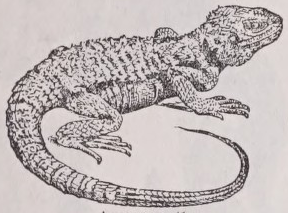
A genus of lizards, one of the few which feed upon vegetable substances; also, one of these lizards.
Agamemnon
Encyclopedia Britannica
AGAMEMNON. The stern obligations of a king and the majesty of his office, as compared with his humane desires and occasional frailty, give the keynote to the character of Agamemnon. But the kingly office, like the sceptre which was the symbol of it, had come to him from Pelops (Iliad, ii. 100) through the stained hands of Atreus and Thyestes, and had brought with it a certain fatality, by which his misfortunes, and especially the catastrophe at the close of his fife, were explained. As his title of Atrides implies, Agamemnon was a son of Atreus, his mother being Aërope. In a later account he is a son of Pleisthenes. But, apart from this difference, it is agreed that he succeeded to the sovereignty of Atreus over Argolis, Corinth, Achaia, and many islands, his seat being at Mycenae, not, as Aeschylus for political reasons asserts, at Argos. The succession had been usurped by Thyestes and Aegisthus. During the usurpation Agamemnon and his brother Menelaus visited Tyndareus, the king of Sparta, and obtained in marriage his two daughters—the former Clytaemnestra, the latter Helena: with his help Agamemnon was reinstated in his rights. Menelaus succeeded Tyndareus. The children born by Clytaemnestra were Chrysothemis, Iphigenia, Electra, and one son, Orestes. Elsewhere are mentioned also Iphianassa and Laodice; but the latter was the original name of Electra, it appears, and it has been suggested that Iphianassa stood in the same relation to Iphigenia. Agamemnon was then the most powerful prince in Greece; and to him of right, as well as naturally, his brother Menelaus turned for aid to compel the Trojans to give up his wife Helena, whom Paris had carried off. The various princes of Greece having been brought to unite in an expedition for this purpose, Agamemnon was ...chosen leader, he himself furnishing 100 ships and lending also 60 more to the Arcadians. It was not perhaps his fault that the Greeks landed by mistake on the coast of Mysia, from which, after plundering it, they took ship and were scattered in a storm; but it was owing to him (and this is the beginning of his ill-fate) that after again assembling in Aulis, whence they had set out, the fleet was storm-bound. He had slain a deer sacred to Artemis, and boasted himself a better hunter than the goddess. This, as Calchas the seer read the divine will, could only be atoned for by his offering up his daughter Iphigenia in sacrifice. Compelled by his duty to the expedition, he allowed her to be sent for, the pretext given to Clytemnestra being that she was to be married to Achilles. But when the moment of sacrifice came, the goddess substituted a stag, carried her off to the Tauri, and made her immortal. The fleet now sailed; and except the quarrel between him and Achilles at Tenedus or Lemnus, there was no incident in which Agamemnon figured particularly, until, in one of the raids on the towns round Troy, Briseis and Chryseis were brought captives, and assigned, the former to Achilles, the latter to Agamemnon,—who, having to yield up his captive to appease Apollo, claimed and took the other. Upon this Achilles withdrew from the war, and Agamemnon endeavoured at first to maintain it without him. In the face of disaster he repented, and offered reparation—sending costly presents by the hands of Phoenix, Ajax, and Ulysses. His offer rejected, he took the field himself, and did marvels of bravery, but was wounded and defeated. When Troy was finally taken and the captives distributed, he obtained Cassandra, and with her returned home; but before sailing the shade of Achilles appeared to him, foretold what would happen, and sought to restrain him. In his absence Clytemnestra had yielded to the temptations of Aegisthus, and, to cover her shame, planned with him the death of her husband. The approach of Agamemnon being announced by a spy, a feast and an affected welcome were prepared for him and his followers. At the feast they were fallen upon by hired murderers, assisted by Aegisthus and Clytemnestra, the latter herself slaying Cassandra (Odyssey, iv. 512-537; xi. 385-461). According to Aeschylus, Agamemnon was slain in his bath, his wife first throwing a piece of cloth over him to prevent resistance. For his death vengeance was taken by his son Orestes. In the legends of the Peloponnesus, Agamemnon was regarded as the highest type of a powerful monarch, and in Sparta he was worshipped under the title of Zeus Agamemnon. His tomb was pointed out among the ruins of Mycenae (Pausanias ii. 16. 5). (a. s. μ.)
9th ed. Encyclopædia Britannica, vol. 1, p. 273
[774 words — estimated reading time: 5 minutes]
[774 words — estimated reading time: 5 minutes]
Master Roget’s Thesaurus §745
N. master, padrone, lord, lord paramount, commander, commandant, captain, chief, chieftain, sirdar, sachem, sheik, head, senior, governor, ruler, dictator, leader, boss, cockarouse, sagamore, werowance, lord of the ascendant, cock of the walk, cock of the roost, gray mare, mistress, potentate, liege, liege lord, suzerain, sovereign, monarch, autocrat, despot, tyrant, oligarch, crowned head, emperor, king, anointed king, majesty, imperator, protector, president, stadholder, judge, ceasar, kaiser, czar, tsar, sultan, soldan|, grand turk, caliph, imaum, shah, padishah, sophi, mogul, great mogul, khan, lama, tycoon, mikado, tenno, inca, cazique, voivode, landamman, seyyid, abuna, cacique, czarowitz, grand seignior, prince, duke, archduke, doge, elector, seignior, marland, margrave, rajah, emir, wali, sheik nizam, nawab, empress, queen, sultana, czarina, princess, infanta, duchess, margravine, czarevna, czarita, maharani, rani, rectrix, regent, viceroy, exarch, palatine, khedive, hospodar, beglerbeg, three-tailed bashaw, pasha, bashaw, bey, beg, dey, scherif, tetrarch, satrap, mandarin, subahdar, nabob, maharajah, burgrave, laird, collector, commissioner, deputy commissioner, woon, the authorities, the powers that be, the government, staff, etat major, aga, official, man in office, person in authority, sircar, sirkar, sublime porte, marshal, field marshal, marechal, general, generalissimo, commander in chief, seraskier, hetman, lieutenant general, major general, colonel, lieutenant colonel, major, captain, centurion, skipper, lieutenant, first lieutenant, second lieutenant, sublieutenant, officer, staff officer, aide-de-camp, brigadier, brigade major, adjutant, jemidar, ensign, cornet, cadet, subaltern, noncommissioned officer, warrant officer, sergeant, sergeant major, color sergeant, corporal, corporal major, lance corporal, acting corporal, drum major, captain general, dizdar, knight marshal, naik, pendragon, mayor, mayoralty, prefect, chancellor, archon, provost, magistrate, syndic, alcalde, alcaid, burgomaster, corregidor, seneschal, alderman, councilman, committeeman, councilwoman, warden, constable, portreeve, lord mayor, officer, dewan, fonctionnaire, admiral, admiralty, rear admiral, vice admiral, port admiral, commodore, captain, commander, lieutenant, ensign, skipper, mate, master, officer of the day, od, navarch
Phr. da locum melioribus, der furst ist der erste diener seines staats, "lord of thy presence and no land beside"
King James Bible KJV Bible
Berean Standard Bible BSB Bible
2,419 KJV and 1,700 BSB verses contain “aga” — showing the first 20. Show all 2,962 verses (searchable)
And I will establish my covenant with you; neither shall all flesh be cut off any more by the waters of a flood; neither shall there any more be a flood to destroy the earth.
And I establish My covenant with you: Never again will all life be cut off by the waters of a flood; never again will there be a flood to destroy the earth.”
And I will remember my covenant, which is between me and you and every living creature of all flesh; and the waters shall no more become a flood to destroy all flesh.
I will remember My covenant between Me and you and every living creature of every kind. Never again will the waters become a flood to destroy all life.
And he divided himself against them, he and his servants, by night, and smote them, and pursued them unto Hobah, which is on the left hand of Damascus.
During the night, Abram divided his forces and routed Chedorlaomer’s army, pursuing them as far as Hobah, north of Damascus.
And he brought back all the goods, and also brought again his brother Lot, and his goods, and the women also, and the people.
He retrieved all the goods, as well as his relative Lot and his possessions, together with the women and the rest of the people.
And he will be a wild man; his hand will be against every man, and every man’s hand against him; and he shall dwell in the presence of all his brethren.
And he spake unto him yet again, and said, Peradventure there shall be forty found there. And he said, I will not do it for forty’s sake.
Once again Abraham spoke to the LORD, “Suppose forty are found there?” He answered, “On account of the forty, I will not do it.”
And they said, Stand back. And they said again, This one fellow came in to sojourn, and he will needs be a judge: now will we deal worse with thee, than with them. And they pressed sore upon the man, even Lot, and came near to break the door.
“Get out of the way!” they replied. And they declared, “This one came here as a foreigner, and he is already acting like a judge! Now we will treat you worse than them.” And they pressed in on Lot and moved in to break down the door.