
BRIG , the termination of names, signifies a bridge, or perhaps, in some cases, a town, or burg.
Word of the Day: Catachrestical
A party or division of troops, or soldiers, whether cavalry or infantry, regular or militia, commanded by a brigadier. It consists of an indeterminate number of regiments, squadrons, of battalions. A brigade of horse is a body of eight or ten squadrons; of infantry, four, five, or six battalions, or regiments.
To form into a brigade or into brigades.
1. A body of troops, whether cavalry, artillery, infantry, or mixed, consisting of two or more regiments, under the command of a brigadier general.
2. Any body of persons organized for acting or marching together under authority; as, a fire brigade.
To form into a brigade, or into brigades.
Brigade
Encyclopedia Britannica
BRIGADE, a tactical body, composed of two or more regiments of cavalry or infantry, under the command of a general officer of the lowest grade. The term brigade is also applied to from four to eight batteries of artillery working together, and to the small detachments (eight or nine men) of engineers employed in excavating saps in siege operations. Two or more brigades constitute a division, two or more divisions a corps d’armée, two or more corps d’armée an army.
9th ed. Encyclopædia Britannica, vol. 4, p. 343
[84 words — estimated reading time: 1 minute]
[84 words — estimated reading time: 1 minute]
Brigade-major
Encyclopedia Britannica
BRIGADE-MAJOR, a third-class staff officer, appointed by the brigadier to assist him in the management of his brigade.
9th ed. Encyclopædia Britannica, vol. 4, p. 343
[20 words — estimated reading time: 1 minute]
[20 words — estimated reading time: 1 minute]
The general officer who commands a brigade, whether of horse or foot, and in rank next below a major-general.
Brigadier
Encyclopedia Britannica
BRIGADIER, a general officer of the lowest grade, next in rank above a colonel, who is intrusted with the command of a brigade.
9th ed. Encyclopædia Britannica, vol. 4, p. 343
[23 words — estimated reading time: 1 minute]
[23 words — estimated reading time: 1 minute]
Brigadier general
Webster's Dictionary 1913
An officer in rank next above a colonel, and below a major general. He commands a brigade, and is sometimes called, by a shortening of his title, simple a brigadier.
1. A light-armed, irregular foot soldier.
2. A lawless fellow who lives by plunder; one of a band of robbers; especially, one of a gang living in mountain retreats; a highwayman; a freebooter.
Like a brigand or freebooter; robberlike.
1. A practical vessel.
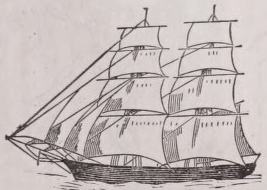
2. A two-masted, square-rigged vessel, differing from a brig in that she does not carry a square mainsail.
3. See Brigandine.
A bridge.
Briggs
Encyclopedia Britannica
BRIGGS, Henry, one of the greatest mathematicians of the 16th century, was born in 1556 at Warley Wood near Halifax, in Yorkshire. He studied at St John’s College, Cambridge, graduated in 1581, and obtained a fellowship in 1588. In 1592 he was made reader of the physical lecture founded by Dr Linacre, and in 1596 first professor of geometry in Gresham House (afterwards College), London. In his lectures at Gresham House he proposed the alteration of the scale of logarithms from the hyperbolic form which Napier had given them, to that in which unity is assumed as the logarithm of the ratio of ten to one; and soon afterwards he wrote to the inventor on the subject. In 1616 he paid a visit to Napier at Edinburgh in order to discuss the suggested change; and next year he repeated his visit for a similar purpose. During these conferences the alteration proposed,'by Briggs was agreed upon; and on his return from his second visit to Edinburgh in 1617 he accordingly published the first chiliad of his logarithms. In 1619 he was appointed Savilian professor of geometry at Oxford, and resigned his professorship of Gresham College on the 25th of July 1620. Soon after his settlement at Oxford he was incorporated master of arts in that university, where he continued a laborious and studious life, employed partly in discharging the duties of his office, and partly in the computation of logarithms and in other useful works. In 1622 he published a small tract on the North-West Passage to the South Seas, through the Continent of Virginia and Hudson's Bay; and in 1624 he printed at London his Arithmetica Logarithmica, in folio, a work containing the logarithms of thirty thousand natural numbers to fourteen places of figures besides the index. He also completed a table of logarithmic ...sines and tangents for the hundredth part of every degree to fourteen places of figures besides the index, with a table of natural sines to fifteen places, and the tangents and secants for the same to ten places; all of which were printed at Gouda in 1631 and published in 1633 under the title of Trigonometria Britannica. Briggs died on the 26th of January 1630 in the 74th year of his age. Dr Smith, in his Lives of the Gresham Professors, characterizes him as a man of great probity, a contemner of ’ riches, and contented with his own station, preferring a studious retirement to all the splendid circumstances of life.
His works are—1. Λ Table to find the Height of the Pole, the Magnetical Declination being given, London, 1602, 4to. 2. “Tables for the Improvement of Navigation,” printed in the second edition of Edward Wright’s treatise entitled Certain Errors in Navigation detected and corrected, London, 1610, 4to. 3. A Description of an Instrumental Table to find the part proportional, devised by Mr Edward Wright, London, 1616 and 1618,12mo. 4. Logarithmorum Chilias prima, London, 1617, 8vo. δ. Lucubrationes et Annotationes in opera posthuma J. Nepcri, Edin., 1619, 4to. 6. Euclidis Elc mentorum VI. libri priores, London, 1620, folio. 7. A Treatise on the North-W 'est Tassage to the South Sea, London, 1622, 4to, reprinted in Purchas’s Pilgrims, vol. iii. p. 852. 8. Arith metica Logarithmica, London, 1624, folio. 9. Tτigonomctria Britannica, Goudae, 1663, folio. 10. Two Letters to Archbishop Usher. 11. Mathematica ab Antiquis mimis cognita. Some other works, as his Commentaries on the Geometry of Peter Ramus, and Remarks on the Treatise of Longomontanus respecting the Quadrature of the Circle, have not been published.
9th ed. Encyclopædia Britannica, vol. 4, p. 343
[596 words — estimated reading time: 4 minutes]
[596 words — estimated reading time: 4 minutes]
3. Clear; transparent; as liquors.
4. Evident; clear; manifest to the mind, as light is to the eyes.
5. Resplendent with charms; as a bright beauty; the brightest fair.
6. Illuminated with science; sparkling with wit; as the brightest of men.
7. Illustrious; glorious; as the brightest period of a kingdom.
8. In popular language, ingenious; possessing an active mind.
9. Promising good or success; as bright prospects.
2. Transmitting light; clear; transparent.
3. Having qualities that render conspicuous or attractive, or that affect the mind as light does the eye; resplendent with charms; as, bright beauty.
4. Having a clear, quick intellect; intelligent.
6. Illustrious; glorious.
7. Manifest to the mind, as light is to the eyes; clear; evident; plain.
8. Of brilliant color; of lively hue or appearance.
Brightly.
To be or become overripe, as wheat, barley, or hops.
Bright's disease
Webster's Dictionary 1913
Burning with a bright flame.
Having bright eyes.
Having bright hair.
Ship Roget’s Thesaurus §273
N. ship, vessel, sail, craft, bottom, navy, marine, fleet, flotilla, shipping, man of war, transport, tender, storeship, merchant ship, merchantman, packet, liner, whaler, slaver, collier, coaster, lighter, fishing boat, pilot boat, trawler, hulk, yacht, baggala, floating hotel, floating palace, ocean greyhound, ship, bark, barque, brig, snow, hermaphrodite brig, brigantine, barkantine, schooner, topsail schooner, for and aft schooner, three masted schooner, chasse-maree, sloop, cutter, corvette, clipper, foist, yawl, dandy, ketch, smack, lugger, barge, hoy, cat, buss, sailer, sailing vessel, windjammer, steamer, steamboat, steamship, liner, ocean liner, cruisp, flap, dab, pat, thump, beat, blow, bang, slam, dash, punch, thwack, whack, hit hard, strike hard, swap, batter, dowse|, baste, pelt, patter, buffet, belabor, fetch one a blow, poke at, pip, ship of the line, destroyer, cruiser, frigate, landing ship, lst, aircraft carrier, carrier, flattop, nuclear powered carrier, submarine, submersible, atomic submarine, boat, pinnace, launch, life boat, long boat, jolly boat, bum boat, fly boat, cock boat, ferry oat, canal boat, swamp boat, ark, bully, bateau battery, broadhorn, dory, droger, drogher, dugout, durham boat, flatboat, galiot, shallop, gig, funny, skiff, dingy, scow, cockleshell, wherry, coble, punt, cog, kedge, lerret, eight oar, four oar, pair oar, randan, outrigger, float, raft, pontoon, prame, iceboat, ice canoe, ice yacht, catamaran, hydroplane, hovercraft, coracle, gondola, carvel, caravel, felucca, caique, canoe, birch bark canoe, dugout canoe, galley, galleyfoist, bilander, dogger, hooker, howker, argosy, carack, galliass, galleon, polacca, polacre, tartane, junk, lorcha, praam, proa, prahu, saick, sampan, xebec, dhow, dahabeah, nuggah, kayak, keel boat, log canoe, pirogue, quadrireme, trireme, stern-wheeler, wanigan, wangan, wharf boat, balloon, airship, aeroplane, biplane, monoplane, triplane, hydroplane, aerodrome, air balloon, pilot balloon, fire balloon, dirigible, zeppelin, aerostat, montgolfier, kite, parachute, jet plane, rocket plane, jet liner, turbojet, prop-jet, propeller plane, corporate plane, corporate jet, private plane, private aviation, airline, common carrier, fighter, bomber, fighter-bomber, escort plane, spy plane, supersonic aircraft, subsonic aircraft
King James Bible KJV Bible
Berean Standard Bible BSB Bible
64 KJV and 35 BSB verses contain “brig” — showing the first 20. Show all 83 verses (searchable)
When a man shall have in the skin of his flesh a rising, a scab, or a bright spot, and it be in the skin of his flesh like the plague of leprosy; then he shall be brought unto Aaron the priest, or unto one of his sons the priests:
“When someone has a swelling or rash or bright spot on his skin that could become an infectious skin disease, he must be brought to Aaron the priest or to one of his sons who is a priest.
If the bright spot be white in the skin of his flesh, and in sight be not deeper than the skin, and the hair thereof be not turned white; then the priest shall shut up him that hath the plague seven days:
Or if there be any flesh, in the skin whereof there is a hot burning, and the quick flesh that burneth have a white bright spot, somewhat reddish, or white;
When there is a burn on someone’s skin and the raw area of the burn becomes reddish-white or white,
But if the priest look on it, and, behold, there be no white hair in the bright spot, and it be no lower than the other skin, but be somewhat dark; then the priest shall shut him up seven days:
And if the bright spot stay in his place, and spread not in the skin, but it be somewhat dark; it is a rising of the burning, and the priest shall pronounce him clean: for it is an inflammation of the burning.
If a man also or a woman have in the skin of their flesh bright spots, even white bright spots;
When a man or a woman has white spots on the skin,
So let all thine enemies perish, O LORD: but let them that love him be as the sun when he goeth forth in his might. And the land had rest forty years.
So may all Your enemies perish, O LORD! But may those who love You shine like the sun at its brightest.” And the land had rest for forty years.
But Jonathan heard not when his father charged the people with the oath: wherefore he put forth the end of the rod that was in his hand, and dipped it in an honeycomb, and put his hand to his mouth; and his eyes were enlightened.
Jonathan, however, had not heard that his father had charged the people with the oath. So he reached out the end of the staff in his hand, dipped it into the honeycomb, and put his hand to his mouth; and his eyes brightened.
Then said Jonathan, My father hath troubled the land: see, I pray you, how mine eyes have been enlightened, because I tasted a little of this honey.
“My father has brought trouble to the land,” Jonathan replied. “Just look at how my eyes have brightened because I tasted a little of this honey.
And the pots, and the shovels, and the basons: and all these vessels, which Hiram made to king Solomon for the house of the LORD, were of bright brass.
and the pots, shovels, and sprinkling bowls. All the articles that Huram made for King Solomon in the house of the LORD were made of burnished bronze.
The pots also, and the shovels, and the fleshhooks, and all their instruments, did Huram his father make to king Solomon for the house of the LORD of bright brass.
and the pots, shovels, meat forks, and all the other articles. All these objects that Huram-abi made for King Solomon for the house of the LORD were of polished bronze.