
The common flounder.
Word of the Day: Catachrestical
Bul
Watson's Biblical & Theological Dictionary
the eighth month of the ecclesiastical year of the Jews, and the second month of the civil year. It answers to October, and consists of twenty-nine days. On the sixth day of this month the Jews fasted, because on that day Nebuchadnezzar put to death the children of Zedekiah in the presence of their unhappy father, whose eyes, after they had been witnesses of this sad spectacle, he ordered to be put out, 2 Kings xxv, 7. We find the name of this month mentioned in Scripture but once, 1 Kings vi, 38.
Watson's Biblical & Theological Dictionary
[93 words — estimated reading time: 1 minute]
[93 words — estimated reading time: 1 minute]
Bulacan
Encyclopedia Britannica
BULACAN, the chief town of a province of the same name in the Philippine island of Luzon, situated on an arm of the Pampanga delta, about 15 miles N. of Manila. With the exception of the churches and a few stone buildings, it was completely destroyed by fire in 1859, but has since been rebuilt. Population estimated at about 10,000.
9th ed. Encyclopædia Britannica, vol. 4, p. 515
[61 words — estimated reading time: 1 minute]
[61 words — estimated reading time: 1 minute]
Bulandshahr
Encyclopedia Britannica
BULANDSHAHR, a district of British India, in the Meerut division, under the jurisdiction of the Lieutenant-Governor of the N.W. Provinces; lies between 28° 3' and 28° 43' N. lat., and 77° 28' and 78° 32' E. long. It is bounded on the N. by the district of Meerut; on the E. by the districts of Moradabad and Budaun; on the S. by the district of Aligarh; and on the W. by the districts of Gúrgáon and Delhi. The district stretches out in a level plain, with a gentle slope from north-west to south-east, and a gradual but very slight elevation about midway between the Ganges and Jumna. Principal rivers, the Ganges and Jumna,—the former navigable all the year round, the latter only during the rains; minor rivers, Hindan and East Kálí Nadí, not navigable. The Ganges canal intersects the district, and serves both for irrigation and navigation. Area of Bulandshahr district, 1910 square miles, of which 1368 are under cultivation; 346 cultivable, but not actually under cultivation; and the rest uncultivable waste. Population in 1872, 936,593 souls, residing in 182,694 houses, and inhabiting 1566 villages; persons per square mile, 490; per village, 598; per house, 5∙1. Of the total population 760,602 or 81∙2 per cent. were Hindus; 175,900 or 18∙8 per cent. Mahometans; and 91 Christians and others....
Cotton, indigo, sugar, wheat, tobacco, barley, millet, and various kinds of pulse, form the principal agricultural products. The chief traffic routes are—(1), Road from Meerut to Aligarh; (2), from Delhi to Bareilly; and (3), between Delhi and Anúpshahr. The East Indian Railway passes through the district. Total revenue in 1870-71, £176,422, of which £155,675, or 88 per cent., was from land. The regular constabulary police consisted of 523 men in 1870-71, besides the rural or village watch. Bulandshahr district contained 302 schools in 1872-73, attended by 6959 pupils. The following twelve towns in the district have upwards of 5000 inhabitants :—1. Baran or Bulandshahr, the administrative headquarters, situated on the right bank of the Kálí Nadi, on the route from Bareilly to Delhi, in 28° 24' N. lat. and 77° 56' E. long.; area, 111 acres; population, 14,804; municipal income in 1872, £1075; expenditure, £1139, 2s.; rate of municipal taxation, 1s. 5⅝d. per head. 2. Dibai—area, 106 acres; population, 7782; municipal income, £346, 16s. 9d.; expenditure, £298, 7s. 4d.; rate of taxation, 10¾d. per head. 3. Amipshahr—area, 123 acres; population, 9336; municipal income, £598, 14s.; expenditure, £532, 14s.; rate of taxation, 1s. 3⅜d. per head. 4. Jahángírabad—114 acres; population, 9408; municipal income, £571, 3s. 5d.; expenditure, £456, í2s. 9d.; rate of taxation, 1s 2⅜d. 5. Shikárpur—area, 115
acres; population, 11,150; municipal income, £435, 19s. 6d.; expenditure, £408, 11s. 9d.; rate of taxation, 9⅜d. per head. 6. Dankaur—area, 251 acres; population, 5423; municipal income, £189, 2s. 4d.; expenditure, £163, 9s. 1d.; rate of taxation, 8⅜d. per head. 7. Jhajhar—area, 50 acres; population, 5632; municipal income, £241, 15s. 5d.; expenditure, £199, 2s. 9d.; rate of taxation, 10⅜d. per head. 8. Jewar—area, 78 acres; population, 7399; municipal income, £282, 14s. 4d.; expenditure, £233,17s. 1d.; rate of taxation, 9⅛d. per. head. 9. Siyána—area, 65 acres; population, 6268; municipal income, £294, 14s. 5d.; expenditure, £251, 9s. 4d.; rate of taxation, 11¼d. 10. Gulaothí—area, 44 acres; population, 5608; municipal income, £239, 0s. 8d.; expenditure, £223, 2s. 7d.; rate of taxation, 10¼d. per head. 11. Khúrja—area, 206 acres; population, 26,858; muncipal income, £2301, 14s.; expenditure, £3028, 10s.; rate of taxation, 1s. 8⅝d. per head. 12. Sikar abad —area, 199 acres; population, 18,349; municipal income, £988; expenditure, £539, 10s.; rate of taxation, 1s. 0¾d. per head. The climate of the district is liable to extremes, being very cold in the winter and excessively hot in the summer.
Towards the end of the last century, the district passed into the hands of Perron, a French common sailor, who had won his way up to the rank of a general in the Marhattá. service. Its annexation formed one of the leading points in the Marquis Wellesley’s policy, and it was ceded to us by the Scindia treaty of 1803. Bulandshahr enjoyed a bad conspicuousness in the mutiny of 1857, when the Gujar peasantry plundered the towns.
9th ed. Encyclopædia Britannica, vol. 4, p. 515
[750 words — estimated reading time: 5 minutes]
[750 words — estimated reading time: 5 minutes]
An East Indian insectivorous mammal (Gymnura Rafflesii), somewhat like a rat in appearance, but allied to the hedgehog.
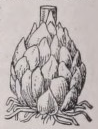
A round body, applied to many objects. But in botany, it is appropriately a bud formed under ground, upon or near the roots of certain herbaceous plants, which are hence called bulbous plants, as the tulip, onion and lily. The bulb under ground is what the bud is upon the stem or branches, a hybernacle or winter receptacle of a future plant, containing the plant in embryo, covered with a bark or rind, generally consisting of scales placed over each other, to defend the tender rudiments of the plant from cold and other external injuries. A bulb is scaly in the lily, solid in the tulip, coated in the onion, and jointed in the tuberous moschatel.
To bulb out is to project or be protuberant. [Little used.]
1. A spheroidal body growing from a plant either above or below the ground (usually below), which is strictly a bud, consisting of a cluster of partially developed leaves, and producing, as it grows, a stem above, and roots below, as in the onion, tulip, etc. It differs from a corm in not being solid.
2. A name given to some parts that resemble in shape certain bulbous roots; as, the bulb of the aorta.
3. An expansion or protuberance on a stem or tube, as the bulb of a thermometer, which may be of any form, as spherical, cylindrical, curved, etc.
To take the shape of a bulb; to swell.
Bulbous. [I believe, not used.]
Round headed.
Producing bulbs; as bulbiferous stems.
Producing bulbs.
A corm.
2. Containing a knob, or protuberant part; swelling out; presenting rounded elevations.
Having or containing bulbs, or a bulb; growing from bulbs; bulblike in shape or structure.
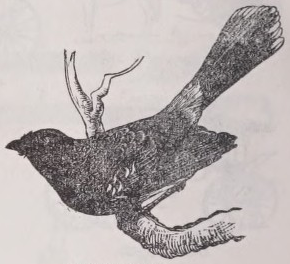
The Persian nightingale (Pycnonotus jocosus). The name is also applied to several other Asiatic singing birds, of the family Timaliidae. The green bulbuls belong to the Chloropsis and allied genera.
A little bull.
Bulgaria
Encyclopedia Britannica
BULGARIA, otherwise known as the vilayet Tuna or province of the Danube (though the two do not absolutely coincide), is a political division of European Turkey, which stretches along the right bank of the Danube from the influx of the Timok to its mouth, and is bounded on the south by the main chain of the Balkan, which separates it from Rumelia. On the east it is washed by the Black Sea, and on the west is conterminous with Servia. Its area is estimated at 32,932 square miles. It may be roughly described as a great table-land, sloping with more or less regularity towards the river, having its surface broken with numerous offshoots and underfalls of the southern mountains, and furrowed by the channels of the many streams to which those heights give rise. By far the larger proportion of the area belongs to the basin of the Danube, which in this part of its course receives from the right the Jibritza, the Ogust, the Shit, the Isker, the Vid, the Osma, the Yantra, the Lorn, and the Kosliashilar. A few streams (mostly small) find their way directly to the Black Sea, the only one of importance being the Kamtchyk, which drains the eastern extremity of the Balkan. In summer many of the smaller streams are almost dried up; but before harvest is fairly over, the wet season frequently sets in, and in spring again there is an abundant rainfall. Throughout the most of the province the soil is excellent, and if it were properly cultivated would yield the richest crops. As it is, the inhabitants are able not only to supply their own wants, but to furnish a considerable export of agricultural produce. The cereal most abundantly grown is wheat, but Indian corn is also pretty common with the Mussulman farmers. Little hay is made, and turnips are quite unknown. Potatoes are only ...cultivated by the Tatar settlers in the Dobrudsha. The peach, the apricot, the grape, and many other fruits come to great perfection; and wine is manufactured in considerable quantities, but in a very careless and rude manner. The buffalo is the animal chiefly used in agricultural labour, though horses are sufficiently common. Cows, pigs, and goats are also kept, and sheep-farming is largely carried on in many parts, but the character of the various stocks is very poor. The mineral wealth of the province is totally neglected, and its rich supplies of timber are often heedlessly wasted. Roads can hardly be said to exist; for though several have been constructed by enterprizing pashas, they have soon been allowed to fall into total disrepair. A single railway line stretches from Kustendji to Chernavoda on the Danube A considerable amount of traffic, however, is carried on by the river, and the export trade on the Black Sea is of growing importance. The province is politically divided into the sandjaks of Rustchuk 1 Nissa, Widdin, Tirnova, Sofia, Varna, and Tulcha. Its principal towns are Widdin, Nikopoli, Sistova, Rustchuk, Rassova, and Hirsovä, along the Danube; Kustendji, Baltshik, and Varna on the coast; and Babadagh, Basarjyk, Shumna, Tirnova, Lovatz, and Vratza. The population, which amounts to from two to two and a half millions, is of various elements, and is estimated as follows :— [table]
The population along the coast is of a very mingled description, the genuine Bulgarian looking down on the Gagaous, as he calls the mongrel race, with no small contempt. The Tatars are emigrants from the Crimea, who were permitted to leave the Russian empire after the last war. They are industrious and prosperous, but the Circassians, who have fled from the Caucasus at the advance of Russia, are for the most part very poor. The Turks, Tatars, Albanians, and Circassians are Mahometans; the Roumanians, the Armenians, and most of the Russians belong to the Greek Church; and the Gypsies are part Mahometan, part Christian, and part Pagan.
The Bulgarians were originally a people of Ugrian or Finnish extraction,—according to Professor Rosier, a Samoyede race. They appear for the first time in history about 120 b.c., when a band, under the leadership of a chieftain called Vound, took refuge in Armenia and settled on the banks of the Araxes. They are next mentioned by Bishop Eunodius as marching towards the left bank of the Danube, and in the following century they became known to the Byzantine empire as a hostile power. About 660 they seem to have broken up into several divisions, of which the most important crossed the Danube under Asparuch (third son of Kubrat, who had delivered them from the domination of the Avars), settled in Moesia, subjugated the Slavonic population, and extorted tribute even from the Greek emperor. The kingdom thus founded gradually extended northwards to the country of the Theiss, and south over a large part of the peninsula. Its most prosperous period rvas the reign of Simeon (893-927), who not only made himself formidable to the Greeks as a warrior, but also took an interest in the internal progress of his country, securing the establishment of Christianity, which had been introduced by Boris or Bogoris about 862, and bestowing his patronage on the early efforts of native literature. After his death decay began; the Russians and Petchenegs invaded the country, and the Byzantine emperors took no rest till the Bulgarians, sadly diminished in numbers, acknowledged the supremacy of Basilius in 1019. More than a century and a half later, two brothers, Peter and Asan or Yusan, headed a successful insurrection, and founded what is known as the Bulgaro-Wallachian kingdom of the Asanides, which, after maintaining itself against the Byzantines and the Hungarians, and even becoming master of Macedonia and Thrace, at last fell under the Tatar yoke, and was finally subjugated to Turkey by the fatal battle of Kossova.
The Bulgarians retain but little trace of their Finnish origin; that they were recognized as belonging to that race is shown by the name Unnogonduri, applied to them by the Byzantines. They still have high cheek bones; their hair is light and thin; their eyelids do not open wide; and the general form of the face is frequently oval. Of their condition in heathen times little is known, though a few important deductions, such as that they had slaves, can be drawn from the questions presented by them to the Pope in 866. (See Acta Conciliorum, v.) They were so far Slavonicized by the 9th century that the church service was held in Slavonic. At present, though their language is still fundamentally Slavonic, and is usually placed between the Russian and the Servian, yet it is largely mingled with Turkish and Persian, and has even a considerable element of Italian and Greek. The Turkish influence not only appears in the vocabulary, but it is no uncommon thing, especially in the more pretentious forms of speech, for Slavonic verbs to be conjugated in the Turkish mode. A grammar was published in 1852 by A. and D. Kyriak Canckof, and Miklosch has devoted himself to the study of the dialects. Of early literary remains there is an almost total lack; but a number of popular songs that seem to have been handed down, perhaps from heathen times, have been collected. (See Dozon’s Les Chants Populaires Bulgares, Paris, 1874.) These songs have little or no poetic merit, but are full of wild cosmogonic myths. The modem literature is written in a dialect which is hardly understood by the mass of the people, and its existence is largely due to foreign influence. The alphabet in use is a compound of letters from the secular and ecclesiastical alphabets of Russia. Though nominally members of the Greek Church, the Bulgarians are in many respects as pagan as they were centuries ago, and their superstitions are almost countless. The clergy, appointed by the heads of the church at Constantinople, are deplorably ignorant, and frequently know as little as their flocks of the meaning of the prayers which they read in Greek. Their arbitrary and oppressive dealings excited a strong movement of revolt about 1860, and the bishops were expelled from many of the towns. A junction λvith the Roman Catholics, to whom the national church of Bulgaria has frequently shown a leaning, was proposed by one party, which soon found numerous supporters; but the agitation will probably end in the establishment of an independent Bulgarian hierarchy.
No inconsiderable number of Bulgarians are to be found beyond the province that bears their name. They form a more or less important element in the whole region from the Danube to the Aegean, and from the Black Sea to Eastern Albania. Gochlert reckons that there are 4,000,000 in the Turkish empire, and Professor Szabo makes their number in Servia 100,000. As early as the 14th century emigration took place to the Banat, where the Bulgarians number upwards of 23,000; and in Transylvania there is a colony which retains its dialect. (See Denkschriften d. Wien. Akad., Phil.- hist. Cl., 1856.) Much more important are the Bulgarian settlements in Bessarabia, which in 1862 numbered 70,000 inhabitants. These began to be formed as early as 1787, and received strong accessions from 1801 to 1812. The chief town which owed its existence to this transmigration is Bolgrad, on Lake Yalpuk, which passed with a portion of Bessarabia to Moldavia in 1851. About 1865 it had 9000 inhabitants.
For further information the reader may consult Jochmus’s “Journey into the Balkan in 1847" (Jour. R. Geog Soc„ 1854); Frähn, in Mem. de ΓAcad. de St I ’ cltrsbourg, série vi. tom. i.; Lejean, Ethnographie de la Turquie <1 Europe, 1861; St Clair and Brophy, Residence in Bulgaria, 1869; Tozer, The Highlands of Turkey, 1869; Sax,“Skizze von Bulgarien,” ∖n Mittheil, der K. K. Geogr. Gesellsch.in Wien, 1869; Kanitz, Serbien, Hist.-ethnogr. Reisestudien, 1868, and Donau, Bulgarien, und der Balkan, 1875; Bradaska, “Die Slaven in der Türkei” (Petermann's Mittheil., 1869, xiL); R. Rösler, Rumänische Studien, 1871.
9th ed. Encyclopædia Britannica, vol. 4, p. 516
[1,675 words — estimated reading time: 10 minutes]
[1,675 words — estimated reading time: 10 minutes]
Bulgarin
Encyclopedia Britannica
BULGARIN, Thaddäus (1789-1859), a distinguished Russian writer, was born in Lithuania. His father was an officer under Kosciusko in the last disastrous Polish campaign. By some influence of friends Thaddäus was entered at the college for military cadets at St Petersburg, and afterwards received a commission in the Russian army, with which he served against Napoleon and in Finland. He then left the Russian army, joined the Poles under Napoleon, and took part in nearly all the great campaigns in Spain, Germany, and Russia. After the fall of the emperor he took up his residence in Warsaw, and devoted himself to literature, writing in his native Polish language. In 1819 he removed to St Petersburg, learned Russian, and became Russian in every way. He edited, alone or in conjunction with Gretch, the Northern Archives, the Northern Bee, and the Russian Thalia. In 1829 his first novel, Ivan Vuizhagen, gained great popularity. A continuation was afterwards published under the title Peter Ivanovitch Vuizhagen. His other works comprise two novels, Demetrius and Mazeppa, an Account of Russia (Russia in an historical, statistical, geographical, and literary point of view), and his Reminiscences. An English translation of his best novel, Ivan Vuizhagen, was published in 1831.
9th ed. Encyclopædia Britannica, vol. 4, p. 517
[205 words — estimated reading time: 2 minutes]
[205 words — estimated reading time: 2 minutes]
Bulgarus
Encyclopedia Britannica
BULGARUS, the most celebrated of the famous “Four Doctors” of the law school of Bologna. He is sometimes erroneously called Bulgarinus, which was properly the name of a jurist of the 15th century. Bulgarus was a native of Bologna, and was regarded as the Chrysostom of the Gloss-writers, being frequently designated by the title of the “Golden Mouth” (os aureum). The time of his birth is not known. A popular tradition represents him to have been a pupil of Irnerius, but unfortunately nothing is known of Irnerius after 1118 a.d. Bulgarus, on the other hand, died in 1166 a.d., having attained a great age, and having become childish before his death. There is thus no inseparable difficulty in point of time in accepting this tradition as far as regards Bulgarus, although Savigny considers the general tradition to be inadmissible which represents all the Four Doctors to have been pupils of Irnerius. Martinus Gosia was the next most celebrated of the Four Doctors. He and Bulgarus were the chiefs of two opposite schools at Bologna, corresponding in many respects to the Procubans and Sabinians of Imperial Rome, Martinus being at the head of a school which accommodated the law to what his opponents styled the equity of “the purse” {cequitas bursalis), whilst Bulgarus adhered more closely to the letter of the law. The school of Bulgarus ultimately prevailed, and it numbered amongst its adherents Joannes Bassianus, Azo, and Accursius, each of whom in his turn exercised a commanding influence over the course of legal studies at Bologna. Bulgarus took the leading part amongst the Four Doctors at the diet of Roncaglia in 1158, and was one of the most trusted advisers of the Emperor Frederick I. His most celebrated work is his commentary De Regulis Juris, which was at one ...time printed amongst the writings of Placentinus, but has been properly reassigned to its true author by Cujacius, upon the internal evidence contained in the additions annexed to it, which are undoubtedly from the pen of Placentinus. Saviguy considers this Commentary, which is the earliest extant work of its kind emanating from the school of the Gloss-writers, to be a model specimen of the excellence of the method introduced by Irnerius, and a striking example of the brilliant results which had been obtained in a short space of time by a ' constant and exclusive study of the sources of law.
9th ed. Encyclopædia Britannica, vol. 4, p. 517
[403 words — estimated reading time: 3 minutes]
[403 words — estimated reading time: 3 minutes]
No thesaurus entries found for "bul".
King James Bible KJV Bible
Berean Standard Bible BSB Bible
164 KJV and 149 BSB verses contain “bul” — showing the first 20. Show all 177 verses (searchable)
And he sent young men of the children of Israel, which offered burnt offerings, and sacrificed peace offerings of oxen unto the LORD.
Then he sent out some young men of Israel, and they offered burnt offerings and sacrificed young bulls as peace offerings to the LORD.
And this is the thing that thou shalt do unto them to hallow them, to minister unto me in the priest’s office: Take one young bullock, and two rams without blemish,
“Now this is what you are to do to consecrate Aaron and his sons to serve Me as priests: Take a young bull and two rams without blemish,
And thou shalt kill the bullock before the LORD, by the door of the tabernacle of the congregation.
And you shall slaughter the bull before the LORD at the entrance to the Tent of Meeting.
And thou shalt take of the blood of the bullock, and put it upon the horns of the altar with thy finger, and pour all the blood beside the bottom of the altar.
Take some of the blood of the bull and put it on the horns of the altar with your finger; then pour out the rest of the blood at the base of the altar.
But the flesh of the bullock, and his skin, and his dung, shalt thou burn with fire without the camp: it is a sin offering.
But burn the flesh of the bull and its hide and dung outside the camp; it is a sin offering.
And thou shalt offer every day a bullock for a sin offering for atonement: and thou shalt cleanse the altar, when thou hast made an atonement for it, and thou shalt anoint it, to sanctify it.
Sacrifice a bull as a sin offering each day for atonement. Purify the altar by making atonement for it, and anoint it to consecrate it.
And he shall kill the bullock before the LORD: and the priests, Aaron’s sons, shall bring the blood, and sprinkle the blood round about upon the altar that is by the door of the tabernacle of the congregation.
And he shall slaughter the young bull before the LORD, and Aaron’s sons the priests are to present the blood and sprinkle it on all sides of the altar at the entrance to the Tent of Meeting.
And he shall bring the bullock unto the door of the tabernacle of the congregation before the LORD; and shall lay his hand upon the bullock’s head, and kill the bullock before the LORD.
He must bring the bull to the entrance to the Tent of Meeting before the LORD, lay his hand on the bull’s head, and slaughter it before the LORD.
And the priest shall put some of the blood upon the horns of the altar of sweet incense before the LORD, which is in the tabernacle of the congregation: and shall pour all the blood of the bullock at the bottom of the altar of the burnt offering, which is at the door of the tabernacle of the congregation.
The priest must then put some of the blood on the horns of the altar of fragrant incense that is before the LORD in the Tent of Meeting. And he is to pour out the rest of the bull’s blood at the base of the altar of burnt offering at the entrance to the Tent of Meeting.
As it was taken off from the bullock of the sacrifice of peace offerings: and the priest shall burn them upon the altar of the burnt offering.
just as the fat is removed from the ox of the peace offering. Then the priest shall burn them on the altar of burnt offering.
Even the whole bullock shall he carry forth without the camp unto a clean place, where the ashes are poured out, and burn him on the wood with fire: where the ashes are poured out shall he be burnt.
all the rest of the bull—he must take outside the camp to a ceremonially clean place where the ashes are poured out, and there he must burn it on a wood fire on the ash heap.
When the sin, which they have sinned against it, is known, then the congregation shall offer a young bullock for the sin, and bring him before the tabernacle of the congregation.
when they become aware of the sin they have committed, then the assembly must bring a young bull as a sin offering and present it before the Tent of Meeting.