
Split pulse, esp. of Cajanus Indicus.
Word of the Day: Catachrestical
Dal segno
Webster's Dictionary 1913
Dalberg
Encyclopedia Britannica
DALBERG, Charles Theodor Anton Maria, Prince oe (1744-1817), was the son of a prince of Dalberg who was one of the chief councillors of the elector of Mainz. Having attended the universities of Gottingen and Heidelberg, he devoted himself to the study of canon law, and entered the church. In 1772 he was appointed counsellor and governor of Erfurt by the elector of Mainz, the duties of which position he fulfilled in the most exemplary manner, displaying the highest conscientiousness, and doing all that he could to promote the interests of his people. After other advancements, he became in 1802 archbishop and elector of Mainz. Being obliged by the terms of the peace of Luneville to give up Worms and Constance, he received Ratisbon, Aschaffenburg, and Wetzlar. In 1804 he visited Paris in order to discuss with Pius VII. the affairs of the Catholic Church of Germany. The result was that he gave way to the wishes of Napoleon, and thereby considerably diminished his popularity at home. The emperor did not fail to reward him; and, on the formation of the Confederation of the Rhine, though he was forced to resign his post as archchancellor of the emperor, he received more than compensating dignities. These, however, on the fall of Napoleon, he was forced to resign; and he died, holding no other office than that of archbishop of Ratisbon (10th February 1817). The friend of Goethe, Schiller, and Wieland, Dalberg was himself a scholar and author.
He produced several works on art and philosophy, including Grundsdtze der AEsthetik, Betrachtung uber das Universum, Von dem Bewusztsein als allgemeinem Grunde der Weltweisheit, and two works on the social influence of art. See Kramer, Karl Theodor von Dalberg (Leip. 1821).
9th ed. Encyclopædia Britannica, vol. 6, p. 774
[288 words — estimated reading time: 2 minutes]
[288 words — estimated reading time: 2 minutes]
1. A low place between hills; a vale or valley.
One living in a dale; -- a term applied particularly to the inhabitants of the valleys in the north of England, Norway, etc.
Dalgarno
Encyclopedia Britannica
DALGARNO, George (c. 1626-1687), an ingenious but now almost forgotten writer, born at Old Aberdeen about 1626. He appears to have studied at Marischal College; and in 1657 he went to Oxford, where, according to Wood, “he taught a private grammar-school with good success for about thirty years,” and where he died on August 28, 1687. In his work entitled Didascalocophus, or the Deaf and Dumb Man's Tutor, printed at Oxford in 1680, he hag the merit of anticipating some of the most useful modern discoveries as to the education of the deaf and dumb, including the hand-alphabet. “In prosecution of his general idea,” says Dugald Stewart in his “Account of a Boy Born Blind and Deaf” (Trans, of Royal Soc. of Edinb. vol. vii.) “he has treated, in one short chapter, of a Deaf Man's Dictionary, and, in another, of a Grammar for Deaf Persons, both of them containing a variety of precious hints, from which useful practical lights might be derived by all who have any concern in the tuition of children during the first stage of their education.” Twenty years before the publication of his Didascalocophus, Dalgarno had given to the world a very ingenious piece entitled Ars Signorum, from which, says Mr Stewart, it appears indisputably that he was theprecursor of Bishop Wilkinsin his speculations concerning “a real character and a philosophical language.” It is alleged that, although Wilkins does not refer to Dalgarno, it was from him that he took the hint of his celebrated work. Leibnitz on various occasions alluded to the Ars Signorum in commendatory terms. The works of Dalgarno, which had become exceedingly rare, have been reprinted by the Maitland Club.
9th ed. Encyclopædia Britannica, vol. 6, p. 776
[284 words — estimated reading time: 2 minutes]
[284 words — estimated reading time: 2 minutes]
Dalhousie
Encyclopedia Britannica
DALHOUSIE, James Andrew Broun-Ramsay, Marquis of (1812-1860), in the peerage of the United Kingdom, the great administrator who was the last of the historic governors-general under the East India Company, and may be ranked with his two most distinguished predecessors, -Warren Hastings and the Marquis Wellesley. The family was founded by Sir John Ramsay, who rescued James VI. in the Gowrie outrage; but there is mention in 1140 of Simon de Ramsay as witness to the grant of Livingston Church in West Lothian; and Sir Alexander Ramsay, whom David II. made sheriff of Teviotdale, was starved to death by the Douglas. The grateful King James made Sir John Lord Ramsay of Barns and Viscount Haddington, and his son obtained a change of the title to Baron Ramsay of Dalhousie. His son was created earl of Dalhousie. The ninth earl was a distinguished Waterloo officer, held high command in Canada, was commander-in-chief in British India previous to 1832, and was created a peer of the United Kingdom as Baron Dalhousie of Dalhousie. He married Miss Broun, the heiress of Coalstoun near Haddington, a woman of remarkable ability and force of character, which she transmitted to her distinguished son, who closely resembled her in features also. He was their third son, but the early death of his brothers, followed by that of their father, made him the tenth earl while yet a youth. For his long and brilliant services in India he received the thanks of Parliament, and the Crown made him marquis, a dignity that passed away with him, his only issue being two daughters, the Lady Susan, married to the Honourable R. Bourke, M.P., brother of the sixth earl of Mayo, and the Lady Edith, first wife of Sir James Fergusson....
Born in 1812, the boy was educated at Harrow, and entered at Christ Church, Oxford, where he gave bright promise of his future career. The two most remarkable of his fellow-students were Lord Canning and Lord Elgin, who both succeeded their college rival in the viceroy’s seat, and more than once in their public career alluded to the friendship that had united the three. When Lord Ramsay, he attempted, as a follower of Sir Robert Peel, to snatch the representation of Edinburgh from Sir John (afterwards Lord Chancellor) Campbell, and James Abercromby, afterwards Speaker and Lord Dunfermline. He was afterwards elected for the county of Haddington, which he represented for a short time till called to the House of Lords on his father’s death. The duke of Wellington was soon attracted by the industry and ability of the young peer, in whom, moreover, he felt an interest for his father’s sake. When the Whigs went out of office under Lord Melbourne, Sir Robert Peel came into power with three colleagues who were successively to be governor-general,—Lord Ellenborough as president of the Board of Control, Sir H. Hardinge as secretary at war, and Lord Dalhousie as vice-president of the Board of Trade under Mr Gladstone, and in 1844 as president. It was in the Board of Trade that he sowed the seeds of that disease which carried him off in the prime of life. The time was that of the corn-law struggle and, still more to him, of the railway mania. Night and day the president had to work. In 1845he organized that railway department of the Board of Trade, through which in one year he passed, after detailed personal study, .332 projects, involving a capital of £271,000,000, besides many foreign schemes which appealed to the English money-market. At the last hour of November for lodging applications no fewer than 600 schemes were deposited on his table. To him, more than any other man, Great Britain owes its railway system, and if the experienced warning of the over-worked president had been heeded, the disasters of 1847-48 would never have taken place. At the same time the duty of leading the com-law debates in the House of Lords fell upon the wearied official. The defeat of Sir Robert Peel at the end of June 1846 gave him no respite, for Lord John Russell asked him to remain in office, and again the Whig premier offered the young Conservative peer the office of governorgeneral of India, from which Lord Hardinge was returning alter the first Sikh war.
Never, since Clive, had any man so young been called to bear such vast responsibilities, and yet, like Clive, he nearly doubled the empire, and adorned his rule with the blessings of peaceful and material reform. Lord Dalhousie was only thirty-five years of age when, on the 12 th January 1848, he assumed at Calcutta that high office which he held for upwards of eight years, or almost as long as the period during which Lord Hastings had been led by troublous times to fill it. Had he remained a cabinet minister, it is not difficult to predict what he might have become in the annals of British statesmanship, but he had even higher work to do in India. Lord Hardinge, guided throughout his policy by the good and great Henry Lawrence, had left the Punjab nominally at peace under a Sikh regency, but really seething with discontent and confusion. To use Lord Dalhousie’s own words in reviewing the situation, the spirit of the whole Sikh people was influenced by the bitterest animosity against us, chief after chief deserted our cause, nearly the whole army and council of regency were openly arrayed against us, the Sikhs courted an Afghan alliance, and the question was no longer one of policy but of national safety. Moolraj, at Mooltan had, in April, murdered the British officers Vans Agnew and Anderson; Herbert Edwardes had in June shown how disaster could be retrieved; by September General Whish was before Mooltan with an avenging force; and on the 5th October the governor-general announced, at a military ball at Barrackpore, a general war against the Sikh Sirdars. Proceeding to the spot like another Clive he conquered, annexed, and reorganized the Punjab in six months. The crowning victory of Gujerat, on the 21st February 1849, followed by the fall of Mooltan, avenged the drawn battle of Chillianwalla, and on the 29th March the Punjab became a British province. Borrowing from administrative experiments on a small scale in Tenasserim and Sind, the governor-general created that non-regulation system, under which military officers and civilians combined have ever since brought up to the ordinary level of our civilized administration the warlike peoples of Northern and the more savage tribes of Central and Eastern India. In the brothers Henry and John Lawrence, assisted by Sir Robert Montgomery and Sir Donald Macleod, Lord Dalhousie found men to work out his plans with such success as to convert the Punjab into the base from which, in 1857, Delhi was taken and the empire was reconquered. He returned to the capital by Bombay, the Straits Settlements, and Burmah, surveying the coast-line of the maguificent dependency which he had thus carried up to its natural boundaries, to the Himalayas from the sea. The experience he thus gained was soon to be used. The king of Upper Burmah violated the treaty of Yandaboo by a gross outrage on certain British traders in the port of Rangoon, and refused atonement. Quoting Lord Wellesley’s maxim, that an insult offered to the British flag at the mouth of the Ganges would be resented as promptly and as fully as at the mouth of the Thames, after every peaceful effort had failed, the Government of India fought the second Burmese war; and, as reparation was still scorned, took possession of the kingdom of Pegu, thus uniting the territories of Arakan and Tenasserim taken in the first war into what is now the compact and prosperous coast province of British Burmah.
From that time, in 1852, the completed empire has been at peace, save for the Mutiny and little frontier campaigns. Its consolidation now became the great work of the young and triumphant governor-general, who showed on as great a scale as history can present, in a few years, that peace has greater victories than those of war. While in the minute review of his 8| years’ administration Lord Dalhousie devotes 177 paragraphs to these, he records in only 3 the conquest of territories and populations as large as those of France. With the foresight and caution that marked all his statesmanship he thus closes the narrative of his wars “Experience—frequent, hard, and recent experience—has taught us that war from without or rebellion from within may at any time be raised against us, in quarters where they were the least to be expected, and by the most feeble and unlikely instruments.” The rising of the tribe of Sonthals, a non-Aryan race of simple and now half-Christianized savages in the Rajmahal hills, due to the oppression of Hindu usurers and landlords, illustrated this. But the mutiny, to which we shall afterwards allude, has still more light thrown on it by this warning.
Lord Dalhousie made additions to those portions of the empire under direct British administration, however, not only by conquest but by annexing native states which lapsed to the suzerain power on the failure of natural and even adopted heirs, or, as in the case of Oudh, for outrageous and hopeless misrule. No part of his policy has been more misrepresented than this. His own narrative of it, written as simple history and long before it was attacked, bears the stamp of the unflinching honesty which was the basis of his nature,—the sympathy with the people and horror of oppression which influenced all his career, and the strict regard for justice which made his Government the strongest India ever had, before or since. He has been charged with the lack of imagination; but he had that as Cromwell had it, where he cared for the many rather than for the self-seeking and self-pleasing few. The question i.? twofold—Is it the duty or the right of the paramount power (1) to escheat states the chiefs of which persist in anarchy that not only ruins their own people but threatens their neighbours, or (2) to allow states to lapse when the chiefs leave no natural heirs and have refused to adopt a successor 1 The first was illustrated in the case of the kingdom of Oudh, which for the crimes of its kings, committed in spite of all warnings, was ordered to be annexed by the British Cabinet contrary to the recommendation of Lord Dalhousie, who would have again tried the policy that failed after the first Sikh war. The second is the real point at issue in his case. Now the despatch of the 30th April 1860, in which Lord Canning urges the concession to the 153 Hindu and Mahometan princes who actually govern their estates of a distinct law of adoption and feudatory right, is based on the fact that no such law or certain usage was in existence before. Lord Dalhousie acted for the good of the natives and for the interests of the British Government, solely as their trustee, when he annexed states according to what has been called the doc trine of lapse. His regard for purely historic claims which could not affect the happiness of the people for evil is shown by his refusal to carry out the consent of the court of directors to extinguish the dynasty of Timur on the death of the king of Delhi. He rather perpetuated the titular sovereignty by recognizing the grandson of the king as heir-apparent, on the two conditions that he should resido at the Kootub palace, outside Delhi, and “should as king receive the governor-general at all times on terms of perfect equality.” To the two kingdoms of the Punjab and Pegu, won by conquest, and to the kingdom of Oudh, annexed for misrule worse than that of the Ottoman Turks, Lord Dalhousie hence added the fourth of Nagpore, “in the absence of all legal heirs,” refusing to bestow the territory in free gift upon a stranger. So also he added the province of Berar, ceded by the Nizam for the permanent maintenance of the Hyderabad contingent. In Nagpore and Berar, one day to be united to Bombay, he gave Lancashire the finest cotton field under the British Crown. So also the principality of Sattara and the chiefship of Jhansi reverted to the Indian Government. Writing in 1856 he showed that these four kingdoms and three provinces had raised the revenue of India from 26 to 30 millions sterling a yeai. In the twenty years since, no revenue-paying addition has been made to the empire as Dalhousie left it, for he reached the boundaries fixed by nature. But the income of the 12 provinces of British India, with the 153 native states, which cost the rest of India far more than the small tribute they pay and spend nothing on the people, has risen to 52 millions sterling a year. It has doubled since Lord Dalhousie landed at Calcutta. But, while caring for the people, he was not indifferent to the welfare and good-will of their chiefs. Himself a sincere Christian, while singularly reticent as to his personal faith, and strictly neutral as the ruler of millions of alien and opposed creeds, he thus wrote of the adoption of Christianity by Maharaja Dhuleep Singh, the last of the rulers of the Punjab :—“The act was voluntary on the part of the boy, and, under the guidance of God’s hands, was the result of his own uninfluenced convictions. It is gratifying to be able to state that his life hitherto has been strictly consistent with the injunctions of the faith he professes.” So he records the baptism of the Queen’s ward, the princess of Coorg, at the desire of her father the ex-raja. And in his time there was passed the Toleration Act,which, completing the good work begun by Lord William Bentinck, removed from the statute book the last traces of the persecution of converts to Christianity, who had suffered the loss of all their goods as a penal consequence.
The catalogue of Lord Dalhcusie’s reforms is as interesting as it is long, but we must be content with a mere statement of those which remind us of Clive’s work in his third visit to India. The Civil Service was opened to the competition of all the natural-born subjects of the Crown, black and white, and at the same time the civil and military services were reorganized in India itself to supply the new territories. In Bengal, the boards which had acted as “screens” for inefficiency were abolished or simplified, and personal government was introduced in a way which made the force of the governor-general’s energy and influence felt throughout the empire. The Public Works Department, separated from the military administration, was organized in a style which has enabled it to grapple with the vast needs of the whole Peninsula. A legislative council was created which, far more effectually than the sham introduced by Lord Halifax afterwards, promised to represent both British and native opinion. Bengal, with its sixty millions, received a lieutenant-governor for itself. In a thousand details life was substituted for apathy or obstructiveness, till among all classes the genius and force of the “boy” governor-general were gratefully eulogized as had never before happened in the history of India. There was not a hostile critic. But these were small matters compared with the introduction of the four potent forces of the railway and the telegraph, cheap postage and the primary school. The triumph of physical and educational progress went hand in hand. The quondam president of the Board of Trade felt himself at his old work, but on a vaster scale, and with far more magnificent results. Every word he spoke or wrote, every act that he ordered or sanctioned, told on the civilization of the country. His it was, too, to push on and open the great Ganges Canal which has since saved Hindustan from famine; his to make roads from Delhi through the Punjab, from Simla and the frontier to Tibet, frum Assam to Pegu. Trade and agriculture were ever before him as if he had no other work to do; cotton and tea, iron and coal, salt and other resources were carefully developed by him; and he created a forest department. When he did not think it politically expedient to make female education a care of the state, any more than even the early missionaries were prepared to attend to it, he supported the Bethune school out of his own pocket. Suttee in native states, and thuggee or strangling in our own, he kept down with an iron hand; female infanticide, and meriah or human sacrifice, he vigilantly suppressed; slavery and the slave-trade he made treaties from the Somalee coast of Africa to the Euphrates and the Irawaddy to put down Finally, his care for the British soldier in a tropical climate was matched only by the improvement which he caused in the physical condition of the sepoys. No less a military than a civil administrator, his last act was to send home a series of minutes pressing for a reorganization and an increase of the army, in language not only unheeded, but deliberately repelled, with consequences which the mutiny soon displayed.
Such work as this, following the still greater strain of the Board of Trade during the railway mania, began to show itself even before Lord Dalhousie had completed the usual five years’ term of service. He recorded, at the time, the bitter pang it was to him to be so ill as not to be able to accompany the first railway train which he officially sent forth in its course Bombay-wards from Howrah, the suburb opposite Calcutta. In 1855 the physicians solemnly warned him to leave, but as Her Majesty’s Government laid on him the duty of annexing Oudh, he deliberately accepted the responsibility. “The ministry have asked me to stay, and I will do my duty,” he replied to all remonstrances. He had, too, lost his wife, to whom he was devotedly attached—a daughter of the marquis of Tweeddale, who had been governor of Madras—and was soothed by the arrival of his eldest daughter. The hot season of 1855 he spent in the Neilgherry hills. It was on the 6th March 1858 that he left Calcutta, amid the tears of many, both natives and Europeans, who accompanied the great proconsul, as he was lovingly called, to the Ghaut. He knew he had no more health to look for. Sadly did he write, in his formal reply to the citizens of Calcutta— “Nearly thirteen years have passed away since first I entered the service of the Crown. Through all those years, with but one short interval, public employment of the heaviest responsibility and labour has been imposed upon me. I am wearied and worn, and have no other thought or wish than to seek the retirement of which I stand in need, and which is all I now am fit for.”
Lord Dalhousie retired not only amid the regrets of the people he had ruled so well, and of the services, civil and military, which he had attached to himself at once by the splendour of his administrative genius and by the kingly fascination of his personal character. He was honoured by Parliament and the Crown, while the press exhausted the terms of eulogy in reviewing the career of one who, like Clive, had proved equally great in peace and in war. The many months spent in Malta before he could brave the rigours of his native climate he devoted to a defence of his whole administration, which, unfortunately, is not now to be found. For already the outburst of the Bengal mutiny had led thoughtless or prejudiced and certainly ignorant persons to demand a victim, and they sought it in the dying governor-general. He could not take his place in the House of Lords and explain his acts and policy to unthinking and excited critics who personally knew nothing of either. In India itself, where the facts were known and he was known, he was defended as, on much less and lower grounds, Warren Hastings had been. So, appealing from his contemporaries to posterity, and moved at the same time by the unauthorized publication of other family papers, he dictated the following addition to his will, which we are permitted to publish for the first time:— “Secondly, It is my wish that on my decease the whole of the letters and private papers of every description, wherever found, belonging to me, and not being legal documents connected with the Dalhousie family, should be delivered to my daughter Susan. 1 enjoin that at her decease, or sooner if she should think fit, all documents, journals, and letters illustrating the history of the Dalhousie family, or the career of those who have been successively its head, shall be delivered to the holder of the title of Dalhousie. —And as...
9th ed. Encyclopædia Britannica, vol. 6, p. 776 — signed G. SM.
[4,918 words — estimated reading time: 30 minutes]
[4,918 words — estimated reading time: 30 minutes]
Dalin
Encyclopedia Britannica
DALIN, Olof von (1708-1763), a Swedish poet, was born August 29, 1708, in the parish of Vinberg, in Halland, being the son of the incumbent. His mother was the daughter of a Dr Auadn, to whom Queen Christina had offered, during her exile in Rome, a cardinal’s hat if he joined the Romish Church. He was also nearly related to a still more remarkable man, Rydelius, the philosophical bishop of Lund, and the young Dalin was sent at a very early age to be instructed by him, Linnaeus being one of his fellow-pupils. The quick instinct of Rydelius instantly perceived the boy’s extraordinary genius, and he assisted its development in every possible way. While studying deeply at Lund, Dalin had visited Stockholm in the year 1723, and in 1726 he proceeded thither for the purpose of entering one of the public offices. Under the patronage of Baron Ralamb he rapidly rose to preferment, and his skill and intelligence won him golden opinions. It was at the age of twenty-four that he commenced his literary career by the publication of a work that was entirely new at that time in Sweden, namely the famous Argus, a weekly journal, founded on the model of Addison’s Spectator. For the two years 1733, 1734, Dalin issued his brilliant paper; at the end of 1733 he had thought to give it over, but he was forced to continue by the importunity of the public. It was not till 1736 that the secret was known, and Dalin confessed that he had been the writer of Argus. His reputation thereupon became immense. His next work was Tankar omKritiker (Thoughts about Critics), the first really aesthetic book brought out in Sweden. With the avowed purpose of enlarging the horizon of his cultivation and tastes, Dalin set off, in company with his pupil, Baron Ralamb’s son, on a tour through Germany and ...France, in 1739-40. On his return the shifting of political life at home caused him to write his famous satiric allegories of The Story of the Horse and April-Work, which were very popular, and provoked countless imitations. He now set himself to work on the most considerable of his writings, his didactic epos of Svenska ffriheten (Swedish Liberty), which first appeared in 1742. Hitherto Addison and Pope had been his models; in this work he draws his inspiration from Thomson, whose poem of Liberty it emulated. In 1751 Dalin received the honourable post of tutor to the crown prince, afterwards Gustavus III., and gained the friendship of'the literary Crown Princess Louisa Ulrika. His position at court gave rise to many personal inconveniences, and separated him to a vexatious degree from the studies in which he had hitherto been absorbed. He held the post of tutor to the crown prince until 1756, when he was arrested on suspicion of having taken part in the attempted revolution of that year, and tried for his life. He was acquitted, but was forbidden on any pretence to show himself at court. This period of exile, which lasted until 1761, Dalin spent in the preparation of his great historical work. He had been ennobled in 1751, and made privy counsellor in 1753; and now, in 1761, he once more took his place at court. During his exile, however, his spirit and his health had been broken; in a fit of panic he had destroyed some packets of his best unpublished works, and this he constantly brooded over. On the 12th of August 1763 he died at his house in Drottningholm. In the year 1767 his writings in belles lettres issued in six volumes, edited by Bokman, his half-brother. Amid an enormous mass of occasional verses, anagrams, epigrams, impromptus, and the like, his satires and serious poems were almost buried. But some of these former, even, are found to be songs of remarkable grace and delicacy, and many display a love of natural scenery and a knowledge of its forms truly remarkable in that artificial age. His dramas also are of interest, particularly his admirable comedy of The Envious Man; he also wrote a tragedy, Brynhilda, or the Unfortunate Love, and a pastoral in three scenes on King Adolphus Frederick’s return from Finland. During the early part of his life he was universally admitted to facile princeps among the Swedish poets of his time; in his later days the extravagant reputation of the poetess Hedvig Nordenflycht somewhat eclipsed his glory. He possessed a singular mixture of the literary qualities which we attribute severally to Pope, to Voltaire, and to Thomson. As a prose writer, Dalin is chiefly memorable for his History of the Swedish Kingdom,, which proceeds to the end of the reign of Charles IX.
9th ed. Encyclopædia Britannica, vol. 6, p. 780
[795 words — estimated reading time: 5 minutes]
[795 words — estimated reading time: 5 minutes]
Dalkeith
Encyclopedia Britannica
DALKEITH, a burgh of barony and market-town of Scotland, in the county of Edinburgh, situated between the North and South Esk, 6 J miles south-east of Edinburgh. The town is for the most part clean and well-built. The principal church, an old Gothic edifice, was originally the castle chapel; in 1406 it was raised to the dignity of a collegiate church, and after the Reformation it became the parish kirk. A new church in the Early English style, with a steeple 167 feet high, was built by the duke of Buccleuch in 1840; and there is an Episcopal chapel within the palace grounds. Dalkeith has one of the largest corn-markets in Scotland, held every Thursday. There are extensive corn-mills, breweries, iron-foundries, a brassfoundry, brickworks, and tanneries. In the vicinity is Dalkeith palace, the principal seat of the duke of Buccleuch. surrounded by an extensive park. It was the temporary residence of Charles I. in 1633, of George IV. in 1822, and of Queen Victoria in 1842. Population in 1871, 6386.
9th ed. Encyclopædia Britannica, vol. 6, p. 780
[176 words — estimated reading time: 2 minutes]
[176 words — estimated reading time: 2 minutes]
1. Literally, delay; a lingering; appropriately, acts of fondness; interchange of caresses; toying, as males and females; as youthful dalliance
2. Conjugal embraces; commerce of the sexes.
3. Delay.
2. Delay or procrastination.
3. Entertaining discourse.
One who fondles; a trifler; as a dallier with pleasant words.
One who fondles; a trifler; as, dalliers with pleasant words.
Dalling and bulwer
Encyclopedia Britannica
DALLING AND BULWER, Baron (1801-1872). William Henry Lytton Earle Bulwer, better known during the chief part of his long and brilliant career in diplomacy, politics, and literature as Sir Henry Bulwer, was born in Baker Street, Portman Square, London, on Friday the 13th February 1801. Upon both sides Lord Dalling’s lineage was illustrious; his father’s house traced back their ancestry to the Vikings of the North, and his mother’s claimed descent from the Tudors arid Plantagenets. General Bulwer, when colonel of the 106th Regiment, had been married to Elizabeth Barbara Lytton, who—as the only offspring of Richard Warburton Lytton, of Knebworth Park, in the county of Hertford—was sole heiress of the family of Norreys-Robinson-Lytton of Monacdhu in the island of Anglesea and of Guersylt in Denbighshire. Her father, Warburton Lytton, was noteworthy in his generation. As an Oriental linguist he became the intimate friend of Sir William Jones; he was besides the favourite pupil of Dr Samuel Parr, who used to brag of him as inferior only to himself and perhaps Porson in classical erudition. Three sons were the fruit of General Bulwer’s marriage with the heiress of the Lyttons. The second of those three sons, Henry, afterwards Lord Dalling, having been amply provided for by his selection as heir to his maternal grandmother, while the paternal estates in Norfolk went in due course, by right of primogeniture, to his elder brother William, the maternal property in Herts passed into the possession of the youngest of the three brothers, Edward, known first as Bulwer the novelist and dramatist, and afterwards as the first Baron Lytton of Knebworth....
Lord Dalling’s father was so far notable in his military capacity that, as brigadier-general of volunteers, he was one of the four commanding officers to whom was intrusted the defence of England in 1804, when threatened with invasion by the great Napoleon. Three years afterwards, on. the 7th July 1807, General Bulwer died prematurely at fifty-two at Heydon Hall. His young widow had then devolved upon her not only the double charge of caring for the estates in Herts and Norfolk, but the far weightier responsibility of superintending the education of her three sons, then in their earliest boyhood. She at once devoted herself with earnest solicitude to their instruction, and her qualifications for the duties of home instructress were certainly exceptional. For, besides having great natural gifts and instinctive refinement,she was awoman of cultured intellect and rare accomplishments. Henry Bulwer’s first school was that of Dr Curtis in Sunbury, Middlesex. Thence, while yet a stripling, he was removed to Harrow, then presided over by Dr George Butler. His tutor there was the Rev. Mark Drury, a younger brother of the previous head master. At eighteen, Henry Bulwer was enrolled as an undergraduate at Trinity College, Cambridge, removing thence soon afterwards to Downing College, where his university career was completed. At that turning-point in his history his maiden work was published. It was issued from the press in 1822 as a tiny volume of verse, commence ing with an ode on the death of Napoleon. It is chiefly interesting now for its fraternal dedication to Edward Lytton Bulwer, then a youth of nineteen, an inscription couched in terms of affectionate admiration.
On leaving Cambridge in the autumn of 1824, Henry Bulwer signalized his entrance into public life by an adventure. As emissary of the Greek Committee then sitting in London, he started for the Morea, carrying with him no less a sum than £80,000 sterling, which, immediately on his arrival at his destination, he handed over to Prince Mavrocordato and his colleagues, as the responsible leaders of the War of Independence. He was accompanied on this expedition by Mr Hamilton Browne, who, a twelvemonth before, had been despatched by Lord Byron to Cephalonia to treat with the insurgent Government. Shortly after his return to England in 1826, Bulwer published a record of this romantic excursion, under the title of An Autumn in Greece. Meanwhile, bent for the moment upon following in his father’s footsteps, he had on the 19th October 1825, been gazetted as a cornet in the Second Life Guards. Within less than eight months, however, he had exchanged from cavalry to infantry, being enrolled on the 2d June 1826 as an ensign in the 58tb Regiment. That ensigncy he retained for little more than a month, obtaining another unattached, which he held until the 1st January 1829, when he finally abandoned the army. The court, not the camp, was to be the scene of his successes; and for thirty-eight years altogether—from the August of 1827 to the August of 1865—he contrived, while maturing from a young attach^ to an astute and veteran ambassador, to hold his own with ease, and in the end was ranked amongst the subtlest intellects of his time as a master of diplomacy. His first appointment in his new profession, at the date just mentioned, was as an attach^ at Berlin. In the April of 1830 he obtained his next step through his nomination as an attache at Vienna s Thence, exactly a year afterwards, he was employed nearer home in the same capacity at the Hague.
As yet, ostensibly, no more than a careless lounger in the salons of the Continent, the young ex-cavalry officer veiled the keenest observation under an air of indifference. His constitutional energy, which throughout life was exceptionally intense and tenacious, wore from the first a mask of languor. When in reality most cautious, he was seemingly most negligent. No matter what he happened at the moment to take in hand, the art he applied to it was always that highest art of all, the ars celare artem. His mastery of the lightest but most essential weapon in the armoury of the diplomatist, tact, came to him as it seemed intuitively, and from the outset was con summate. Talleyrand himself would have had no reason, even in Henry Bulwer’s earliest years as an attach^, to write entreatingly, “Pas de zele,” to one who concealed so felicitously, even at starting, a lynx-like vigilance under an aspect the most phlegmatic. Endowed thus highly both in intellect and in temperament, he had hardly reached his new post in the capital of the Netherlands when he found and immediately seized his opportunity. The revolutionary explosion of July at Paris had been echoed on the 25th August 1830 at Brussels by an equally startling outburst of insurrection. During the whole of September a succession of stormy events swept over Belgium, until the popular rising reached its climax on the 4th October in the declaration of Belgian independence by the Provisional Government. At the beginning of the revolution, the young attach^ was despatched by the then foreign secretary at Whitehall, Lord Aberdeen, to watch events as they arose and report their character. When he reached Ghent in the midst of the civil conflict, the commissionaire of his hotel was shot down at his elbow on the Grande Place. In the execution of his special mission he traversed the country in all directions amidst civil war, the issue of which was to the last degree problematic. Under those apparently bewildering circumstances, he was enabled by his sagacity and penetration to win his spurs as a diplomatist. Writing almost haphazard in the midst of the conflict, he sent home from day to day a series of despatches which threw a flood of light upon incidents that would otherwise have appeared almost inexplicable. Scarcely a week had elapsed, during which his predictions had been wonderfully verified, when he was summoned to London to receive the congratulations of the Cabinet. He returned to Brussels no longer in a merely temporary or informal capacity. As secretary of legation, and afterwards as chargd d’affaires, he assisted in furthering the negotiations out of which Belgium rose into a kingdom, and in so rising established for the first time on the European continent the adjusted fabric of a moderate constitutional sovereignty. Scarcely had this been accomplished when he wrote what may be called the first chapter of the history of the newly created Belgian kingdom. It appeared in 1831 as a brief but luminous paper in the January number of the Westminster Review. And as the events it recorded had helped to inaugurate its writer’s career as a diplomatist, so did his narrative of those occurrences in the pages of the Radical quarterly signalize in a remarkable way the commencement of his long and consistent career as a Liberal politician. Shortly before his appearance as a reviewer, and immediately prior to the carrying of the first Reform Bill, Bulwer had won a seat in the House of Commons as member for Wilton, afterwards in 1831 and 1832 sitting there as M.P. for Coventry. Nearly two years having elapsed, during which he was absent from the legislature, he was in 1834 returned to Westminster as the representative of the metropolitan borough of Marylebone, which, as it happened, was his birthplace. That position he retained during four sessions, winning considerable distinction as a debater by his undoubted gifts of wit and oratory. Within the very year in which he was chosen by the Marylebone electors, he brought out in two volumes, entitled France—Literary, Social, and Political, the first half of a work which was only completed upon the publication, two years afterwards, of a second series, also in two volumes, under the title of The Monarchy of the Middle Classes. Through its pages he made good his claim to be regarded not merely as a keen-witted observer, but as one of the most sagacious and genial delineators of the generic Frenchman, above all of that supreme type of the race, with whom all through his life he especially delighted to hold familiar intercourse, the true Parisian. Between the issuing from the press of these two series, Henry Bulwer had prefixed an intensely sympathetic Life, of Lord Byron to the Paris edition of the poet’s works published by Galignani,—a memoir republished sixteen years afterwards. A political argument of a curiously daring and outspoken character, entitled The Lords, the Government, and the Country, was given to the public in 1836 by Bulwer, in the form of an elaborate letter to a constituent. At this point his literary labours, which throughout life were with him purely labours by-the-way, ceased for a time, and he disappeared during three decades from authorship and from the legislature. It was within that interval of thirty years, however, that he succeeded in building up what has ever since constituted the sum and substance of his reputation, securing to him his eminent and now historical name as a diplomatist. During the period of his holding the position of charg6 d’affaires at Brussels, Bulwer had seized every opportunity of making lengthened sojourns at Paris, always for him the choicest place of residence. It was in the midst of one of these dolce far niente loiterings on the Boulevards that, on the 14th August 1837, he received his nomination as secretary of embassy at Constantinople. Although he held that position for little more than a year, he contrived within that brief period to make his mark upon the Ottoman empire. He did this by opening up single-handed its resources to Western Europe, through the negotiation of a commercial treaty that has ever since proved of the greatest importance, not to England alone, but in a more or less considerable way to all Christendom. Until then the mercantile relations subsisting between the Sublime Porte and the outer world were not merely unsatisfactory, they were simply intolerable. Recognizing, immediately upon his advent, the exceptional abilities of the new secretary, Lord Ponsonby, then ambassador at Stamboul, devolved upon Bulwer the responsibility of discovering some solution for this apparently insoluble problem. Dexterously overcoming difficulties which had heretofore appeared insuperable, the young diplomatist succeeded within an astonishingly brief interval in removing the barriers which hampered trade at the Golden Horn. So triumphant in their result were his negotiations that Lord Palmerston, in writing his congratulations to him from Windsor Castle, on the 13th September 1838, pronounced his treaty a capo d’opera, adding that without reserve it would be at once ratified. Shortly after this achievement he was nominated secretary of embassy at St Petersburg. Illness, however, compelled him to delay his northern journey—almost opportunely, as it happened, for in the June of 1839 he was despatched, in the same capacity, to the more congenial atmosphere of Paris. At that juncture the affairs of the Levant were threatening to bring England and France into armed collision. In 1839 and 1840, during the temporary absence of his chief, Lord Granville, the secretary of embassy was gazetted ad interim charge d’affaires at the court of France. Opportunities were thus afforded him, of which he availed nimself, for winning new distinction as a diplomatist. The reward earned by his devotion to his profession came to him at last towards the close of 1843. On the 14th November he was appointed ambassador at the court of the young Spanish Queen Isabella II. Upon his arrival at Madrid signal evidence was afforded of the estimation in which he was then held as a diplomatist. He was chosen arbitrator between Spain and Morocco, then confronting each other in deadly hostility. As the result of his mediation, a treaty of peace was signed between the two powers in 1844, their antagonistic interests having through his negotiations been adroitly reconciled. Two years had hardly elapsed after Bulwer’s success in this way as a peacemaker when, in 1846, a much more formidable difficulty arose,—one which, after threatening war between France and England, led at last to a diplomatic rupture between the British and Spanish Governments. The dynastic intrigues of Louis Philippe were the immediate cause of this estrangement, and those intrigues found their climax in what has ever since been discreditably known in European annals as the Spanish Marriages. The storm sown in the Spanish marriages was reaped in the whirlwind of the February revolution. And the explosion which took place at Paris was answered a month afterwards at Madrid by a similar outbreak. Marshal Narvaez thereupon assumed the dictatorship, and wreaked upon the insurgents a series of reprisals of the most pitiless character. These excessive severities of the marshal-dictator the British ambassador did his utmost to mitigate. When at last, however, Narvaez carried his rigour to the length of summarily suppressing the constitutional guarantees, Bulwer sent in a formal protest in the name of England against an act so entirely ruthless and unjustifiable. This courageous proceeding at once drew down upon the British envoy a counter-stroke as ill-judged as it was unprecedented. Narvaez, with matchless effrontery, denounced the ambassador from England as an accomplice in the conspiracies of the Progressistas; and despite his position as an envoy, and in insolent defiance of the Palmerstonian boast, Civis Britannicus, Bulwer, on the 12th June, was summarily required to quit Madrid within twenty-four hours. Two days afterwards M. Isturitz, the Spanish ambassador at the court of St James’s, took his departure from London. Diplomatic relations were not restored between the two countries until years had elapsed, nor even then until after a formal apology, dictated by Lord Palmerston, had been signed by the prime minister of Queen Isabella. Before his return the ambassador was gazetted a Knight Companion of the Bath, being promoted to the Grand Cross some three years afterwards. In addition to this mark of honour, he received the formal approbation of the ministry, and with it the thanks of both Houses of Parliament. Before the year of his return from the peninsula had run out Sir Henry Bulwer was married to the Hon. Georgiana Charlotte Mary Wellesley, youngest daughter of the first Baron Cowley, and niece to the duke of Wellington. Early in the following year, on the 27th April 1849, he was nominated ambassador at Washington. During his sojourn in the United States in that capacity he acquired immense popularity. Though possessing few popular qualifications as a speaker, he frequently roused American audiences to enthusiasm by his generous sentiments and impressive address. His principal success, as ambassador at Washington, was the compact known equally in the Old World and in the New as the Bulwer-Clayton treaty, which was in the main the fruit of his sustained labour as a diplomatist. This convention, ratified in May 1850, pledged the contracting Governments to respect the neutrality of the meditated ship canal through Central America, bringing the waters of the Atlantic and Pacific into direct communication. If it did no other good, it unquestionably for the time being allayed the jealousies which so often before then had sprung up between the two countries in regard to the British right of protection on the Mosquito Coast and in the Bay of Honduras. After having been accredited as ambassador to the United States for three years, Sir Henry Bulwer, early in 1852, was despatched as minister plenipotentiary to the small but stately court of the grand duke of Tuscany at Florence. Shortly after his retirement from that post in the January of 1855, he was intrusted with various diplomatic missions of an almost nomadic character, in one of which he was empowered as commissioner under the 23d article of the Treaty of Paris, 1856, to investigate the stat® of things in the Danubian principalities, with a view to their definitive reorganization. Finally, as the crowning incident in his diplomatic career, he was installed, from May 1858 to August 1865, as the immediate successor, after the close of the Crimean war, of the “Great Eltchi,” Viscount Stratford de Redcliffe, as ambassador extraordinary to the Ottoman Porte at Constantinople. In that capacity he fully sustained the high reputation he had acquired as a diplomatist.
When in the winter of 1865 Sir Henry Bulwer returned home from the Bosphorus it was to retire upon his pension to the lettered ease he had so well earned, and to revive for a brief space in the evening of his life the recollection of his earlier successes as an advanced liberal reformer in the House of Commons. He was elected member for Tam worth on the 17th November 1868, and retained his seat until gazetted as a peer of the realm on the 21st March 1871, under the title of Baron Dalling and Bulwer of Wood Dalling in the county of Norfolk. Upon the eve of his return to his old haunts as a debater and a politician he had asserted his claim to literary distinction by giving to the world in two volumes his four masterly sketches of typical men, entitled Historical Characters. This work, dedicated to his brother Edward, in testimony of the writer’s fraternal affection and friendship, portrayed in luminous outline Talleyrand the Politic Man, Cobbett the Contentious Man, Canning the Brilliant Man, and Mackintosh the Man of Promise. Two other kindred sketches, those of Sir Robert Peel and Viscount Melbourne, having been selected from among their author’s papers, have since been published posthumously. Another work of ampler outline and larger pretension was begun and partially issued from the press during Lord Dalling’s lifetime. The luxury of completing it, however, was denied to the hand of its author. This was the elaborately planned and vigorously opened Life of Viscount Palmerston., the first two volumes of which were published in 1870. A third volume appeared four years afterwards. Even then it left the story of the English statesman broken off so abruptly that the work remained at the last the merest fragment. Within little more than one year from the date of his elevation to the peerage Lord Dalling, on the 23d May 1872, breathed his last quite unexpectedly at Naples, whither he had gone to all appearance on a mere holiday excursion. Although he had been for some time a confirmed valetudinarian, his death occurred so suddenly that it came at last almost as a surprise. Yet he had by that time entered upon his seventy-second year, more than half his life having been passed in the service of his country. In his public career he enjoyed a three-fold success—as ambassador, as politician, and as man of letters. Winning his way in each character with a seemingly careless ease, he still improved the gifts of nature and fortune by personal effort, and bore his honours with an air of distinction expressive half of fatigue, half of indifference. His popularity in society was at all times remarkable, mainly no doubt from his mastery of all the subtler arts of a skilled conversationalist. The apparent languor with which he related an anecdote, flung off a bon mot, or indulged in a momentary stroke of irony imparted interest to the narrative, wings to the wit, and point to the sarcasm in a manner peculiarly his own. If as envoy he helped to mould the events of his time, he left among those who came within the range of his social influence the memory of one of the most gifted and charming of companions....
9th ed. Encyclopædia Britannica, vol. 6, p. 780
[3,553 words — estimated reading time: 25 minutes]
[3,553 words — estimated reading time: 25 minutes]
1. Literally, to delay; to linger; to wait. Hence.
3. It is madness to dally any longer. Calamy.
5. To sport; to play.
6. She dallies with the wind. Shak.
1. To waste time in effeminate or voluptuous pleasures, or in idleness; to fool away time; to delay unnecessarily; to tarry; to trifle.
2. To interchange caresses, especially with one of the opposite sex; to use fondling; to wanton; to sport.
To delay unnecessarily; to while away.
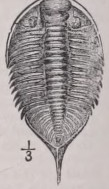
A genus of trilobites, of many species, common in the Upper Silurian and Devonian rocks.
No thesaurus entries found for "dal".
King James Bible KJV Bible
Berean Standard Bible BSB Bible
8 KJV and 3 BSB verses contain “dal”
And the king of Sodom went out to meet him after his return from the slaughter of Chedorlaomer, and of the kings that were with him, at the valley of Shaveh, which is the king’s dale.
After Abram returned from defeating Chedorlaomer and the kings allied with him, the king of Sodom went out to meet him in the Valley of Shaveh (that is, the King’s Valley).
And the sons of Elioenai were, Hodaiah, and Eliashib, and Pelaiah, and Akkub, and Johanan, and Dalaiah, and Anani, seven.
The sons of Elioenai: Hodaviah, Eliashib, Pelaiah, Akkub, Johanan, Delaiah, and Anani—seven in all.
And Parshandatha, and Dalphon, and Aspatha,
including Parshandatha, Dalphon, Aspatha,
And straightway he entered into a ship with his disciples, and came into the parts of Dalmanutha.
He got into the boat with His disciples and went to the district of Dalmanutha.
For Demas hath forsaken me, having loved this present world, and is departed unto Thessalonica; Crescens to Galatia, Titus unto Dalmatia.
because Demas, in his love of this world, has deserted me and gone to Thessalonica. Crescens has gone to Galatia, and Titus to Dalmatia.
But they that would not be reformed by that correction, wherein he dallied with them, shall feel a judgment worthy of God.