
AY ,
Word of the Day: Catachrestical
1. Yes, yea, a word expressing assent, or an affirmative answer to a question. It is used also to enforce the sense of what is asserted, equivalent to even so, truly, certainly.
2. Always; forever; continually; for an indefinite time; used in poetry.
Always; ever; continually; for an indefinite time.
1. Same as Aye.
2. Yes; yea; -- a word expressing assent, or an affirmative answer to a question. It is much used in viva voce voting in legislative bodies, etc.
Ayamonte
Encyclopedia Britannica
AYAMONTE, a fortified city of Spain, in the province of Huelva, on the left bank of the Guadiana, about 2 miles from its mouth. The harbour is good, but, on account of a bar at its mouth, it is of difficult entrance. The principal employment of the inhabitants is afforded by the fisheries, especially for sardince, tunny, cod, and horse-mackerel; but this branch of industry has suffered by the extension of the general coasting traffic. Silk-weaving is carried on. Ayamonte is said to have had in the 16th century 16,000 inhabitants. Population, 5960.
9th ed. Encyclopædia Britannica, vol. 3, p. 162
[96 words — estimated reading time: 1 minute]
[96 words — estimated reading time: 1 minute]
An affirmative vote; one who votes in the affirmative; as, "To call for the ayes and noes;" "The ayes have it."
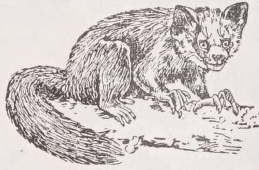
A singular nocturnal quadruped, allied to the lemurs, found in Madagascar (Cheiromys Madagascariensis), remarkable for its long fingers, sharp nails, and rodent-like incisor teeth.
The houseleek (Sempervivum tectorum).
Again; back against.
Backward.
In law, a grandfather.
A grandfather.
Aylesbury
Encyclopedia Britannica
AYLESBURY, a market-town, parliamentary borough, and railway junction, in the county of Buckingham, 39 miles N.W. of London. It stands on a gentle eminence in the centre of a fertile vale, and consists of several streets and lanes irregularly built, but well paved and lighted. The county-hall, market-house, and county gaol are handsome buildings, as is also the parish church, an ancient structure with a tower rising from the centre. It has a free grammar-school (1611), several other schools and charities, a corn-exchange (1865), three banks, a savings bank, an infirmary (1833), a union workhouse, and places of public worship for Roman Catholics, Methodists, Baptists, Independents, &c. It returns two members to parliament. The assizes and quarter sessions and the elections of members for the county are held here. The inhabitants are principally employed in the manufacture of bonelace and strawplaiting, besides the rearing of ducks, which are sent in large quantities to the London market at Christmas. A branch canal, six miles in length, connects Aylesbury with the Grand Junction Canal. Population of parliamentary borough in 1871, 28,760.
9th ed. Encyclopædia Britannica, vol. 3, p. 162
[186 words — estimated reading time: 2 minutes]
[186 words — estimated reading time: 2 minutes]
Aylesford
Encyclopedia Britannica
AYLESFORD, a village of England, in the county of Kent, 3j miles from Maidstone, and 32 from London. It stands at the base of a hill on the right bank of the Medway, which is here crossed by a stone bridge of six arches. The church stands on an eminence behind the village. At a short distance to the W. was a Carmelite friary, founded in 1240, the remains of which now form a part of the family mansion of the earl of Aylesford. The vicinity exhibits several remains of antiquity, among which is, or rather was, for it is grievously destroyed, a cromlech called Kit’s Coity House, about a mile N.E. from the village. This is supposed by Mr Fergusson, in accordance with tradition, to mark the burial-place of Catigern, w ho was slain here in a battle between the Britons and Saxons in 455 a.d. The tomb of Horsa, who fell in the same battle, is situated at Horsted, about 2 miles to the N. Near Aylesford, too, are other remains, known as the Countless Stones. Population of parish in 1871, 2100.
9th ed. Encyclopædia Britannica, vol. 3, p. 162
[188 words — estimated reading time: 2 minutes]
[188 words — estimated reading time: 2 minutes]
Aylmer
Encyclopedia Britannica
AYLMER, John, Bishop of London in the reign of Queen Elizabeth, was born in the year 1521 at Aylmer-hall, in the parish of Tilney, in the county of Norfolk. Whilst a boy, he was noticed for his precocity by the marquis of Dorset, afterwards duke of Suffolk, who sent him to the university of Cambridge. He afterwards proceeded to Oxford, where he completed his studies and took his degree in divinity. He was then made chaplain to the duke and tutor to his daughter, the accomplished and unfortunate Lady Jane Grey, whose extraordinary proficiency in the Greek and Latin languages reflects no small honour on her preceptor. His first preferment was to the archdeaconry of Stow, in the diocese of Lincoln, which gave him a seat in the Convocation held in the first year of Queen Mary, where he resolutely opposed the return to Popery, to which the generality of the clergy were inclined. He was soon after obliged to fly his country, and take shelter among the Protestants in Switzerland. While there he wrote a reply to Knox’s famous Blast against the Monstrous Regiment of Women, under the title of An Harborowe for Faithfull and Treue Subjects, &c. On the accession of Queen Elizabeth he returned to England. In 1562 he obtained the archdeaconry of Lincoln, and was a member of the famous synod of that year, which reformed and settled the doctrine and discipline of the Church of England. In 1576 he was consecrated bishop of London, and while in that position made himself notorious by the harsh manner in which he insisted on the Act of Uniformity. His persecution of the Puritans, and of any clergymen suspected of Puritanical leanings, with the extreme measures he used, made him unpopular even with his own party. He is frequently assailed in the famous Marprelate Tracts, and is ...characterised as Morrell, the bad shepherd, in Spenser’s Shepheardds Calendar. He seems to have been a man of harsh and violent temper, coarse, and avaricious, and with few redeeming qualities. He is said to have been an able scholar, but he has left nothing which could prove this. He died in 1594. (Strype, Life and Actions of John Aylmer, Bishop of London.}
9th ed. Encyclopædia Britannica, vol. 3, p. 162
[373 words — estimated reading time: 3 minutes]
[373 words — estimated reading time: 3 minutes]
Beyond.
Beyond.
Ayr
Encyclopedia Britannica
AYR, County of, or Ayrshire, a Scottish county, bounded by Wigtownshire and the stewartry of Kirkcudbright on the S.; by Kirkcudbright, Dumfries, and Lanark on the E.; and by Renfrewshire on the N. On the W. it has a coast line extending to 70 miles on the Irish Sea and the Firth of Clyde. The county contains 1149 square miles, or 735,262 acres. The middle part, which is the broadest, is about 26 miles across. There are six rivers of some note in Ayrshire—Stinchar, Girvan, Doon, Ayr, Irvine, and Garnock. Of these the Ayr, from which the county and county town take their name, is the largest. It rises at Glenbuck, on the border of Lanarkshire, and, after a course of 33 miles, falls into the Firth of Clyde at the county town. The scenery along its banks from Sorn downwards—passing Catrine, Ballochmyle, Barskimming, Sundrum, Auchencruive, and Craigie—is varied and beautiful. The lesser streams are numerous; and there are many fresh-water lochs, the largest of which is Loch Doon, the source of the river Doon. The southern and eastern parts of the county are hilly, but none of the peaks reaches a. height of 2000 feet. In former times the shire was divided into three districts—Carrick, south of the Doon; Kyle, between the Doon and the Irvine; and Cunningham, north of the Irvine. Kyle, again, was divided by the river Ayr into King’s Kyle on the south, and Kyle Stewart on the north. The county is now politically divided into south and north Ayrshire. The former comprises Kyle and Carrick, and the latter Cunningham, and each division returns a representative to Parliament. The old divisions, however are still popularly retained. The greater part of Carrick is hilly, and fit only for sheep-walks. The uplands of Kyle are also extensive, but there is a larger proportion ...of good low-country land in that district. Cunningham is comparatively level, and has a great extent of rich land, though rather heavy in its character. The scenery is not grand in any part of the county, but much of it is picturesque and beautiful. From many of the heights a rich, undulating, well-wooded country may be seen, with the Bay of Ayr, or the Firth of Clyde beyond, and the lofty peaks of Arran, or the Argyllshire hills, in the distance.
There has been no lack of agricultural enterprise in Ayrshire. With a moist climate, and, generally, a rather heavy soil, draining was necessary for the successful growth of green crops. Up till 1840, or a few years later, a green crop in the rotation was seldom seen, except on porous river-side land, or on the lighter farms of the lower districts. In the early part of the century lime was a powerful auxiliary in the inland districts, but, with repeated applications, it gradually became of little avail. Thorough draining gave the next great impulse to agriculture. Enough had been done to test its efficacy previous to the announcement of Sir Robert Peel’s drainage loan, after which it was rapidly extended throughout the county. Green-crop husbandry, and the liberal use of guano and other auxiliary manures, made a wonderful change on the face of the county, and increased immensely the amount of agricultural produce. Early potatoes are now extensively grown in some localities. The farmers on the coast lands of Girvan and West Kilbride are first in the market, and the next supplies come from the friable lands about Ayr and St Quivox. A considerable extent of ground is cleared in June for the Glasgow market; and, in dropping seasons, good crops of turnips follow. At the end of July and the beginning of August, great quantities of potatoes are sent to Newcastle, and to the large towns of Lancashire and the West Riding. The mild climate of the Ayrshire coast in spring is favourable to this kind of cropping, which brings quick returns, and on the whole is profitable. Carrots and mangolds are cultivated more extensively than in any other Scotch county, and, with early sowing and rich manuring, heavy crops are raised. Wheat generally follows green crops in the lower parts of the county, though barley is coming more into use than in former times on light land. The border line for wheat may be drawn at a little over 300 feet; above that height its growth is exceptional. The dairy forms an important department of farm management in Ayrshire. Dunlop cheese was a well-known product of Ayrshire dairies a quarter of a century ago. Part of it was very good; but it was unequal in its general character, and unsaleable in English markets. Dissatisfied with the inferior commercial value of their cheese in comparison with some English varieties, the Ayrshire Agricultural Association brought a Somerset farmer and his wife in 1855 to teach the Cheddar method, and their effort has been most successful. Cheddar cheese of first rate quality is now made in Ayrshire and Galloway, and the annual cheese show at Kilmarnock is the most important in the kingdom. The cheese may be more thoroughly fine in a few Somerset dairies, but the average quality of Scotch Cheddar is higher than the English. This great change of an industrial art has brought wealth to the county. It is not too much to say that it has added £2 per cow to the annual value of dairy produce, and there are 45,000 cows in Ayrshire.
The manufactures of Ayrshire have attained considerable importance. The cotton works at Catrine are extensive, and have been a long time established. The site was chosen with the view of utilising the water power of the river Ayr, and steam is still merely an auxiliary. At Kilmarnock and Ayr there are extensive engineering establishments, and large carpet works; and other fabrics are manufactured in those towns and at Dairy, Kilbirnie, Beith, and Stewarton. Until the last three or four years, Irvine was a back-going place, but it has received an impulse from the erection of large chemical works. The situation is very suitable for chemical manufactures, as the soil is poor and sandy, and the liquid refuse of chemical works is easily carried into the sea, without causing the nuisance which is inevitable in a large town. The Eglinton Chemical Company are most extensive manufacturers of bichromate of potash—a substance which is used at dyeworks as an oxidising agent; and another company is largely engaged in the alkali trade, and in the extraction of copper from burnt pyrites ore. On the coast, between Irvine and Ardrossan, works have been erected on the sandhills for the manufacture of dynamite, which is now well known as one of the most powerful explosive agents. It is much used for blasting under water, and large quantities of it are sent to America for blowing up the roots of trees in the reclamation of land.
The iron trade of Ayrshire has risen to great importance. The manufacture has long been carried on at Muir-kirk, although the iron had to be carted long distances to Ayr and Glasgow before the introduction of railways. Immense fields of ironstone have been opened up within the last quarter of a century · and there are now 33 furnaces in blast within the county, producing about 330,000 tons per annum. The works are all connected with the Glasgow and South-Western Railway. The whole manufacture of iron in Ayrshire is in the hands of three great companies, namely, William Baird & Company, the Dalmellington Iron Company, and Merry <fc Cunningham. Haematite of good quality is raised in Sorn and Muirkirk, and discoveries of it have been made in Carrick. The coal-fields are of great extent, and limestone exists in large quantities. A valuable whetstone quarry is worked at Bridge of Stair on the Ayr.
The old harbours of the county were at Ayr, Irvine, and Saltcoats. The latter is now neglected, and its place is supplied by the more important harbour of Ardrossan. The works at Ardrossan were carried through by the private enterprise of the last two earls of Eglinton. They were begun in the early part of this century, with the expectation of making Ardrossan an important shipping port for Glasgow, in connection with a canal, which, however, was never carried further than from Glasgow to Johnstone. The works were designed by Telford. The pier was finished in 1811, and the docks were completed by the late earl. The harbour of Troon was likewise the work of an enterprising nobleman. It was formed by the late duke of Portland, who connected it with Kilmarnock by a railway, which was among the earliest in the country. Troon has an extensive shipping business, as the outlet for the great coal-fields of the Kilmarnock district. Acts of parliament have been obtained, which sanction harbour improvements at Irvine and Girvan, and a large wet-dock is in course of formation at Ayr. The dock at Ayr is important, as Ayr is the natural outlet for the great coal-fields up the river, and for the ironworks at Dalmellington, Lugar, and Muirkirk, as well as the fields which are being developed on the railways, called the Ayrshire lines, between Cumnock and the river Doon.
The Glasgow, Kilmarnock, and Ayr Railway was partially opened in 1840, and soon after completed. A connection was made a few years later from the Ayr line at Kilwinning to Ardrossan, and an extension from Kilmarnock to Cumnock, with a branch to Muirkirk. Extensions followed from Cumnock to Dumfries and Carlisle, and from Ayr to Dalmellington, and to Maybole and Girvan; and the Troon Railway was acquired from the duke of Portland, as a connecting link of what is now the Glasgow and South-Western Railway system. Other important branches have been made, and a trunk line is now in course of formation between Girvan and Stranraer, which will give a connection between Glasgow and Ayrshire and the north of Ireland by the shortest sea passage. Ayrshire is thus well supplied with railways.
The antiquities of Ayrshire are not of much note. There are cairns in Galston, Sorn, and other localities; a road, supposed to be a work of the Romans, which extended from Ayr, through Dalrymple and Dalmellington, towards the Solway; camps, attributed to the Norwegians or Danes, on the hills of Knockgeorgan and Dundonald; and the castles of Loch Doon, Turnberry, Dundonald, Porten-cross, Ardrossan, &c. There are interesting remains of the celebrated abbeys of Kilwinning and Crossraguel; and the ruins of the little church of Alloway, amid the lovely scenery near the birthplace of Burns, have become more famous from their associations than many great w-orks of architectural genius.
The rural population of Ayrshire is decreasing, but the mining population has increased, and the towns are growing. At the last census there were 27,132 inhabited houses, and the population reached 200,745. The county valuation last year amounted to £1,178,183, 5s. 10d., being an increase of more than <£50,000 from the previous year. The amount for Kyle was £446,874, 18s. 5d.; for Cunningham, £411,504, Is. 6d.; for Carrick, £177,168, 10s. 3d.; for the burgh of Ayr, £63,273, 16s. 6d. ,∙ for Kilmarnock, £63,202, 19s.; and for Irvine, £16,159, 0s. 2d.
Ayr, the capital of the above county, is situated at the mouth of the river of the same name, and about 40 miles S.S.W. from Glasgow The spot has probably been inhabited from a remote antiquity. Nothing, however, is known of its history till the close of the 13th century, when it was made a royal residence, and soon afterwards a royal burgh, by William the Lion. The charter conferring upon it the latter privilege has been preserved, of which a fac-simile will be found in vol. i. of the National Manuscripts of Scotland. During the wars of Scottish independence the possession of Ayr and its castle was, according to tradition, an object of importance to both the contending parties. In Blind Harry’s Life of Wallace they are frequently mentioned, and the scene is laid there of one of the patriot’s greatest exploits; but the authenticity of many of the minstrel-historian’s statements is more than doubtful. On better authority, the records of the burgh, it is known that early in the 16th century Ayr was a place of considerable influence and trade. The liberality of William the Lion had bestowed upon the corporation an extensive grant of lands; while in addition to the well-endowed church of St John’s, it had two monasteries, each possessed of a fair revenue. When Scotland was overrun by Oliver Cromwell, Ayr was selected as the site of one of those forts which he built to command the country. This fortification, termed the citadel, enclosed an area of ten or twelve acres, and included within its limits the church of St John’s, in which the Scottish Parliament on one occasion met, and confirmed the title of Robert Bruce to the throne. The church was converted into a storehouse, the Protector partly indemnifying the inhabitants for this seizure by liberally contributing towards the erection of a new place of worship, now-known as the Old Church. Ayr proper lies on the south bank of the river, and is connected with Newton and Wallacetown on the north by two bridges, the Old and the New, the “Twa Brigs” of Burns. Of late years the town has extended greatly on the Ayr side of the stream. Nearly the whole of Cromwell’s Fort is now covered with houses, and to the south, in the direction of the racecourse, numerous fine villas have been erected. Ayr possesses several good streets and a number of elegant public and other edifices. The County Buildings, which afford accommodation for the circuit and provincial courts, as well as for the various local authorities, occupy the w est side of Wellington Square. Contiguous to these is the jail, a well-regulated establishment, partly used as a penitentiary. The Town’s Buildings, near the New Bridge, is a handsome erection, the effect of which is somewhat impaired by the lowness of the site. They contain assembly rooms and a reading-room, and are surmounted by a spire 217 feet high, designed by Hamilton, of Edinburgh, and considered by many the finest in the west of Scotland. All the Edinburgh and Glasgow banks have branches in Ayr, and some of them have built ornamental structures for their accommodation. Besides the old church already mentioned, there is another parish church called the New, and a number of dissenting places of worship, none of them, however, noteworthy on account of their architecture. The Academy, a large building in a convenient position, includes, or has superseded, the Grammar School of the burgh, the existence of which can be traced back as far as the 13th century. A portion of the tower of St John’s Church still remains, but, to the regret of the antiquary, has been completely modernised. The “Wallace Tower” is a Gothic structure in High Street, erected on the site of an old building of the same name taken down in 1835. A niche in front is filled by a statue of the Scottish hero by Thom, a self-taught sculptor, who executed, in a much more successful manner the statues of Tam o’ Shanter and Souter Johnnie, now in the grounds of Burns’ Monument. Ayr Hospital is a plain but substantial erection near the Townhead railway station. There are two subscription libraries in the town, and it also supports one weekly and one bi-weekly newspaper. Its religious and charitable societies are numerous. A market is held every Tuesday, and there are five yearly fairs. The Western Meeting takes place in September of every year on Ayr racecourse, a large enclosure in the suburbs, which has been reserved for this purpose for more than a century. Alloway Kirk and Burns’ Monument are distant 2£ miles. The principal manufactures of Ayr are leather, carpets, w-oollen goods, Ac.; and fisheries and shipbuilding are also carried on to a small extent. There are several foundries and engineering establishments. Ayr has a general trade of considerable value. Large quantities of timber are imported from Canada and from Norway; coal and iron are the chief exports. The harbour occupies both sides of the river from the New Bridge to the sea, and has been built at a very considerable expense in a most substantial manner. The south pier projects some distance into the sea; on the north side is a large breakwater protecting the entrance, and on the north pier are three lights, two bright and one red from 12 to 35 feet above high water. The depth of water at the bar is about 14 feet at neap and 16 at spring tides. Extensive docks are in the course of formation, which are expected to increase largely the importance of the place as a seaport. Railways converge upon Ayr from the north, east, and south, opening up a connection with all parts of the country. The burgh unites with Irvine, Inveraray, Campbeltown, and Oban in returning a member to Parliament. Previous to 1873, its municipal boundary on the north was the river, but an Act of Parliament was obtained in that year by which this boundary was extended so as to include Newton-on-Ayr and Wallacetown, and made the same as that of the parliamentary burgh. The corporation of Ayr consists of a provost and four bailies, and twelve town councillors. In 1871 the population of the extended burgh was 17,851. Though thus conjoined with Ayr for the parliamentary franchise and municipal government, and forming with it in reality but one town, Newton and Wallacetown were formerly each quite separate. The former is a burgh or barony of very ancient erection. The original charter has been lost; but it is traditionally said to have been granted by King Robert the Bruce in favour of forty-eight of the inhabitants who had distinguished themselves at Bannockburn. Be this as it may, the common property of the burgh is held to be the exclusive property of the freemen, forty-eight in number. The extent of the lots possessed by each varies from six to ten acres, and their value is considerable. Newton has a council, consisting of two bailies, a treasurer, and six councillors, annually elected by the freemen from among their own number; but the powers of the council, though originally extensive, are now very limited. Wallacetown is quoad, civilia a part of the neighbouring parish of St Quivox. About two miles east of Newton is the village of Prestwick, the headquarters of one of the most flourishing golf clubs in Scotland.
9th ed. Encyclopædia Britannica, vol. 3, p. 162
[3,150 words — estimated reading time: 18 minutes]
[3,150 words — estimated reading time: 18 minutes]
Ayrer
Encyclopedia Britannica
AYRER, Jacob, one of the earliest dramatists of Germany, was born in 1560, probably at Nuremberg,—at least he resided there when a mere boy. His first occupation was keeping an iron-store, which he did with considerable success. After studying law for some time at Bamberg, where he attained a good position as a lawyer, he returned to Nuremberg, and continued to practise there, acquiring the freedom of the city in 1594, and ultimately becoming an imperial notary. He died 26th March 1605. Ayrer’s works consist of numerous small poems, and of the series of dramas on which his fame rests. Like other dramas of the time, his productions are, for the most part, spectacular displays, with laboured dialogue, and vary in length from five to twenty-eight acts. The plots are plainly taken from the Latin and Italian tales which supplied material to nearly all the early European dramatists. The chief interest of Ayrer’s works for English readers arise from their connection with Shakespeare. Ayrer adopted several of Shakespeare’s plots, as well a3 his method of representing the characters on the stage after life, “and so produced,” says his editor, “according to the neιυ English manner and art, that all can be personally acted and placed so that it shall seem to the spectators to be really happening.” In Ayrer’s time the dramatic spirit in England was strong, and good plays and players abounded. Some of the latter took circuits through Germany, and though performing in their native tongue, excited enthusiasm by their vivacity. Ayrer caught this enthusiasm, and adapted several of the English dramas to the German stage. The Opus Theatricum, in one folio volume of 1262 pages, was published posthumously in 1618. It contained thirty plays and thirty-six carnival ...interludes. A second volume to contain forty more, though promised, did not appear. Of the comedies and tragedies of Ayrer, six have been reproduced with an English translation in Cohn’s Shakespeare in Germany. These contain respectively plots resembling The Tempest, Much Ado about Noticing, The Two Gentlemen of Verona, Titus Andronicus, Romeo and Juliet, and Hamlet. In 1601, a comic prose work by Ayrer was published, giving an account of an Imaginary Suit of the Devil against Jesus Christ for Destroying Hell. Some of his plays were published prior to 1585, but these are not now to be had, and even the folio of 1618 is extremely rare. Further information about Ayrer may be gained from Tieck’s Deutsches Theater, vol. i.; Wolff’s Encyc. der Deutschen Nationalliteratur, vol. i.; Cohn’s Shakespeare in Germany; Dr Bell’s Shakespeare's Puck, and his Folklore; Dr Latham’s Two Dissertations on “Hamlet W. J. Thom’s Three Notelets on Shakespeare.
ΑΥΤΟΝ, Sir Robert (1570-1638), a Scottish lyrical poet, the second son of Andrew Ayton of Kinaldie in Fifeshire, was educated at the University of St Andrews, and seems afterwards to have resided for several years in France, where he gained considerable reputation as a poet and scholar. On the accession of James VI. in 1603, Ayton published a very elegant Latin panegyric, which at once brought him into notice and favour at court. He was knighted by the king, and held various important offices, particularly that of private secretary to the queen. He was of an exceedingly amiable disposition, and was much beloved by his contemporaries; even Ben Jonson, w ho criticised all other poets so severely, seems to have made an exception in his favour, for he told Drummond that Sir Robert loved him dearly. Ayton’s extant works consist of some Latin poems, and of a few pieces in the English dialect, which are distinguished by smoothness of rhythm and delicacy of fancy. His best ode, Inconstancy Reproved, beginning, “I do confess thou’rt smooth and fair,” may take rank w ith the finest pieces of Herrick or Suckling, while a few others are but little inferior. His poems have been collected and published by C. Rogers (Edin. 1844).
9th ed. Encyclopædia Britannica, vol. 3, p. 165
[669 words — estimated reading time: 4 minutes]
[669 words — estimated reading time: 4 minutes]
Assent Roget’s Thesaurus §488
N. assent, assentment, acquiescence, admission, nod, accord, concord, concordance, agreement, affirmance, affirmation, recognition, acknowledgment, avowal, confession of faith, unanimity, common consent, consensus, acclamation, chorus, vox populi, popular belief, current belief, current opinion, public opinion, concurrence, cooperation, ratification, confirmation, corroboration, approval, acceptance, visa, indorsement, consent, pressure to conform, herd instinct, peer pressure
V. assent, give assent, yield assent, nod assent, acquiesce, agree, receive, accept, accede, accord, concur, lend oneself to, consent, coincide, reciprocate, go with, be at one with, go along with, chime in with, strike in with, close in with, echo, enter into one's views, agree in opinion, vote, give one's voice for, recognize, subscribe to, conform to, defer to, say yes to, say ditto, amen to, say aye to, acknowledge, own, admit, allow, avow, confess, concede, come round to, abide by, permit, arrive at an understanding, come to an understanding, come to terms, come to an agreement, confirm, affirm, ratify, approve, indorse, countersign, corroborate, go with the stream, swim with the stream, go with the flow, blow with the wind, be in fashion, join in the chorus, join the crowd, be one of the guys, be part of the group, go with the crowd, don't make waves, be in every mouth
Adj. assenting, of one accord, of one mind, of the same mind, at one with, agreed, acquiescent, content, willing, uncontradicted, unchallenged, unquestioned, uncontroverted, carried, agreed, nem, con, &c. adv[abbr: nemine contradicente], unanimous, agreed on all hands, carried by acclamation, affirmative
Adv. yes, yea, ay, aye, true, good, well, very well, very true, well and good, granted, even so, just so, to be sure, "thou hast said", you said it, you said a mouthful, truly, exactly, precisely, that's just it, indeed, certainly, you bet, certes, ex concesso, of course, unquestionably, assuredly, no doubt, doubtless, naturally, natch, be it so, so be it, so let it be, amen, willingly, affirmatively, in the affirmative, ok, all right, might as well, why not? with one consent, with one voice, with one accord, unanimously, una voce, by common consent, in chorus, to a man, nem, con, [abbr: nemine contradicente], nemine dissentiente, without a dissentient voice, as one man, one and all, on all hands
Phr. avec plaisir, chi tace accousente, "the public mind is the creation of the master-writers", you bet your sweet ass it is, what are we waiting for? whenever you're ready, anytime you're ready
Type at least 3 letters to search the Bible, or a reference such as John 3:16.