BIR, or Birejik (the former being its Arabic and the latter its Turkish name), a town of Asiatic Turkey, in the pashalik of Rakka, built on the side of a chalky range of hills that skirts the left bank of the Euphrates, about 90 miles N.E. of Aleppo, in long. 38° 6' E., and lat. 36° 48' N. It consists of about 2000 houses, surrounded by a dilapidated wall and protected by the citadel of Kalai-Beda, which, with its earthquake-shattered interior, occupies a precipitous eminence cut off from the town. Bir is situated on the main route from Aleppo to Orfa, Diarbekr, and the Persian frontier, and had formerly a considerable trade with Baghdad by means of the river. It is now a post and telegraph station. A ferry seems to have crossed the river at this spot from time immemorial, Abraham himself having made use of it, according to tradition, on his passage from Haran to Canaan. The town is identified with the ancient Birtha or Britha, where the emperor Julian rested on his march to Maogamalcha, and found quarters for his army in one extensive palace. In the English Euphrates expedition Bir was frequently visited, Fort William, one of the principal places of rendezvous, being about 2 miles further down on the other side of the river. (See view in Chesney’s Narrative of Euphrates Expedition, 1868.)
9th ed. Encyclopædia Britannica, vol. 3, p. 697 [232 words — estimated reading time: 2 minutes]
1. burch. A genus of trees, the Betula, of which there are several species; as the white or common birch the dwarf birch the Canada birch of which there are several varieties, and the common black birch
1. A tree of several species, constituting the genus Betula; as, the white or common birch (B. alba) (also called silver birch and lady birch); the dwarf birch (B. glandulosa); the paper or canoe birch (B. papyracea); the yellow birch (B. lutea); the black or cherry birch (B. lenta).
2. The wood or timber of the birch.
3. A birch twig or birch twigs, used for flogging.
BIRCH(Betula), a genus of arboraceous plants constituting the principal portion of the natural order Betulaceoe. The various species of birch are mostly trees of medium size, but several of them are merely shrubs. They are as a rule of a very hardy character, thriving best in northern latitudes,—the trees having round, slender branches, and serratedeciduous leaves, with barren and fertile catkins on the same tree and winged seeds. The bark in most of the trees occurs in fine soft membranous layers, the outer cuticle of which peels off in thin white papery sheets. The common birch (Â alba) grows throughout the greater part of Europe, and also in Asia Minor, Siberia, and North America, reaching in the north to the extreme limits of forest vegetation, and stretching southward on the European continent as a forest tree to 45 3 N. lat., beyond which birches occur only in special situations or as isolated trees. It is one of the most wide-spread and generally useful of forest trees of Russia, occurring in that empire in vast forests, in many instances alone, and in other cases mingled with pines, poplars, and other forest trees. The wood is highly valued by carriage-builders, upholsterers, and turners, on account of its toughness and tenacity, and in Russia it is prized as firewood and a source of charcoal. A very extensive domestic industry in Russia consists in the manufacture of wooden spoons, which are made to the extent of 30,000,000 annually, mostly of birch. Its pliant and flexible branches are made into brooms; and in ancient Rome the fasces of the lictors, with which they cleared the way for the magistrates, were made up of birch rods. A similar use of birch rods has continued among pedagogues to times so recent that the birch is yet, literally or metaphorically, ...the instrument of school-room discipline. The bark of the common birch is much more durable, and industrially of greater value, than the wood. It is impermeable to water, and is therefore used in northern countries for roofing, for domestic utensils, for boxes and jars to contain both solid and liquid substances, and for a kind of bark shoes, of which it is estimated 25 millions of pairs are annually worn by the Russian peasantry. The jars and boxes of birch bark made by Russian peasants are often stamped with very effective patterns. By dry distillation the bark yields an empyreumatic oil, called diogott in Russia, used in the preparation of Russia leather; to this oil the peculiar pleasant odour of the leather is due. The bark itself is used in tanning; and by the Samoiedes and Kamchatkans it is ground up and eaten on account of the starchy matter it contains. A sugarysap is drawn from the trunk in the spring before the opening of the leaf-buds, and is fermented into a kind of beer and vinegar The whole tree, but especially the bark and leaves, has a very pleasant resinous odour, and from the young leaves and buds an essential oil is distilled with water The leaves are used as fodder in northern latitudes The species which belong peculiarly to America (Z?. lenta, excelsa, nigra, papyracea, &c.) are generally similar in appearance and properties to B. alba, and have the same range of applications. The largest and most valuable is the black birch (A. lento), found abundantly over an extensive area in British North America, growing 60 to 70 feet high, and 2 to 3 feet in diameter. It is a wood most extensively used for furniture and for carriage building, being tough in texture and bearing shocks well, while much of it has a handsome grain, and it is susceptible of a fine polish. The bark, which is dark brown or reddish, and very durable, is used by Indians and backwoodsmen in the same way as the bark of B. alba is used in Northern Europe. Concerning the canoe or paper birch (B. papyracea), which some regard as a variety of the white birch, Mr Bernard R. R∩ss, of the Hudson’s Bay Company, writes: —“The canoc or paper birch is found as far north as 70° N. on the American continent, but it becomes rare and stunted in the Arctic circle. It is a tree of the greatest value to the inhabitants of the Mackenzie River district in British North America. Its bark is used for the construction of canoes, and for drinking-cups, dishes, and baskets. From the wood, platters, axe handles, snow-shoe frames, and dog sledges are made, and it is worked into articles of furniture which are susceptible of a good polish. The sap which flows in the spring is drawn off and boiled down to an agreeable spirit, or fermented with a birch-wine of considerable alcoholic strength. The bark is also used by the Christianized American Indians as a substitute for paper.” A species (B. Bhojputtra) growing on the Himalayan Mountains, as high up as 9000 feet, yields large quantities of fine thin papery bark, extensively sent down to the plains as a substitute for wrapping-paper, for covering the “snakes” of hookahs, and for umbrellas. It is also said to be used as writing paper by the mountaineers; and in Kashmir it is in general use for roofing houses.
BIRCH, Thomas, historical and biographical writer, and one of the early trustees and benefactors of the British Museum, was born in London, November 23, 1705. He was the son of a coffee-mill maker, and was to have followed his father’s business; but his active mind and ambition of higher pursuits led him into the paths of literature. His parents were members of the Society of Friends, and therefore he had not the advantages of a university training. But by persevering application to study and to teaching he qualified himself for the ministry of the Church of England. In 1728 he obtained a curacy, and in the same year he married. His wife died in the following year. He was ordained priest in December 1731, and was soon after recommended to the favour of Philip Yorke, then attorney-general, afterwards Lord Chancellor and earl of Hardwicke, to whom he owed his successive preferments in the church. His first benefice was the vicarage of Ulting in Essex. In 1734 he was appointed domestic chaplain to the earl of Kilmarnock, who was beheaded for his share in the rebellion of ’45. He afterwards held successively benefices in Pembrokeshire, Gloucestershire, and the city of London. His last church preferment was to the rectory of Depden in Essex, to which he was presented in February 1761. In his latter years he was appointed chaplain to the princess Amelia. His literary attainments procured him election as a fellow of the Royal Society in February 1735, and in the following December he was chosen a member of the Society of Antiquaries. He held the office of Secretary to the Royal Society for thirteen years 1752-1765. From the university of Aberdeen he received the degrees first of M.A., and afterwards (1753) of D.D. The degree of D.D. was also conferred on him about the same time by the archbishop of Canterbury. Dr Birch was engaged in a large number of literary undertakings. His appetite and his capacity for hard work were extraordinary. Besides his diversified labours of compilation and editing, he transcribed many volumes in the library of Lambeth Palace, and carried on an extensive correspondence with literary men. He was an early riser; and amidst all his labours he found time to take part in social enjoyments. He was only in his sixty-first year when he was killed by a fall from his horse in Hampstead Road, January 9, 1766. He bequeathed his books and manuscripts, with part of his pictures and prints, to the British Museum. The rest of his property, in value about £500, he gave to be invested in Government securities, the interest to be applied in augmenting the salaries of the three assistant librarians.
His principal publications were—1. The General Dictionary, Historical and Critical, including a new translation of Bayle, and interspersed with several thousand new lives, in 10 volumes fol., 1734- 1741. 2. Thurloe’s State Papers, 7 τ<Λs. folio, 1742. 3. Dr Cud worth's Intellectual System, improved from the Latin edition of Mosheim; his Discourse on the true Notion of the Lord's Supper; and two Sermons, with an Account of his Life and Writings, 2 vols. 4to, 17/3. 4. The Life of the Honourable Robert Boyle, 1744, prefixed ro an edition of that philosopher’s works. 5. The Lives of Illustrious Persons of Great Britain, to accompany the engravings of Houbraken and Vertue, 1747-1752. 6. An Inquiry into the Share which King Charles 1. had in the Transactions of the Earl of Glamorgan, 1747, 8vo. 7. An edition of Spenser s Faery Queen, 1751, 3 vols. 4to, with prints from designs by Kent. 8. The Miscellaneous Works of Sir WalterRaleigh, with his Life, 1751, 2 vols. 8vo. 9. The Theological, Moral, Dramatic, and Poetical Works of Mrs Catherine Cockburn, with a Life, 1751, 2 vols. 8vo. 10. The Life of Dr Tillotson, Archbishop of Canterbury, compiled chiefly from his Original Papers and Letters, 1762, 8vo. 11. Milton’s Prose Works, 1753, 2 vols. 4to, with a Life. 12. Memoirs of the Reign of Queen Elizabeth, from the year 1581 till her death; illustrated from the original papers of Anthony Bacon, Esq., and from other MSS., 1754, 2 vols. 4to. 13. The History of the Royal Society of London, 1756 and 1757, 4 vols. 4to. 14. The Life of Henry Prince of Wales, eldest son of James I., compiled chiefly from his own apers and other MSS., 1760, 8vo. 15. The Letters, Speeches, <kc., of Lord Chancellor Bacon. His numerous communications to the Royal Society may be seen in the Philosophical Transactions.
9th ed. Encyclopædia Britannica, vol. 3, p. 697 [891 words — estimated reading time: 6 minutes]
Birched[Imperfect tense and past participle]Webster's Dictionary 1913
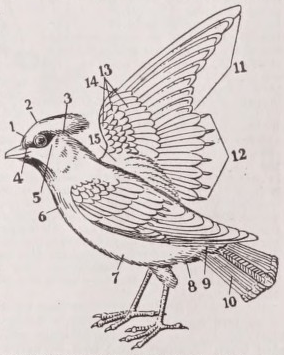
2. Properly, a chicken, the young of fowls, and hence a small fowl.
3. In modern use, any fowl or flying animal.
4. It is remarkable that a nation should lay aside the use of the proper generic name of flying animals, and substitute the name of the young of those animals, as the generic term. The fact is precisely what it would be to make lamb, the generic name of sheep, or colt, that of the equine genus.
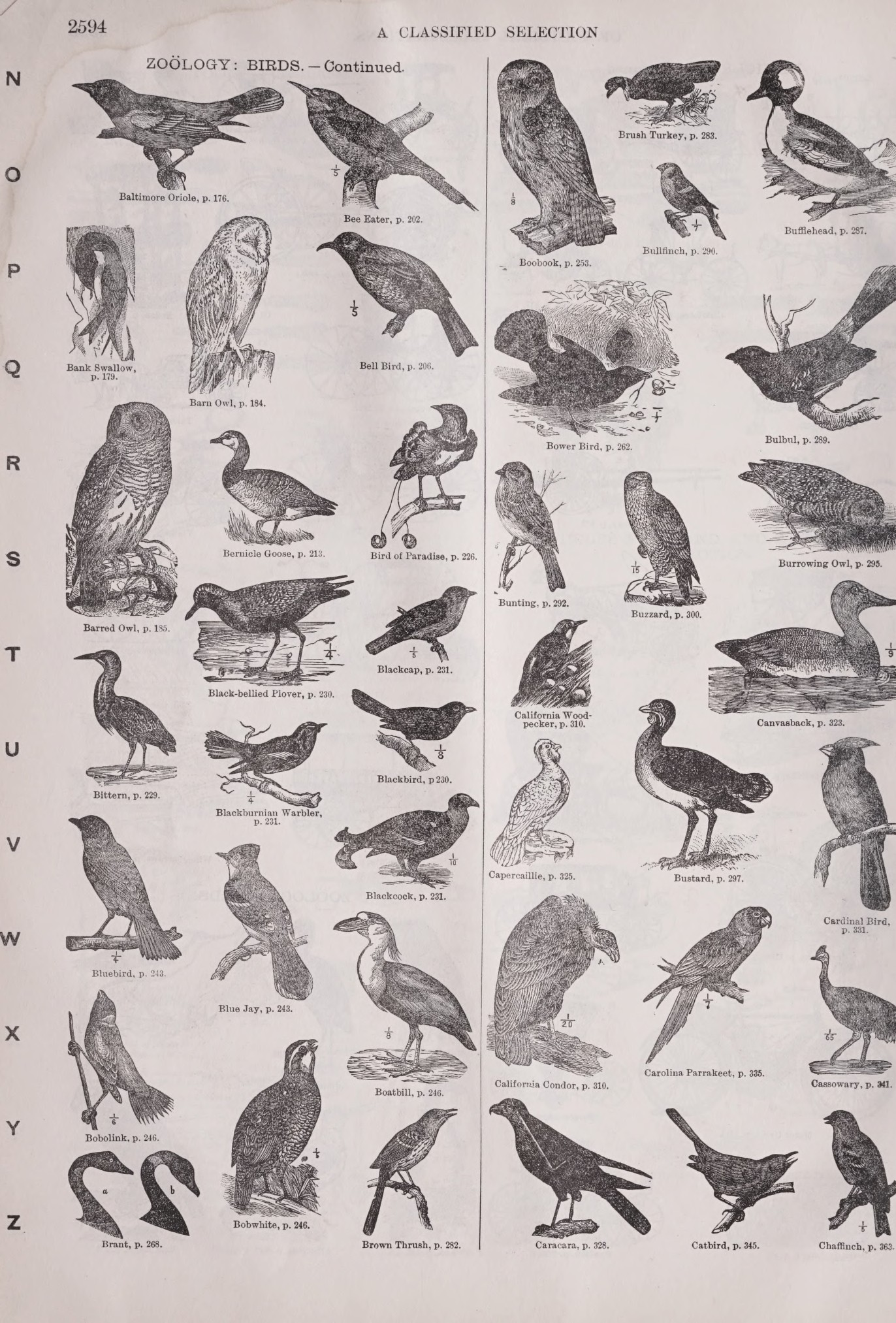
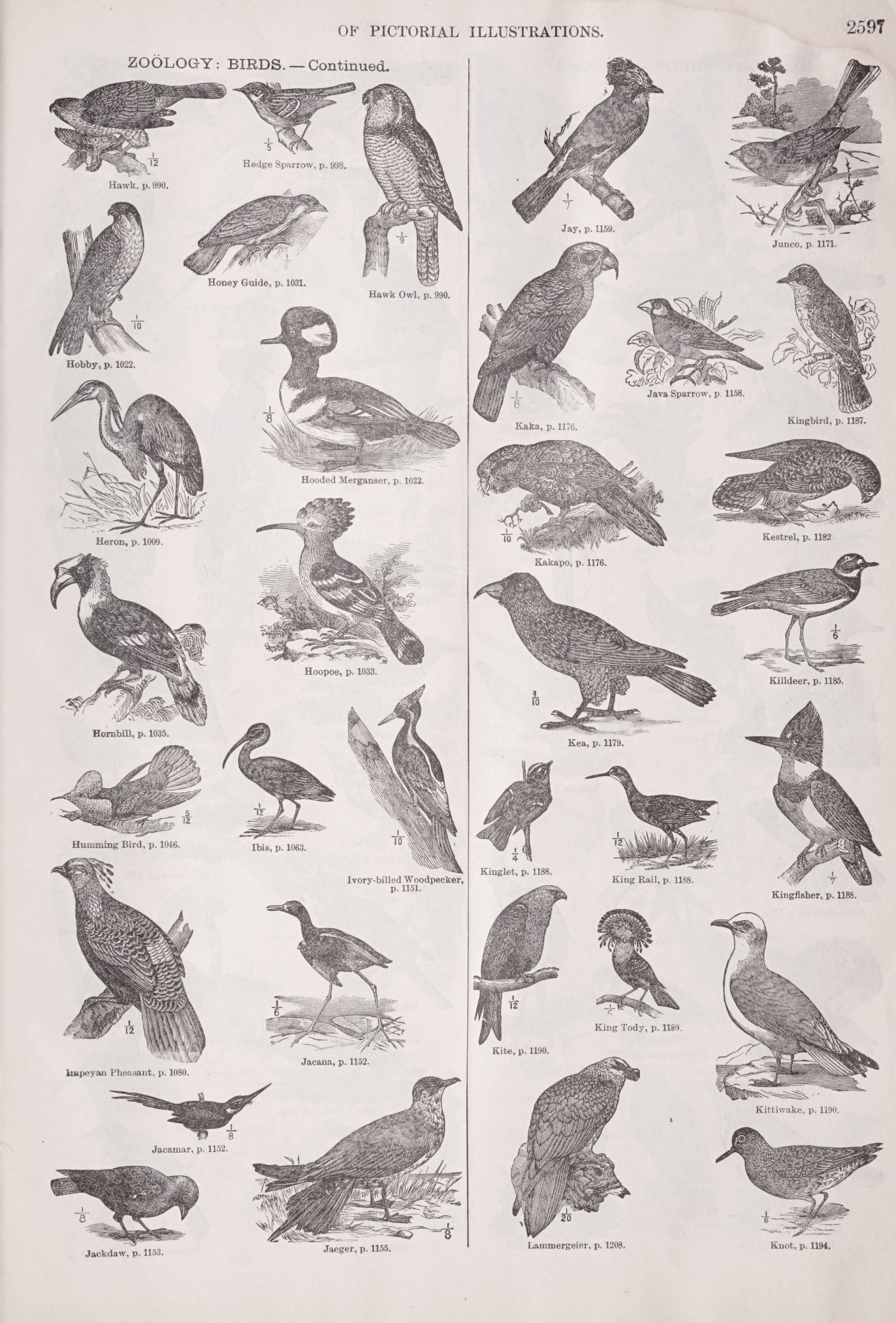
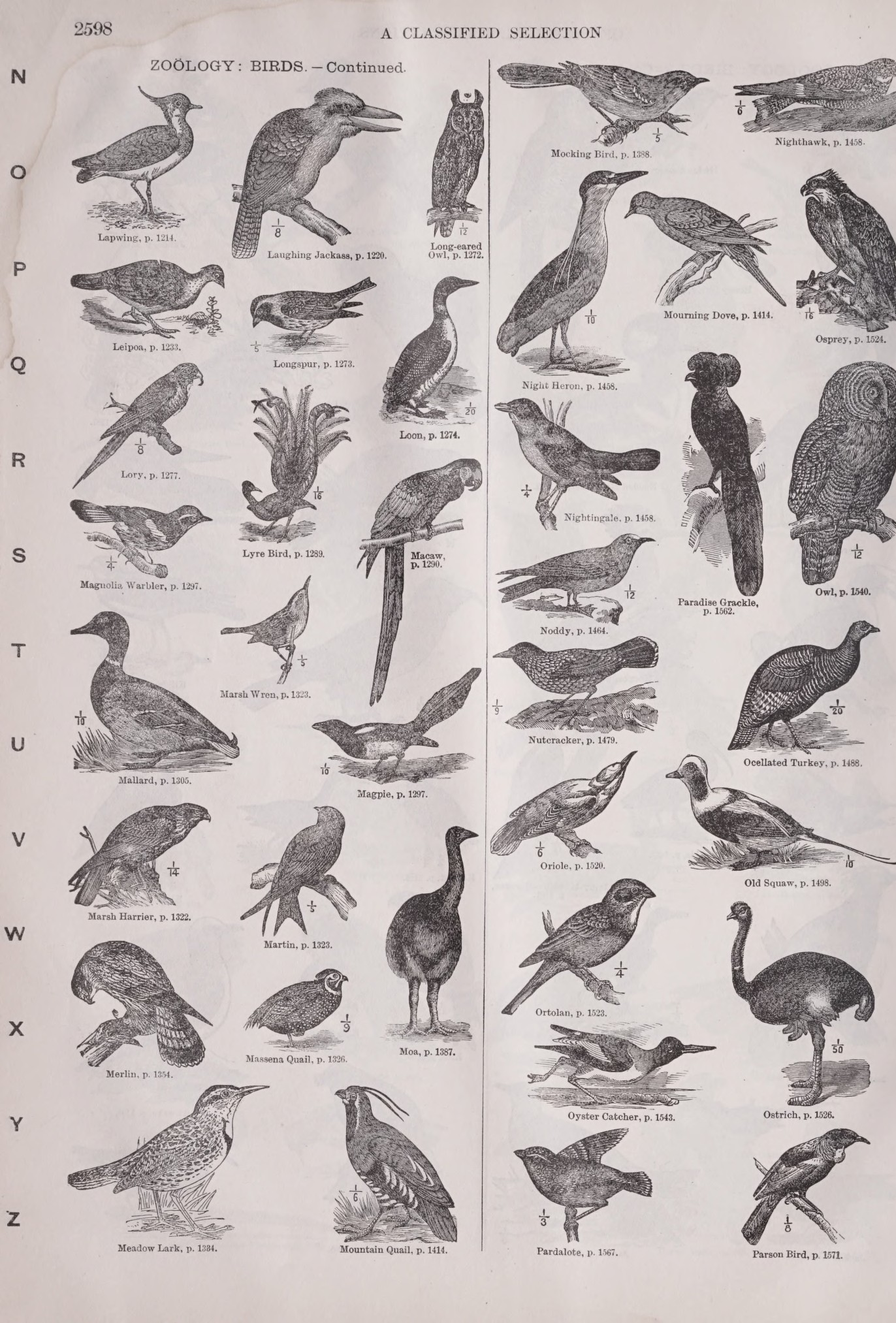
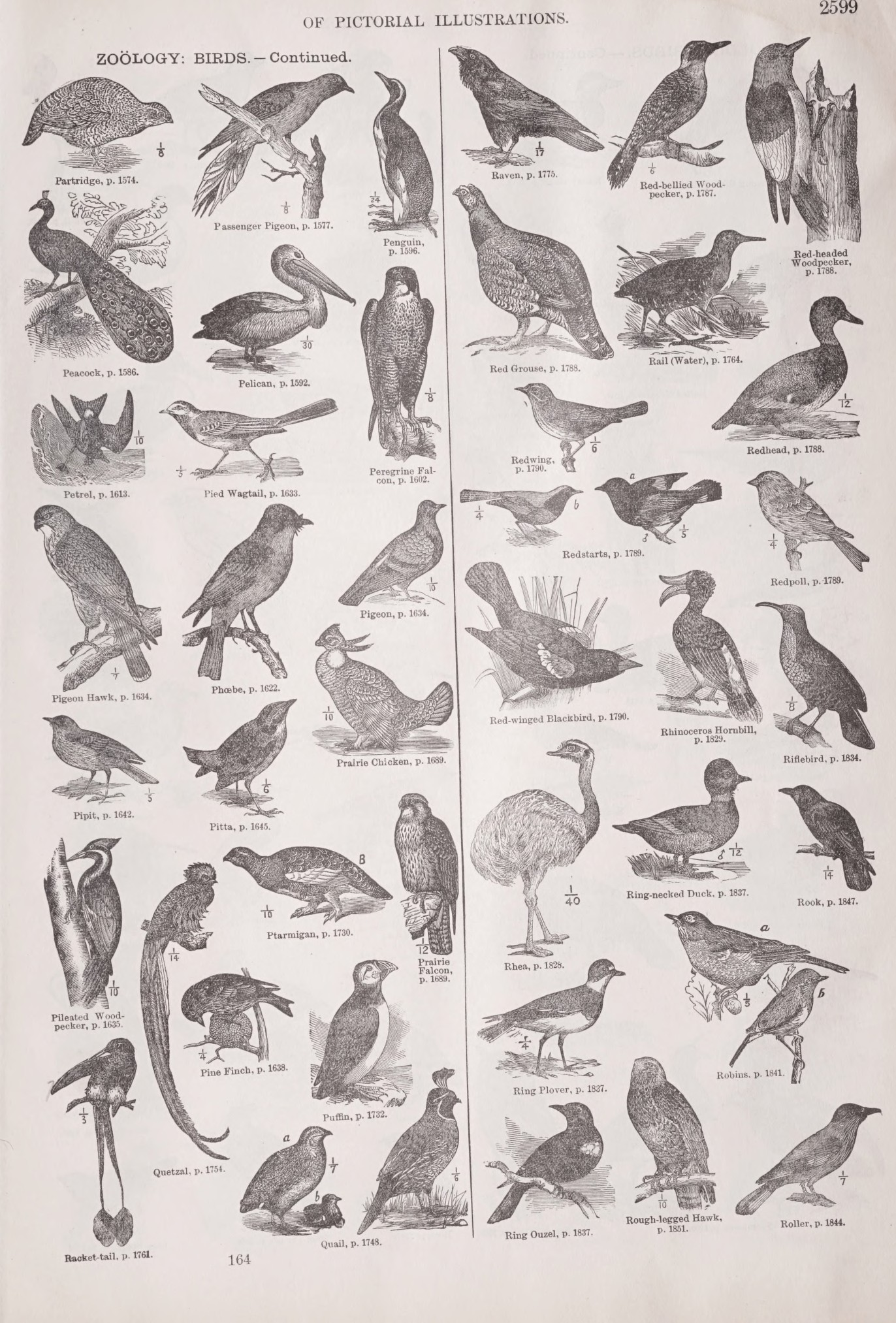
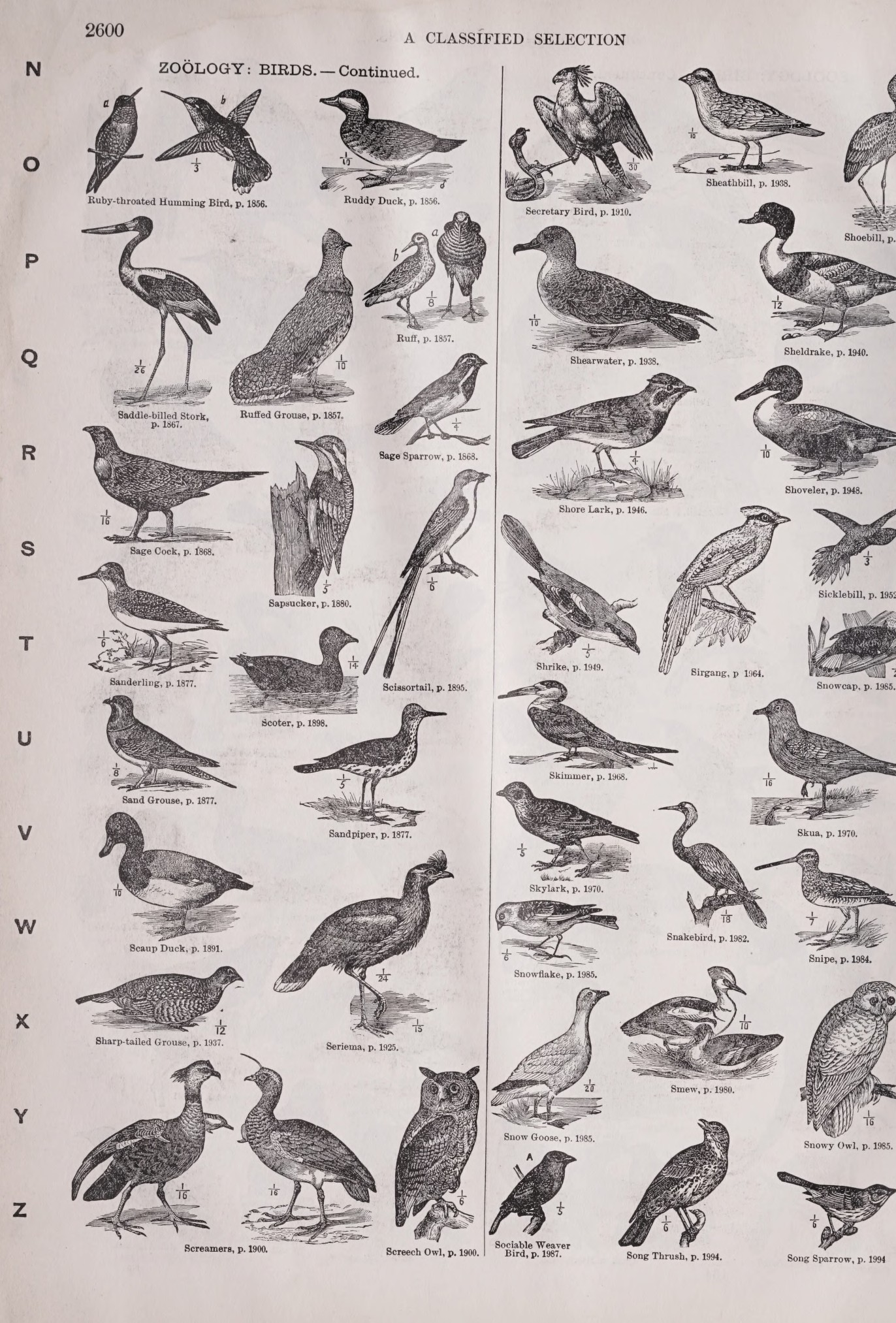
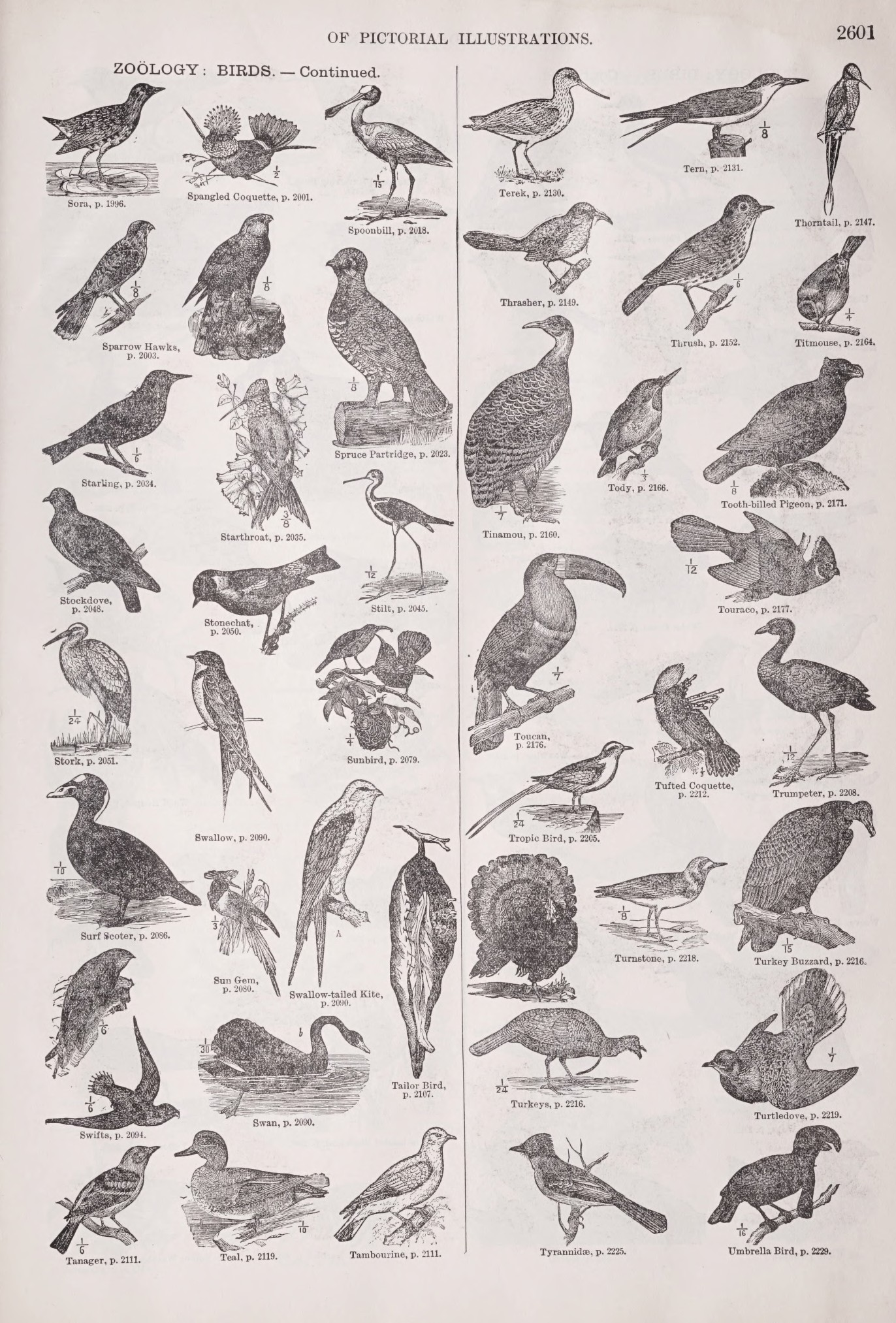
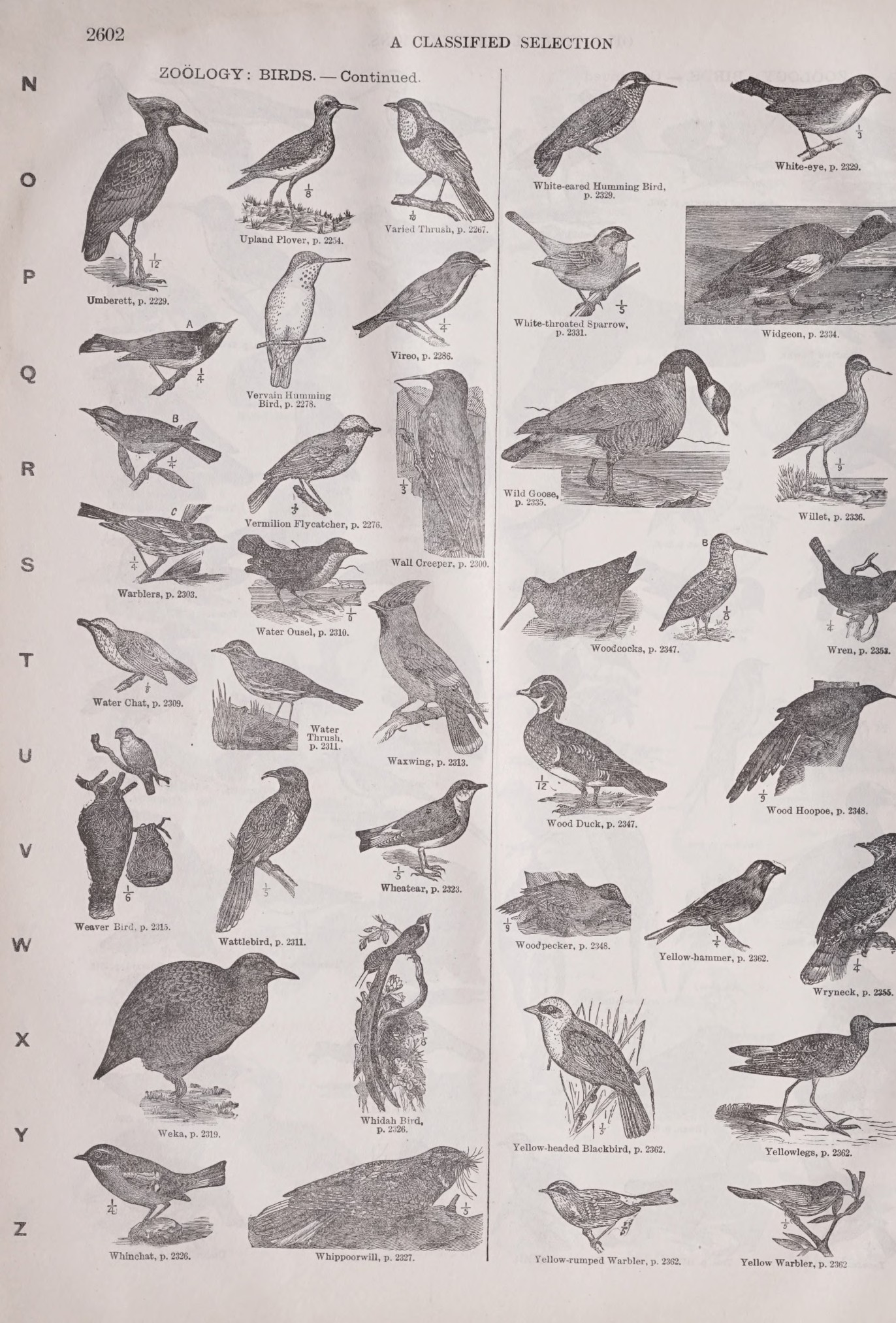
2. BIRD of paradise, a genus of birds, found in the Oriental isles, and in New Guinea; some of them remarkable beautiful. The beak is covered with a belt or collar of downy feathers at the base, and the feathers on the sides are very long. The longest species is two feet four inches in length. The head and back part of the neck are lemon-colored; the neck of the brightest emerald green, soft like velvet; the breast is black; the wings of a chestnut color. The back part of the body is covered with long straight narrow feathers, of a pale brown color, similar to the plumes of the ostrich. These are spread when the bird flies, for which reason he cannot keep long on the wing. From the rump proceed two long stiff shafts, feathered at the extremities.
BIRD, William, an English composer, and one of the best organists of his time, was born about 1540, and died at London, 4th July 1623. He was appointed organist of Lincoln cathedral in 1563; and in 1575 he and his master Tallis were gentlemen of the chapel royal, and organists to Queen Elizabeth. Bird was the earliest English composer of madrigals, and some of his numerous sacred compositions are still much esteemed. Most of them were published during his lifetime under a patent from Queen Elizabeth, which secured to him and Tallis the sole right to print and sell music. Between 1575 and 1611 there were issued under this patent eight different collections of his works, with such titles as Cantiones Sacroe ; Gradualia; Psalmes, Songs, and Sonets, <fcc. The vocal canon Non nobis Domine, generally attributed to him, is well known, and often sung. He also wrote a number of pieces for Queen Elizabeth’s Virginal Book, and other similar collections. In his compositions there is a freedom and elegance rarely found in the music of his period. A full account of Bird’s life by E. F. Rimbault is prefixed to one of his Masses, published by the Musical Antiquarian Society.
9th ed. Encyclopædia Britannica, vol. 3, p. 698 [202 words — estimated reading time: 2 minutes]
צפור, a common name for all birds, but is sometimes used for the sparrow in particular.
Birds are distinguished by the Jewish legislator into clean and unclean. Such as fed upon grain and seeds were allowed for food, and such as devoured flesh and carrion were prohibited.
Moses, to inspire the Israelites with sentiments of tenderness toward the brute creation, commands them, if they find a bird’s nest, not to take the dam with the young, but to suffer the old one to fly away, and to take the young only, Deut. xxii, 6. This is one of those merciful constitutions in the law of Moses which respect the animal creation, and tended to humanize the heart of that people, to excite in them a sense of the divine providence extending itself to all creatures, and to teach them to exercise their dominion over them with gentleness. Beside, the young never knew the sweets of liberty; the dam did: they might be taken and used for any lawful purpose; but the dam must not be brought into a state of captivity. The poet Phocylides has a maxim, in his admonitory poem, very similar to that in the sacred texts:--
Μηδέ τις ὄρνιθας καλιῆς ἅμα ϖάντας ἑλέσθω, Μητερα δ’ ἐκπρολίπης, ἵν’ ἔχῃς ϖάλι τῆσδε νεοττούς.
Nor from a nest take all the birds away, The mother spare, she’ll breed a future day.
It appears that the ancients hunted birds. Baruch, iii, 17, speaking of the kings of Babylon, says, “They had their pastime with the fowls of the air;” and Daniel, iii, 38, tells Nebuchadnezzar that God had made the fowls of the air subject to him.
Birds were offered in sacrifice on many occasions. In the sacrifices for sin, he who had not a lamb, or a kid, “might offer two turtles, or two young pigeons; ...one for a sin-offering, the other for a burnt-offering. These he presented to the priest, who offered that first which was for the sin-offering, and wrung off the head from the neck, but did not divide it asunder: the other he was to offer for a burnt-offering,” Lev. v, 7, 8. When a man who had been smitten with a leprosy was healed, he came to the entrance of the camp of Israel, and the priest went out to inspect him, whether he were entirely cured, Lev. xiv, 5, 6. After this inspection, the leprous person came to the door of the tabernacle, and offered two living sparrows, or two birds; (pure birds, those of which it was lawful to eat;) he made a wisp with branches of cedar and hyssop, tied together with a thread, or scarlet ribbon; he filled an earthen pot with running water, that the blood of the bird might be mingled with it; then the priest, dipping the bunch of hyssop and cedar into the water, sprinkled with it the leper who was healed; after which he let loose the living bird, to fly where it would. In Palestine dead bodies were sometimes left exposed to birds of prey, as appears from Scripture; but, generally, they were buried in the evening: even criminals were taken down from the gallows.
The name of several very beautiful birds of the genus Paradisea and allied genera, inhabiting New Guinea and the adjacent islands. The males have brilliant colors, elegant plumes, and often remarkable tail feathers.
And God said, Let the waters bring forth abundantly the moving creature that hath life, and fowl that may fly above the earth in the open firmament of heaven.
And God said, “Let the waters teem with living creatures, and let birds fly above the earth in the open expanse of the sky.”
And God created great whales, and every living creature that moveth, which the waters brought forth abundantly, after their kind, and every winged fowl after his kind: and God saw that it was good.
So God created the great sea creatures and every living thing that moves, with which the waters teemed according to their kinds, and every bird of flight after its kind. And God saw that it was good.
And God said, Let us make man in our image, after our likeness: and let them have dominion over the fish of the sea, and over the fowl of the air, and over the cattle, and over all the earth, and over every creeping thing that creepeth upon the earth.
Then God said, “Let Us make man in Our image, after Our likeness, to rule over the fish of the sea and the birds of the air, over the livestock, and over all the earth itself and every creature that crawls upon it.”
And God blessed them, and God said unto them, Be fruitful, and multiply, and replenish the earth, and subdue it: and have dominion over the fish of the sea, and over the fowl of the air, and over every living thing that moveth upon the earth.
God blessed them and said to them, “Be fruitful and multiply, and fill the earth and subdue it; rule over the fish of the sea and the birds of the air and every creature that crawls upon the earth.”
And to every beast of the earth, and to every fowl of the air, and to every thing that creepeth upon the earth, wherein there is life, I have given every green herb for meat: and it was so.
And to every beast of the earth and every bird of the air and every creature that crawls upon the earth—everything that has the breath of life in it—I have given every green plant for food.” And it was so.
And out of the ground the LORD God formed every beast of the field, and every fowl of the air; and brought them unto Adam to see what he would call them: and whatsoever Adam called every living creature, that was the name thereof.
And out of the ground the LORD God formed every beast of the field and every bird of the air, and He brought them to the man to see what he would name each one. And whatever the man called each living creature, that was its name.
And Adam knew his wife again; and she bare a son, and called his name Seth: For God, said she, hath appointed me another seed instead of Abel, whom Cainslew.
And Adam again had relations with his wife, and she gave birth to a son and named him Seth, saying, “God has granted me another seed in place of Abel, since Cain killed him.”
And the LORD said, I will destroy man whom I have created from the face of the earth; both man, and beast, and the creeping thing, and the fowls of the air; for it repenteth me that I have made them.
So the LORD said, “I will blot out man, whom I have created, from the face of the earth—every man and beast and crawling creature and bird of the air—for I am grieved that I have made them.”
Of fowls after their kind, and of cattle after their kind, of every creeping thing of the earth after his kind, two of every sort shall come unto thee, to keep them alive.
Two of every kind of bird and animal and crawling creature will come to you to be kept alive.
They, and every beast after his kind, and all the cattle after their kind, and every creeping thing that creepeth upon the earth after his kind, and every fowl after his kind, every bird of every sort.
they and every kind of wild animal, livestock, crawling creature, bird, and winged creature.
And all flesh died that moved upon the earth, both of fowl, and of cattle, and of beast, and of every creeping thing that creepeth upon the earth, and every man:
And every living thing that moved upon the earth perished—birds, livestock, animals, every creature that swarms upon the earth, and all mankind.
This site uses cookies to remember your display preferences (search sources and editions, Bible version, auto-link, images, light/dark theme). No personal data whatsoever is collected. Privacy Policy