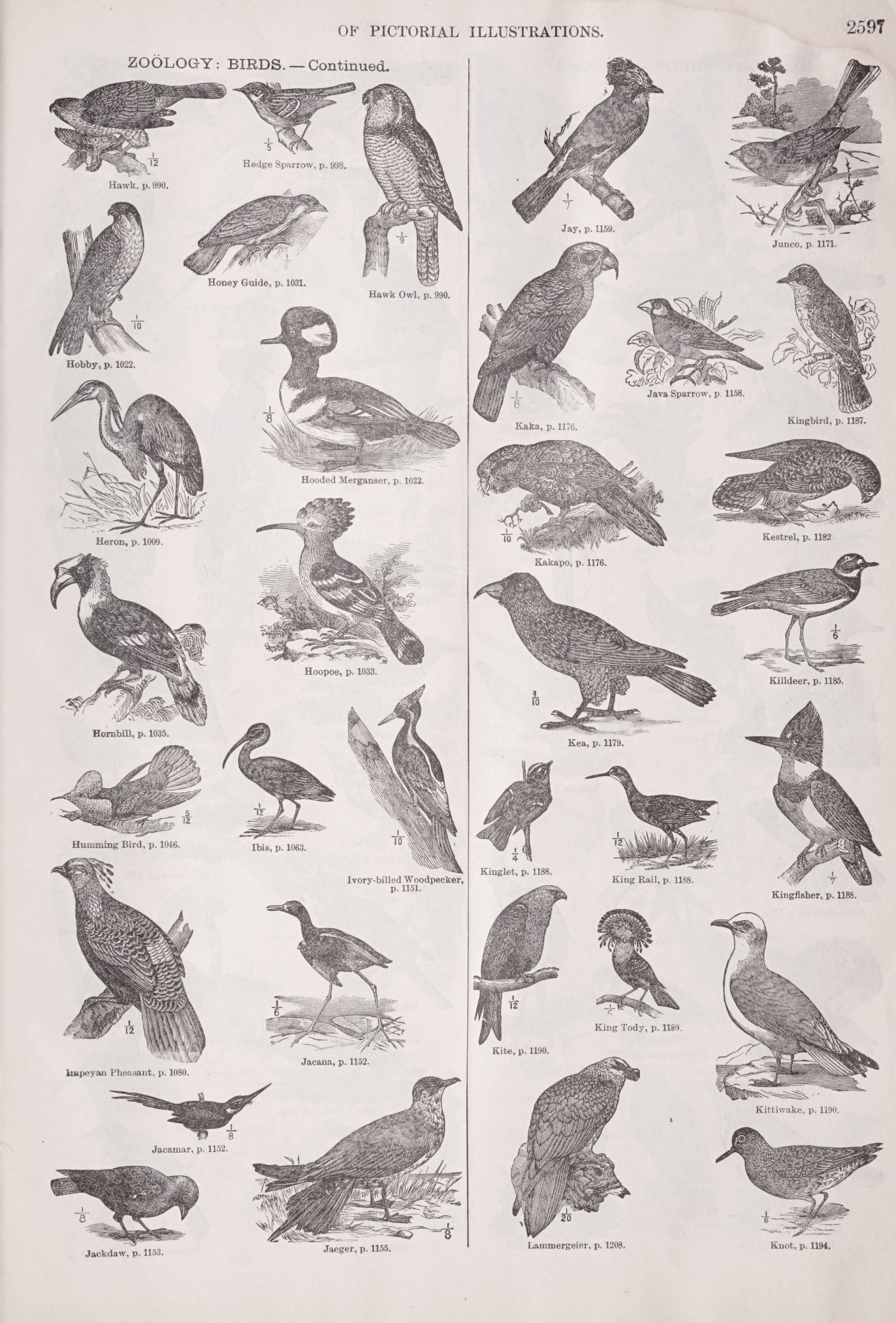
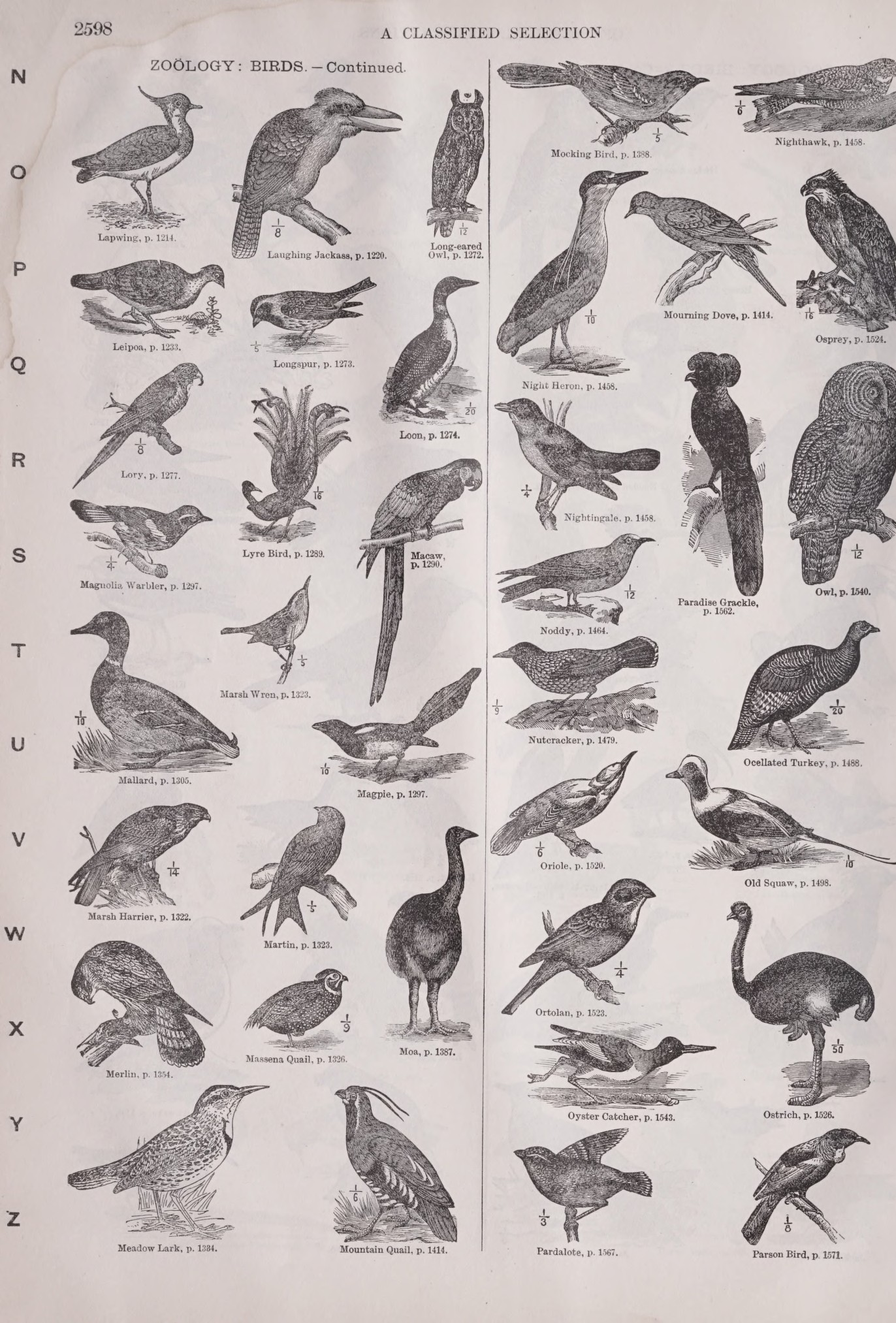
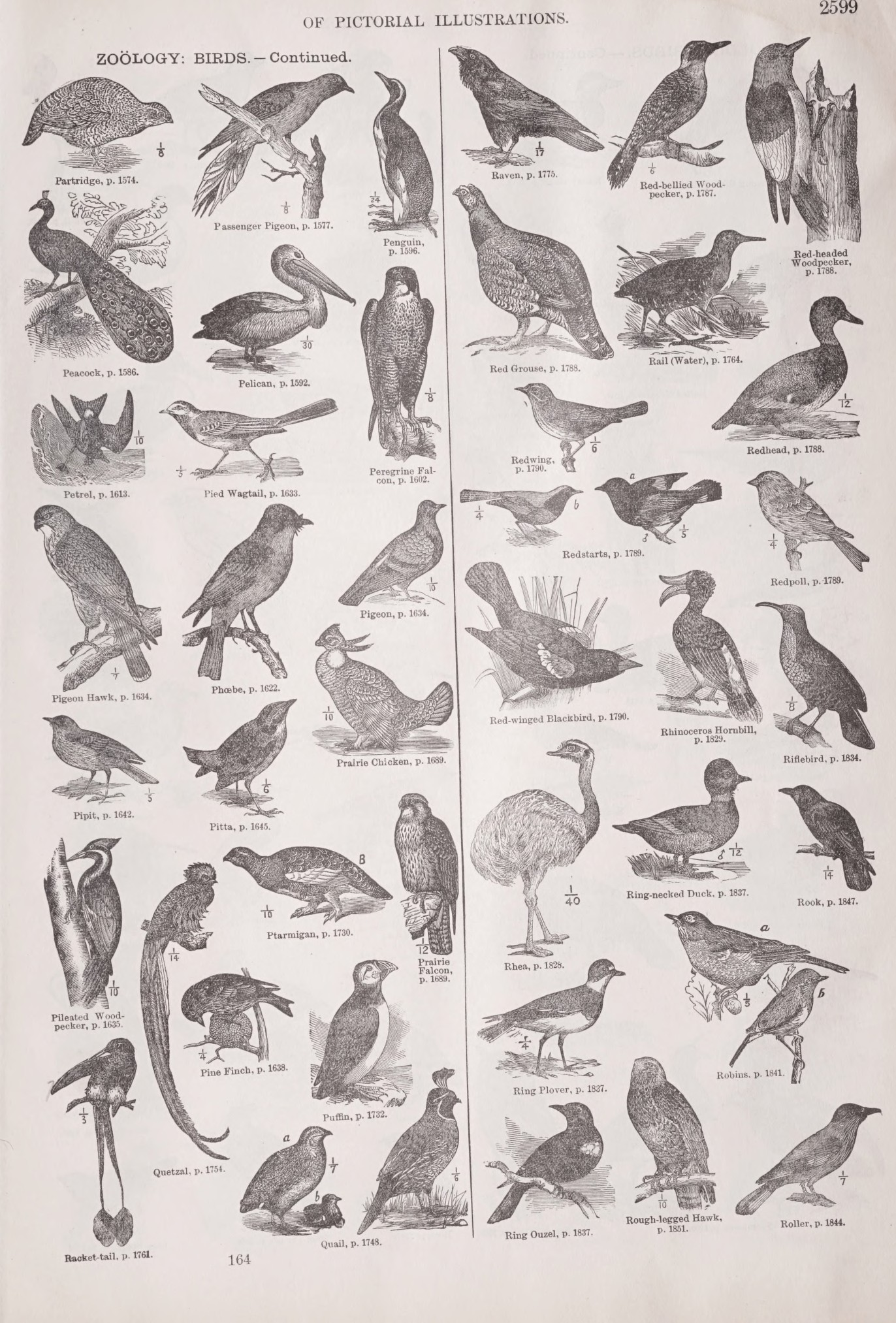
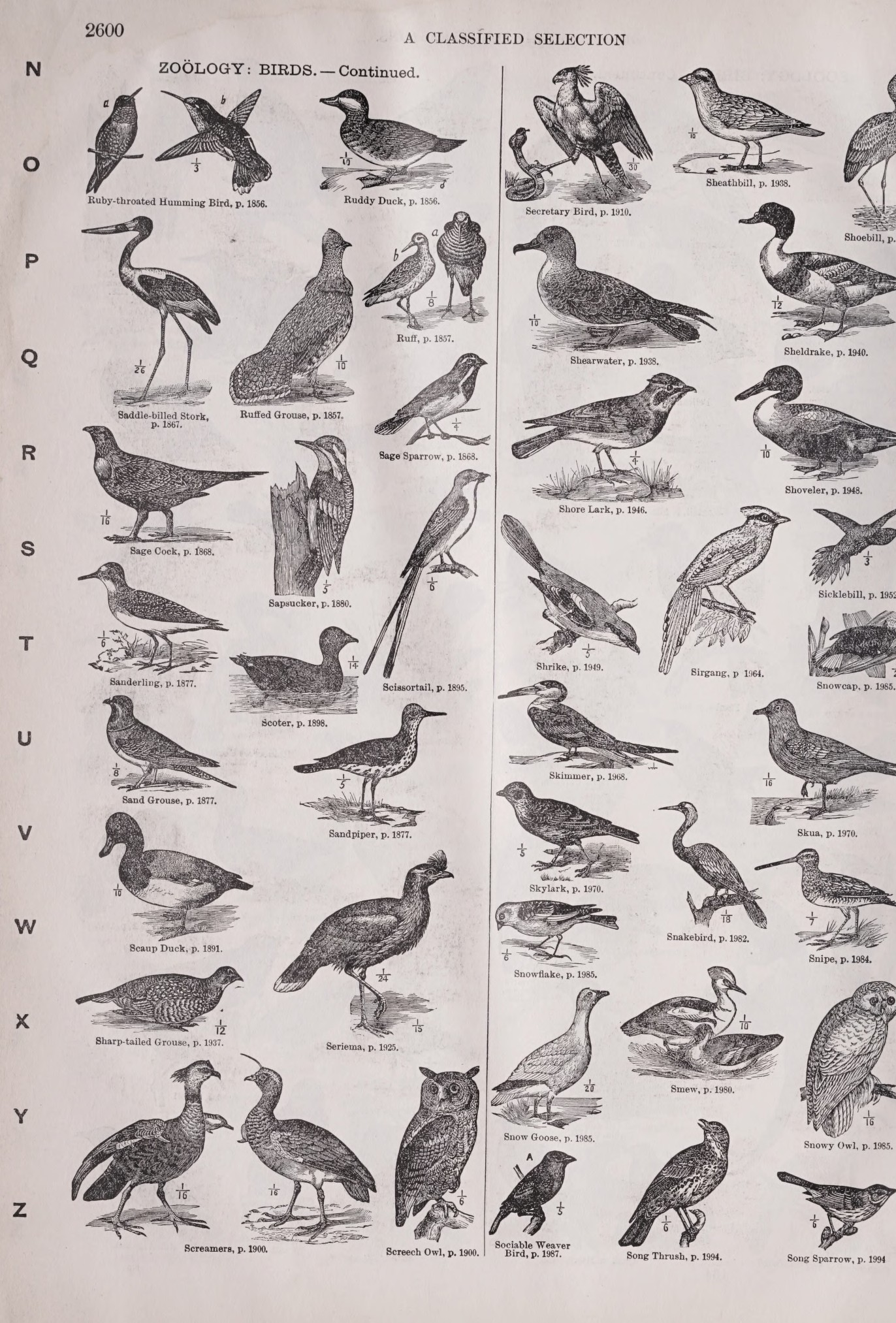
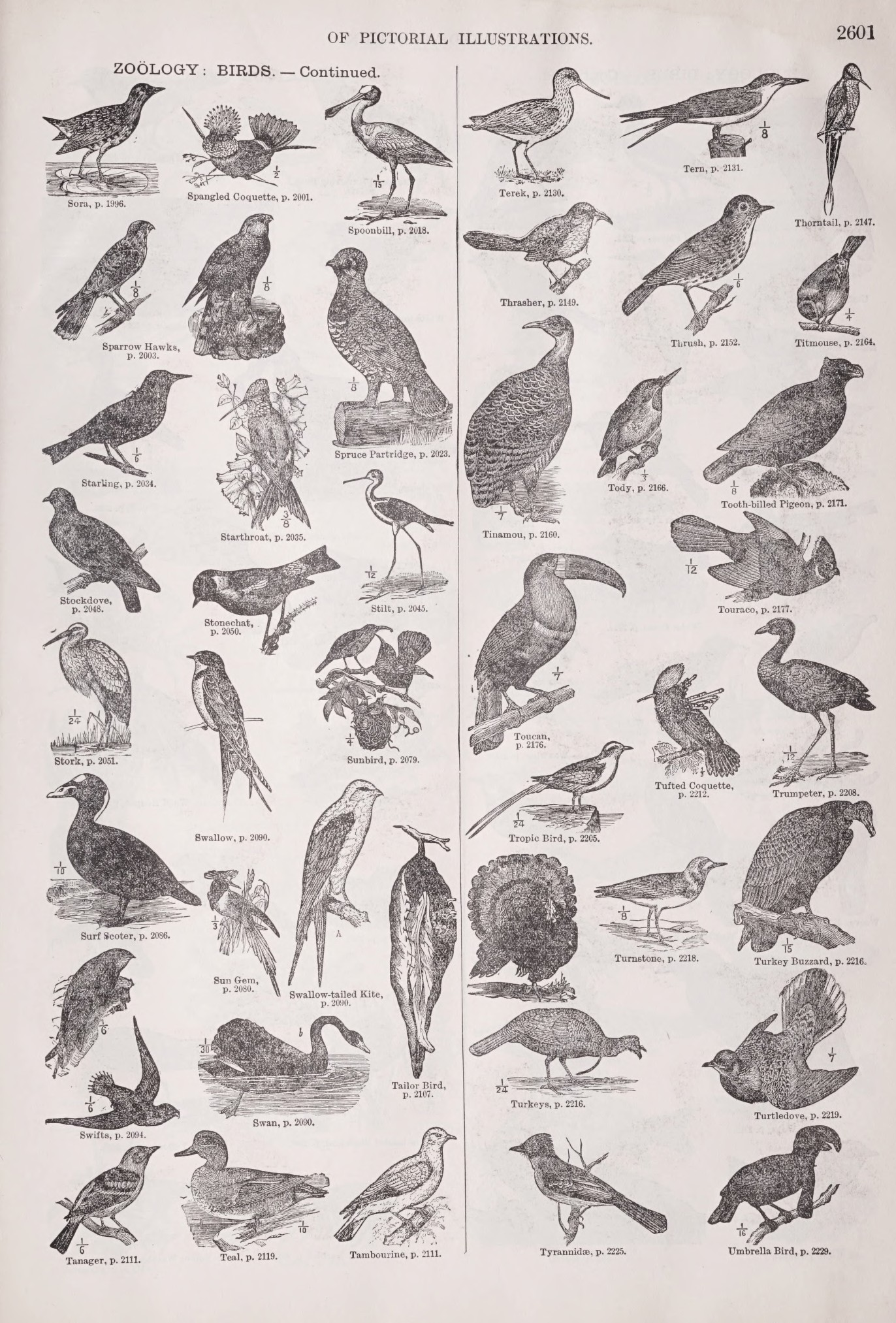
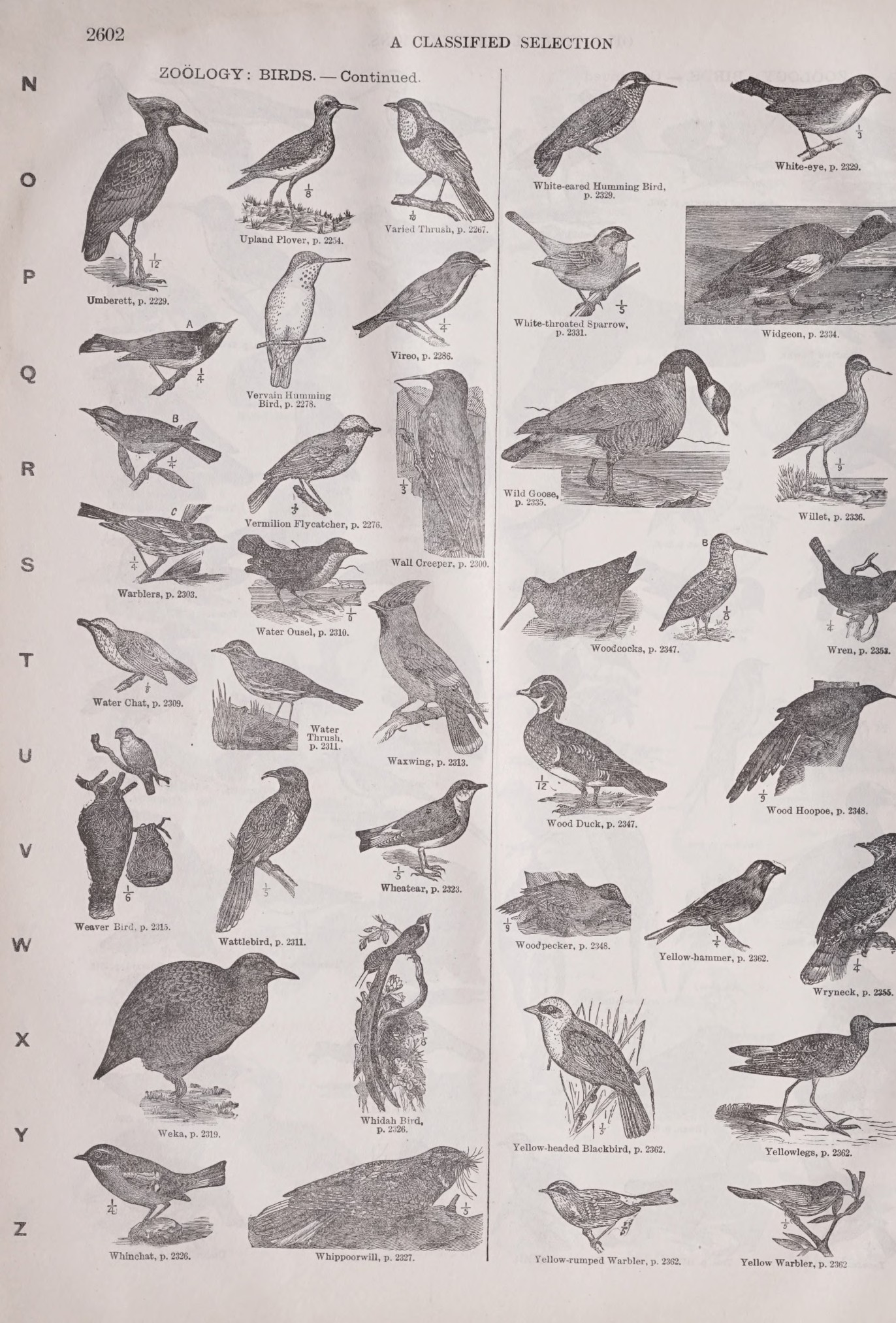
2. Properly, a chicken, the young of fowls, and hence a small fowl.
3. In modern use, any fowl or flying animal.
4. It is remarkable that a nation should lay aside the use of the proper generic name of flying animals, and substitute the name of the young of those animals, as the generic term. The fact is precisely what it would be to make lamb, the generic name of sheep, or colt, that of the equine genus.
2. BIRD of paradise, a genus of birds, found in the Oriental isles, and in New Guinea; some of them remarkable beautiful. The beak is covered with a belt or collar of downy feathers at the base, and the feathers on the sides are very long. The longest species is two feet four inches in length. The head and back part of the neck are lemon-colored; the neck of the brightest emerald green, soft like velvet; the breast is black; the wings of a chestnut color. The back part of the body is covered with long straight narrow feathers, of a pale brown color, similar to the plumes of the ostrich. These are spread when the bird flies, for which reason he cannot keep long on the wing. From the rump proceed two long stiff shafts, feathered at the extremities.
BIRD, William, an English composer, and one of the best organists of his time, was born about 1540, and died at London, 4th July 1623. He was appointed organist of Lincoln cathedral in 1563; and in 1575 he and his master Tallis were gentlemen of the chapel royal, and organists to Queen Elizabeth. Bird was the earliest English composer of madrigals, and some of his numerous sacred compositions are still much esteemed. Most of them were published during his lifetime under a patent from Queen Elizabeth, which secured to him and Tallis the sole right to print and sell music. Between 1575 and 1611 there were issued under this patent eight different collections of his works, with such titles as Cantiones Sacroe ; Gradualia; Psalmes, Songs, and Sonets, <fcc. The vocal canon Non nobis Domine, generally attributed to him, is well known, and often sung. He also wrote a number of pieces for Queen Elizabeth’s Virginal Book, and other similar collections. In his compositions there is a freedom and elegance rarely found in the music of his period. A full account of Bird’s life by E. F. Rimbault is prefixed to one of his Masses, published by the Musical Antiquarian Society.
9th ed. Encyclopædia Britannica, vol. 3, p. 698 [202 words — estimated reading time: 2 minutes]
צפור, a common name for all birds, but is sometimes used for the sparrow in particular.
Birds are distinguished by the Jewish legislator into clean and unclean. Such as fed upon grain and seeds were allowed for food, and such as devoured flesh and carrion were prohibited.
Moses, to inspire the Israelites with sentiments of tenderness toward the brute creation, commands them, if they find a bird’s nest, not to take the dam with the young, but to suffer the old one to fly away, and to take the young only, Deut. xxii, 6. This is one of those merciful constitutions in the law of Moses which respect the animal creation, and tended to humanize the heart of that people, to excite in them a sense of the divine providence extending itself to all creatures, and to teach them to exercise their dominion over them with gentleness. Beside, the young never knew the sweets of liberty; the dam did: they might be taken and used for any lawful purpose; but the dam must not be brought into a state of captivity. The poet Phocylides has a maxim, in his admonitory poem, very similar to that in the sacred texts:--
Μηδέ τις ὄρνιθας καλιῆς ἅμα ϖάντας ἑλέσθω, Μητερα δ’ ἐκπρολίπης, ἵν’ ἔχῃς ϖάλι τῆσδε νεοττούς.
Nor from a nest take all the birds away, The mother spare, she’ll breed a future day.
It appears that the ancients hunted birds. Baruch, iii, 17, speaking of the kings of Babylon, says, “They had their pastime with the fowls of the air;” and Daniel, iii, 38, tells Nebuchadnezzar that God had made the fowls of the air subject to him.
Birds were offered in sacrifice on many occasions. In the sacrifices for sin, he who had not a lamb, or a kid, “might offer two turtles, or two young pigeons; ...one for a sin-offering, the other for a burnt-offering. These he presented to the priest, who offered that first which was for the sin-offering, and wrung off the head from the neck, but did not divide it asunder: the other he was to offer for a burnt-offering,” Lev. v, 7, 8. When a man who had been smitten with a leprosy was healed, he came to the entrance of the camp of Israel, and the priest went out to inspect him, whether he were entirely cured, Lev. xiv, 5, 6. After this inspection, the leprous person came to the door of the tabernacle, and offered two living sparrows, or two birds; (pure birds, those of which it was lawful to eat;) he made a wisp with branches of cedar and hyssop, tied together with a thread, or scarlet ribbon; he filled an earthen pot with running water, that the blood of the bird might be mingled with it; then the priest, dipping the bunch of hyssop and cedar into the water, sprinkled with it the leper who was healed; after which he let loose the living bird, to fly where it would. In Palestine dead bodies were sometimes left exposed to birds of prey, as appears from Scripture; but, generally, they were buried in the evening: even criminals were taken down from the gallows.
The name of several very beautiful birds of the genus Paradisea and allied genera, inhabiting New Guinea and the adjacent islands. The males have brilliant colors, elegant plumes, and often remarkable tail feathers.
An interior angle or notch cut across a piece of timber, for the reception of the edge of another, as that in a rafter to be laid on a plate; -- commonly called crow's-foot in the United States.
1. A box or case with wires, small sticks, or wicker, forming open work, for keeping birds.
2. A little stick, cleft at one end, in which is put a leaf of some plant for imitating the cry of birds. A laurel leaf counterfeits the voice of lapwings; a leek, that of nightingales; etc.
2. BIRD'-LIME, noun [bird and lime.] A viscous substance, usually made of the juice of holly-bark, extracted by boiling, mixed with a third-part of nut oil or thin grease, used to catch birds. For this purpose, the twigs of a bush are smeared over with this viscid substance.
And God said, Let the waters bring forth abundantly the moving creature that hath life, and fowl that may fly above the earth in the open firmament of heaven.
And God said, “Let the waters teem with living creatures, and let birds fly above the earth in the open expanse of the sky.”
And God created great whales, and every living creature that moveth, which the waters brought forth abundantly, after their kind, and every winged fowl after his kind: and God saw that it was good.
So God created the great sea creatures and every living thing that moves, with which the waters teemed according to their kinds, and every bird of flight after its kind. And God saw that it was good.
And God said, Let us make man in our image, after our likeness: and let them have dominion over the fish of the sea, and over the fowl of the air, and over the cattle, and over all the earth, and over every creeping thing that creepeth upon the earth.
Then God said, “Let Us make man in Our image, after Our likeness, to rule over the fish of the sea and the birds of the air, over the livestock, and over all the earth itself and every creature that crawls upon it.”
And God blessed them, and God said unto them, Be fruitful, and multiply, and replenish the earth, and subdue it: and have dominion over the fish of the sea, and over the fowl of the air, and over every living thing that moveth upon the earth.
God blessed them and said to them, “Be fruitful and multiply, and fill the earth and subdue it; rule over the fish of the sea and the birds of the air and every creature that crawls upon the earth.”
And to every beast of the earth, and to every fowl of the air, and to every thing that creepeth upon the earth, wherein there is life, I have given every green herb for meat: and it was so.
And to every beast of the earth and every bird of the air and every creature that crawls upon the earth—everything that has the breath of life in it—I have given every green plant for food.” And it was so.
And out of the ground the LORD God formed every beast of the field, and every fowl of the air; and brought them unto Adam to see what he would call them: and whatsoever Adam called every living creature, that was the name thereof.
And out of the ground the LORD God formed every beast of the field and every bird of the air, and He brought them to the man to see what he would name each one. And whatever the man called each living creature, that was its name.
And the LORD said, I will destroy man whom I have created from the face of the earth; both man, and beast, and the creeping thing, and the fowls of the air; for it repenteth me that I have made them.
So the LORD said, “I will blot out man, whom I have created, from the face of the earth—every man and beast and crawlingcreature and bird of the air—for I am grieved that I have made them.”
Of fowls after their kind, and of cattle after their kind, of every creeping thing of the earth after his kind, two of every sort shall come unto thee, to keep them alive.
Two of every kind of bird and animal and crawlingcreature will come to you to be kept alive.
They, and every beast after his kind, and all the cattle after their kind, and every creeping thing that creepeth upon the earth after his kind, and every fowl after his kind, every bird of every sort.
And all flesh died that moved upon the earth, both of fowl, and of cattle, and of beast, and of every creeping thing that creepeth upon the earth, and every man:
And every living thing that moved upon the earth perished—birds, livestock, animals, every creature that swarms upon the earth, and all mankind.
And every living substance was destroyed which was upon the face of the ground, both man, and cattle, and the creeping things, and the fowl of the heaven; and they were destroyed from the earth: and Noah only remained alive, and they that were with him in the ark.
And every living thing on the face of the earth was destroyed—man and livestock, crawling creatures and birds of the air; they were blotted out from the earth, and only Noah and those with him in the ark remained.
Bring forth with thee every living thing that is with thee, of all flesh, both of fowl, and of cattle, and of every creeping thing that creepeth upon the earth; that they may breed abundantly in the earth, and be fruitful, and multiply upon the earth.
Bring out all the living creatures that are with you—birds, livestock, and everything that crawls upon the ground—so that they can spread out over the earth and be fruitful and multiply upon it.”
And the fear of you and the dread of you shall be upon every beast of the earth, and upon every fowl of the air, upon all that moveth upon the earth, and upon all the fishes of the sea; into your hand are they delivered.
The fear and dread of you will fall on every living creature on the earth, every bird of the air, every creature that crawls on the ground, and all the fish of the sea. They are delivered into your hand.
And with every living creature that is with you, of the fowl, of the cattle, and of every beast of the earth with you; from all that go out of the ark, to every beast of the earth.
and with every living creature that was with you—the birds, the livestock, and every beast of the earth—every living thing that came out of the ark.
This site uses cookies to remember your display preferences (search sources and editions, Bible version, auto-link, images, light/dark theme). No personal data whatsoever is collected. Privacy Policy