
CARAC ,
Word of the Day: Catachrestical
Caracal
Encyclopedia Britannica
CARACAL, The(Felis caracal), belongs to a group of Lynxes characterized by comparative slenderness of body and length of tail and ears. It is somewhat larger than a fox, of a uniform reddish brown colour above, and whitish beneath, with two white spots above each of the eyes, and with a long black tuft of hair at the tip of the ears, the latter, according to Sir W. Jardine, being only present in spring, or at the commencement of the breeding season. It is to the ear-tufts that it owes its name, which is derived from two Turkish words signifying “black-ear.” The caracal is widely distributed, being found throughout Africa and South-western Asia. It feeds on the smaller quadrupeds and birds, hunting the former in packs after the manner of wolves, and climbing trees in pursuit of the latter. It is said also to resemble the jackal in following in the wake of the lion and other large carnivora, in order to feed on what those lords of the lower creation may leave, and on this account has received the name of the “lion’s provider.” Like the cheetah, it was formerly trained by Eastern princes to hunt the smaller quadrupeds, and such birds as the crane and pelican; but from its fierceness, and the extreme irritability which it displays in confinement, it does not seem well-fitted for domestication.
Frequent reference is made in Greek and Roman literature to the lynx, and from such descriptions as are given of it there is little doubt that the caracal, and not the more northerly species now known as the lynx, was referred to. In South Africa, where the caracal abounds, its hide is made by the Kaffres into skin cloaks, known as karosses.
9th ed. Encyclopædia Britannica, vol. 5, p. 80
[295 words — estimated reading time: 2 minutes]
[295 words — estimated reading time: 2 minutes]
Caracalla
Encyclopedia Britannica
CARACALLA, Marcus Aurelius Antoninus (188— 219 a.d. ), a Roman emperor, son of the Emperor Septimius Severus, was born at Lyons in 188. His original name, Bassianus, has been entirely dropped in favour, either of the nickname Caracalla (taken from the long hooded tunic which he wore, and introduced into the army), or of the imperial title of Marcus Aurelius Antoninus, which he received at the time when his father declared himself the adopted son of Μ. Aurelius. Dion Cassius regularly calls him Tarantus, from his resemblance to a certain coarse and bloodthirsty gladiator. The heartless cruelty of his disposition was early displayed in an attempt to assassinate his father; and when, on his father’s death, he mounted the throne (211) as colleague of his brother Geta, he did not shrink from murdering him in the presence of his mother, to seize the supreme power, nor from making himself secure by butchering 20,000 persons whom he suspected. It is said that he was, however, unable to rid himself of remorse, and that it was the torment of conscience which drove him to spend the rest of his life in the maddest acts of destruction and bloodshed. He visited Gaul, Germany, France, Egypt, and various parts of Asia, plundering everywhere, and committing the most atrocious crimes. In Alexandria he took vengeance for the sarcasms of the people by a general massacre; and he laid Mesopotamia waste because Artabanus, the Parthian king, refused to give him his daughter in marriage. In 217 he was killed at the instigation of Macrinus, who succeeded him. See Roman History.
9th ed. Encyclopædia Britannica, vol. 5, p. 81
[265 words — estimated reading time: 2 minutes]
[265 words — estimated reading time: 2 minutes]
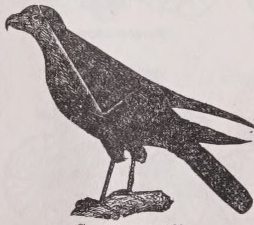
A south American bird of several species and genera, resembling both the eagles and the vultures. The caracaras act as scavengers, and are also called carrion buzzards.
Caracci
Encyclopedia Britannica
CARACCI, Lodovico, Agostino, and Annibale, three celebrated Italian painters, were born at Bologna in 1555, 1558, and 1560 respectively. Lodovico, the eldest, son of a butcher, was cousin to the two younger, Agostino and Annibale, sons of a tailor, and had nearly finished his professional studies before the others had begun their education. From being a reputed dunce while studying under Tintoretto in Venice, he gradually rose, by an attentive observation of nature and a careful examination of the works of the great masters preserved at Bologna, Venice, Florence, and Parma, to measure himself with the teachers of his day, and ultimately projected the opening of a rival school in his native place. Finding himself unable to accomplish his design without assistance, he sent for his two cousins, and induced them to abandon their handicrafts (Agostino being a goldsmith, and Annibale a tailor) for the profession of painting. Agostino he first placed under the care of Fontana, retaining Annibale in his own studio; but he afterwards sent both to Venice and Parma, to copy the works of Titian, Tintoretto, and Correggio, on which his own taste had been formed. On their return, the three relatives, assisted by an eminent anatomist, Anthony de la Tour, opened, in 1589, an academy of painting under the name of the Incamminati (or, as we might paraphrase it, the Right Road), provided with numerous casts, books, and bassi-rilievi,which Lodovico had collected in his travels. From the affability and kindness of the Caracci, and their zeal for the scientific education of the students, their academy rose rapidly in popular estimation, and soon every other school of art in Bologna was deserted and closed. They continued together till, at the invitation of Cardinal Farnese, Annibale and ...Agostino went to Rome in 1600 to paint the gallery of the cardinal’s palace. The superior praises awarded to Agostino inflamed the jealousy of Annibale, already kindled by the brilliant reception given by the pupils of the Incamminati to Agostino’s still highly celebrated picture of the Communion of St Jerome, and the latter was dismissed to Parma to paint the great saloon of the Casino. Here he died in 1601, when on the eve of finishing his renowned painting of Celestial, Terrestrial, and Venal Love. Annibale continued to work alone at the Farnese gallery till the designs were completed; but, disappointed at the miserable remuneration offered by the cardinal, he retired to Naples, where an unsuccessful contest for a great work in the church of the J esuits threw him into a fever, of which he died in 1609. Lodovico always remained at his academy in Bologna (excepting for a short visit to his cousin at Rome), though invited to execute paintings in all parts of the country. He died in 1619, and was interred in the church of St Mary Magdalene. The works of Lodovico are numerous in the chapels of Bologna. The most famous are—The Madonna standing on the moon, with St Francis and St Jerome beside her, attended by a retinue of angels; John the Baptist, St Jerome, St Benedict, and St Cecilia; and the Limbo of the Fathers. He was by far the most amiable of the three cousins, rising superior to all feelings of jealousy towards his rivals, and though he received large sums for his productions, yet, from his almost unparalleled liberality to the students of the academy, he died poor. With skill in painting Agostino combined the greatest proficiency in engraving (which he had studied under Cornelius de Cort) and high accomplishments as a scholar. He died not untroubled by remorse for the indecencies which, in accordance with the corruption of the time, he had introduced into some of his engravings. The works of Annibale are more diversified in style than those of the others, and comprise specimens of painting after the manner of Correggio, Titian, Paolo Veronese, Raphael, and Michelangelo. The most distinguished are the Dead Christ in the lap of the Madonna; the Infant and St John; St Catherine; St Roch distributing alms (now in the Dresden Gallery); and the Saviour wailed over by the Maries, at present in possession of the earl of Carlisle. He frequently gave great importance to the landscape in his compositions. The reputation of Annibale is tarnished by his jealousy and vindictiveness towards his brother, and the licentiousness of his disposition, which contributed to bring him to a comparatively early grave.
The three Caracci were the founders of the so-called Eclectic School of painting,—the principle of which was to study in the works of the great masters the several excellencies for which they had been respectively pre-eminent, and to combine these in the productions of the school itself; for instance, there was to be the design of Raphael, the power of Michelangelo, the colour of Titian, and so on. The dullest or müdest connoisseur will at once perceive that a picture uniting these various kinds of greatness would be a glorious and indeed an unparagoned work of art; but it does not follow that the attempt to transfer the several qualities, by study and practice, from the works of various men to those of one man, is fruitful of good. It is, in fact, far the reverse; and at the present day perhaps few axioms in art have won a wider acceptance than that which pronounces eclecticism to be at once a result and a symptom of decadence. Eclecticism indicates that the creative impulse, the vital energy and fertility, of art have departed; that the practitioners of the day can no longer do what their forerunners did—produce admirable works, because in themselves spontaneously capable of doing so. They have on the contrary to investigate what has been achieved, and labour not for a new achievement resembling those which preceded in so far as all are the product of some personal gift, special and unforestalled, but rather for an achievement recombining and re-applying old successes, and qualifying, or indeed neutralizing, the strength of one quality by that of another. This is, in effect, an attempt to produce works of art upon the principles which govern the criticism of those works,—an attempt predestined to sterility, for no two things are more antagonistic than the producing power and the criticizing power. They may, no doubt, be united in the same person, but cannot work out their results the one through the medium of the other.
9th ed. Encyclopædia Britannica, vol. 5, p. 81
[1,077 words — estimated reading time: 7 minutes]
[1,077 words — estimated reading time: 7 minutes]
A kind of large ship formerly used by the Spaniards and Portuguese in the East India trade; a galleon.
To move in a caracol; to wheel.
1. A half turn which a horseman makes, either to the right or the left.
2. A staircase in a spiral form.
To move in a caracole, or in caracoles; to wheel.
A mixture of gold, silver and copper, of which are made rings pendants and other toys for the savages.
Caractacus
Encyclopedia Britannica
CARACTACUS, a chief of the Silures in ancient Britain. See Britannia, vol. iv. p. 353.
9th ed. Encyclopædia Britannica, vol. 5, p. 82
[15 words — estimated reading time: 1 minute]
[15 words — estimated reading time: 1 minute]
CarÁcas
Encyclopedia Britannica
CARÁCAS, a large city of South America, capital of the United States of Venezuela and of the federal district, is situated on the declivity of a mountain 2880 feet above the level of the sea, 16 miles south-south-east of La Guayra, its port on the Caribbean Sea, in 10° 30' N. lat., 67° 4' W. long. Population in 1873, 48,897. The city is finely-situated, and has a temperate and healthy though variable climate. The mean temperature of the year is about 72° Fahr., being in the hot season 75°, and in the cold season 6G 0 . The thermometer, however, sometimes rises to 84° or 85°, and at other times descends as low as 51° or 52°. Rain is abundant during the months of April, May, and June, but not so incessant as in other tropical countries; the rest of the year is rather dry. The city is much subject to earthquakes, from which it has frequently suffered; in that of 1812,12,000 persons are said to have perished. Carácas is separated from the sea-coast, and from its port of Guayra by the high ridge of the Cerro de Avila, and lies on the western skirt of the plain of Chacao, which has a steep slope from north-north-west to south-south-east. The Guayra, a tributary of the River Tuy, which falls into the ocean thirty-six miles east of Cape Codera, flows past the southern side of the city, and is joined by the streams called the Anauco, Catuche, and Caroata passing through the town from the north. Two miles east the great double-peaked mountain known as the Silla de Carácas rises to 8600 feet. The Cal vario hill, west of the city, was the scene of a battle between the Spaniards and patriots in June 1821. The town is well and regularly built; the streets are wide and well paved, crossing each other at right angles. There are several squares, of which the Plaza Mayor, or ...great square, is the most worthy of notice. Its east side is principally occupied by the cathedral, the south by the college, and the west by the public prison. This square is a great market for provisions, fruit, and other articles, and contains a sort of inner square in which are ranges of shops. A reservoir in the ravine of the Catuche to the north furnishes the city with water, which is supplied to the inhabitants by public fountains as well as in pipes. The chief public building is the cathedral, which is 250 feet in length by 75 in breadth, and is supported by twenty-four pillars, without beauty or proportion. It contains the tomb of Bolivar. The university of Carácas, which, with the House of Assembly, the National Library (of 10,000 volumes), and a church, forms one block of the town, was originally a convent of Carmelite friars, and has faculties of divinity, chemistry, and medicine. The Municipal Hall, close to the Grand Plaza, is a plain building, one of the oldest in Carácas. There are several parish churches, three monasteries for friars, two nunneries, three hospitals (one of which is for lepers alone), and a theatre. The city is very inaccessible from the north, in which direction three rough mountain tracks unite it with La Guayra. A railroad is projected to unite Carácas and its port. A railway to the eastward from the city was partly constructed at one time, but was not completed. Carácas was founded by Diego Losada in 1567.
9th ed. Encyclopædia Britannica, vol. 5, p. 81
[599 words — estimated reading time: 4 minutes]
[599 words — estimated reading time: 4 minutes]
No thesaurus entries found for "Carac".
No Bible verses found for "Carac".