
A small bed; on board of ships, a bed frame suspended from the beams, for the officers to sleep in, between the decks; a piece of canvas, extended by a frame.
Word of the Day: Catachrestical
Cotta
Encyclopedia Britannica
COTTA, a family intimately connected with the history of German literature.
Johann Georg Cotta was the founder of the illustrious Cotta publishing-house. At the time of the Reformation the family (originally of noble Italian blood) lived in Eisenach; and we hear of them later as being settled in Dresden. Johann Georg started business at Tübingen in 1640
His son, Johann Friedrich (1701-1779), born March 12, 1701, devoted himself to theological study, and began his public career as lecturer in Jena University. He then travelled in Germany, France, and Holland, and, after a stay of several years in London, became professor at Tübingen in 1733. In 1736 he removed to the chair of theology in the university of Göttingen, which had been instituted as a seat of learning, two years before, by George II. of England, in his capacity as elector of Hanover. In 1739, however, he returned, as extraordinary professor of theology, to his Alma Mater, and, after successively filling the chairs of history, poetry, and oratory, was appointed ordinary professor of theology in 1741. Finally he died, as chancellor of the university, on the 31st of December 1779. His learning was at once wide and accurate; his theological views were orthodox, although he did not believe in strict verbal inspiration. He was a voluminous writer. His chief works are his edition of Johann Gerard’s Loci Theologici, and the Kirchen Historie des Neuen, Testaments....
The most famous member of the family was Johann Friedrich Freiherr Cotta von Cottendorf (1764- 1832), a grandson of the theologian, who was born at Stuttgart April 27, 1764. He attended the gymnasium of his native place, and originally meant to study theology, but became greatly interested in the science of war. In 1782 he entered, as a student of mathematics, in the university of Tübingen, and on the recommendation of Professor Pfleiderer, was elected tutor of Prince Lubomirski in Warsaw. While engaged in tuition, he continued his own studies with great enthusiasm; and, in his zeal for self-culture, he spent a considerable time in Paris, studying French and natural science, and mixing with distinguished literary men. After practising as an advocate in one of the higher courts, Cotta, in compliance with his father’s earnest desire, undertook to conduct the publishing business at Tübingen, which, in the hands of subordinates, had very much declined. He started in December 1787, and laboured incessantly to acquire familiarity with all the details. The house connections rapidly extended; and, in 1793, the Allgemeine Zeitung, of which Schiller was to be editor, was planned. Schiller was compelled to withdraw on account of his health; but his friendship with Cotta deepened every year, and was a great advantage to the poet and his family. Cotta awakened in Schiller so warm an attachment that, as Doering tells us, when a bookseller offered him a higher price than Cotta for the copyright of Wallenstein, the poet firmly declined it, replying, “Cotta deals steadily with me, and I with him.” In 1795 Schiller and Cotta founded the Horen, a periodical very important to the student of German literature. The poet intended, by means of this work, to infuse higher ideas into the common lives of men, by giving them a nobler human culture, and“to reunite the divided political world under the banner of truth and beauty.” The Horen brought Goethe and Schiller into most intimate relations with each other and with Cotta; and Goethe, while regretting that he had already promised Wilhelm Meister to another publisher, contributed the Unterhaltung Deutscher Ausgewanderten, the Roman Elegies, and a paper on Literary Sansculottism. Fichte sent essays from the first; and the other brilliant German authors of the time were also represented. In 1798 the Allgemeine Zeitung, which is still the leading daily paper in Germany, appeared at Tübingen, being edited first by Posselt and then by Huber. It soon wielded a mighty influence, and must prove a valuable storehouse to the historian. In 1798 the editorial office was transferred to Stuttgart, and in 1803 to Augsburg. In 1799 Cotta entered on his political career, and was sent to Paris by the Würtemburg states as their representative, where he made friendships which proved very advantageous for the Allgemeine Zeitung. In 1801 he paid another visit to Paris, in a political capacity, when he carefully studied Napoleon’s policy, and treasured up many hints which were useful to him in his literary undertakings. He still, however, devoted most of his attention to his own business, and, for many years, made all the entries into the ledger with his own hand. He relieved the tedium of almost ceaseless toil by pleasant intercourse with literary men. With Schiller, Huber, and Pfeffel he was on terms of the warmest friendship; and he was also intimate with Herder, Schelling, Fichte, Richter, Voss, Hebel, Tieck, Therese Huber, Matthissυn, the brothers Humboldt, Johann Müller, Spittler, and others, whose works he published in whole or in part. In the correspondence of Alexander von Humboldt with Varnhagen von Ense we see the familiar relations in which the former stood to the Cotta family. In 1795 appeared the Politischen Annalen and the Jahrbücher der Baukunde, and in 1798 the Damenalmanach, along with some works of less importance. In 1807 he issued the Morgenblatt, to which Schorn’s Kunstblatt and Menzel’s Literaturblatt were afterwards added. In 1810 he removed to Stuttgart; and from that time till his death he was loaded with honours. State affairs and an honourable commission from the German booksellers took him to the Vienna Congress; and in 1815 he was deputy-elect at the Wurtemberg Diet. In 1819 he became representative of the nobility; then he succeeded to the offices of member of committee and (1824) vice-president of the Würtemberg second chamber. He was also chosen Prussian privy court counsellor, Bavarian chancellor, and knight of the order of the Würtemberg Crown. Meanwhile such publications as the Polytechnische Journal, the Hesperus, the Würtember-gischen Jahrbücher, the Hertha, the Ausland, and the Inland issued from the press. In 1828-29 appeared the famous correspondence between Schiller and Goethe. Cotta was an unfailing friend of young struggling men of talent. In addition to his high standing as a publisher, he was a man of great practical energy, which flowed into various fields of activity. He was a scientific agriculturist, and promoted many reforms in farming. He was the first Wstrtemberg landholder who did away with servitude on his estates. In politics he was throughout his life a moderate liberal. In 1824 he set up a steam printing press in Augsburg, and, about the same time, founded a literary institute at Munich. In 1825 he started steamboats, for the first time, on Lake Constance, and introduced them in the following year for the Rhine traffic. In 1828 he was sent to Berlin, on an important commission, by Bavaria and Würtemberg, and was there rewarded with orders of distinction at the hands of the three kings. He died on the 29th of December 1832.
His son, Freiherr Georg Cotta von Cottendorf, who was born in 1796, and died in 1863, succeeded to the management of the business on the death of his father. He was materially assisted by his brother-in-law, Chamberlain Freiherr von Reischach. He greatly extended the connections of the firm; and, in 1865, the house had establishments for different kinds of publications at Stuttgart, Augsburg, Leipsic, and Munich. The business is still in the hands of the Cotta family. (τ. gi.)
9th ed. Encyclopædia Britannica, vol. 6, p. 480
[1,266 words — estimated reading time: 8 minutes]
[1,266 words — estimated reading time: 8 minutes]
Cottabus
Encyclopedia Britannica
COTTABUS (Greek, κoττaβoζ, κoσσaβoς, or oττaβofi), a game of skill for a long time in great vogue in ancient Greece, frequently alluded to by the classical writers of the period, and not seldom depicted on the ancient vases. The object of the player was to cast a portion of wine left in his drinking cup in such a way that without breaking bulk in its passage through the air, it should reach a vessel set to receive it, and there produce a distinct noise by it:: impact. The thrower, in the ordinary form of the game was expected to retain the recumbent position that was usual at table, and in flinging the cottabus, to make use of his right hand only. To succeed in the aim no small amount of dexterity was required, and unusual ability in the game was rated as high as corresponding excellence in throwing the javelin. Not only was the cottabus the ordinary accompaniment of the festal assembly, but at least in Sicily a special building of a circular form was sometimes erected so that the players might be easily arranged round the basin, and follow each other in rapid succession. Like all games in which the element of chanca found a place, it was regarded as more or less ominous of the future success of the players, especially in matters of love; and the excitement was sometimes further augmented by some object of value being staked on the event. Various modifications of the original principle of the game were gradually introduced, and no fewer than nine different kinds, though some of these have no very striking individuality, have been described by Groddeck in his essay on the subject, published in his Antiquarische Versuche, 1800. In one variety a flotilla of shallow saucers was set swimming in a basin, and he was regarded as the victor who sank the greatest ...number by his casts; in another the difficulty of the task was increased by setting up a small figure called a μAvη<i, and requiring the jet of wine first to strike on this, and then to fall with a noise into the vessel beneath; while in a third two scales were balanced in such a way that the weight of the liquid cast into either scale caused it to dip down, and touch the top of an image. In the boisterous mirth of convivial gatherings the players seem sometimes to have set a slave or one of their companions whom they wished to annoy, in the place of the μAvη<s ; and from this ill-mannered custom the word aπoκoττaβiζeιu is occasionally used in the sense of to insult. The game appears to have been of Sicilian origin, but it spread through Greece from Thessaly to Rhodes, and was especially fashionable at Athens. Dionysius, Alcaeus, Anacreon, Pindar, Bacchylides, AEschylus, Sophocles, Euripides, Aristophanes, Antiphanes, have frequent and familiar allusion to the κoτταβos; but in the writers of the Roman and Alexandrian period such reference as occurs shows that the fashion had died out. In Latin literature it is almost altogether unknown.
For ancient accounts see Athenaeus, xv.; the Scholiast on Aristo-panes, Pac.; the Scholiast on Lucian’s Lexiphrones; Tzetzes, Chiliad, vi.; Suidas, s.v. κoττaβiζειv ; Nonnus, xxxiii.; and for modern investigation, Meursius, De ludis Graecorum ; Becker, De ludicro cottaborum, Dresden, 1754-55; Fr. Jacobs, “Ueber den Kottabus,” in Wieland’s Attisches Museum, iii.; Osann, Beiträge zu griech. Litt. Geschichte, 1835; Panofka, Recherches sur les noms do vases grecques, 1827; Otto Jahn “Kottabos auf Vasenbildern,” with illustrations, in Philologus, 1867; and Annali dell’ Instituto di corresp. Arch, di Roma, 1868 and 1870.
9th ed. Encyclopædia Britannica, vol. 6, p. 481
[623 words — estimated reading time: 4 minutes]
[623 words — estimated reading time: 4 minutes]
2. The sea coast shall be dwellings and cottages for shepherds. Zephaniah 2:6 .
Set or covered with cottages.
Set or covered with cottages.
2. In law, one who lives on the common, without paying any rent, or having land of his own.
1. One who lives in a cottage.
2. One who lives on the common, without paying any rent, or having land of his own.
1. Alt. of Cottar
2. A piece of wood or metal, commonly wedge-shaped, used for fastening together parts of a machine or structure. It is driven into an opening through one or all of the parts. [See Illust.] In the United States a cotter is commonly called a key.
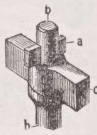
3. A toggle.
Cottereau
Encyclopedia Britannica
COTTEREAU, Jean. See Chouans.
9th ed. Encyclopædia Britannica, vol. 6, p. 481
[4 words — estimated reading time: 1 minute]
[4 words — estimated reading time: 1 minute]
Cottin
Encyclopedia Britannica
COTTIN, Sophie (1773-1807), née Restaud, was born at Tonneins, Lot-et-Garonne, and was educated at Bordeaux. At seventeen she married a banker, who died three years after, when she removed to Paris. In 1798 she published anonymously her Claire d'Albe, to obtain money, it is said, for a friend who was proscribed and exiled. Her second romance, Malvina (1800), was also anonymous; but the success of Amélie Mansfield (1802) induced the authoress to reveal her identity. In 1805 appeared Mathilde, a crusading story, sentimental and extravagant to a degree; and in 1806 she produced her last story, the famous Elisa beth, ou les exiles de Sibérie. At the date of her death Madame Cottin was engaged on an educational novel, and on a treatise entitled La réligìon prouvée par le sentiment, Her worst fault is a tendency to exaggerate the virtues of her characters. A complete edition of her works was published, in two volumes, in 1847.
9th ed. Encyclopædia Britannica, vol. 6, p. 481
[166 words — estimated reading time: 1 minute]
[166 words — estimated reading time: 1 minute]
A diminutive of the bendlet, containing one half its area or one quarter the area of the bend. When a single cottise is used alone it is often called a cost. See also Couple-close.
Set between two cottises, -- said of a bend; or between two barrulets, -- said of a bar or fess.
Like a fish of the genus Cottus.
A fish belonging to, or resembling, the genus Cottus. See Sculpin.
Pertaining to cotton; made of cotton; consisting of cotton; as cotton cloth; cotton stockings.
1. A soft downy substance, resembling fine wool, growing in the capsules or pods of a shrub, called the cotton-plant. It is the material of a large proportion of cloth for apparel and furniture.
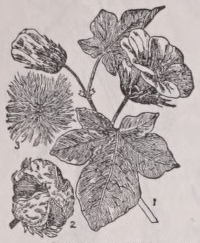
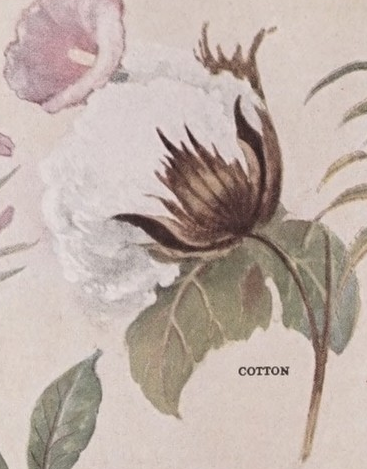
2. Cloth made of cotton
3. Lavender-cotton, a genus of plants, Santolina, of several species; shrubs cultivated in gardens. One species, the chamoecyparyssus or abrotanum foemina, female southernwood, is vulgarly called brotany.
4. Philosophic cotton flowers of zink, which resemble cotton
5. Silk-cotton tree, a genus of plants, the Bombax, growing to a great size in the Indies, and producing a kind of cotton in capsules.
1. A soft, downy substance, resembling fine wool, consisting of the unicellular twisted hairs which grow on the seeds of the cotton plant. Long-staple cotton has a fiber sometimes almost two inches long; short-staple, from two thirds of an inch to an inch and a half.
2. The cotton plant. See Cotten plant, below.
3. Cloth made of cotton.
1. To rise with a regular nap, as cloth does.
2. To go on prosperously; to succeed.
3. To unite; to agree; to make friends; -- usually followed by with.
4. To take a liking to; to stick to one as cotton; -- used with to.
Cotton
Encyclopedia Britannica
COTTON, an indigenous product of all intertropical regions, consists of the down or fine cellular hair attached to the seeds of plants belonging to the genus Gcssypium, natural order Malvaceae. The plants which supply the raw material for one of our greatest industries, and for the clothing of all nations, may claim to be ranked amongst the most valuable of nature’s productions. The genus has occasioned no small degree of perplexity to botanists, and the genealogy of the different varieties is still involved in much uncertainty. Linnaeus admitted five species of Gossypium, an estimate which by some subsequent botanists has been more than quadrupled. The investigations of Professor Parlatore, who, in a handsome folio with coloured plates, described the cottons which he had seen cultivated in Laly, led him to the conclusion that there were seven species of cotton only, the rest being merely varieties. These are :—
1. Gossypium arboreum, Linn., found in Ceylon, the Moluccas, Arabia, Senegal, &c.
2. G. herbaceum, Linn., growing in Siam, China, India, Italy, &c.
3. G. saìidwichense, Park, indigenous to the Sandwich Islands.
4. G. hirsutum, Linn., including Siamese, Bourbon, Upland Georgia, and Louisiana cottons.
5. G. barbadense, Linn., comprising Sea Island and Barbadoes cotton, with long staple.
6. G. tahitense, cottons from the Society Islands, Tahiti, &c., in the Pacific.
7. G. religiosum, Linn., including Peruvian and other cottons, principally with seeds in adherent files....
Some authorities have enumerated ten species, and the cultivators of cotton have been still more extravagant in the multiplication of species or varieties. Not regarding the effects produced by soil, climate, or culture, they have given new or provincial names to the different sorts of the same species, and have invented a nomenclature which has only produced additional confusion. In Dr Royle’s exhaustive work entitled The Culture of Cotton ui India the reader will find a trustworthy source of information upon the botanical part of the subject.
The cottons of the New and those of the Old World constitute the two great typical divisions of the kinds most known to commerce—these are the Oriental and the Occidental, the Indian and the American cottons. The botanical characteristics, though slight, are sufficiently marked to prevent the one being mistaken for the other,—the sçed of the Eastern plant is never black or naked, and the curvature at the base of the leaf lobes is compounded of two opposite curves, and not purely heart-shaped as in the case of the Western plant. Numerous varieties of each type are to be found constituting distinct races of the same species, and affording ample scope for experimenters in their efforts for the improvement of the plant.
Oriental, Asiatic, or Indian Cottons.— All these, although the several varieties may be distinguished from one another, belong to the species designated by Linnaeus Gossypium herbaceum. There is one exception, however, to be made, and that is the singular purple-blossomed cotton-tree, the Gossypium arboreum, Linn., held sacred by the Hindus, known also as Gossypium religiosum, grown about the temples in India, which supplies the material for the sacerdotal tripartite thread of the Brahmans, the emblem of their Trinity. The plant has dark-green leaves, bears handsome red-purple blossoms, and produces silky cotton. Attempts have been made to improve its cultivation by hybridizing, and to bring it into general use, but hitherto without success, and it remains almost entirely unknown to commerce. With the exception, then, of this curious species, the numerous varieties of Indian cottons are but different forms of Gossypium herbaceum. One of these is cultivated to a considerable extent in the Levant, and is known in the market as Smyrna cotton. The different kinds of Indian cotton are usually included in the generic term Burats. The principal sorts are Hingunghât, Oomrawuttee, Broaclι, Dhóllera, and Dharwar. The Hingunghât, which may perhaps be said to possess the highest qualities, stands at the head of the different descriptions grown in the Central Provinces and the Berars. The staple is of moderate length and strength, white, soft, and silky, and well adapted for spinning. Dharwar, in the southern part of the Bombay Presidency, is the only district in India where exotic cotton has been successfully cultivated; the variety grown is chiefly acclimatized American cotton, from seed of the New Orleans species, Gossypvwm hirsutum. In the NorthWestern Provinces, Assam, and other parts of India, various kinds of cotton are grown, but none of them is of so much importance to the manufacturer as any of those already enumerated. The cottons produced in China and Central Asia also belong to the same species, but little or no supply is furnished for export to other countries.
The Occidental or American Cottons.— These, which have become known to the civilized world only since the discovery of America, consist of tw o great divisions— the Barbadensian or black-seeded cottons, bearing pure yellow blossoms, with a reddish-purple spot at the base of the petals, and the Hirsute or hairy cotton, more or less covered with a distinct clothing of hairs, bearing white or faintly primrose-coloured blossoms. The two cannot always be distinguished from each other by the appearance of the seed, as the black-seeded cottons are occasionally found with a tuft of short hairs or fuzz at one or both ends, and the hairy, though generally downy all over, are also sometimes found with seeds black or naked. On this account some authorities have concluded that the two kinds belong to the same species—the Barbadensian; but carefully conducted experiments show that the variation in the seeds may be attributed to peculiarities of soil or cultivation, and that the specific characteristics of the two kinds remain unaltered generation after generation The cottons most in demand among manufacturers are those of the Western world, viz., the Sea Island and New Orleans or Uplands, varieties which are altogether unequalled by the products of any other part of the globe. The Sea Island plant in the soft maritime climate of the low-lying islands off the coast of Georgia, where frost is scarcely known, has surpassed all other descriptions of cotton in the strength, length, and beauty of its staple. The “Georgian Uplands” cotton, sometimes called “Boweds,” is the result of attempts to cultivate Sea Island cotton on the uplands of Georgia. Sea Island cotton has also been successfully introduced into Queensland, the Fiji Islands, Tahiti, and Egypt. Of the other great Western cotton, the New Orleans, which is probably of Mexican origin, there are two principal varieties— one with green seeds and hardy constitution, the other with white, tawny, or greyish seeds, longer and more silky in staple. The New Orleans and Boweds cottons constitute the great production of the United States, and are known in English and European markets as “American cottons.” The sowing time is March and April, and the crop is gathered from August to the end of the year, or even later in the absence of frost. There are several forms of this Hirsute or Orleans type, such as the Cuba Vine, a large and showy plant, another bearing yellow or brown stapled cotton used for nankeen cloths, and a third kind, producing the “Bourbon” cotton; but all these are more remarkable than useful. The fine Venezuela and the West Indian green-seeded cottons belong to the same race, the latter differing only by a faint blotch of purple at the base of the pale yellow petals. The black-seeded, long-stapled cottons (G. l>arbadense), though of the Sea Island type, are found in such diversified forms, and so widely spread over the different parts of the globe, that some of them have been classed as separate species. The Peruvian and the Brazilian may be adduced as instances; the latter, known by the name of “kidney” cotton, is remarkable for the curious arrangement of its seeds, eight or ten of which adhere together in compact kidney-shaped masses, but there is little else to distinguish it from other forms of black or naked seeded cottons. The various black-seeded cottons cultivated in Brazil, together with the Peruvian and some other descriptions, constitute the Gossypium, acuminatum of Royle. Colonel Trevor Clarke has made the cotton plant his special study with a view to its improvement by hybridization, and it is to be hoped that ere long he may be induced to publish the results of his investigations.
Cotton Ginning.— The lobes in every boll of cotton contain seeds which, except when covered with down, resemble the coffee-berry, and which have to be separated from the fibre, by a process called “ginning.” When this is done there remains of the bulk, as gathered from the tree, about one-third of clean cotton fit for manufacturing purposes, and two-thirds of seed. The separation of the seed from the lint is accomplished by different methods. The most primitive as well as the most rude and simple machine employed is the churka used by the Chinese and Hindus, and known in Italy under the name of manganello. It consists of two wooden rollers fixed in a frame and revolving in contact, between which the cotton is drawn to the exclusion of the seeds. Though various attempts have been made to increase the efficiency of the churka, which is still extensively used in India, there has been but little real improvement, and it is found impossible to clean cotton rapidly by means of it. Hence ginning establishments .with machines worked by steam power have now been introduced into the principal cotton districts of India. In the year 1792 Eli Whitney, an American, produced his saw gin, the machine which, under various modifications, is still employed for cleaning the greater proportion of the cotton grown in the Southern States. It consists of a series of saws revolving between the interstices of an iron bed upon which the cotton is placed so as to be drawn through whilst the seeds are left behind. As the fibre of the long-stapled cottons was found to be injured by the action of the saws, and to be more or less cut or “nepped,” another more recent American invention, the Macarthy gin, has come into use for cleaning Sea Island, Egyptian, and Brazilian cotton. The fibre is drawn by a leather roller between a metal-plate called the “doctor,” fixed tangential to the roller, and a blade called the beater, which moves up and down in a plane immediately behind and parallel to the fixed plate. As the cotton is drawn through by the roller the seeds are forced out by the action of the movable blade, which in some machines is made to work horizontally instead of vertically. Attempts continue to be made so to improve both the saw gin and the roller gin as in the one case to prevent injury to the staple, and in the other to increase the efficiency or capability of the machine to clean large quantities of cotton quickly. The “needle” saw gin is a recent invention intended to prevent the fibre from being cut. It consists of steel-wire set in block tin with the bottom of the teeth rounded or made smooth. On the other hand the double-action Macarthy gin, with two movable blades or beaters, the “knife-roller” gin, the “lock-jaw” gin, and others have appeared as rivals to the saw gin. The machine which will clean the largest quantity in the shortest space of time is naturally preferred, unless such injury is occasioned as materially to diminish the market value of the cotton,, This has sometimes been the case to the extent of Id. or 2d. per lb, and even more as regards Sea Island or long-stapled cottons. The production, therefore, of the most perfect and efficient cottoncleaning machinery is of importance alike to the planter and the manufacturer, and although considerable improve ment has already been effected, there is still room for further efforts in the same direction. The seed obtained in ginning that is not required for sowing, comprising many thousands of tons, is pressed for oil, which when refined is in some cases used to mix with olive oil, or is converted into cake for feeding cattle, or into a material for making paper, whilst the ultimate residuum, or refuse, is made into soap. Even the stalks of the cotton plant are made to answer some valuable purposes. Besides being used for thatch and baskets, a fibre is obtained that can be converted into gunny and other kinds of cloths, equal to those manufactured from jute. They furnish also a material that can be used for the manufacture of the common kinds of paper. The cotton when cleaned or separ ated from the seed is pressed, chiefly by hydraulic power, into bales varying in weight in different countries, and in this state it is ready for market and for the various pro cesses of manufacture.
Cotton Supply.— The capability of the world to furnish in sufficient abundance the raw material required by the vast and ever-expanding cotton industry has from time to time, and under the pressure of dire necessity, been well ascertained. Happily it has been found possible to cultivate cotton over almost the whole of the intertropical and in many of the temperate portions of the globe, so that if from any cause there should be a deficiency in one part this may be compensated by the superabundance in others. The most ancient cotton-growing country is probably India. For five centuries before the Christian era cotton was largely used in the domestic manufactures of India; and the clothing of the inhabitants then consisted, as now, chiefly of garments made from this vegetable product. More than two thousand years before Europe or England had conceived the idea of applying modern industry to the manufacture of cotton, India had matured a system of hand-spinning, weaving, and dyeing which during that vast period received no recorded improvement. The people, though remarkable for their intelligence whilst Europe was in a state of barbarism, made no approximation to the mechanical operations of modern times, nor was the cultivation of cotton either improved or considerably extended. Possessing soil, climate, and apparently all the requisite elements from nature for the production of cotton to an almost boundless extent, and of a useful and acceptable quality, India for a long series of years did but little towards supplying the manufacturers of other countries with the raw material which they required. Between the years 1788 and 1850 numerous attempts were made by the East India Company to improve the cultivation and to increase the supply of cotton in India, and botanists and American planters were engaged for the purpose. One great object of their experiments was to introduce and acclimatize exotic cottons. Bourbon, New Orleans, Upland Georgia, Sea Island, Pernambuco, Egyptian, &c., were tried but with little permanent success. The result of these and similar attempts, more recently made, has been to establish the conclusion that efforts to improve the indigenous cottons are most likely to be rewarded with success. As will be seen from the table showing the imports of cotton into Great Britain, on a subsequent page, the largest supply obtained from India prior to the American civil war was in 1857, being upwards of 680,000 bales, of the value of £5,458,426; but in 1866, owing to the efforts employed to increase the production of cotton, the import from India had reached a total of 1,847,760 bales, of the value of £25,270,547. The quantity now obtained from India averages something over one million of bales annually, being the largest supply procured from any one country with the exception of America. The cultivation of cotton is not of so remote a date in China as in India. In the accounts of the revenues aud of the arts of China during the period of the celebrated dynasty which commenced about 1100 years before the Christian era, and lasted for some centuries, no mention is made of the cotton plant; nor, indeed, is there any notice of cotton in these records until about 200 years before the Christian era; from which period to the 6th century the cotton cloth, which was either paid in tribute, or offered in presents to the emperors, is always mentioned as a thing rare and precious. The annals record as a singular circumstance that the Emperor Ou-ti, who ascended the throne in 502, had a robe of cotton. In the 7th century we find the cotton plant mentioned, but its cultivation appears to have been then confined to gardens; and the poems and romances of that period are occupied in celebrating the beauty of its flowers. It was in the 11 th century that the cotton plant was first removed from the gardens to the fields, and became an object of common culture; and it is only from this period that we can date the commencement of the manufacture in China. The cotton tree was introduced into that country at the time of its conquest by the Mongol Tartars in the year 1280; after which period every encouragement was given by the Government to the culture and manufacture of cotton. Considerable difficulties, however, were at first encountered through the prejudices of the people and the opposition of those engaged in the manufacture of woollen and linen; and it was not until the year 1368 that they were altogether surmounted. After that date rapid progress was made, and cotton has ever tince supplied the material manufactured for the clothiι g of a large proportion of the population of China. The Chinese, in addition to their own growth of cotton, obtain large imports from India and the Burmese territories. A famine which happened in China about the close of the 18th century induced the Government to direct, by au imperial edict, that a greater portion of the land should be devoted to the cultivation of grain. Since then the importation of cotton from India has been considerable, though but a small part of that which is consumed in their manufactures. China, indeed, was never a source of supply to other countries, excepting to a small extent and for a brief period, when the whole world was ransacked to meet the exigencies of the cotton famine.
Central and South America and the West Indies, though now but comparatively insignificant sources of supply, were formerly of much greater importance. On the conquest of Mexico, in 1519, it is said that Cortes received garments of cotton as presents from the natives of Yucatan, as well as cotton cloths for coverings to his huts; and the clothing of the Mexicans was found to consist chiefly of cotton. In Peru raw cotton and cotton fabrics have long been known to exist, and specimens from the ancien>fc Peruvian tombs were at an early period brought to Europa for exhibition. In the time of the Incas, in 1532, there is evidence that the plant was successfully cultivated; and the tree-cotton of Peru has often attracted attention, and been made the subject of examination for the purpose of determining whether it is the veritable Gossypium, arboreum of Linnaeus. It is represented to be not only exceedingly beautiful, but valuable on account of its abundant crops. It yields largely lor four or five years, and may be maintained for eight or ten years without being renewed. The Gossιjpium peruvianum or aczιminatum, cultivated in the coast valleys of Peru, is an arborescent kind growing to 10 or 15 feet in height. It produces the cotton of Brazil, Pernambuco, Maranhao, Peru, &c. The Anguilla cotton, better known as Sea Island, is represented to be a native of Honduras; it spread thence to the West Indies, and was carried to the United States shortly after the revolution. The West Indies, before the present century, was the chief source from which England derived the cotton then required. The finest ever brought to the English market, or probably ever grown, was raised in the island of Tobago between the years 1789 and 1792 upon the estate of Mr Robley. The West Indian cottons have generally been highly esteemed, but the cultivation has been neglected for the sake of sugar, which was found to be a more profitable crop.
Amongst the countries which in more recent times have become prominent for the supply of cotton, Egypt deserves to be specially mentioned, furnishing a staple which for quality and length holds a high rank and comes next to Sea Island. Cotton was doubtless grown in Egypt at a very remote period, but was cultivated only to a small extent, and chiefly for home consumption, before the early part of the present century, when the inferior indigenous was superseded by the present exotic plant, the produce of which has obtained a high reputation. Its introduction was due to Mahò Bey, who had been governor of Dongola and Sennaar, and had brought seed of the plant with him from Ethiopia. In his garden at Cairo it was discovered about the year 1820, by a Frenchman named Jumel, in the service of Mehemet Ali. That sagacious ruler saw...
9th ed. Encyclopædia Britannica, vol. 6, p. 482
[22,032 words — estimated reading time: 2.1 hours]
[22,032 words — estimated reading time: 2.1 hours]
A machine to separate the seeds from cotton, invented by that celebrated mechanician, E. Whitney.
A genus of plants, the Eriophorum.
A machine for carding or spinning cotton.
No thesaurus entries found for "Cott".
King James Bible KJV Bible
Berean Standard Bible BSB Bible
4 KJV and 0 BSB verses contain “Cott”
The earth shall reel to and fro like a drunkard, and shall be removed like a cottage; and the transgression thereof shall be heavy upon it; and it shall fall, and not rise again.