Flow
[Noun]
Webster's Dictionary 1828
1. A stream of water or other fluid; a current; as a flow of water; a flow of blood.
2. A current of water with a swell or rise; as the flow and
ebb of tides.
3. A stream of any thing; as a flow of wealth into the country.
4. Abundance; copiousness with action; as a flow of spirits.
5. A stream of
diction, denoting abundance of words at command and facility of speaking;
volubility.
6. Free expression or communication of generous feelings and sentiments.
7. The feast of reason, and the flow of soul.
Flow
[Verb intransitive]
Webster's Dictionary 1828
1. To move along an inclined plane, or on descending ground, by the operation of gravity, and with a continual change of place among the particles or parts, as a fluid. A solid body descends or moves in mass, as a ball or a wheel; but in the flowing of liquid substances, and others consisting of very fine particles, there is a constant change of the relative position of some parts of the substance, as in the case with a stream of water, of
quicksilver, and of sand. Particles at the bottom and sides of the stream, being somewhat checked by friction, move slower than those in the middle and near the surface of the current. Rivers flow from springs and lakes; tears flow from the eyes.
2. To
melt; to become liquid.
3. That the mountains might flow down at they presence.
5. To proceed; to issue. Evils flow from different sources. Wealth flows from industry and economy. All our blessings flow from divine
bounty6. To abound; to have in abundance.
7. In that day the mountains shall drop down new wine, and the hills shall flow with milk.
Joel 3:18 .
8. To be full; to be copious; as flowing cups or goblets.
9. To
glide along smoothly, without harshness or
asperity; as a flowing period; flowing numbers.
10. To be smooth, as composition or
utterance. The
orator has a flowing tongue.
11. Virgil is sweet and flowing in his hexameters.
12. To
hang loose and waving; as a flowing
mantle; flowing locks.
13. The imperial purple flowing in his train.
14. To rise, as the tide; opposed to
ebb. The tide flows twice in twenty four hours.
15. To move in the arteries and veins of the body; to
circulate, as blood.
16. To issue, as rays or beams of light.
17. Light flows from the sun.
18. To move in a stream, as air.
Flow
[Verb transitive]
Webster's Dictionary 1828
To cover with water; to overflow; to
inundate. The low grounds along the river are annually flowed.
Flow
[Noun]
Webster's Dictionary 1913
1. A stream of water or other fluid; a current; as, a flow of water; a flow of blood.
2. A continuous movement of something abundant; as, a flow of words.
3. Any gentle, gradual movement or procedure of thought,
diction, music, or the like, resembling the quiet, steady movement of a river; a stream.
4. The tidal setting in of the water from the ocean to the shore. See
Ebb and flow, under
Ebb.
5. A low-lying piece of
watery land; -- called also flow
moss and flow
bog.
Flow
[Verb intransitive]
Webster's Dictionary 1913
1. To move with a continual change of place among the particles or parts, as a fluid; to change place or
circulate, as a liquid; as, rivers flow from springs and lakes; tears flow from the eyes.
2. To become liquid; to
melt.
3. To proceed; to issue forth; as, wealth flows from industry and economy.
4. To
glide along smoothly, without harshness or asperties; as, a flowing period; flowing numbers; to sound smoothly to the ear; to be uttered easily.
5. To have or be in abundance; to abound; to full, so as to run or flow over; to be copious.
6. To
hang loose and waving; as, a flowing
mantle; flowing locks.
7. To rise, as the tide; -- opposed to
ebb; as, the tide flows twice in twenty-four hours.
8. To discharge blood in excess from the
uterus.
Flow
[Verb transitive]
Webster's Dictionary 1913
1. To cover with water or other liquid; to overflow; to
inundate; to flood.
Flowage
[Noun]
Webster's Dictionary 1913
An overflowing with water; also, the water which thus overflows.
Flower
[Noun]
Webster's Dictionary 1828
1. In botany, that part of a plant which contains the organs of
fructification, with their coverings. A flower when complete, consists of a
calyx,
corol,
stamen and
pistil; but the essential parts are the
anther and
stigma, which are sufficient to constitute a flower either together in
hermaphrodite flowers, or separate in male and female flowers.
2. In vulgar
acceptation, a
blossom or flower is the flower
bud of a plant, when the petals are expanded; open petals being considered as the principal thing in constituting a flower But in botany, the petals are now considered as a finer sort of covering, and not at all necessary to constitute a flower
3. The early part of life, or rather of
manhood; the prime; youthful
vigor; youth; as the flower of age or of life.
4. The best or finest part of a thing; the most valuable part. The most active and vigorous part of an army are called the flower of the troops. Young, vigorous and
brave men are called the flower of a nation.
5. The finest part; the essence.
6. The choice and flower of all things profitable the Psalms do more briefly contain.
7. He or that which is most distinguished for any thing valuable. We say, the youth are the flower of the country.
8. The finest part of grain
pulverized. In this sense, it is now always written flour, which see.
9. Flowers, in
chimistry, fine particles of bodies, especially when raised by fire in
sublimation, and
adhering to the heads of vessels in the form of a powder or
mealy substance; as the flowers of sulphur.
10. A substance, somewhat similar, formed
spontaneously, is called efforescence.
11. In rhetoric, figures and ornaments of discourse or composition.
Flower
[Verb intransitive]
Webster's Dictionary 1828
1. To
blossom; to
bloom; to
expand the petals, as a plant. In New England
peach trees usually flower in April, and apple trees in May.
2. To be in the prime and spring of life; to
flourish; to be youthful, fresh and vigorous.
3. When flowered my youthful spring.
5. The beer did flower a little.
6. To come as
cream from the surface.
Flower
[Verb transitive]
Webster's Dictionary 1828
Flower
[Noun]
Webster's Dictionary 1913
1. In the popular sense, the
bloom or
blossom of a plant; the
showy portion, usually of a different color, shape, and texture from the foliage.
2. That part of a plant destined to produce seed, and hence including one or both of the sexual organs; an organ or combination of the organs of reproduction, whether inclosed by a circle of
foliar parts or not. A complete flower consists of two essential parts, the stamens and the
pistil, and two
floral envelopes, the
corolla and callyx. In
mosses the flowers consist of a few special leaves surrounding or
subtending organs called archegonia. See
Blossom, and
Corolla.
3. The fairest, freshest, and choicest part of anything; as, the flower of an army, or of a family; the state or time of freshness and
bloom; as, the flower of life, that is, youth.
5. A substance in the form of a powder, especially when
condensed from
sublimation; as, the flowers of sulphur.
6. A figure of speech; an ornament of style.
7. Ornamental type used chiefly for borders around pages, cards, etc.
Flower
[Verb intransitive]
Webster's Dictionary 1913
1. To
blossom; to
bloom; to
expand the petals, as a plant; to produce flowers; as, this plant flowers in June.
2. To come into the finest or fairest condition.
Flower
[Verb transitive]
Webster's Dictionary 1913
To
embellish with flowers; to
adorn with imitated flowers; as, flowered silk.
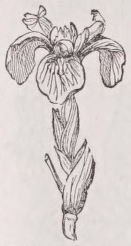
2. In botany, the
Iris, a genus of
monogynian trianders, called also flag-flower, and often written incorrectly flower-de-
luce. The species are numerous.
A genus of
perennial herbs (
Iris) with swordlike leaves and large three-
petaled flowers often of very gay colors, but probably white in the plant first chosen for the royal French
emblem.
A tropical
leguminous bush (
Poinciana, / Caesalpinia, pulcherrima) with
prickly branches, and
showy yellow or red flowers; -- so named from its having been sometimes used for hedges in the West Indies.
A garden in which flowers are chiefly cultivated.
Dressed with garlands of flowers.
Flowerer
[Noun]
Webster's Dictionary 1913
A plant which flowers or blossoms.
1. The state of being
flowery, or of abounding with flowers.
Flowering
[Participle present tense]
Webster's Dictionary 1828
2.
Adorning with artificial flowers, or figures of blossoms.
Flowering
[Adjective]
Webster's Dictionary 1913
Having conspicuous flowers; -- used as an
epithet with many names of plants; as, flowering ash; flowering
dogwood; flowering
almond, etc.