
A size of paper. See under Paper.
Word of the Day: Catachrestical
Pott's disease
Webster's Dictionary 1913
Old pot metal.
Pertaining to, or containing, potassium.
Preserved or inclosed in a pot; drained in a cask.
1. One whose occupation is to make earthen vessels.
2. One who hawks crockery or earthenware.
3. One who pots meats or other eatables.
Potter
Encyclopedia Britannica
POTTERY AND PORCELAIN T
HE word ‘ pottery” (Fr. poterne') in its widest sense includes all objects made of clay, moulded into form while in a moist plastic state, and then hardened by fire. Clay, the most widely spread and abundant of all mineral substances, consists essentially of a hydrated silicate of alumina (see vol. x. p. 237), admixed, however, in almost all cases with various impurities. Thus it usually contains a considerable proportion of free silica, lime, and oxides of iron, its colour chiefly depending on the last ingredient. The white kaolin clays (see Kaolin) used in the manufacture of porcelain are the purest; they consist of silicate of alumina, with 5 to 7 per cent, of potash, and only traces of lime, iron, and magnesia.
The making of pottery depends on the chemical change that takes place when clay is heated in the fire; the hydrated silicate of alumina becomes anhydrous, and, though the baked vessel can absorb mechanically a large quantity of water, the chemical state, and with it the hardness of the vessel, remains unaltered. A well-baked piece of clay is the most durable of all manufactured substances. In preparing clay for the potter it is above all things necessary that it should be worked and beaten, with sufficient water to make it plastic, into a perfectly homogeneous mass. Any inequalities cause an irregular expansion during the firing, and the pot cracks or flies to pieces. In early times the clay was prepared by being kneaded by the hands or trampled by the feet (see Isa. xli. 25); modern manufacturers prepare it on a larger scale by grinding it between mill-stones, and mixing it in a fluid state with an additional quantity of silica, lime, and other substances....
During the process of firing all clays shrink in volume, partly through the loss of water and partly on account of increase of density. What are called “fat” clays—those, that is to say, which are very plastic and unctuous—shrink very much, losing from one-third to one-fourth of their bulk; they are also very liable to crack or twist during the firing. “Lean” clays—those that have a large percentage of free silica—shrink but little, and keep their form unaltered under the heat of the kiln; they are not, however, so easy to mould into the required shape, and thus a certain compromise is frequently required. Lean and fat clays are mixed together, or silica (sand or ground and calcined flints) is added to a fat clay in sufficient quantity to enable it to stand the firing. The same result may be attained by the addition of broken pots, crushed or ground, an expedient practised during the earliest stages of the development of the art of pottery.
Classification.— Many attempts have been made to classify pottery and porcelain according to their mode of manufacture. The classification of Μ. Brongniart {Traité des Arts Céramiques, Paris, 1854) has been followed by most later writers. With some modifications it is as follows :— [table]
This classification is necessarily imperfect, some pottery coming under two heads, as, for instance, much of the Italian majolica, which is both enamelled and glazed. For this reason in the following article pottery will be treated according to its age and country, not according to its method of manufacture. Porcelain differs from pottery in being whiter, harder, less fusible, and (most essential difference) in being slightly translucent. The paste of which it is formed is a purer silicate of alumina than the clay of which pottery is made. It will therefore be described under separate heads (p. 633 sq., infra').
For the sake of clearness it will be well to define the sense in which technical words relating to pottery are used in this article. Body or paste is the clay of which the main bulk of a pot is made. Slip is clay finely ground and mixed with water to the consistency of cream. It is usually applied over the whole surface of a vessel in order to give it a finer face or a different colour from that of the body of the pot. It is also sometimes applied partially, forming ornaments in relief, as in the case of some Roman ware and the coarse 17th-century pottery of Staffordshire described below. Glaze is a thin coating of glass, evenly fused over the surface of a clay vessel to make it harder, and also to render it impervious to water. Clay simply baked without a vitreous coating is called biscuit·, its surface is dull, and it is more or less porous. The simplest and oldest form of glaze is a pure silicate of soda; the addition of oxide of lead makes the glaze more fusible, but less hard and durable. F or decorative purposes glazes may be coloured by various metallic oxides without losing their transparency. Enamel is a glaze with the addition of some substance to render it opaque. Binoxide of tin has the peculiar property that when even a small quantity is added to a transparent glass it renders it opaque and white without otherwise altering its character. Great confusion has been caused in various works on pottery by a careless use of the terms “glaze’’and “enamel”; they are both of the nature of glass, but the best distinction to make is to apply the word “enamel” to a vitreous coating that is opaque, and the word “glaze” to one that is transparent ; both may be coloured. The method of applying vitreous coatings to clay, whether enamel or glaze, is this. The materials are ground fine and mixed with water to the consistency of cream. The pot is dipped in the mixture, or the fluid is applied with a brush; it is then set to dry, and finally fired in the kiln, which must be heated sufficiently to fuse the component parts of the glaze or enamel into one smooth vitreous coating, while on the other hand it must not be hot enough to soften or melt the clay body of the vessel. The use of oxide of lead enables a glaze to be applied to a clay body which would not stand the high temperature necessary to combine and fuse a pure silico-alkaline glaze. In order to prevent the glaze or enamel from blistering or cracking off there must be a certain similarity of substance between the clay body and the vitreous coating. A fine silicious glaze or enamel will not adhere to a soft fat clay unless the proportion of silica in the latter is increased either by admixture of a harder, more silicious clay, or by the addition of pure silica either in the form of sand or of ground flint.
The Potter's Wheel.— All pottery, except the rudest and most primitive sorts, is moulded or “thrown” by the aid of a very simple contrivance, a small round table fixed on a revolving pivot. Fig. 1, from a tomb-painting at Thebes, shows its simplest form. The potter at intervals gives a spin to the table, which continues to revolve for some time without a fresh impulse. This form of wheel, used by the Egyptians (as is shown by existing fragments of pottery) about 4000 b.c., is still employed without any alteration by the potters of many parts of India. A later improvement introduced in Egypt under the Ptolemies was to have another larger circular table, fixed lower down on the same axis, which the potter set in movement with his feet, and thus was able to keep up a regular speed and leave his hands free for the manipulation of the clay (see fig. 2). No process in any handicraft is more beautiful than that of a potter moulding a vessel on the wheel. The ease with which the plastic clay answers to the touch of the hand, and rises or falls, taking a whole succession of symmetrical shapes, and seeming, as it were, instinct with the life and thought of the potter, makes this art beautiful and striking beyond all others, in which the desired form can only be at-, tained by comparatively slow and laborious methods. Ancient poetry is full of allusions to this. Homer (Il., xviii. 600) compares the rhythm of a dance to the measured spin of a potter’s wheel; and the rapid ease with which a clay vessel is made and remade in a new form is described by Jeremiah (xviii. 3-4) in one of his most forcible similes (compare Horace, A. P., 21-22). Among the Egyptians of the Ptolemaic period the potter was used as a type of the Creator. Nouf or Knoum, the divine spirit, and Pthah, the creator of the mundane egg, are symbolized by human figures moulding clay on the potter’s wheel. The wheel and egg are shown above in fig·
Kilns for firing Pottery.— The earliest form of kiln, as represented in Egyptian wall-paintings, is a tall circular chamber of brick, with a perforated floor near the bottom. The fuel was introduced from an opening on one side, and raked in under the brick floor. The pottery to be baked was piled up in the upper part of the chamber. Fig. 3, from a potter’s votive tablet from Corinth, shows an early Greek form of kiln, with a place for the fuel on one side, and a door in the side of the upper chamber through which the pottery could be put in and withdrawn. The Corinthian kiln differs from the Egyptian kiln in being domed over, but it is the same in principle.
Even at the present day kilns shaped almost exactly like this early Greek one are still largely used.
Section I.— Prehistoric.
The art of making pottery is one of the most extreme antiquity; with the exception of the cave-dwellers of the Drift or Palaeolithic period it was practised by all known prehistoric races from the Neolithic age downwards. The sepulchral barrows of Britain and other European countries have supplied vast stores of this earliest kind of pottery. It is mostly formed of coarse clay, generally brown in colour, though sometimes grey or reddish; some few specimens are fine in texture and have a slightly glossy surface. The clay, while moist, has been kneaded with some care, and is often mixed with a proportion of gravel, coarse sand, quartz crystals, or pounded pottery. The more carefully made specimens, chiefly those of the bronze and iron ages, are frequently covered with a smooth slip, made of the same clay as the body, but finely pounded and thoroughly mixed. All are alike “hand-made,” without any assistance from the potter’s wheel; some of the smaller ones are scooped out of a solid ball of clay, while in some cases great skill has been shown in the building up, by the unaided hand, of the thin walls of larger vessels, some of which are so round and neatly formed as to appear at first sight to be wheel-made. This, however, is never the case with the pottery of the three great prehistoric periods.
The shapes found in the sepulchral barrows of Britain, France, Scandinavia, and other countries are usually classified thus—(1) cinerary urns, (2) food vessels, (3) drinking-cups, and (4) the so-called “incense cups” (see fig. 4).
(1) Cinerary urns, usually found full of burned bones, are the largest, varying from 12 to 18 inches in height. They are mostly less ornamented and less carefully made than the smaller vessels. Most have their decoration confined to a band round the upper part of the pot, or often only a projecting flange lapped round the whole rim. A few have small handles, formed of pierced knobs of clay, and sometimes projecting rolls of clay looped, as it were, all round the urn. (2) Food-vessels vary considerably in size and form. Some are shaped like a tea-cup, with a handle on one side; others are like small cinerary urns, either quite plain or with pierced knobhandles and bands of ornaments incised or impressed. (3) Drinking-cups, mostly from 6 to 8 inches high, vary but little in form, and are usually completely covered with ornament. They are often made with considerable care and skill, and are not ungraceful in shape. The names given to the preceding three classes possibly express their real use, but the name of the fourth class, “incense cups,” is purely imaginary. Under this head are comprised a number of small vessels of very varied shape, some with their sides pierced through with square or lozenge - shaped openings, while others, almost globular in shape, have several pierced knob-handles, as if for suspension. Some are quite plain, and others are covered with ornament. Their use is unknown; one possible suggestion is that they were intended to carry fire from some sacred source to light the funeral pyre. Canon Greenwell, probably the best authority on this subject, believes, contrary to the opinion of many antiquaries, that none of the above classes of barrow-pottery were intended for domestic use, but that they were made solely to be buried with the dead. He considers that a fifth class of pottery, chiefly in the form of bowls, which has occasionally been found, not in barrows but in dwellings, is the only kind that was actually used for domestic purposes by prehistoric man (see Greenwell, British Barrows, 1877).
The ornament whieh is often lavishly applied on prehistoric pottery is of especial interest. It frequently consists of lines of small dots impressed from a notched niece of wood or meta), arranged in various patterns—crosses, chevrons, or zigzags. All the patterns were stamped into the body of the pot before it was hardened by fire. The lines were frequently made by pressing a twisted thong of skin against the moist clay, so that a sort of spiral sunk line was produced. Other bands of ornament were made by wooden stamps; the end of a hollow round stick was used to form a row of small circles, or a round stick was used sideways to produce semicircular depressions. In some cases the incised lines or dots have been filled up with a white slip of pipeclay. Considerable taste and invention are shown by many of these combined ornaments, and a certain richness of decorative effect is produced on some of the best drinking-cups; but one thing is to be noted: all the main lines are straight, no wavy lines or circles appearing, except in very rare instances—a fact which points to the very limited artistic development attained by the prehistoric races.
Prehistoric pottery has sometimes been described as “sun-baked,” but this is not the case; however imperfectly baked, the pieces have all been permanently hardened by fire, otherwise they would certainly not have lasted to our time. This was done in a very rough and imperfect manner, not in a kiln but in an open fire, so that in some cases the pots have received a superficial black colour from the smoke of the fuel. Great quantities of this pottery have been found in the sepulchral barrows of Great Britain and Ireland; those from the latter country are usually very superior in neatness of execution to the British specimens. The British Museum is specially rich in this class of pottery, chiefly the result of excavations made in British barrows by Canon Greenwell.
For prehistoric pottery, see Greenwell, British Barrows, 1877; Lubbock, Prehistoric Times, 1865; Boyd Dawkins, Early Man in Britain, 1880; D∙ Wilson, Prehistoric Man, 3d ed., 1876, and Prehistoric Annals of Scotland, 18<⅛∣. Keller, Lake-Dwellings in Switzerland (tr. by Lee, 1878); Bonstetten, Kecueu <l' Antiquités Suisses, 1855-57; Perrin, Etude Préhistorique, 18<0; lroyon, Habitations Lacustres, I860; Borlase, Narnia Cornubiae, 1872.
Section II.— Ancient Egyptian.
But few examples remain which date from the time of the earlier dynasties of Egypt, though from the XVIIIth Dynasty downwards a great quantity of specimens exist. Broken fragments, embedded in the clay bricks of which some of the oldest pyramids are built, supply us with a few imperfect samples whose date can be fixed. The early pottery of Egypt is of many varieties of quality: some is formed of coarse brown clay moulded by hand without the aid of the wheel; other specimens, thin and carefully wheel-made, are of fine red clay, with a slight surface gloss, something like the “Samian’’pottery of the Romans. Some fragments of brown clay have been found, covered with a smooth slip made of a creamy white or yellowish clay. The early use of fine coloured enamels, afterwards brought to such perfection in Egypt, is shown by the enamelled clay plaques in black, white, and greenish blue which decorated the doorway of the great step-pyramid at Sakkàra. Each plaque has a pierced projection at the back, so that it could be firmly fixed by means of a wood or metal dowel.
Egypt is rich in materials for pottery, both glazed and enamelled. The finest of clays is washed down and deposited by the Nile; the sandy deserts supply pure silica; and a great part of the soil is saturated with the alkali necessary for the composition of vitreous enamels and glazes. In spite, however, of this abundance of materials the Egyptians never learned to apply either their enamels or their glazes, both of great beauty, to their larger works in pottery made of the fine Nile clay. The reason probably was that the clay was too fat, and therefore a vitreous coating would have flaked off during the firing, while they had not discovered the simple expedient of mixing with the native clay an addition of sand (silica), which would have enabled both glazes and enamels to form a firm coating over the body of the vessel. The colours used for Egyptian enamels and glazes are very varied, and of great beauty and brilliance. The glazes themselves are pure alkaline silicates, free from lead. The enamels are the same, with the addition of oxide of tin. The metallic oxides used to give the colours are these,— various shades of blue and green, protoxide of copper, or more rarely cobalt; purple and violet, oxide of manganese; yellow, iron or antimoniate of lead; red, sub-oxide of copper or iron; black, magnetic oxide of iron or manganese. The white enamel is simply silicate of soda with oxide of tin. The blues and greens, whether used in transparent glazes or opaque enamels, are often of extreme magnificence of colour, in an endless variety of tints,—turquoise, ultramarine, deep indigo, and all shades of blue passing into green. The most remarkable specimens of Egyptian enamel work are some clay plaques or slabs, about 10 inches high, which were used to decorate the walls of Ranieses II.’s palace at Tel al-Yâhùdiya, in the Delta (14th cent, b.c.). These have figures of men and animals executed in many different colours in the most complicated and ingenious manner. They are partly modelled in slight relief, and then covered with coloured enamels; in other parts a sort of mosaic has been made by mixing fine clay and enamels into soft pastes, the design being fitted together and modelled in these coloured pastes while moist. The slab was then fired, and the enamel pastes were at once vitrified and fixed in their places by the heat. A third process applied to these elaborate slabs was to fit into cavities left for them certain small pieces of coloured glass or brilliant enamels, giving the effect of precious stones, which were fused into their places by a second firing. The chief figures on the plaques are processions of captives, about 8 inches high; the enamel flesh is varied according to the nationality of the prisoners: negroes are black, others white, red, or yellow. Some of the dresses are represented with great richness: various embroidered or textile patterns of the most minute scale are shown by enamel inlay of many colours, and even jewel ornaments are shown by the inserted bits of glass; the dress of some Assyrian captives has patterns of great beauty and richness, —the sacred tree between the guardian beasts, and other figures. Besides these elaborate figure-reliefs an enormous number of smaller pieces of clay inlaid with different-coloured pastes were used to form a sort of mosaic wall-decoration in this wonderful palace, the ruins of which have supplied a perfect museum of all kinds and methods of enamelled work as applied to pottery. The British Museum and the Louvre have the finest specimens of these wall-slabs (see Birch, Ancient Pottery, p. 51, 1873).
The term “Egyptian porcelain” has sometimes been given to the small mummy-figures in brilliant blues and greens. This is a misnomer. The little figures, about 3 to 6 inches high, of which immense numbers have been found, mostly dating from about the XXth Dynasty downwards, are simply formed of sand (silica) with a little alkali, and only sufficient clay to cement them together, so that they could retain the form given them by the mould into which they were pressed. The result of analysis is silica 92, alumina 4,...
9th ed. Encyclopædia Britannica, vol. 19, p. 600
[51,682 words — estimated reading time: 5.0 hours]
[51,682 words — estimated reading time: 5.0 hours]
Potter
Watson's Biblical & Theological Dictionary
Frequent mention is made of the potter in Scripture, Jer. xviii, 3; Ecclus. xxxviii, 29, 30. Homer says, that the potter turns his wheel with his hands. But at the present day, the wheel on which the work is formed is turned by another. POTTER’s FIELD, the land that was bought with the money for which Judas sold our Saviour, Matt. xxvii, 7, 10, and which he returned. See ACELDAMA.
Watson's Biblical & Theological Dictionary
[70 words — estimated reading time: 1 minute]
[70 words — estimated reading time: 1 minute]
Of or pertaining to potters.
2. The place where earthen vessels are manufactured.
2. The place where earthen vessels are made.
Pottery and porcelain t
Encyclopedia Britannica
POTTERY AND PORCELAIN T
HE word ‘ pottery” (Fr. poterne') in its widest sense includes all objects made of clay, moulded into form while in a moist plastic state, and then hardened by fire. Clay, the most widely spread and abundant of all mineral substances, consists essentially of a hydrated silicate of alumina (see vol. x. p. 237), admixed, however, in almost all cases with various impurities. Thus it usually contains a considerable proportion of free silica, lime, and oxides of iron, its colour chiefly depending on the last ingredient. The white kaolin clays (see Kaolin) used in the manufacture of porcelain are the purest; they consist of silicate of alumina, with 5 to 7 per cent, of potash, and only traces of lime, iron, and magnesia.
The making of pottery depends on the chemical change that takes place when clay is heated in the fire; the hydrated silicate of alumina becomes anhydrous, and, though the baked vessel can absorb mechanically a large quantity of water, the chemical state, and with it the hardness of the vessel, remains unaltered. A well-baked piece of clay is the most durable of all manufactured substances. In preparing clay for the potter it is above all things necessary that it should be worked and beaten, with sufficient water to make it plastic, into a perfectly homogeneous mass. Any inequalities cause an irregular expansion during the firing, and the pot cracks or flies to pieces. In early times the clay was prepared by being kneaded by the hands or trampled by the feet (see Isa. xli. 25); modern manufacturers prepare it on a larger scale by grinding it between mill-stones, and mixing it in a fluid state with an additional quantity of silica, lime, and other substances....
During the process of firing all clays shrink in volume, partly through the loss of water and partly on account of increase of density. What are called “fat” clays—those, that is to say, which are very plastic and unctuous—shrink very much, losing from one-third to one-fourth of their bulk; they are also very liable to crack or twist during the firing. “Lean” clays—those that have a large percentage of free silica—shrink but little, and keep their form unaltered under the heat of the kiln; they are not, however, so easy to mould into the required shape, and thus a certain compromise is frequently required. Lean and fat clays are mixed together, or silica (sand or ground and calcined flints) is added to a fat clay in sufficient quantity to enable it to stand the firing. The same result may be attained by the addition of broken pots, crushed or ground, an expedient practised during the earliest stages of the development of the art of pottery.
Classification.— Many attempts have been made to classify pottery and porcelain according to their mode of manufacture. The classification of Μ. Brongniart {Traité des Arts Céramiques, Paris, 1854) has been followed by most later writers. With some modifications it is as follows :— [table]
This classification is necessarily imperfect, some pottery coming under two heads, as, for instance, much of the Italian majolica, which is both enamelled and glazed. For this reason in the following article pottery will be treated according to its age and country, not according to its method of manufacture. Porcelain differs from pottery in being whiter, harder, less fusible, and (most essential difference) in being slightly translucent. The paste of which it is formed is a purer silicate of alumina than the clay of which pottery is made. It will therefore be described under separate heads (p. 633 sq., infra').
For the sake of clearness it will be well to define the sense in which technical words relating to pottery are used in this article. Body or paste is the clay of which the main bulk of a pot is made. Slip is clay finely ground and mixed with water to the consistency of cream. It is usually applied over the whole surface of a vessel in order to give it a finer face or a different colour from that of the body of the pot. It is also sometimes applied partially, forming ornaments in relief, as in the case of some Roman ware and the coarse 17th-century pottery of Staffordshire described below. Glaze is a thin coating of glass, evenly fused over the surface of a clay vessel to make it harder, and also to render it impervious to water. Clay simply baked without a vitreous coating is called biscuit·, its surface is dull, and it is more or less porous. The simplest and oldest form of glaze is a pure silicate of soda; the addition of oxide of lead makes the glaze more fusible, but less hard and durable. F or decorative purposes glazes may be coloured by various metallic oxides without losing their transparency. Enamel is a glaze with the addition of some substance to render it opaque. Binoxide of tin has the peculiar property that when even a small quantity is added to a transparent glass it renders it opaque and white without otherwise altering its character. Great confusion has been caused in various works on pottery by a careless use of the terms “glaze’’and “enamel”; they are both of the nature of glass, but the best distinction to make is to apply the word “enamel” to a vitreous coating that is opaque, and the word “glaze” to one that is transparent ; both may be coloured. The method of applying vitreous coatings to clay, whether enamel or glaze, is this. The materials are ground fine and mixed with water to the consistency of cream. The pot is dipped in the mixture, or the fluid is applied with a brush; it is then set to dry, and finally fired in the kiln, which must be heated sufficiently to fuse the component parts of the glaze or enamel into one smooth vitreous coating, while on the other hand it must not be hot enough to soften or melt the clay body of the vessel. The use of oxide of lead enables a glaze to be applied to a clay body which would not stand the high temperature necessary to combine and fuse a pure silico-alkaline glaze. In order to prevent the glaze or enamel from blistering or cracking off there must be a certain similarity of substance between the clay body and the vitreous coating. A fine silicious glaze or enamel will not adhere to a soft fat clay unless the proportion of silica in the latter is increased either by admixture of a harder, more silicious clay, or by the addition of pure silica either in the form of sand or of ground flint.
The Potter's Wheel.— All pottery, except the rudest and most primitive sorts, is moulded or “thrown” by the aid of a very simple contrivance, a small round table fixed on a revolving pivot. Fig. 1, from a tomb-painting at Thebes, shows its simplest form. The potter at intervals gives a spin to the table, which continues to revolve for some time without a fresh impulse. This form of wheel, used by the Egyptians (as is shown by existing fragments of pottery) about 4000 b.c., is still employed without any alteration by the potters of many parts of India. A later improvement introduced in Egypt under the Ptolemies was to have another larger circular table, fixed lower down on the same axis, which the potter set in movement with his feet, and thus was able to keep up a regular speed and leave his hands free for the manipulation of the clay (see fig. 2). No process in any handicraft is more beautiful than that of a potter moulding a vessel on the wheel. The ease with which the plastic clay answers to the touch of the hand, and rises or falls, taking a whole succession of symmetrical shapes, and seeming, as it were, instinct with the life and thought of the potter, makes this art beautiful and striking beyond all others, in which the desired form can only be at-, tained by comparatively slow and laborious methods. Ancient poetry is full of allusions to this. Homer (Il., xviii. 600) compares the rhythm of a dance to the measured spin of a potter’s wheel; and the rapid ease with which a clay vessel is made and remade in a new form is described by Jeremiah (xviii. 3-4) in one of his most forcible similes (compare Horace, A. P., 21-22). Among the Egyptians of the Ptolemaic period the potter was used as a type of the Creator. Nouf or Knoum, the divine spirit, and Pthah, the creator of the mundane egg, are symbolized by human figures moulding clay on the potter’s wheel. The wheel and egg are shown above in fig·
Kilns for firing Pottery.— The earliest form of kiln, as represented in Egyptian wall-paintings, is a tall circular chamber of brick, with a perforated floor near the bottom. The fuel was introduced from an opening on one side, and raked in under the brick floor. The pottery to be baked was piled up in the upper part of the chamber. Fig. 3, from a potter’s votive tablet from Corinth, shows an early Greek form of kiln, with a place for the fuel on one side, and a door in the side of the upper chamber through which the pottery could be put in and withdrawn. The Corinthian kiln differs from the Egyptian kiln in being domed over, but it is the same in principle.
Even at the present day kilns shaped almost exactly like this early Greek one are still largely used.
Section I.— Prehistoric.
The art of making pottery is one of the most extreme antiquity; with the exception of the cave-dwellers of the Drift or Palaeolithic period it was practised by all known prehistoric races from the Neolithic age downwards. The sepulchral barrows of Britain and other European countries have supplied vast stores of this earliest kind of pottery. It is mostly formed of coarse clay, generally brown in colour, though sometimes grey or reddish; some few specimens are fine in texture and have a slightly glossy surface. The clay, while moist, has been kneaded with some care, and is often mixed with a proportion of gravel, coarse sand, quartz crystals, or pounded pottery. The more carefully made specimens, chiefly those of the bronze and iron ages, are frequently covered with a smooth slip, made of the same clay as the body, but finely pounded and thoroughly mixed. All are alike “hand-made,” without any assistance from the potter’s wheel; some of the smaller ones are scooped out of a solid ball of clay, while in some cases great skill has been shown in the building up, by the unaided hand, of the thin walls of larger vessels, some of which are so round and neatly formed as to appear at first sight to be wheel-made. This, however, is never the case with the pottery of the three great prehistoric periods.
The shapes found in the sepulchral barrows of Britain, France, Scandinavia, and other countries are usually classified thus—(1) cinerary urns, (2) food vessels, (3) drinking-cups, and (4) the so-called “incense cups” (see fig. 4).
(1) Cinerary urns, usually found full of burned bones, are the largest, varying from 12 to 18 inches in height. They are mostly less ornamented and less carefully made than the smaller vessels. Most have their decoration confined to a band round the upper part of the pot, or often only a projecting flange lapped round the whole rim. A few have small handles, formed of pierced knobs of clay, and sometimes projecting rolls of clay looped, as it were, all round the urn. (2) Food-vessels vary considerably in size and form. Some are shaped like a tea-cup, with a handle on one side; others are like small cinerary urns, either quite plain or with pierced knobhandles and bands of ornaments incised or impressed. (3) Drinking-cups, mostly from 6 to 8 inches high, vary but little in form, and are usually completely covered with ornament. They are often made with considerable care and skill, and are not ungraceful in shape. The names given to the preceding three classes possibly express their real use, but the name of the fourth class, “incense cups,” is purely imaginary. Under this head are comprised a number of small vessels of very varied shape, some with their sides pierced through with square or lozenge - shaped openings, while others, almost globular in shape, have several pierced knob-handles, as if for suspension. Some are quite plain, and others are covered with ornament. Their use is unknown; one possible suggestion is that they were intended to carry fire from some sacred source to light the funeral pyre. Canon Greenwell, probably the best authority on this subject, believes, contrary to the opinion of many antiquaries, that none of the above classes of barrow-pottery were intended for domestic use, but that they were made solely to be buried with the dead. He considers that a fifth class of pottery, chiefly in the form of bowls, which has occasionally been found, not in barrows but in dwellings, is the only kind that was actually used for domestic purposes by prehistoric man (see Greenwell, British Barrows, 1877).
The ornament whieh is often lavishly applied on prehistoric pottery is of especial interest. It frequently consists of lines of small dots impressed from a notched niece of wood or meta), arranged in various patterns—crosses, chevrons, or zigzags. All the patterns were stamped into the body of the pot before it was hardened by fire. The lines were frequently made by pressing a twisted thong of skin against the moist clay, so that a sort of spiral sunk line was produced. Other bands of ornament were made by wooden stamps; the end of a hollow round stick was used to form a row of small circles, or a round stick was used sideways to produce semicircular depressions. In some cases the incised lines or dots have been filled up with a white slip of pipeclay. Considerable taste and invention are shown by many of these combined ornaments, and a certain richness of decorative effect is produced on some of the best drinking-cups; but one thing is to be noted: all the main lines are straight, no wavy lines or circles appearing, except in very rare instances—a fact which points to the very limited artistic development attained by the prehistoric races.
Prehistoric pottery has sometimes been described as “sun-baked,” but this is not the case; however imperfectly baked, the pieces have all been permanently hardened by fire, otherwise they would certainly not have lasted to our time. This was done in a very rough and imperfect manner, not in a kiln but in an open fire, so that in some cases the pots have received a superficial black colour from the smoke of the fuel. Great quantities of this pottery have been found in the sepulchral barrows of Great Britain and Ireland; those from the latter country are usually very superior in neatness of execution to the British specimens. The British Museum is specially rich in this class of pottery, chiefly the result of excavations made in British barrows by Canon Greenwell.
For prehistoric pottery, see Greenwell, British Barrows, 1877; Lubbock, Prehistoric Times, 1865; Boyd Dawkins, Early Man in Britain, 1880; D∙ Wilson, Prehistoric Man, 3d ed., 1876, and Prehistoric Annals of Scotland, 18<⅛∣. Keller, Lake-Dwellings in Switzerland (tr. by Lee, 1878); Bonstetten, Kecueu <l' Antiquités Suisses, 1855-57; Perrin, Etude Préhistorique, 18<0; lroyon, Habitations Lacustres, I860; Borlase, Narnia Cornubiae, 1872.
Section II.— Ancient Egyptian.
But few examples remain which date from the time of the earlier dynasties of Egypt, though from the XVIIIth Dynasty downwards a great quantity of specimens exist. Broken fragments, embedded in the clay bricks of which some of the oldest pyramids are built, supply us with a few imperfect samples whose date can be fixed. The early pottery of Egypt is of many varieties of quality: some is formed of coarse brown clay moulded by hand without the aid of the wheel; other specimens, thin and carefully wheel-made, are of fine red clay, with a slight surface gloss, something like the “Samian’’pottery of the Romans. Some fragments of brown clay have been found, covered with a smooth slip made of a creamy white or yellowish clay. The early use of fine coloured enamels, afterwards brought to such perfection in Egypt, is shown by the enamelled clay plaques in black, white, and greenish blue which decorated the doorway of the great step-pyramid at Sakkàra. Each plaque has a pierced projection at the back, so that it could be firmly fixed by means of a wood or metal dowel.
Egypt is rich in materials for pottery, both glazed and enamelled. The finest of clays is washed down and deposited by the Nile; the sandy deserts supply pure silica; and a great part of the soil is saturated with the alkali necessary for the composition of vitreous enamels and glazes. In spite, however, of this abundance of materials the Egyptians never learned to apply either their enamels or their glazes, both of great beauty, to their larger works in pottery made of the fine Nile clay. The reason probably was that the clay was too fat, and therefore a vitreous coating would have flaked off during the firing, while they had not discovered the simple expedient of mixing with the native clay an addition of sand (silica), which would have enabled both glazes and enamels to form a firm coating over the body of the vessel. The colours used for Egyptian enamels and glazes are very varied, and of great beauty and brilliance. The glazes themselves are pure alkaline silicates, free from lead. The enamels are the same, with the addition of oxide of tin. The metallic oxides used to give the colours are these,— various shades of blue and green, protoxide of copper, or more rarely cobalt; purple and violet, oxide of manganese; yellow, iron or antimoniate of lead; red, sub-oxide of copper or iron; black, magnetic oxide of iron or manganese. The white enamel is simply silicate of soda with oxide of tin. The blues and greens, whether used in transparent glazes or opaque enamels, are often of extreme magnificence of colour, in an endless variety of tints,—turquoise, ultramarine, deep indigo, and all shades of blue passing into green. The most remarkable specimens of Egyptian enamel work are some clay plaques or slabs, about 10 inches high, which were used to decorate the walls of Ranieses II.’s palace at Tel al-Yâhùdiya, in the Delta (14th cent, b.c.). These have figures of men and animals executed in many different colours in the most complicated and ingenious manner. They are partly modelled in slight relief, and then covered with coloured enamels; in other parts a sort of mosaic has been made by mixing fine clay and enamels into soft pastes, the design being fitted together and modelled in these coloured pastes while moist. The slab was then fired, and the enamel pastes were at once vitrified and fixed in their places by the heat. A third process applied to these elaborate slabs was to fit into cavities left for them certain small pieces of coloured glass or brilliant enamels, giving the effect of precious stones, which were fused into their places by a second firing. The chief figures on the plaques are processions of captives, about 8 inches high; the enamel flesh is varied according to the nationality of the prisoners: negroes are black, others white, red, or yellow. Some of the dresses are represented with great richness: various embroidered or textile patterns of the most minute scale are shown by enamel inlay of many colours, and even jewel ornaments are shown by the inserted bits of glass; the dress of some Assyrian captives has patterns of great beauty and richness, —the sacred tree between the guardian beasts, and other figures. Besides these elaborate figure-reliefs an enormous number of smaller pieces of clay inlaid with different-coloured pastes were used to form a sort of mosaic wall-decoration in this wonderful palace, the ruins of which have supplied a perfect museum of all kinds and methods of enamelled work as applied to pottery. The British Museum and the Louvre have the finest specimens of these wall-slabs (see Birch, Ancient Pottery, p. 51, 1873).
The term “Egyptian porcelain” has sometimes been given to the small mummy-figures in brilliant blues and greens. This is a misnomer. The little figures, about 3 to 6 inches high, of which immense numbers have been found, mostly dating from about the XXth Dynasty downwards, are simply formed of sand (silica) with a little alkali, and only sufficient clay to cement them together, so that they could retain the form given them by the mould into which they were pressed. The result of analysis is silica 92, alumina 4,...
9th ed. Encyclopædia Britannica, vol. 19, p. 600
[51,682 words — estimated reading time: 5.0 hours]
[51,682 words — estimated reading time: 5.0 hours]
Preserving in a pot; draining, as above; drinking.
1. Tippling.
2. The act of placing in a pot; as, the potting of plants; the potting of meats for preservation.
1. A liquid measure of four pints.
2. A vessel; a pot or tankard.
1. A liquid measure of four pints.
2. A pot or tankard.
3. A vessel or small basket for holding fruit.
1. A nocturnal mammal (Perodictius potto) of the Lemur family, found in West Africa. It has rudimentary forefingers. Called also aposoro, and bush dog.
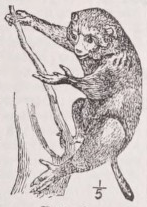
2. The kinkajou.
Pottstown
Encyclopedia Britannica
POTTSTOWN, a borough of Montgomery county, Pennsylvania, United States, is picturesquely situated on the Schuylkill river, in a plain surrounded by hills. It is 18 miles east-south-east of Reading and 40 miles westnorth-west of Philadelphia, at the junction of the Philadelphia and Reading (main line) and the Colebrookdale Railroads, and has communication also by the Schuylkill Valley branch of the Pennsylvania Railroad. There are in and near Pottstown six rolling-mills, two blast-furnaces, three iron and brass foundries, two nail-factories, and large bridge works, besides minor industries. The population of Pottstown was 4125 in 1870, and 5305 in 1880.
9th ed. Encyclopædia Britannica, vol. 19, p. 643
[104 words — estimated reading time: 1 minute]
[104 words — estimated reading time: 1 minute]
Pottsville
Encyclopedia Britannica
POTTSVILLE, a city of the United States, capital of Schuylkill county, Pennsylvania, lies 35 miles north-west of Reading, on the north side of the Schuylkill river, in the gap by which it breaks through Sharp Mountain. It is the terminus of the main line of the Philadelphia and Reading Railroad, and the great emporium of the Schuylkill coal region, which extends north and east and west, and has an annual yield of about 6,000,000 tons. Furnaces, rolling-mills, machine-shops, planing-mills, a spikemill, a pottery, <fcc., are among the industrial establishments; and the public institutions include a court-house, a jail, a town-hall, a union hall, an opera-house, a children’s home, a lyceum, and a free reading-room. The German and Welsh elements in the population are strong enough to be represented each by several churches. Pottsville as a city dates from 1825. In 1850 it had 7515 inhabitants, 12,384 in 1870, and 13,253 in 1880.
9th ed. Encyclopædia Britannica, vol. 19, p. 644
[165 words — estimated reading time: 1 minute]
[165 words — estimated reading time: 1 minute]
No thesaurus entries found for "Pott".
King James Bible KJV Bible
Berean Standard Bible BSB Bible
31 KJV and 20 BSB verses contain “Pott” — showing the first 20. Show all 34 verses (searchable)
And one went out into the field to gather herbs, and found a wild vine, and gathered thereof wild gourds his lap full, and came and shred them into the pot of pottage: for they knew them not.
One of them went out to the field to gather herbs, and he found a wild vine from which he gathered as many wild gourds as his garment could hold. Then he came back and cut them up into the pot of stew, though no one knew what they were.
These were the potters, and those that dwelt among plants and hedges: there they dwelt with the king for his work.
These were the potters who lived at Netaim and Gederah. They lived there in the service of the king.
I have raised up one from the north, and he shall come: from the rising of the sun shall he call upon my name: and he shall come upon princes as upon morter, and as the potter treadeth clay.
I have raised up one from the north, and he has come— one from the east who calls on My name. He will march over rulers as if they were mortar, like a potter who treads the clay.