Present
[Adjective]
Webster's Dictionary 1828
1. s as z. [Latin proesens; proe and sum, esse, to be.]
2. Being in a certain place; opposed to absent.
3. Being before the face or near; being in company. Inquire of some of the
gentlemen present
4. These things have I spoken unto you, being yet present with you.
John 14:25 .
5. Being now in view or under consideration. In the present instance, facts will not warrant the conclusion. The present question must be decided on different principles.
6. Now existing, or being at this time; not past or future; as the present session of congress. The court is in session at the present time. We say, a present good, the present year or age.
7. Ready at hand; quick in
emergency; as present wit.
8. '
Tis a high point of philosophy and virtue for a man to be present to himself.
10. Nor could I hope in any place but there
11. To find a god so present to my prayer.
12. Not absent of mind; not abstracted;
attentive.
13. The present an
elliptical expression for the present time.
15. Present tense, in grammar, the tense or form of a verb which expresses action or being in the present time, as I am writing; or something that exists at all times, as virtue is always to be preferred to vice; or it expresses habits or general truths, as plants spring from the earth; fishes
swim; reptiles
creep; birds fly; some animals
subsist on
herbage, others are
carnivorous.
Present
[Noun]
Webster's Dictionary 1828
2. Presents' in the plural, is used in law for a deed of
conveyance, a
lease, letter of
attorney or other writing; as in the phrase, 'Know all men by these presents, ' that is, by the writing itself, per presentes. In this sense, it is rarely used in the singular.
Present
[Verb transitive]
Webster's Dictionary 1828
1. To set, place or introduce into the presence or before the face of a superior, as to present an
envoy to the king; and with the reciprocal
pronoun, to come into the presence of a superior.
2. Now there was a day when the sons of God came to present themselves before the Lord.
Job 1:6 .
3. To exhibit to view or notice. The top of Mount
Holyoke, in
Hampshire county, in Massachusetts, presents one of the finest prospects in America.
4. To offer; to exhibit.
5. O hear what to my mind first thoughts present
6. He is ever ready to present to us the thoughts or observations of others.
7. To give; to offer
gratuitously for reception. The first President of the American Bible Society, presented to that institution ten thousand dollars.
8. To put into the hands of another in ceremony.
9. So ladies in romance assist their knight,
10. Present the
spear, and arm him for the fight.
11. To favor with a gift; as, we present a man with a suit of clothes. Formerly the phrase was, to present a person.
13. [This use is obsolete.]
15. The patron of a church may present his clerk to a
parsonage or
vicarage; that is, may offer him to the bishop of the diocese to be instituted.
16. To offer.
17. He--presented battle to the French navy, which was refused.
19. To lay before a court of
judicature as an object of inquiry; to give notice officially of a crime or
offense. It is the duty of grand
juries to present all breaches of law within their knowledge. In America, grand
juries present whatever they think to be public
injuries, by
notifying them to the public with their censure.
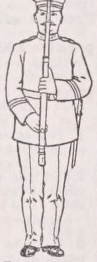
20. To point a weapon, particularly some species of fire-arms; as, to present a
musket to the breast of another; in manual exercise, to present arms.
21. To
indict; a customary use of the word in the United Stats.
Present
[Adjective]
Webster's Dictionary 1913
1. Being at hand, within reach or call, within certain
contemplated limits; -- opposed to absent.
2. Now existing, or in process; begun but not ended; now in view, or under consideration; being at this time; not past or future; as, the present session of Congress; the present state of affairs; the present instance.
4. Ready; quick in
emergency; as a present wit.
6. Present time; the time being; time in progress now, or at the moment
contemplated; as, at this present.
7. Present letters or instrument, as a deed of
conveyance, a
lease, letter of
attorney, or other writing; as in the phrase, " Know all men by these presents," that is, by the writing itself, " per has literas praesentes; " -- in this sense, rarely used in the singular.
8. A present tense, or the form of the verb denoting the present tense.
9. To bring or introduce into the presence of some one, especially of a superior; to introduce formally; to offer for acquaintance; as, to present an
envoy to the king; (with the reciprocal
pronoun) to come into the presence of a superior.
10. To exhibit or offer to view or notice; to lay before one's perception or
cognizance; to set forth; to present a fine appearance.
11. To pass over, esp. in a
ceremonious manner; to give in charge or possession; to deliver; to make over.
13. Hence: To
endow; to
bestow a gift upon; to favor, as with a
donation; also, to court by gifts.
16. To
nominate for support at a public school or other institution .
17. To lay before a public body, or an official, for consideration, as before a legislature, a court of
judicature, a corporation, etc.; as, to present a
memorial, petition,
remonstrance, or
indictment.
18. To lay before a court as an object of inquiry; to give notice officially of, as a crime of offence; to find or represent judicially; as, a grand jury present certain offenses or nuisances, or whatever they think to be public
injuries.
20. To aim, point, or direct, as a weapon; as, to present a
pistol or the point of a sword to the breast of another.
Present
[Noun]
Webster's Dictionary 1913
2. The position of a soldier in presenting arms; as, to stand at present.
Present
[Verb intransitive]
Webster's Dictionary 1913
To appear at the mouth of the
uterus so as to be
perceptible to the finger in
vaginal examination; -- said of a part of an infant during labor.
1. That may be presented; that may be exhibited or represented.
2. That may be offered to a church living; as a presentable clerk.
3. That admits of the presentation of a clerk; as a church presentable [Unusual.]
1. Capable or admitting of being presented; suitable to be exhibited, represented, or offered; fit to be brought forward or set forth; hence, fitted to be introduced to another, or to go into society; as, ideas that are presentable in simple language; she is not presentable in such a
gown.
2. Admitting of the presentation of a clergiman; as, a church presentable.
Ready; quick; immediate; as presentaneous poison.
Ready; quick; immediate in effect; as, presentaneous poison.
1. The act of presenting.
2. Prayers are sometimes a presentation of mere desires.
3. Exhibition; representation; display; as the presentation of fighting on the stage.
4. In ecclesiastical law, the act of offering a clerk to the bishop or ordinary for institution in a
benefice. An
advowson is he right of presentation
5. If the bishop admits the patron's presentation the clerk so admitted is next to be instituted by him.
6. The right of presenting a clerk. The patron has the presentation of the
benefice.
1. The act of presenting, or the state of being presented; a setting forth; an offering;
bestowal.
2. exhibition; representation; display; appearance;
semblance; show.
3. That which is presented or given; a present; a gift, as, the picture was a presentation.
5. The particular position of the child during labor relatively to the passage though which it is to be brought forth; -- specifically designated by the part which first appears at the mouth of the
uterus; as, a
breech presentation.
1. In ecclesiastical affairs, that has the right of presentation, or offering a clerk to the bishop for institution. Advowsons are presentative
collative or
donative.
2. An
advowson presentative is where the patron hath a right of presentation to the bishop or ordinary.
3. That admits the presentation of a clerk; as a presentative
parsonage.
1. Having the right of presentation, or offering a
clergyman to the bishop for institution; as, advowsons are presentative,
collative, or
donative.
Presented
[Participle passive]
Webster's Dictionary 1828
Offered; given; exhibited to view; accused.
Presentee
[Verb transitive]
Webster's Dictionary 1913
One to whom something is presented; also, one who is presented; specifically (Eccl.), one presented to
benefice.
Supposing actual presence. [Little used.]
Implying actual presence; present, immediate.
The state of being present. [Little used.]
State of being actually present.
Presentiate
[Verb transitive]
Webster's Dictionary 1828
To make present. [Little used.]
Making present. [Not in use.]
In such a manner as to make present. [Not in use.]
Previous conception, sentiment or opinion; previous
apprehension of something future.
Bringing a conception or notion directly before the mind; presenting an object to the memory of imagination; -- distinguished from
symbolic.