
See Bitts.
Word of the Day: Catachrestical
The box for the compasses and lights on board a ship. [ See Binacle .]
2. Sharp; cruel; severe; as bitter enmity. Hebrews 1:1 .
3. Sharp, as words, reproachful; sarcastic.
4. Sharp to the feeling; piercing; painful; that makes to smart; as a bitter cold day, or a bitter blast.
5. Painful to the mind; calamitous; poignant; as a bitter fate.
6. Afflicted; distressed.
7. The Egyptians made their lives bitter Exodus 1:14 .
8. Hurtful; very sinful.
9. Is is an evil and bitter thing. Jeremiah 2:19 .
10. Mournful; distressing; expressive of misory; as a bitter complaint or lamentation. Job 23:2 . Jeremiah 6:26 .
1. A substance that is bitter [See bitter ]
2. In marine language, a turn of the cable which is round the bitts.
2. Any substance that is bitter. See Bitters.
1. Having a peculiar, acrid, biting taste, like that of wormwood or an infusion of hops; as, a bitter medicine; bitter as aloes.
3. Causing, or fitted to cause, pain or distress to the mind; calamitous; poignant.
4. Characterized by sharpness, severity, or cruelty; harsh; stern; virulent; as, bitter reproach.
6. To make bitter.
Bitter
Watson's Biblical & Theological Dictionary
HERBS. מרורים. Exod. xii, 8, and Num. ix, 11. The Jews were commanded to eat their passover with a salad of bitter herbs; but whether one particular plant was intended, or any kind of bitter herbs, has been made a question. By the Septuagint it is rendered επι ϖικριδων; by Jerom, “_cum lactucis agrestibus_;” and by the Gr. Venet., επι ϖικρισιν. Dr. Geddes remarks, that “it is highly probable that the succory or wild lettuce is meant.” The Mischna in _Pesachim_, cap. 2, reckons five species of these bitter herbs: 1. Chazareth, taken for lettuce: 2. Ulsin, supposed to be endive or succory: 3. Tamca, probably tansy: 4. Charubbinim, which Bochart thought might be the nettle, but Scheuchzer shows to be the camomile: 5. Meror, the sow-thistle, or dent-de-lion, or wild lettuce. Mr. Forskal says, “the Jews in Sana and in Egypt eat the lettuce with the paschal lamb.” He also remarks, that _moru_ is centaury, of which the young stems are eaten in February and March.
Watson's Biblical & Theological Dictionary
[167 words — estimated reading time: 1 minute]
[167 words — estimated reading time: 1 minute]
Bitter spar
Webster's Dictionary 1913
Epsom salt.
Rhombspar, a mineral that crystallizes in rhomboids. It is the crystallized variety of magnesian limestone.
The plant called gentian, Gentiana, which has a remarkable bitter taste.
the butterbump or bittern.
Full of bitterness.
A bitter compound used in adulterating beer; bittern.
Somewhat bitter; bitter in a moderate degree.
Somewhat bitter.
The quality of being moderately bitter.
A roachlike European fish (Rhodima amarus).
1. With a bitter taste.
3. In a manner severely reproachful; sharply; severely; angrily; as, to censure bitterly
In a bitter manner.
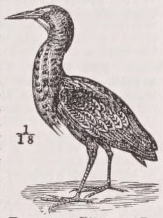
1. A fowl of the grallic order, the Ardea stellaris, a native of Europe. This fowl has long legs and neck, and stalks among reeds and sedge, feeding upon fish. It makes a singular noise, called by Dryden bumping, and by Goldsmith booming.
1. The brine which remains in salt works after the salt is concreted, having a bitter taste from the chloride of magnesium which it contains.
2. A very bitter compound of quassia, cocculus Indicus, etc., used by fraudulent brewers in adulterating beer.
A wading bird of the genus Botaurus, allied to the herons, of various species.
Bittern
Encyclopedia Britannica
BITTERN, a genus of Wading Birds, belonging to the family Ardeidoe, comprising several species closely allied to the Herons, from which they differ chiefly in their shorter neck, the back of which is covered with down, and the front with long feathers, which can be raised at pleasure. They are solitary birds, frequenting countries possessing extensive swamps and marshy grounds, remaining at rest by day, concealed among the reeds and rushes of their haunts, and seeking their food, which consists of fish, reptiles, insects, and small quadrupeds, in the twilight. The Common Bittern fBotaurus stellaris) is nearly as large as the heron, and is widely distributed over the eastern hemisphere. Formerly it was common in Britain, but the extensive drainage of late years has greatly diminished its numbers, and it is now a permanent resident only in the fen districts of England. The bittern in the days of falconry was strictly preserved, and afforded excellent sport. It sits crouching on the ground during the day, with its bill pointing in the air, a position from which it is not easily roused, and even when it takes wing, its flight is neither swift nor long sustained. When wounded it requires to be approached with caution, as it will then attack either man or dog with its long sharp bill and its acute claws. It builds a rade nest among the reeds and flags, out of the materials which surround it, and the female lays four or five eggs of a uniform dusky brown. During the breeding season it utters a booming noise, from which it probably derives its generic name, Botaurus, and which has made it in many places an object of superstitious dread. Its plumage for the most part is of a pale buff colour, rayed and speckled with black and reddish brown. The American Bittern (Botaurus ...lentiginosus) is somewhat smaller than the European species, and is found throughout the central and southern portions of North America, where it forms an article of food. It also occurs in Britain as an occasional straggler.
9th ed. Encyclopædia Britannica, vol. 3, p. 794
[343 words — estimated reading time: 2 minutes]
[343 words — estimated reading time: 2 minutes]
Bittern
Watson's Biblical & Theological Dictionary
קפוד. Isa. xiv, 23; xxxiv, 11; and Zephaniah ii, 14. Interpreters have rendered this word variously: an _owl_, an _osprey_, a _tortoise_, a _porcupine_, and even an _otter_. “How unhappy,” says Mr. Harmer, “that a word which occurs but three times in the Hebrew Bible should be translated by three different words, and that one of them should be _otter_!” Isaiah, prophesying the destruction of Babylon, says that “the Lord will make it a possession for the bittern, and pools of water;” and Zephaniah, ii, 14, prophesying against Nineveh, says that “the cormorant and bittern shall lodge in the upper lintels of it: their voice shall sing in the windows.” The Arabic version reads “_al-houbara_.” According to Dr. Shaw, the _houbara_ is “of the bigness of a capon, but of a longer body. It feeds on little shrubs and insects, like the _graab el Sahara_; frequenting, in like manner, the confines of the desert.” Golius interprets it _the bustard_; and Dr. Russel says that the Arabic name of the bustard is “houbry.”
Watson's Biblical & Theological Dictionary
[172 words — estimated reading time: 1 minute]
[172 words — estimated reading time: 1 minute]
1. A bitter taste; or rather a quality in things which excites a biting disagreeable sensation in the tongue.
2. In a figurative sense, extreme enmity, grudge, hatred; or rather an excessive degree or implacableness of passions and emotions; as the bitterness of anger. Ephesians 4:31 .
3. Sharpness; severity of temper.
5. Keen sorrow; painful affliction; vexation; deep distress of mind.
8. Root of bitterness a dangerous error, or schism, tending to draw persons to apostasy. Hebrews 12:15 .
1. The quality or state of being bitter, sharp, or acrid, in either a literal or figurative sense; implacableness; resentfulness; severity; keenness of reproach or sarcasm; deep distress, grief, or vexation of mind.
2. A state of extreme impiety or enmity to God.
Bitterness
Watson's Biblical & Theological Dictionary
_waters of_. See ADULTERY.
Watson's Biblical & Theological Dictionary
[4 words — estimated reading time: 1 minute]
[4 words — estimated reading time: 1 minute]
No thesaurus entries found for "bitt".
King James Bible KJV Bible
Berean Standard Bible BSB Bible
84 KJV and 81 BSB verses contain “bitt” — showing the first 20. Show all 104 verses (searchable)
And they made their lives bitter with hard bondage, in morter, and in brick, and in all manner of service in the field: all their service, wherein they made them serve, was with rigour.
and made their lives bitter with hard labor in brick and mortar, and with all kinds of work in the fields. Every service they imposed was harsh.
And they shall eat the flesh in that night, roast with fire, and unleavened bread; and with bitter herbs they shall eat it.
They are to eat the meat that night, roasted over the fire, along with unleavened bread and bitter herbs.
And when he hath made her to drink the water, then it shall come to pass, that, if she be defiled, and have done trespass against her husband, that the water that causeth the curse shall enter into her, and become bitter, and her belly shall swell, and her thigh shall rot: and the woman shall be a curse among her people.
The fourteenth day of the second month at even they shall keep it, and eat it with unleavened bread and bitter herbs.
Such people are to observe it at twilight on the fourteenth day of the second month. They are to eat the lamb, together with unleavened bread and bitter herbs;
Lest there should be among you man, or woman, or family, or tribe, whose heart turneth away this day from the LORD our God, to go and serve the gods of these nations; lest there should be among you a root that beareth gall and wormwood;
Make sure there is no man or woman, clan or tribe among you today whose heart turns away from the LORD our God to go and worship the gods of those nations. Make sure there is no root among you that bears such poisonous and bitter fruit,
They shall be burnt with hunger, and devoured with burning heat, and with bitter destruction: I will also send the teeth of beasts upon them, with the poison of serpents of the dust.
They will be wasted from hunger and ravaged by pestilence and bitter plague; I will send the fangs of wild beasts against them, with the venom of vipers that slither in the dust.