
The country and garden in which Adam and Eve were placed by God himself.
Word of the Day: Catachrestical
The garden where Adam and Eve first dwelt; hence, a delightful region or residence.
Eden
Encyclopedia Britannica
EDEN, Hebrew (∏P, denoting pleasure or delight), was the first residence of Adam and Eve according to the Old Testament Scriptures. The passage in which its geographical position seems tobe indicated (Gen. ii. 8-14) has been from the earliest times the subject of a discussion as ingenious and elaborate as it has been fruitless. Its general position is given as “eastward,” i.e., to the east of the place where the narrative was written. Of the four rivers mentioned the Euphrates is undoubtedly the same which is still known by that name, and the Hiddekel has been almost universally identified with the Tigris. The object of commentators who have sought to put a literal construction on the passage has, therefore, been to identify the Pison and the Gihon, by finding two rivers which together with the Euphrates and the Tigris fulfil the condition stated in Gen. ii. 10, “Aud a river went out of Eden to water the garden; and from thence it was parted and became into four heads.” As there is no river which forms a common source for the Euphrates, the Tigris, and two others, recourse has been had to a straiued construction of one kind or other. Josephus, for example, supposes the river which is the common source to have been the ocean stream which surrounds the earth, and identifies the Pison with the Ganges and the Gilιon with the Nile; and in this he is followed by many of the fathers. Calmet, Rosenmüller, and others, again, suppose the river which is the common source to have been a region of springs, and, by making the Pison and the Gilιon mountain streams, place the site of Eden in the highlands of Armenia. Calvin, Huet, and Bochart place Eden in lower Babylonia, on the supposition that the Pison and the Gihon are the two channels by which the united rivers ...Euphrates and Tigris enter the Persian Gulf. Luther and others, such as Clericus and more recently Baumgarten, have hazarded the supposition that the flood altered the course of the streams, and thus rendered it impossible to identify the locality of Eden from the description given in Genesis. These may suffice as specimens of the almost innumerable solutions that have been offered of what is now generally admitted to be an insoluble problem. On the theory that the narrative in Genesis is veritable history to be literally interpreted, it is impossible to fix the geographical position of Eden with any approach to certainty. This impossibility fully accounts for the immense variety of the conjectures that have been put forward. It deserves mention as a curiosity of criticism that the site o'f Eden has been assigned by different writers to each of the four quarters of the globe, and that the particular localities specified have ranged from Scandinavia to the South Sea Islands. The allegorical interpretations, which have been offered in great variety from the time of Philo downwards, are, of course, not hampered with any geographical difficulties. Philo supposes Eden to be a symbol of the soul that delights in virtue, the river which is the source to be generic virtue or goodness, and the four rivers to be the specific virtues of prudence, temperance, courage, and justice. Origen finds in the subject an excellent opportunity for applying his favourite allegorical method, and supposes Eden to be heaven, and the rivers wisdom. Similar interpretations, with individual variations, are given by several of the fathers who are prone to allegorize. In modern times Coleridge is perhaps the most celebrated of those who have interpreted the story of Eden as an allegory. It is to be observed, however, that this mode of explaining the narrative has found even less favour with recent interpreters than that which accepts it as literal history, meeting the obvious difficulties as best it can. The undoubted tendency of later criticism has been to discard alike the theory of literal history and the theory of allegory in favour of another, according to which the story of Eden is a mythical tradition of a kind similar to that which is to be found in the early sacred literature of most nations. According to this view the true explanation is to be sought for in a careful comparison of these various traditions as preserved in sacred scriptures, early histories, inscriptions, and otherwise. See Adam, vol. i. p. 135-6, and Pentateuch.
EDEN, The Honourable Emily (1795-1851), novelist and miscellaneous writer, was the seventh daughter of the first Lord Auckland, and was born in 1795. Happily gifted by nature, heι , literary faculties and tastes were fostered by a liberal education. In 1835 she accompanied her brother, Lord Auckland, to India, on his appointment as governor-general, and remained with him during his term of office, which covered the period of the Afghan war. Returning to England in 1841, she made herself favourably known as a writer by the publication, three years later, of her Portraits of the Princes and People of India. She was also author of two novels entitled the The Semi-detached House and The Semi-attached Couple, which first appeared anonymously under the editorship of Lady Theresa Lewis. In these works she gives clever and amusing delineations of Anglo-Indian life and manners as she saw them. In 1866 was published a. series of her letters to her sister written from India, and entitled Up the Country. Her private journal, at present unpublished, is said to be still more attractive and full of sparkling anecdote and graphic sketches. Another volume entitled Letters from India, edited by her niece, the Pion. Eleanor Eden, was published in 1872. For many years Miss Eden lived at Kensington, and her house was one of the most frequented centres of London intellectual and fashionable life. She afterwards removed to Richmond, and there died, August 5, 1869. Her eldest sister Eleanor attracted the warn’ affection of William Pitt, who, however, did not feel justified in making her an offer of marriage. This was, it is supposed, the only love-passage in Pitt’s history. She afterwards married Lord Hobart, and died in 1851.
9th ed. Encyclopædia Britannica, vol. 7, p. 651
[738 words — estimated reading time: 5 minutes]
[738 words — estimated reading time: 5 minutes]
Eden
Watson's Biblical & Theological Dictionary
_Garden of_, the residence of our first parents in their state of purity and blessedness. The word _Eden_ in the Hebrew denotes “pleasure” or “delight:” whence the name has been given to several places which, from their situation, were pleasant or delightful. Thus the Prophet Amos, i, 5, speaks of an Eden in Syria, which is generally considered to have been in the valley of Damascus, where a town called Eden is mentioned by Pliny and Ptolemy, and where the tomb of Abel is pretended to be shown. This has in consequence been selected by some as the site of the garden of Eden. By others, the garden has been placed on the eastern side of mount Libanus; and by others again, in Arabia Felix, where traces of the word _Eden_ are found. But the opinion which has been most generally received on this subject is that which places the garden on the Lower Euphrates; between the junction of that river with the Tigris and the gulf of Persia. This is Dr. Well’s opinion; in which he is supported by Huetius, Grotius, Marinus, and Bochart. To this it is replied, that, according to this scheme, the garden was intersected by a great branch of the Euphrates, in the lower and broadest part of its course; which will give it an extent absolutely irreconcilable with the idea of Adam’s “dressing” it by his own manual labour, or even of overlooking it: beside that all communication would be cut off between its different parts by a stream half a mile in width. Its local features, too, if in this situation, must have been of the most uninteresting kind; the whole of that region, as far as the sight can reach, being a dead, monotonous, sandy, or marshy flat, without a single undulation to relieve the eye, or give any of the beauties which the imagination involuntarily paints to itself ...as attendant on a spot finished by the hand of God as the residence of his creatures in a state of innocence; whose minds may be supposed to be tuned to the full enjoyment of the grand and beautiful in nature. How different will be the aspect and arrangement of this favoured spot, if it be placed where only, according to the words of Moses, it can be placed; namely, at the heads or fountains of the rivers described, instead of their mouths. The country of Eden, therefore, according to others, was some where in Media, Armenia, or the north of Mesopotamia; all mountainous tracts, and affording, instead of the sickening plains of Babylonia, some of the grandest, as well as the richest scenery in the world. A river or stream rising in some part of this country, entered the garden; where it was parted into four others, in all probability, by first falling into a basin or lake, from which the other streams issued at different points, taking different directions, and growing into mighty rivers; although at their sources in the garden, they would be like all other rivers, mere brooks, and forming no barrier to a free communication between the parts of the garden. Dr. Wells, in order to support his hypothesis of the situation of Eden on the lower parts of the Euphrates and Tigris, after giving these rivers a distribution which has now no existence, makes the Pison and Gihon to be parts of the Tigris and Euphrates themselves: an arrangement at perfect disagreement with the particular description of Moses; beside, that the Gihon thus called, instead of compassing the whole land of Cush, can only be said to skirt an extreme corner of it. It appears, indeed, that in the time of Alexander, the Euphrates pursued a separate course to the sea; or, at least, that a navigable branch of it was carried in that direction: in the mouth of which, at Diridotis, Nearchus anchored with his fleet. But what reliance can be placed on the ever shifting channels of a river flowing through an alluvial soil, and over a perfect level divertible at the pleasure of the people inhabiting its banks? Or, what theory can be founded on their distribution, which will not be as unstable as the streams themselves? This very channel, so essential to the hypothesis which places Eden in this situation, was annihilated by the Orcheni, a neighbouring people; who directed the stream to water their own land, and thus gave it a shorter course into the Tigris, which it has ever since preserved. But it is only the lower parts of the Euphrates and Tigris, as they creep through the plains of Babylonia, which are thus inconstant: higher up in their courses, they flow over more solid strata, and in deeper valleys, unchanged by time. It is here that their conformity with the Mosaic account is to be sought; and it is here that they may be found, in the exact condition in which they were left by the deluge, and, indeed, according to Moses, in which they existed before that event. It is true, that the heads of the four rivers, above described, cannot now be found sufficiently near, to recognise thence the exact situation of paradise; but they all arise from the same mountainous region; and the springs of the Euphrates and Tigris, as already mentioned, are even now nearly interwoven. Mr. Faber supposes the lake Arsissa to cover the site of Eden; and that the change which carried the heads of the rivers to a greater distance from it, was occasioned by the deluge. But it is far more probable that this change, if we may infer from the account given by Moses that the courses of all the streams remained unaltered by the flood, may have taken place at man’s expulsion from the garden: when God might choose to obliterate this fair portion of his works, unfitted for any thing but the residence of innocence; and to blot at once from the face of the earth, like the guilty cities of the plain, both the site and the memorial of man’s transgression,--an awful event, which would add tenfold horrors to the punishment.
Watson's Biblical & Theological Dictionary
[1,023 words — estimated reading time: 6 minutes]
[1,023 words — estimated reading time: 6 minutes]
Of or pertaining to Eden; paradisaic.
Admitted to a state of paradisaic happiness.
See Edentate, a.
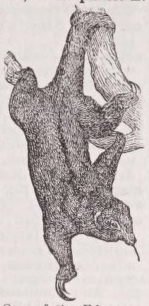
An order of mammals including the armadillos, sloths, and anteaters; -- called also Bruta. The incisor teeth are rarely developed, and in some groups all the teeth are lacking.
Edentata
Encyclopedia Britannica
EDENTATA, an order of placental mammals characterized by the total absence of median incisor teeth. Such teeth as are found in edentate species are composed entirely of dentine and cement, without enamel; they likewise grow for an indefinite period, and are consequently without root; and so far as yet discovered there is no displacement of the first teeth by any second set except in a few of the armadilloes. This order contains the sloths, armadilloes, and ant-eaters.
9th ed. Encyclopædia Britannica, vol. 7, p. 652
[78 words — estimated reading time: 1 minute]
[78 words — estimated reading time: 1 minute]
Destitute or deprived of teeth.
A depriving of teeth.
Toothless.
Heaven Roget’s Thesaurus §981
N. heaven, kingdom of heaven, kingdom of god, heavenly kingdom, throne of god, presence of god, inheritance of the saints in light, paradise, eden, zion, abode of the blessed, celestial bliss, glory, olympus, elysium, elysian fields, arcadia, bowers of bliss, garden of the hesperides, third heaven, valhalla, walhalla (scandinavian), nirvana (buddhist), happy hunting grounds, alfardaws, assama, falak al aflak "the highest heaven" (mohammedan), future state, eternal home, eternal reward, resurrection, translation, resuscitation, apotheosis, deification
Phr. "looks through nature up to the nature's god", "the great world;s altarstairs, that slope through darkness up to god", "the treasury of everlasting joy", vigeur de dessus
King James Bible KJV Bible
Berean Standard Bible BSB Bible
19 KJV and 19 BSB verses contain “eden”
And the LORD God planted a garden eastward in Eden; and there he put the man whom he had formed.
And the LORD God planted a garden in Eden, in the east, where He placed the man He had formed.
And a river went out of Eden to water the garden; and from thence it was parted, and became into four heads.
Now a river flowed out of Eden to water the garden, and from there it branched into four headwaters:
And the LORD God took the man, and put him into the garden of Eden to dress it and to keep it.
Then the LORD God took the man and placed him in the Garden of Eden to cultivate and keep it.
Therefore the LORD God sent him forth from the garden of Eden, to till the ground from whence he was taken.
Therefore the LORD God banished him from the Garden of Eden to work the ground from which he had been taken.
So he drove out the man; and he placed at the east of the garden of Eden Cherubim, and a flaming sword which turned every way, to keep the way of the tree of life.
Have the gods of the nations delivered them which my fathers have destroyed; as Gozan, and Haran, and Rezeph, and the children of Eden which were in Thelasar?
And next him were Eden, and Miniamin, and Jeshua, and Shemaiah, Amariah, and Shecaniah, in the cities of the priests, in their set office, to give to their brethren by courses, as well to the great as to the small:
Under his authority, Eden, Miniamin, Jeshua, Shemaiah, Amariah, and Shecaniah faithfully distributed portions to their fellow priests in their cities, according to their divisions, old and young alike.
Have the gods of the nations delivered them which my fathers have destroyed, as Gozan, and Haran, and Rezeph, and the children of Eden which were in Telassar?
For the LORD shall comfort Zion: he will comfort all her waste places; and he will make her wilderness like Eden, and her desert like the garden of the LORD; joy and gladness shall be found therein, thanksgiving, and the voice of melody.
For the LORD will comfort Zion and will look with compassion on all her ruins; He will make her wilderness like Eden and her desert like the garden of the LORD. Joy and gladness will be found in her, thanksgiving and melodious song.
Thou hast been in Eden the garden of God; every precious stone was thy covering, the sardius, topaz, and the diamond, the beryl, the onyx, and the jasper, the sapphire, the emerald, and the carbuncle, and gold: the workmanship of thy tabrets and of thy pipes was prepared in thee in the day that thou wast created.
To whom art thou thus like in glory and in greatness among the trees of Eden? yet shalt thou be brought down with the trees of Eden unto the nether parts of the earth: thou shalt lie in the midst of the uncircumcised with them that be slain by the sword. This is Pharaoh and all his multitude, saith the Lord GOD.
Who then is like you in glory and greatness among the trees of Eden? You also will be brought down to the depths of the earth to be with the trees of Eden. You will lie among the uncircumcised, with those slain by the sword. This is Pharaoh and all his multitude, declares the Lord GOD.’”
A fire devoureth before them; and behind them a flame burneth: the land is as the garden of Eden before them, and behind them a desolate wilderness; yea, and nothing shall escape them.
Before them a fire devours, and behind them a flame scorches. The land before them is like the Garden of Eden, but behind them, it is like a desert wasteland— surely nothing will escape them.