
nearer.
Word of the Day: Catachrestical
Nerbudda
Encyclopedia Britannica
NERBUDDA (properly Narbada), one of the great rivers of India, traditionally regarded as the boundary between Hindustan proper and the Deccan. It rises on the summit of Amarkantak hill in Rewah state, in 22“
4Γ N. lat., 89° 4Γ Ε. long., and after a westward course of 800 miles through the Central Provinces and Guzerat, falls into the sea in 21° 38' N. lat., 72° 0' 30" E. long., in the Bombay district of Broach. During its passage through the Central Provinces several falls interrupt its course, the principal of which are a series of glittering cascades and rapids for some hundreds of feet down the heights of Amarkantak, and the well-known falls of the “Marble rocks” 9 miles below Jabalpur. After leaving the Central Provinces, the river widens out in the fertile district of Broach, with an average breadth of from half a mile to a mile. Below Broach city it forms an estuary which is 13 miles broad where it enters the Gulf of Cambay. The Nerbudda is nowhere utilized for irrigation, and navigation is confined to the lower section. In the rainy season boats of considerable size sail about 60 miles above Broach city. Sea-going ships of about 70 tons frequent the port of Broach, but they are entirely dependent on the tide. In sanctity the Nerbudda ranks only second to the Ganges among the rivers of India, and along its whole course are special places of pilgrimage. The most meritorious act that a pilgrim can perform is to walk from the sea to the source of the river and back along the opposite bank. This pilgrimage is chiefly undertaken by devotees from Guzerat and the Deccan, and takes from one to two years to accomplish.
9th ed. Encyclopædia Britannica, vol. 17, p. 345
[290 words — estimated reading time: 2 minutes]
[290 words — estimated reading time: 2 minutes]
Nere
Webster's Dictionary 1913
Were not.
1. A sea nymph, one of the daughters of Nereus, who were attendants upon Neptune, and were represented as riding on sea horses, sometimes with the human form entire, and sometimes with the tail of a fish.
2. Any species of Nereis. The word is sometimes used for similar annelids of other families.
2. A genus, including numerous species, of marine chaetopod annelids, having a well-formed head, with two pairs of eyes, antennae, four pairs of tentacles, and a protrusile pharynx, armed with a pair of hooked jaws.

Fossil tracks of annelids.
A genus of gigantic seaweeds.
Nereus
Encyclopedia Britannica
NEREUS, the old man of the sea, as his name (comp. νάω, modern Greek νερό, water) denotes, was described in Greek legend as full of wisdom and knowledge, friendly to men, but requiring compulsion before he reveals to them all that he knows. The struggle in which Heracles wrestles and overcomes him is a favourite subject of early Greek art; Heracles, the representative of toiling active man, bends to do his will even the power of the sea, αλιoς γepωv. The fifty daughters of Nereus, the Nereids, are personifications of the smiling, quiet sea with all the gifts which it offers to men. None of the Nereids have any individual character except Thetis, Amphitrite, and Galatea. Thetis and Amphitrite are the queen or mistress of the sea in the legend of different localities; Galatea is a Sicilian figure, who plays with and deludes her rustic lover of the shore, Polyphemus. It is impossible to treat in brief of the religious conceptions on which the mythology of Nereus is founded, or of the connexion between the early representations of Nereus and Heracles and similar subjects in pre-Hellenic art.
9th ed. Encyclopædia Britannica, vol. 17, p. 346
[187 words — estimated reading time: 2 minutes]
[187 words — estimated reading time: 2 minutes]
The id.
Neri
Encyclopedia Britannica
NERI, Philip (1515-1595). Filippo Neri, one of the most remarkable and individual figures amongst the ecclesiastics of the 16th century, was born at Florence, July 21, 1515, the youngest child of Francesco Neri, a lawyer of that city, and his wife Lucrezia Soldi, a woman of higher birth than her husband, and descended from a family whose members had held important public offices in the time of the republic. They were both devout persons, and Francesco was accustomed to intercourse with the monastic bodies in Florence, notably with the Dominicans. The child was carefully brought up, and displayed from infancy a winning, gentle, intelligent, playful, and yet obedient disposition, which earned him the title of the “good Pippo” (bon Pippo') amongst his young companions. He received almost his earliest teachings from the friars at San Marco, the famous Dominican monastery in Florence, and was accustomed in after life to ascribe most of his progress to the teaching of two amongst them, Zenobio de’ Medici and Servanzio Mini. When he was about sixteen years old, a fire destroyed nearly all his father’s property, and it became therefore expedient to seek some means of recruiting the family fortunes. His father’s brother Romolo, a merchant at San Germano, a Neapolitan town in the Terra di Lavoro, near the base of Monte Cassino, was wealthy and childless, and to him Philip was sent in 1531, to assist him in his business, and with the hope that he might inherit his possessions. So far as gaining Romolo’s confidence and affection, the plan was entirely successful, but it was thwarted by Philip’s own resolve to adopt the ecclesiastical calling, a determination at which he arrived in the course of frequent visits to a solitary chapel on a rock overlooking the Bay of ...Gaeta. In 1533 he left San Germano, and betook himself to Rome, where he found shelter, food, and protection in the house of a Florentine gentleman named Galeotto Caccia, to whose two children he became tutor, continuing in that post for several years, and pursuing his own studies independently, while also practising habitual austerities, and beginning those labours amongst the sick and poor which gained him in later life the title of “Apostle of Rome,” besides paying nightly visits for prayer and meditations to the basilican churches of the city, and to the catacombs. In 1538 he entered on that course of home mission work which was the distinguishing characteristic of his life, and which bears in much of its method a curious resemblance to the manner in which Socrates was accustomed to set the Athenians thinking, in that he traversed the city, seizing opportunities of entering into conversation with persons of all ranks, and of leading them on, now with playful irony, now with searching questions, and again with words of wise and kindly counsel, to consider the topics he desired to set before them.
In 1548 he founded the celebrated confraternity of the Santissima Trinità de’ Pellegrini e de’ Convalescente, whose primary object is to minister to the needs of the thousands of poor pilgrims accustomed to flock to Rome, especially in years of jubilee, and also to relieve the patients discharged from hospitals, but still too weak for labour. In 1551 he passed through all the minor orders, and was ordained deacon, and finally priest on May 23. He settled down, with some companions, at the hospital of San Girolamo della Carità, and while there tentatively began, in 1556, the institute with which his name is more especially connected, that of the Oratory, after a plan he had formed of proceeding as a missionary to India was abandoned at the instance of shrewd advisers, who saw that there was abundant work to be done in Rome, and that he was the man to do it. The scheme of the Oratory at first was no more than a series of evening meetings in his own room, at which there were prayers, hymns, readings from Scripture, from the fathers, and from the Martyrology, followed by a lecture, or by discussion of some religious question proposed for consideration. It afterwards was developed further, and the members of the society were employed in various kinds of mission work throughout Rome, notably in preaching sermons in different churches every evening, a wholly novel agency at that time. In 1564 the Florentines, who regarded themselves as having a special claim upon him as their fellow-citizen, requested him to leave San Girolamo, and to take the oversight of their peculiar church in Rome, San Giovanni dei Fiorentini, then newly built. He was at first reluctant, but the pope (Pius IV.) was induced to enjoin him to accept, permitting him, however, to retain the charge of San Girolamo, where the exercises of the Oratory were still kept up. At this time the new society included amongst its members Caesar Baronius the ecclesiastical historian, Tarrugi, afterwards archbishop of Avignon, and Paravicini, all three subsequently cardinals, and also Gallonius, author of a well-known work on the Sufferings of the Martyrs, Ancina, Bordoni, and other men of ability and distinction.
The Florentines, however, built in 1574 a large oratory or mission-room for the society contiguous to San Giovanni, in order to save them the fatigue of the daily journey to and from San Girolamo, and to provide a more convenient place of assembly, and the headquarters were transferred thither. As the community grew, and its mission work extended, the need of having a church entirely its own, and not subject to other claims, as were San Girolamo and San Giovanni, made itself felt, and the offer of the small parish church of Santa Maria in Vallicella, conveniently situated in the middle of Rome, was made and accepted. The building, however, as not large enough for their purpose, was pulled down, and a splendid church erected on the site. It was immediately after taking possession of their new quarters that Filippo Neri formally organized, under permission of a bull dated July 15, 1575, a community of secular priests, entitled the Congregation of the Oratory. The new church was consecrated early in 1577, and the clergy of the new society at once resigned the charge of San Giovanni dei Fiorentini, but Neri himself did not migrate from San Girolamo till 1583, and then only in virtue of an injunction of the pope that he, as the superior, should reside at the chief house of his congregation. He was at first elected for a term of three years (as is usual in modern societies), but in 1587 was nominated superior for life. He was, however, entirely free from personal ambition, and had no desire to be general over a number of dependent houses, so that he desired that all congregations formed on his model outside Rome should be autonomous, governing themselves, and without endeavouring to retain control over any new colonies they might themselves send out,—a regulation afterwards formally confirmed by a brief of Gregory XV. in 1622. Much as he mingled with society, and with persons of importance in church and state, his single interference in political matters was in 1593, when his persuasions induced the pope, Clement VIII., to withdraw the excommunication and anathema of Henry IV. of France, and the refusal to receive his ambassador, even though the king had formally abjured Calvinism. Neri saw that the pope’s attitude was more than likely to drive Henry to a relapse, and probably to rekindle the civil war in France, and directed Baronius, then the pope’s confessor, to refuse him absolution, and to resign his office of confessor, unless he would withdraw the anathema. Clement yielded at once, though the whole college of cardinals had supported his policy; and Henry, who did not learn the facts till several years afterwards, testified lively gratitude for the timely and politic intervention. Neri continued in the government of the Oratory until his death, which took place on May 26, 1595, in the eightieth year of his age. There are many anecdotes told of him which attest his possession of a playful humour, united with shrewd mother-wit, often urging him to acts with a ludicrous aspect, but which were well calculated to serve his purpose of divesting religion of the hyperprofessional garb it wore in his day, and bringing it within the area of ordinary lay experience. This, rather than the atmosphere of supernaturalism with which he is surrounded in the various biographies of him which have appeared, and that to a much greater degree than is common in similar writings, is the true key to his popularity, and to the fact that his name figures often in the folk-lore of the Roman poor, whom he loved so well and served so long. He was beatified by Paul V. in 1600, and canonized by Gregory XV. in 1622.
“Practical commonplaceness,” to cite the words of Frederick William Faber in his panegyric of Philip Neri, was the special mark which distinguishes his form of ascetic piety from the types accredited before his day. “He looked like other men . . . . he was emphatically a modern gentleman, of scrupulous courtesy, sportive gaiety, acquainted with what was going on in the world, taking a real interest in it, giving and getting information, very neatly dressed, with a shrewd common sense always alive about him, in a modern room with modern furniture, plain, it is true, but with no marks of poverty about it,—in a word, with all the ease, the gracefulness, the polish of a modern gentleman of good birth, considerable accomplishments, and a very various information.” Accordingly, he was ready to meet the needs of his day to an extent and in a manner which even the versatile Jesuits, who much desired to enlist him iu their company, did not rival; and, though an Italian priest and head of a new religious order, his genius was entirely unmonastic and unmediaeval; he was the active promoter of vernacular services, frequent and popular preaching, unconventional prayer, and unsystematized, albeit fervent, private subjective devotion.
Philip Neri was not a reformer, save in the sense that in the active discharge of pastoral work he laboured to reform individuals. He had no difficulties in respect of the teaching and practice of his church, being in truth an ardent Ultramontane in doctrine, as was all but inevitable in his time and circumstances, and his great merit was the instinctive tact which showed him that the system of monasticism could never be the leaven of secular life, but that something more homely, simple, and everyday in character was needed for the new time.
Accordingly, the institute he founded is of the least conventional nature, rather resembling a residential clerical club than a monastery of the older type, and its rules would have appeared incredibly lax, nay, its religious character almost doubtful, to a Bruno, a Stephen Harding, a Francis, or a Dominic. It admits only priests aged at least thirty-six, or ecclesiastics who have completed their studies, and are ready for ordination. The members live in community, and each pays his own expenses, having the usufruct of his private means,—a startling innovation on the monastic vow of poverty. They have indeed a common table, but it is kept up precisely as a regimental mess, by monthly payments from each member. Nothing is provided by the society except the bare lodging, and the fees of a visiting physician. Everything else —clothing, books, furniture, medicines—must be defrayed at the private charges of each member. There are no vows, and every member of the society is at liberty to withdraw when he pleases, and to take his property with him. The government, strikingly unlike the Jesuit autocracy, is of a republican form; and the superior, though first in honour, has to take his turn in discharging all the duties which come to each priest of the society in the order of his seniority, including that of waiting at table, which is not entrusted in the Oratory to lay brothers, according to the practice in most other communities. Four deputies assist the superior in the government, and all public acts are decided by a majority of votes of the whole congregation, in which the superior has no casting voice. To be chosen superior, fifteen years of membership are requisite as a qualification, and the office is tenable, as all the others, for but three years at a time. No one can vote till he has been three years in the society; the deliberative voice is not obtained before the eleventh year. Each house can call its superior to account, can depose, and can restore him, without appeal to any external authority, although the bishop of the diocese in which any house of the Oratory is established is its ordinary and immediate superior, though without power to interfere with the rule. Their churches are non-parochial, and they can perform such rites as baptisms, marriages, &c., only by permission of the parish priest, who is entitled to receive all fees due in respect of these ministrations. The Oratory chiefly spread in Italy, but a branch established in Paris by Cardinal de Bérulle in 1611 had a great success and a distinguished history. It fell in the crash of the Revolution, but was revived by Père Pététot, cure of St Roch, in 1852; while an English house, founded in 1847, is celebrated as the place at which Cardinal Newman fixed his abode after his submission to the Roman Catholic Church. The society has never thriven in Germany, though a few houses have been founded there, in Munich and Vienna.
Authorities.— Marciano, Memorie istoriche delta Congregatione delt Oratorio, 5 vols, folio, Naples, 1693-1702; Bacci, Life of Saint Philip Neri, translated by Faber, 2 vols. 8vo, London, 1847; Crispino, La Scuola di San Fitippo Neri, 8vo, Naples, 1675; Faber, Spirit and Genius of St Philip Neri, 8vo, London, 1850; Agnelii, Excellencies of the Oratory of St Philip Neri, translated by F. A. Antrobus, London, 1881; articles by F. Theiner in Wetzer und Weltβ's Kirchenlexicon, and by Reuchlin in Herzog’s Real-Encyhlopädie. (B∙ F∙ L.)
9th ed. Encyclopædia Britannica, vol. 17, p. 346
[2,372 words — estimated reading time: 14 minutes]
[2,372 words — estimated reading time: 14 minutes]
A genus of marine gastropods, mostly natives of warm climates.
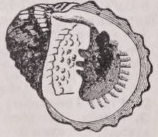
A genus of univalvular shells.
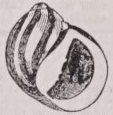
A genus including numerous species of shells resembling Nerita in form. They mostly inhabit brackish water, and are often delicately tinted.
A Roman emperor notorius for debauchery and barbarous cruelty; hence, any profligate and cruel ruler or merciless tyrant.
Nero
Encyclopedia Britannica
NERO (37-68 a.d.), Roman emperor, the only child of Cn. Domitius Ahenobarbus and the younger Agrippina, was born at Antium on December 15, 37 a.d., nine months after the death of the emperor Tiberius. Though on both his father’s and his mother’s side he came of the blood of Augustus, and the astrologers are said to have predicted that he would one day be emperor, the circumstances of his early life gave little presage of his future eminence. His father Domitius, at best a violent, pleasure-seeking noble, died when Nero was scarcely three years old. In the previous year (39 a.d.) his mother had been banished by order of her brother the emperor Caligula on a charge of treasonable conspiracy, and Nero, thus early deprived of both parents, found a bare shelter in the house of his aunt Domitia, where two slaves, a barber and a dancer, commenced the training of the future emperor. With the death of Caligula in 41 a.d. his prospects improved, for Agrippina was recalled from exile by her uncle, the new emperor Claudius, and resumed the charge of her young son. Nero’s history during the next thirteen years is summed up in the determined struggle carried on by his mother to win for him the throne which it had been predicted should be his. The fight was a hard one. Messalina, Claudius’s wife, was all powerful with her husband, and her son Britannicus was by common consent regarded as the next in succession. But on the other hand Claudius was weak and easily led, and Agrippina daringly aspired to supplant Messalina in his affections. To outweigh Britannicus’s claims as the son of the reigning emperor, she relied on the double prestige which attached to her own son, as being at once the grandson of the popular favourite Germanicus and the lineal descendant of Augustus ...himself. Above all, she may well have put confidence in her own great abilities, indomitable will, and untiring energy, and in her readiness to sacrifice everything, even her personal honour, for the attainment of the end she had in view. Her first decisive success was gained in 48 by the disgrace and execution of Messalina. In 49 followed her own marriage with her uncle Claudius, and her recognition as his consort in the government of the empire. She now freely used her ascendency to advance the interests of her son. The Roman populace already looked with favour on the grandson of Germanicus, but in 50 his claims obtained a more formal recognition from Claudius himself, and the young Domitius was adopted by the emperor under the title of Nero Claudius Caesar Drusus Germanicus. Agrippina’s next step was to provide for her son the training needed to fit him for the brilliant future which seemed opening before him. The philosopher L. Annaeus Seneca was recalled from exile and appointed tutor to the young prince. On December 15, 51, Nero completed his fourteenth year, and Agrippina, in view of Claudius’s failing health, determined to delay no longer his adoption of the toga virilis. The occasion was celebrated in a manner which seemed to place Nero’s prospects of succession beyond the reach of doubt. He was introduced to the senate by Claudius himself. The proconsular imperium and the title of “princeps juventutis” were conferred upon him. He was specially admitted as an extraordinary member of the great priestly colleges, and his name was included by the Arvai Brethren in their prayers for the safety of the emperor and his house. Largesses and donations delighted the populace and the soldiery, and at the games in the circus Nero’s appearance in triumphal dress contrasted significantly with the simple toga praetexta worn by Britannicus. During the next two years Agrippina followed up this great success with her usual energy. Britannicus’s leading partisans were banished or put to death, and the all-important command of the praetorian guard was transferred to Afranius Burrus, formerly a tutor of Nero’s, and devoted to his service. Nero himself was put prominently forward whenever occasion offered. The petitions addressed to the senate by the town of Bononia and by the communities of Rhodes and Ilium were gracefully supported by him in Latin and Greek speeches, and during Claudius’s absence in 52 at the Latin festival it was Nero who, as prefect of the city, administered justice in the forum to crowds of suitors. Early in 53 his marriage with Claudius’s daughter, the ill-fated Octavia, drew still closer the ties which connected him with the imperial house, and now nothing but Claudius’s death seemed wanting to secure his final triumph. This event, which could not in the course of nature be long delayed, Agrippina determined to hasten, and the absence, through illness, of the emperor’s trusted freedman Narcissus, favoured her schemes. On October 13, 54, Claudius died, poisoned, as all our authorities declare, by the orders of his unscrupulous wife. For some hours the fact of his death was concealed, but at noon the gates of the palace were thrown open, and Nero was presented to the soldiers on guard as their new sovereign. From the steps of the palace he proceeded to the praetorian camp to receive the salutations of the troops, and thence to the senate-house, where he was fully and promptly invested with all the honours, titles, and. powers of emperor.
Agrippina’s bold stroke had been completely successful. Its suddenness had disarmed opposition: only a few voices were raised for Britannicus; nor is there any doubt that Rome was prepared to welcome the new emperor with genuine enthusiasm. To his descent from Germanicus and from Augustus he owed a prestige which was strengthened by the general belief in his own good qualities. He was young, generous, and genial. His abilities, really considerable, were skilfully assisted and magnified by Seneca’s ready dexterity, while the existence of his worse qualities—his childish vanity, ungovernable selfishness, and savage temper —was as yet unsuspected by all but those immediately about him. His first acts confirmed the favourable impressions thus produced. With graceful modesty he declined the venerable title of “pater patriae.” The memory of Claudius, and that of his own father Domitius were duly honoured. The senate listened with delight to his promises to rule according to the maxims of Augustus, and to avoid the errors and abuses which had multiplied under the rule at once lax and arbitrary of his predecessor, while his unfailing clemency, liberality, and affability were the talk of Rome. Much no doubt of the credit of all this is due to Seneca, and his faithful ally Burrus. Seneca had seen from the first that the real danger with Nero lay in the savage vehemence of his passions, and he made it his chief aim to stave off by every means in his power the dreaded outbreak of “the wild beast” element in his pupil’s nature. He indulged him to the full in all his tastes, smoothed away opposition, and, while relieving him as far as possible of the more irksome duties of government, gave him every facility for easily winning the applause he craved for by acts of generosity which cost him little. Nor is it certain that any other policy would have succeeded better with a nature like Nero’s, which had never known training or restraint, and now revelled with childish delight in the consciousness of absolute power. Provided only that the wild beast did not taste blood, it mattered little if respectable society was scandalized at the sight of an emperor whose chief delight was in pursuits hitherto left to Greek slaves and freedmen. At any rate the policy succeeded for the time. During the first five years of his reign, the golden “quinquennium Neronis,” little occurred to damp the hopes excited by his behaviour on succeeding to the throne. His clemency of temper was unabated. His promises of constitutional moderation were amply fulfilled, and the senate found itself free to discuss and even to decide important administrative questions. Abuses were remedied, the provincials protected from oppression, and the burdens of taxation lightened. On the frontiers, thanks chiefly to Corbulo’s energy and skill, no disaster occurred serious enough to shake the general confidence in the government, and even the murder of Britannicus seems to have been easily pardoned at the time as a necessary measure of self-defence. But Seneca’s fears of what the consequences would be, should Nero’s sleeping passions once be roused, were fully verified by the result, and he seems to have seen all along from what quarter danger was to be apprehended. Agrippina’s imperious temper and insatiable love of power made it certain that she would not willingly abandon her ascendency over her son, and it was scarcely less certain that her efforts to retain it would bring her into collision with his ungovernable self-will. At the same time the success of Seneca’s own management of Nero largely depended on his being able gradually to emancipate the emperor from his mother’s control. During the first few months of Nero’s reign the chances of such an emancipation seemed remote, for he not only treated his mother with elaborate respect, but consulted her on all affairs of state. In 55, however, Seneca found a powerful ally in Nero’s passion for the beautiful freedwoman Acte, a passion which he deliberately encouraged for his own purposes. Agrippina’s injured pride provoked her to angry remonstrances, which served only to irritate her wayward son, and the caresses by which she endeavoured to repair her mistake equally failed in their object. Furious at her discomfiture, she rashly tried intimidation, and threatened to espouse the cause of the injured Britannicus. But her threats only served to show that her son, if once his will was crossed, or his fears aroused, could be as unscrupulous and headstrong as his mother. Britannicus was poisoned as he sat at table. Agrippina, however, still persisted. She attempted to win over Nero’s neglected wife Octavia, and to form a party of her own within the court. Nero replied by dismissing her guards, and placing herself in a sort of honourable confinement. This second defeat seems to have decided Agrippina to acquiesce in her deposition from the leading position she had filled since 49. During nearly three years she disappears from the history, and with her retirement things again for the time went smoothly. In 58, however, fresh cause for anxiety appeared. For the second time Nero was enslaved by the charms of a mistress. But Poppaea Sabina, the new favourite, was a woman of a very different stamp from her predecessor. High-born, wealthy, and accomplished, she had no mind to be merely the emperor’s plaything. She was resolved to be his wife, and with consummate skill she set herself at once to remove the obstacles which stood in her way. Her first object was the final ruin of Agrippina. By taunts and caresses she drove her weak and passionate lover into a frenzy of fear and baulked desire. She taught him easily enough to hate and dislike his mother as an irksome check on his freedom of action, and as dangerous to his personal safety. To get rid of her, no matter how, became his one object, and the diabolical ingenuity of Anicetus, a freedman, and now prefect of the fleet at Misenum, devised a means of doing so without unnecessary scandal. Agrippina was invited to Baiae, and after an affectionate reception by her son, was conducted on board a vessel so constructed as, at a given signal, to fall to pieces and precipitate its passengers into the waters of the lake. But the manoeuvre failed. Agrippina saved herself by swimming to the shore, and at once wrote to her son, announcing her escape, and affecting entire ignorance of the plot against her. The news filled Nero with consternation, but once again Anicetus came to his rescue. A body of soldiers under his command surrounded Agrippina’s villa, and murdered her in her own chamber. The deed done, Nero was for the moment horrorstruck at the enormity of the crime, and terrified at its possible consequences to himself. But a six months’ residence in Campania, and the congratulations which poured in upon him from the neighbouring towns, where the report had been officially spread that Agrippina had fallen a victim to her own treacherous designs upon the emperor’s life, gradually restored his courage. In September 59 he re-entered Rome amid universal rejoicing, fully resolved upon enjoying his dearly bought freedom. A prolonged carnival followed, in which Nero revelled in the public gratification of the tastes which he had hitherto ventured to indulge only in comparative privacy. Chariot races, musical and dramatic exhibitions, games in the Greek fashion, rapidly succeeded each other. In all the emperor was a prominent figure, and the fashionable world of Rome, willingly or unwillingly, followed the imperial example. These revels, however, extravagant as they were, at least involved no bloodshed, and were humanizing and civilized compared with the orthodox Roman gladiatorial shows. A far more serious result of the death of Agrippina was the growing influence over Nero of Poppaea and her friends; and in 62 their influence was fatally strengthened by the removal of the trusty advisers who had hitherto stood by the emperor’s side. Burrus died early in that year, it was said from the effects of poison, and his death was immediately followed by the retirement of Seneca from a position which he felt to be no longer tenable. Their place was filled by Poppaea, and by the infamous Tigellinus, whose sympathy with Nero’s sensual tastes had gained him the command of the praetorian guards in succession to Burrus. The two now set themselves to attain a complete mastery over the emperor. The haunting fear of conspiracy, which had unnerved stronger Caesars before him, was skilfully used to direct Nero’s fierce suspicions against possible opponents. Cornelius Sulla, who had been banished to Massilia in 58, was put to death on the ground that his residence in Gaul was likely to arouse disaffection in that province, and a similar charge proved fatal to Rubellius Plautus, who had for two years been living in retirement in Asia. Nero’s taste for blood thus whetted, a more illustrious victim was next found in the person of the unhappy Octavia. At the instigation of Poppaea she was first divorced and then banished to the island of Pandateria, where a few days later she was barbarously murdered. Poppaea’s triumph was now complete. She was formally married to Nero; her head appeared on the coins side by side with his; and her statues were erected in the public places of Rome.
This series of crimes, in spite of the unvarying applause which still greeted all Nero’s acts, had excited gloomy forebodings of coming evil, and the general uneasiness was increased by the events which followed. In 63 the partial destruction of Pompeii by an earthquake, and the news of the evacuation of Armenia by the Roman legions, seemed to confirm the belief that the blessing of the gods was no longer with the emperor. A far deeper and more lasting impression was produced by the great fire in Rome, an event which more than almost any other has thrown a lurid light round Nero’s reign. The fire broke out on the night of July 18, 64, among the wooden booths at the south-east end of the Circus Maximus. Thence in one direction it rapidly spread over the Palatine and Velia up to the low cliffs of the Esquiline, and in another it laid waste the Aventine, the Forum Boarium, and Velabrum till it reached the Tiber and the solid barrier of the Servian wall. After burning fiercely for six days, and when its fury seemed to have exhausted itself, it suddenly started afresh in the northern quarter of the city, and desolated the two regions of the Circus Flaminius and the Via Lata. By the time that it was finally quenched only four of the fourteen regiones remained untouched; three had been utterly destroyed, and seven reduced to ruins. The conflagration is said by all authorities later than Tacitus to have been deliberately caused by Nero himself. But Tacitus, though he mentions rumours to that effect, declares that its origin was uncertain, and his description of Nero’s energetic conduct at the time justifies us in acquitting the emperor of so reckless a piece of incendiarism. By Nero’s orders, the open spaces in the Campus Martius were utilized to give shelter to the homeless crowds, provisions were brought up from Ostia, and the price of corn lowered. In rebuilding the city every precaution was taken against the recurrence of such a calamity. Broad regular streets replaced the narrow winding alleys. The new houses were limited in height, built partly of hard stone, and protected by open spaces and colonnades. The water supply, lastly, was carefully regulated. But there is nevertheless no doubt that this great disaster told against Nero in the popular mind. It was regarded as a direct manifestation of the wrath of the gods, even by those who did not share the current suspicions of the emperor’s guilt. This impression no religious ceremonies, nor even the execution of a number of Christians, hastily pitched upon as convenient scapegoats, could altogether dispel. Nero, however, undeterred by forebodings and rumours, proceeded with the congenial work of repairing the damage inflicted by the flames. In addition to the rebuilding of the streets, he gratified his love of magnificence by the erection of a splendid palace for himself. The wonders of his “golden house” were remembered and talked of long after its partial demolition by Vespasian. It stretched from the Palatine across the low ground, afterwards occupied by the Colosseum, to the Esquiline. Its walls blazed with gold and precious stones; masterpieces of art from Greece adorned its walls; but most marvellous of all were the grounds in which it stood, with their meadows and lakes, their shady woods, and their distant views. To defray the enormous cost, Italy and the provinces, says Tacitus, were ransacked, and in Asia and Achaia especially the rapacity of the imperial commissioners recalled the days of Mummius and of Sulla. It was the first occasion on which the provincials had suffered from Nero’s rule, and the discontent it caused helped to weaken his hold over them at the very moment when the growing discontent in Rome was gathering to a head. For early in 65 Nero was panic-stricken amid his pleasures by the discovery of a formidable conspiracy against his life and rule. Such conspiracies, prompted partly by the ambition of powerful nobles and partly by their personal fears, had been of frequent occurrence in the history of the Caesars, and now Nero’s recent excesses, and his declining popularity, seemed to promise well for the success of the plot. Among the conspirators were many who held important posts, or belonged to the innermost circle of Nero’s friends, such as Faenius Rufus, Tigellinus’s colleague in the prefecture of the praetorian guards, Plautius Lateranus, one of the consuls elect, the poet Lucan, and, lastly, not a few of the tribunes and centurions of the praetorian guard itself. Their chosen leader, whom they destined to succeed Nero, was C. Calpurnius Piso, a handsome, wealthy, and popular noble, and a boon companion of Nero himself. The plan was that Nero should be murdered when he appeared as usual at the games in the circus, but the design was frustrated by the treachery of a freedman Milichus, who, tempted by the hope of a large reward, disclosed the whole plot to the emperor. In a frenzy of sudden terror Nero struck right and left among the ranks of the conspirators. Piso was put to death in his own house; and his fall was rapidly followed by the execution of Faenius Rufus, Lucan, and many of their less prominent accomplices. Even Seneca himself, though there seems to have been no evidence of his complicity, could not escape the frantic suspiciousness of the emperor, stimulated as it may have been in his case by the jealousy of Tigellinus and Poppaea. The order for his death reached him in his country house near Rome, and he met his fate with dignity and courage. For the moment Nero felt safe; but, though largesses and thanksgivings celebrated the suppression of the conspiracy, and the dazzling round of games and shows was renewed with even increased splendour, the effects of the shock were visible in the long and dreary list of victims who during the next few months were sacrificed to his restless fears and savage resentment. Conspicuous among them was Paetus Thrasea, whose irreconcilable non-conformity and unbending virtue had long made him distasteful to Nero, and who was now suspected, possibly with reason, of sympathy with the conspirators. The death of Poppaea in the autumn of 65 was probably not lamented by any one but her husband, but the general gloom was deepened by a pestilence, caused,...
9th ed. Encyclopædia Britannica, vol. 17, p. 347
[5,213 words — estimated reading time: 30 minutes]
[5,213 words — estimated reading time: 30 minutes]
Nero
Watson's Biblical & Theological Dictionary
The Emperor Nero is not named in Scripture; but he is indicated by his title of emperor, and by his surname Cæsar. To him St. Paul appealed after his imprisonment by Felix, and his examination by Festus, who was swayed by the Jews. St. Paul was therefore carried to Rome, where he arrived A. D. 61. Here he continued two years, preaching the Gospel with freedom, till he became famous even in the emperor’s court, in which were many Christians; for he salutes the Philippians in the name of the brethren who were of the household of Cæsar, that is, of Nero’s court, Phil. i, 12, 13; iv, 22. We have no particular information how he cleared himself from the accusations of the Jews, whether by answering before Nero, or whether his enemies dropped their prosecutions, which seems probable, Acts xxviii, 21. However, it appears that he was liberated in the year 63. Nero is reckoned the first persecutor of the Christian church: his persecution was A. D. 64. Nero, the most cruel and savage of all men, and also the most wicked and depraved, began his persecution against the Christian church, A. D. 64, on pretence of the burning of Rome, of which some have thought himself to be the author. He endeavoured to throw all the odium on the Christians: those were seized first that were known publicly as such, and by their means many others were discovered. They were condemned to death, and were even insulted in their sufferings. Some were sewed up in skins of beasts, and then exposed to dogs to be torn in pieces; some were nailed to crosses; others perished by fire. The latter were sewed up in pitched coverings, which, being set on fire, served as torches to the people, and were lighted up in the night. Nero gave leave to use his own gardens, as the scene of all these cruelties. From this ...time edicts were published against the Christians, and many martyrs suffered, especially in Italy. St. Peter and St. Paul are thought to have suffered martyrdom, consequent on this persecution, A. D. 65. The revolt of the Jews from the Romans happened about A. D. 65 and 66, in the twelfth and thirteenth of Nero. The city of Jerusalem making an insurrection, A. D. 66, Florus there slew three thousand six hundred persons, and thus began the war. A little while afterward, those of Jerusalem killed the Roman garrison. Cestius on this came to Jerusalem to suppress the sedition; but he was forced to retire, after having besieged it about six weeks, and was routed in his retreat, A. D. 66. About the end of the same year, Nero gave Vespasian the command of his troops against the Jews. This general carried on the war in Galilee and Judea during A. D. 67 and 68, the thirteenth and fourteenth of Nero. But Nero killing himself in the fourteenth year of his reign, Jerusalem was not besieged till after his death, A. D. 70, the first and second of Vespasian.
Watson's Biblical & Theological Dictionary
[510 words — estimated reading time: 3 minutes]
[510 words — estimated reading time: 3 minutes]
Of or pertaining to the Neuroptera.
No thesaurus entries found for "ner".
King James Bible KJV Bible
Berean Standard Bible BSB Bible
32 KJV and 31 BSB verses contain “ner” — showing the first 20. Show all 32 verses (searchable)
Moreover thou knowest also what Joab the son of Zeruiah did to me, and what he did to the two captains of the hosts of Israel, unto Abner the son of Ner, and unto Amasa the son of Jether, whom he slew, and shed the blood of war in peace, and put the blood of war upon his girdle that was about his loins, and in his shoes that were on his feet.
And I gave the evidence of the purchase unto Baruch the son of Neriah, the son of Maaseiah, in the sight of Hanameel mine uncle’s son, and in the presence of the witnesses that subscribed the book of the purchase, before all the Jews that sat in the court of the prison.