
See Price, and 1st Prize.
Word of the Day: Catachrestical
A right belonging to the crown of England, of taking two tons of wine from every ship importing twenty tons or more; one before and one behind the mast. This by charter of Edward I. was exchanged into a duty of two shillings for every tun imported by merchant strangers, and called butlerage, because paid to the king's butler.
1. A right belonging to the crown of England, of taking two tuns of wine from every ship importing twenty tuns or more, -- one before and one behind the mast. By charter of Edward I. butlerage was substituted for this.
2. The share of merchandise taken as lawful prize at sea which belongs to the king or admiral.
Priscian
Encyclopedia Britannica
PRISCIAN (Pbiscianus Caesariensis), the most celebrated Latin grammarian, lived about 500 a.d., i.e., somewhat before Justinian. This is shown by the facts that he addressed to Anastasius, emperor of the East 491-518, a laudatory poem, and that the MSS. of his Institutiones Grammatical contain a subscription to the effect that the work was copied (526, 527) by Flav. Theodorus, a clerk in the imperial secretariat (“memorialis sacri scrinii epistolarum ”). Three minor treatises are dedicated to Symmachus (the father-in-law of Boetius). Cassiodorus, writing in the ninety-third year of his age (560? 573?), heads some extracts from Priscian with the statement that he taught at Constantinople in his (Cassiodor’s) time (Keil, Gr. Lot., vii. p. 207). His title Caesariensis points, according to Niebuhr and others, to Caesarea in Mauretania. Priscian’s teacher was Theoctistus, “noster praeceptor, omnis eloquentiae decus, cui quicquid in me sit doctrinae post deum imputo” (Inst. Gr., vi. 51), who also wrote an Institutio artis grammaticae (ibid., xviii. 56). A later grammarian, Eutyches, pays Priscian himself a still higher compliment—“de quibus Romanae lumen facundiae, meus, immo comtfiunis omnium hominum, praeceptor, summa cum subtilitate copiosissime grammaticus Priscianus disseruisse cognoscitur” (Eutych., i. 8; Keil, Gr. Lat., v. p. 456). Priscian was quoted by several writers in Britain of the 8th century—Aidhelm, Bede, Alcuin—and was abridged or largely used in the next century by Hrabanus Maurus of Fulda and Servatus Lupus of Ferrara. Of the general use made of his great work the best proof is that, as Hertz says, there is hardly a library in Europe that did not and does not contain a copy, and that there are now about a thousand MSS. of it. The ...greater part of these contain only books i-xvi. (sometimes called Priscianus major); a few contain (with the three books Ad Symmachum) books xvii., xviii. (Priscianus minor); and a few contain both parts. The earliest MSS. are of the 9th century, though a few fragments are somewhat earlier. All are ultimately derived from the copy made by Theodorus. The first printed edition was in 1470 at Venice. It may fairly be said that from the beginning of the 6th century until recently Priscian has reigned over Latin grammar with almost as generally recognized an authority as Justinian has over Roman law. Some account of so remarkable a treatise may reasonably be required.
The Institutiones Grammatical· is a systematic exposition of Latin grammar, dedicated to Julian, consul and patrician, whom some have identified with the author of a well-known epitome of Justinian’s Novellae, but the lawyer appears to be somewhat later than Priscian. In length the treatise is about twice the size of Quintilian’s Institutio Oratoria, and about equal to Madvig’s Latin Grammar. It is divided into eighteen books, of which the first sixteen deal mainly with sounds, word-formation, and inflexions, the last two, which form from a fourth to a third of the whole work, deal with syntax. Priscian informs us in his preface that he has translated into Latin such precepts of the Greeks Herodian and Apollonius as seemed suitable, and added to them from Latin grammarians. Of the latter he occasionally refers to Caper, Donatus, Probus, and Servius; and more rarely to Charisius, Diomedes, Asper, Nonius, Remmius Palaemon, and others. He proceeds in orderly and almost exhaustive fashion, though with some digressions and repetitions, gives definitions, rules, examples, and exceptions, and constantly quotes passages from various writers to illustrate the use of a form. He has thus preserved to us numerous fragments which would otherwise have been lost, e.g., from Ennius, Pacuvius, Attius, Lucilius, Cato, and Varro. But the authors whom he quotes most frequently are Virgil, and, next to him, Terence, Cicero, Plautus; then Lucan, Horace, Juvenal, Sallust, Statius, Ovid, Livy, and Persius. His industry in collecting forms and examples is both great and methodical. His style is somewhat heavy, but sensible and clear; it has not the admirable grace of Quintilian, nor the adroit use of a technical language such as is found in the Roman jurists; but there is no attempt at fine writing, and it is free not of course from usages of late
Latin, but from anything that can be called barbarism. Considering the time at which it was written, it is very creditable to the author, and not unworthy of the high placo it obtained in the grammatical world. Its defects are such as were till lately common more or less to all grammars.
These defects may be referred in the main to four heads. (1) Priscian avowedly treats Greek writers on (Greek) grammar as his supreme authorities (cf. i. 13; vi. 1; xii. 13, &c.), and, though noticing differences between the two languages, bears too little in mind that each has a history of its own and is a law to itself. (2) There had been no scientific study of phonetics, and consequently the changes and combinations of languages are treated in a mechanical way: e.g., i passes into a, as genus, generis, generatum ; into o as saxi, saxosus (i. 33); q passes into s as torqueo, torsi (i. 48), &c. (3) The resolution of a word into root or stem and inflexional or derivative affixes was an idea wholly unknown, and the rules of formation are often based on unimportant phenomena, and yet are invested with an authority which is irrational and misleading: e.g., Venus, like other names ending in us, ought to have genitive Veni, but, as this might be taken for a verb, it has Veneris (vi. 86; viii. 5). Λdor has no genitive because two rules conflict; for neuters in or have a short penult (e.g., aequor, aequoris), and αdoro, from which it is derived, has a long penult (vi. 49; viii. 6). (4) The practical meaning of the inflexions is not realized, and syntactical usages are treated as if they were arbitrary or accidental associations. Thus, after laying down as a general rule for declinable words that, when they refer to one and the same person, they must have the same case, gender, and number, Priscian adds, that when there are transitive words we may use different numbers, as doceo discipulos, docemus discipulum (xvii. 153-155). He often states a rule too broadly or narrowly, and then, as it were, gropes after restrictions and extensions.
His etymologies are of course sometimes very wild: e.g., caelebs from caelestium vitam ducens, b being put for u because a consonant cannot be put before another consonant (i. 23); deterior from the verb detero, deteris ; potior (adj.) from potior, potiris (iii. 3); arbor from robur (vi. 48); verbum from verberatus aeris (viii. 1), <fcc. Nor is he always right in Greek usages: thus, in illustrating Latin moods by Greek he frequently uses the future optative with av, e.g., iκ8υσoιvτo av, τrιστevσoιpι av (xviii. 106), and still more strangely treats apa as identical in force with av, e.g., quasi tolleretur ac constitueretur, eπaipoιτo av κaι κατατάττοιτο apa, and misuses both particles, e.g., in me causam conferebat quod eum codicem obsignassem, άτφράγισα αν ήτοι Ισφραγικώς Ριην apa (xviii. 110). He evidently regarded αν or apa as normally required with the Greek optative or other moods corresponding to the Latin subjunctive (xviii. 117, &c.).
A rapid notice of the order and of some salient points will show both merits and defects in the treatment of his subject-matter. The references are to the book and to KrehΓs paragraphs.
Book i. treats of vocal sound and of letters, their changes and combinations. Elementa are vowels, semi-vowels, or mutes. Vowels are named from their own sound; semi-vowels sound a vowel before them; mutes sound a vowel after them (i. 7). As semivowels he classes f, I, m, n, r, s, x, and in Greek names z. F was, among the earliest Latins, the Aeolic digamma, but afterwards was equivalent to φ. It is, however, rather a mute, because it is not found at the end of a word, and can be placed before I and r in the same syllable (ib. 13). K is quite superfluous; g merely shows that a u following has no metrical effect; h is a mere aspiration; i and u sometimes pass into consonants, and then have a different metrical effect from what they have as vowels (ib. 14-17). D has often the sound of z : e.g., in meridies, hodie (ib. 31).
Book ii. treats of the syllable and of the letters used to end it, then of the parts of speech. A syllable is an ordered combination of letters uttered with one accent and one breath (ii. 1). A word (dictio) is the unit of orderly speech (ib. 14). Speech (oratio) is a suitable arrangement of words expressing a complete meaning (ib.
15). The parts of speech are, according to Priscian, eight, viz., noun, verb, participle, pronoun, preposition, adverb, interjection, conjunction. Infinites (i.e., infinitive moods) are included under the verb, because they have tenses and no cases. Participles are not included, because they have cases and genders but no moods (ib. 18). Priscian obtains a framework for the arrangement of his facts from the “accidents” of each part of speech, and subordinate classifications are taken from the endings of the words. Nouns have the following accidents :— species, genus, numerus, figura, casus. As regards species (“class”) nouns are proper or appellative, and each of these classes are subdivided into many others. Adjectives are (rightly) treated by Priscian in common with other nouns (ii. 22 sq. ). The rest of this book and books iii. and iv. treat of the formation of the different classes of nouns, e.g., of patronymics, possessives, comparatives, superlatives, diminutives, and other derivatives. Book v. treats of gender, number, figure, and case. For gender, nouns are discussed by their endings. Figure is either simple or composite or decomposite (ι.e., derivative from composite), as, magnus, magnanimus, magnanimitas {y. 61). There are four modes of composition :—(1) ex duobus integris, as tribunusplebis ; (2) ex duobus corruptis, as benivolus ; (3) ex integro et corrupto, e.g., inimicus·, (4) ex corrupto et integro, as impius (v. 58). There are six cases, thus arranged :—(1) the nominative as the original; (2) the genitive, because it is born from the nominative, and begets the other oblique cases; (3) the dative, “qui magis amicis convenit;” (4) the accusative, “qui magis ad inimicos attinet (5) the vocative as the most imperfect; (6) the ablative as new and peculiar to the Latins (v. 74). In book vi. the formation of the genitive is discussed, each nominative termination being taken in order, irrespective of the declension. Book vii. treats of the other cases in each of the five declensions. Neither here nor in the books on the verb are full paradigms set out as in modern grammars. Hic, hujus, &c., are often prefixed as symbols of gender and case.
Books viii.-x. deal with the verb. Verbs have eight accidents :— genus, tempus, modus, species, figura, conjugatio, persona, numerus. Some verbs (as other parts of speech) are defective, either by natural necessity or by chance. Necessity may lie in the meaning (e.g., puerperus is not found) or in the incompatibility of sound (e.g., cursor but not cursrix). Chance may lie simply in non-use, e.g., faux, prex, dicio, for, dor ; or because the form would be unpleasant, e.g., metuturus or metuiturus, nutritrix (from nutritor), for which nutrix is used. Sometimes a word is not used in order to avoid confusion, e.g., conjunx has conjugis, lest conjungis should be taken fora verb; maneo has mansi, not manui ; fac, if wc avoid confusion with ablatives face, duce, &c. (viii. 4-6).
Genus or significatio verbi is its being active or passive. Verbs in o are active, neuter, and neutro-passive, e.g., amo, spiro, gaudeo (cf. xi. 28). Verbs in or are passive, common, and deponent, e.g., amor, osculor te and a te, sequor. Verbs whose meaning and use do not correspond with the form are enumerated (ib. 7-39). Tempus is present, past, and future. Past time is divided into past imperfect, past perfect, past pluperfect. Present and future time are not divided by the Romans (tδ. 38). Dixero is called the subjunctive future (ib. 55, 57). The indicative and subjunctive have all tenses; the imperative has present, future, and, in passive, a past {e,g., amatus sit). The optative and infinite have one form expressing both present and past imperfect, and another expressing perfect and pluperfect (ib. 38-43). The present tense embraces to some extent both past and future (e.g., Priscianus vocor, scribo versum). The perfect corresponds to Greek aorist as well as to perfect (ib. 51-54). Priscian makes five moods,—the optative (same in forms as the subjunctive) always requiring an adverb of wishing; the subjunctive, requiring not only an adverb or conjunction, but also another verb, e.g., cum faciam venito. In expressions of command, as ne dicas, another verb is not required (ib. 68). Supines and gerunds (sometimes confused, sometimes distinguished, by Priscian) are nouns used in place of the infinite. Amandus, &c., is called participiale or nomen verbale (ib. 44, 70). Impersonal verbs have a peculiar meaning (ib. 69).
In class verbs are primitive or derivative. Derivatives are numerously classified as inchoatives, fréquentatives, &c. (ib. 72 sq. ). In figure verbs are simple or compound (ib. 81). Conjugations in Latin are determined by the vowel of the 2nd person, and are thus four only, while the Greeks have ten. Person and number close the eighth book. Pero, volo, edo are specially treated (ix. 4-11). The formation of the perfect is first treated generally (ix. 13), and then the perfects and supines of 1st and 2nd conjugations and (in book X.) of 3rd and 4th conjugations.
Book xi. deals with participles, which were invented to act as verbs applied to nouns, especially in oblique cases. Hence we can say not only bonus homo loquebatur but boni hominis loquenlis orationem audivi, &c. (xi. 3). The participle has six accidents: — genus, casus, significatio, tempus, numerus, figura (ib. 13),—where gemis is gender, and significatio and jigura have same application as in verbs. The formation of the participles, especially of the past participle, is fully discussed.
Books xii. and xiii. deal with pronouns. They have six accidents :— species, persona, genus, numerus, figura, casus. There are four declensions, viz., personal, ille, &c., meus, &c., nostras, &c. Priscian classes as nouns, and not as pronouns, quis, qualis, talis, quantus, tantus, tot, unus, solus, totus, alius, nullus, uter, alter, and their compounds (xiii. 11, 29-35).
Having finished the four declinable parts of speech, Priscian turns to the four indeclinable. Prepositions (book xiv. ) are (except sometimes in verse) put before nouns both by apposition and composition; before pronouns only by apposition; before all else by composition (xiv. 8). He treats first of prepositions used with the accusative case, then of those used with the ablative, and lastly of those occurring only in composition. Adverbs (book xv.) have species, significatio, figura, where species refers to their being primitive or derivative, and significatio to their meaning as temporal, local, confirmative, optative, &c. Some are used with all tenses and moods, others with some only. They are arranged for discussion under their endings (ib. 7). Under the endings inα are treated also ablatives of nouns used as adverbs, e.g., una, qua, Roma, and also other local uses of nouns, e.g., Romaesum, Romam eo, &c. (ib. 9). Interjections are separated from adverbs by Roman writers, because they express fully an emotion of the mind, e.g., papae, quid video, yvhere papae== miror (ib. 40). Conjunctions have figzιra and species, species denoting meaning and use as copulative, causal, disjunctive, &c. Some conjunctions belong to several of these classes.
The two books on syntax are looser in arrangement, and are not so clear and exhaustive as the former books. The truth is, Priscian lacked a good framework for the facts of construction, and first tries one and then another. The seventeenth book rests mainly on Apollonius; the eighteenth is less dependent on him, and ends with a long miscellaneous list, in alphabetical order, of Greek idioms, chiefly verbal, which he compares with corresponding Latin usages. Part of this list occurs twice over. Omitting duplicates, there are nearly 300 such comparisons. Hertz suggests (Praef. iii. p. vii.) that it was only closed by the fortunate occurrence of χορτάζομαζ, illustrated by a line of Terence which ended with satzιr! These idioms are illustrated by copious quotations from Demosthenes and Plato, and not a few from Homer, Herodotus, Thucydides, and Xenophon, besides Latin authors.
The syntax commences with showing the analogy of elements, words, and speech. In each of these we have repetition, omission, conjunction, transposition, &c. (xvii. 3 sq.). Then Prisciau discusses why interrogatives are all of two parts of speech only, viz., nouns and adverbs (ib. 22): why not also verbs (ib. 36)? He discusses the difference of pronouns from one another, their use with impersonals, particularly interest, refert (ib. 92), the use of the possessive and reflexive pronouns. He says that mei ager may be used for meus ager, but also for “the land of my husband” (ib. 129, 130). There are many possible unions and interchanges of different parts of speech and of their accidents. Such unions as ille ego qui quondam, &c., are justified analogically by the union of different cases, e.g., animalizιm quaedam sunt mortalia, or by the rise of compounds from different cases, as mediterraneus a medio terrae (ib. 144-152). Different numbers and genders are combined, as pars secant ; aperite aliquis ; in Eunuchum suam ; or different cases, as urbem quam statuo vestra est ; or different times, as post quam cecidit . . . Ilion et omnis humo fumat Troja (ib. 155-163). Often we find interchange, e.g., of parts of speech, as sublime (volas) for an adverb, genus unde Latinum for ex quo, &c. (ib. 168).
In the eighteenth book he discusses the use of the cases. The nominative and vocative are absolute, and with substantival or vocatival verbs of the first or second person they do not require a pronoun, e.g., homo sum, Cicero nominor, but with other verbs they do, e.g., ego Priscianus scribo, tu Apollonius (or Apolloni) scribis. Tu may, however, be omitted with the vocative, but Priscianus scribo is a solecism, because nouns by themselves and participles, without the vocative case, are of the third person (ib. 2-4). If a noun requires an oblique case, we must have the verb substantive or participle, e.g., filius Herculis sum. In filius Pelei Achilles multos interfecit, the participle ens (“for which we now use qui est or qzιi fuit") must be understood (ib. 6). The nominative is joined to the genitive when possession and a possessor are meant. In Hector filius Priami the genitive denotes the possessor; in magnae virtutis vir it denotes the possession. In the latter use the Latins often have the ablative, as they have also for the Greek genitive of consequence, lμoυ ζωvτos =me vivo (ib. 14). The genitive after comparatives and superlatives and after verbals in -or and -rix is mentioned; also such usages as fidens animi, dives lactis (ib. 18, 19). In doctus grammaticam -we have a. participle; in doctus grammaticae a noun (ib. 21). The dative is used acquisitively, e.g., commodus tibi sum, also after verbals in -Us and -dus. Words of equivalence or subjection or the reverse are used in any order with either genitive or dative, e.g., pater filii, or · filio est pater ; so similis, par, amicus, &c. Nominatives are joined to accusatives when what belongs to a part is assigned to the whole, c.g., fortis dextram for fortem dextram habens. In all (even in oblique) cases we must understand qzιi est, as albi colorem equi ’-tqui ejus qui est albi coloris (ib. 27). The ablative is joined to the nominative to express the instrument, the possession, the consequence (see above). It is used also with words of passive meaning, e.g., viduus pharetra, dignus morte-, and in comparisons (ib. 32). He then proceeds (in awkward language) to point out that the nominative which is joined to a verb remains unchanged, and either takes no oblique cases of another declinable word or only such as are construed with the verb, e.g., Terentius ambulat ; Caesar vincit Pompeium; pater indulget filio. But the nominative, which in consequence of the nature of the noun itself takes oblique cases, takes those cases, be its own case what it may; e.g., victor Pompeii Caesar interfectus est a Bruto ; victoris Pompeii Caesaris filia fuit Julia·, victori Pompeii Caesari, &c. (ib. 35, 36). Similarly datives like curse, cordi, &c., are used with all cases, e.g., cordi hominis for jucundi hominis (ib. 38; xi. 24). Priscian would have found it difficult to give an instance of this.
The syntax of the verb follows. The infinite is taken first as the most general. Infinites are often joined to nouns, e.g., bonum est legere, and, by a beautiful figure, to adjectives, e.g., fortis bellare·, also to verbs and participles (xviii. 40-46). All verbs may be...
9th ed. Encyclopædia Britannica, vol. 19, p. 743 — signed H. J. R.
[4,163 words — estimated reading time: 25 minutes]
[4,163 words — estimated reading time: 25 minutes]
Priscilla
Watson's Biblical & Theological Dictionary
a Christian woman, well known in the Acts, and in St. Paul’s epistles; sometimes placed before her husband Aquila. From Ephesus this pious pair went to Rome, where they were when St. Paul wrote his epistle to the Romans, A. D. 58. He salutes them the first of all, with great commendations, Rom. xvi, 3. They returned into Asia some time afterward; and St. Paul, writing to Timothy, desires him to salute them on his behalf, 2 Tim. iv, 19, A. D. 65.
Watson's Biblical & Theological Dictionary
[83 words — estimated reading time: 1 minute]
[83 words — estimated reading time: 1 minute]
In church history, one of a sect so denominated from Priscillian, a Spaniard, bishop of Avila, who practiced magic, maintained the errors of the Manichees, and held it to be lawful to make false oaths in the support of one's cause and interest.
A follower of Priscillian, bishop of Avila in Spain, in the fourth century, who mixed various elements of Gnosticism and Manicheism with Christianity.
Priscillianists
Encyclopedia Britannica
PRISCILLIANISTS, an heretical sect which rose to some prominence in Spain towards the end of the 4th century and continued to subsist, in varying numbers, there and in Gaul, until after the middle of the 6th. Its founder was Priscillian, a wealthy and influential layman of considerable reading and ability who had devoted his life to a self-denying study of the occult sciences and the deeper problems of philosophy. In the course of his speculations he came under the influence of two teachers, Elpidius and Agape, who professed to have derived their views from a certain Marcus, a native of Egypt who had settled in Spain. The creed which Priscillian now formulated appears to have combined various features of Gnosticism and Manichaeism: he seems, for example, to have held the theory of emanations—high in rank among these being the heavenly powers whom he called by the name of the twelve patriarchs, and brought also into close relation with the signs of the zodiac—the doctrine of the demiurge, the pre-existence of souls, the eternity of the devil, the essential sinfulness of the flesh, the unlawfulness of procreation, and the like. He and his followers retained their connexion with the Catholic Church,—insisting, however, on fasting on Sundays, and refusing the bread in the sacrament: but they also held separate meetings in private at which they were accused by their adversaries (with what truth is not known) of practising magic and indulging in licentious orgies. Many women joined the sect, and among the more prominent of its converts were two bishops, named Instantius and Salvianus. Bishop Hyginus of Cordova, who had been the first to raise the alarm against the new doctrines and practices, himself soon afterwards joined the sect; but through the exertions of Idacius ...of Emerita the leading Priscillianists, who had failed to appear before the synod of Spanish and Aquitanian bishops to which they had been summoned, were excommunicated at Saragossa in October 380. The same synod passed certain canons against the heresy, and Ithacius of Ossonuba was charged with the publication of its decisions. Meanwhile, however, Priscillian was made bishop of Avila, and the orthodox party found it necessary to appeal to the emperor (Gratian), who issued an edict threatening the sectarian leaders with banishment. Priscillian, Instantius, and Salvianus now passed through Gaul to Italy with the object of enlisting the sympathies of Ambrose of Milan and Pope Damasus, but without result. They succeeded, however, by bribing the proconsul, it is said, in procuring the withdrawal of Gratian’s edict, and the attempted arrest of Ithacius. With the murder of Gratian and accession of Maximus (383) the aspect of matters again changed; Ithacius fled to Treves, and in consequence of his representations a synod was held (384) at Bordeaux where Instantius was deposed. Priscillian for his part appealed to the emperor, with the unexpected result that along with six of his companions he was condemned to death and executed at Treves in 385. This first instance of the application of the Theodosian law against heretics caused a profound sensation throughout the Catholic world; it had the approval of the synod which met at Treves in the same year, but Ambrose of Milan and Martin of Tours can claim the glory of having lifted up their voices against it, and of having in some measure stayed the hand of persecution. The heresy, notwithstanding the severe measures taken against it, continued to spread in France as well as in Spain; and the barbarian invasions of the 5th century appear to have helped its further diffusion. About 444 it attracted the attention of Leo I. at Rome, along with other forms of Manichaeism, and something was done for its repression by a synod held at the pope’s instance by Turribius of Astorga in 446 and by that of Toledo in 447; as an openly professed creed it wholly disappeared after the second synod of Braga in 563.
9th ed. Encyclopædia Britannica, vol. 19, p. 746
[661 words — estimated reading time: 4 minutes]
[661 words — estimated reading time: 4 minutes]
An enterprise.
See Prize, n., 5. Also Prize, v. t.
See 1st Prizer.
Prishtina
Encyclopedia Britannica
PRISHTINA, or Pristina, a town of European Turkey, since 1877 at the head of a liwa in the vilayet of Kossovo, lies on an affluent of the Sitnitza, a subtributary of the Morava, and gives its name to one of the stations on the Salonica-Uskub-Mitrowica Railway, which runs at a distance of 6 or 7 miles to the west of the town. It stands at a height of 1700 feet above the sea on undu-
lating ground, and presents in the distance a pleasant appearance with the minarets erected, according to the legend, by Turkish women whose husbands fell in the battle of Kossovo fought in the neighbourhood. Prishtina is the seat of a Greek bishop. Its population is estimated at from 8000 to 10,000. To the south-east lies the partly ruined monastery of Gratchanitza founded by King Milutin of Servia, who reigned from 1275 to 1321. It is a graceful building with a large central dome surrounded by four smaller domes and a variety of arches, of which the higher are pointed and the lower round. Among the frescos are portraits of the founder and his queen Simonida, daughter of Andronicus II. Palaeologus, and a remarkable head of Christ in the dome. See Mackenzie and Irby, The, Slavonic Provinces of Turkey.
9th ed. Encyclopædia Britannica, vol. 19, p. 746
[216 words — estimated reading time: 2 minutes]
[216 words — estimated reading time: 2 minutes]
1. A solid whose bases or ends are any similar, equal and parallel plane figures, and whose sides are parallelograms.
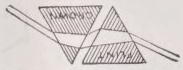
2. A prism of glass is one bounded by two equal and parallel triangular ends and three plain and well polished sides which meet in three parallel lines, running from the three angles of one end to the three angles of the other end.
1. A solid whose bases or ends are any similar, equal, and parallel plane figures, and whose sides are parallelograms.
2. A transparent body, with usually three rectangular plane faces or sides, and two equal and parallel triangular ends or bases; -- used in experiments on refraction, dispersion, etc.

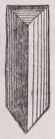
3. A form the planes of which are parallel to the vertical axis. See Form, n., 13.
1. Resembling a prism; as a prismatic form.
2. Separated or distributed by a prism; formed by a prism; as prismatic colors.
3. Pertaining to a prism.
Alt. of Prismatical
1. Resembling, or pertaining to, a prism; as, a prismatic form or cleavage.
2. Separated or distributed by a prism; formed by a prism; as, prismatic colors.
3. Same as Orthorhombic.
In the form or manner of a prism.
In the form or manner of a prism; by means of a prism.
Having a prismatic form.
Having a prismlike form.
A body that approaches to the form of a prism.
A body that approaches to the form of a prism.
Having the form of a prismoid; as, prismoidal solids.
Pertaining to or like a prism.
Pertaining to a prism.
1. priz'n. [Latin prendo.]
2. In a general sense, any place of confinement or involuntary restraint; but appropriately, a public building for the confinement or safe custody of debtors and criminals committed by process of law; a jail. Originally, a prison as Lord Coke observes, was only a place of safe custody; but it is now employed as a place of punishment. We have state-prisons, for the confinement of criminals by way of punishment.
3. Any place of confinement or restraint.
5. With power imperial curbs the struggling winds,
6. And sounding tempests in dark prisons binds.
7. In Scripture, a low, obscure, afflicted condition. Ecclesiastes 4:14 .
8. The cave where David was confined. Psalms 142:7 .
9. A state of spiritual bondage. Isaiah 42:7 .
1. To shut up in a prison; to confine; to restrain from liberty.
2. To confine in any manner.
4. [This word is proper, but imprison is more commonly used.]
1. A place where persons are confined, or restrained of personal liberty; hence, a place or state o/ confinement, restraint, or safe custody.
2. Specifically, a building for the safe custody or confinement of criminals and others committed by lawful authority.
1. To imprison; to shut up in, or as in, a prison; to confine; to restrain from liberty.
2. To bind (together); to enchain.
Prison discipline
Encyclopedia Britannica
PRISON DISCIPLINE. Authority in every age and in every country has claimed to impose penalties on all who offend against it. Either coercion or protection has been the moving principle: the master extorted submission, or society, through its rulers, defended itself against evil doers. The most common punishments in early times were naturally those most easily inflicted. Offenders paid in their persons: they were put to death with every variety of the capital sentence, were branded, mutilated, or sold as slaves. They were fined also, were degraded, or forfeited civil rights, or yet again were simply banished from their homes. Enforced detention, incarceration within four walls, was another method of coercion which grew and gained favour under the feudal system. The lord temporal or spiritual or corporate body could thus hold the vassal safe until he yielded fealty or submitted to extortion. A dungeon told no tales, and served conveniently to bury the victims of mediaeval oppression. The unrestrained and unjustifiable exercise of the power to imprison lingered long in lands where personal liberty was unknown ∙, nor did arbitrary imprisonment terminate with the destruction of the Bastille. In England, however, freedom from illegal arrest, the dearest of the Briton’s privileges, was resolutely fought for and early achieved. The Great Charters conceded it; and, although often in danger, it was confirmed finally and beyond all question by the Habeas Corpus Act passed in the reign of Charles II. But the theory was better than the practice: numbers always languished in jail, the victims of needlessly severe or misinterpreted laws, who nowadays would have been at large. Through long years of trouble and disquiet, when the country was torn with religious and political ...dissensions, the prisons were always full. Intolerance appealed to the strong arm, and the jail was the antechamber of the scaffold or stake. When party warfare ran high, when kings struggled for larger powers or their ministers and myrmidons ruled with a high hand, incarceration was the easy recompense for all on the losing side. The commercial laws of a nation wedded to trade kept a large contingent always in jail. The debtor was at the mercy of his creditor, who could command the best efforts of the Jaw to assist him in recovering his own again. Irregularity in the administration of justice contributed largely to fill the prisons. Jail deliveries were frequently delayed indefinitely; while, even when tardy trial ended in an acquittal, release was not always accorded, and innocent men, unable to meet extortionate demands in fees, were carried back to prison. This was one reason why jails were full; yet another was the laxity or entire absence of discipline which suffered the families of accused persons to share their confinement. Under such conditions, more or less universal, the state of prisons, not in England alone, but throughout the then civilized world, was deplorable in the extreme. Yet the terrors of incarceration were long but vaguely understood. Glimpses of light sometimes penetrated the dark recesses of the prison house, as when the atrocities perpetrated by the keepers of the chief debtors’ prisons in London were made the subject of parliamentary inquiry. This was in 1730, forty-three years before the revelations of Howard. But in the interval voices were occasionally raised in protest, and there was a general sense of uneasiness throughout the country to which the great philanthropist gave point and expression. Howard began his journeys of inspection in 1773; in the following year he was examined by the House of Commons, and received the thanks of the House for his arduous and self-sacrificing labours for the mitigation of suffering in jails. What Howard found is sufficiently well known. The prisons of the kingdom were a disgrace to humanity: they were for the most part poisonous pestiferous dens, densely overcrowded, dark, foully dirty, not only ill-ventilated, but deprived altogether of fresh air. The wretched inmates were thrown into subterranean dungeons, into wet and noisome caverns and hideous holes to rot and fester, a prey to fell disease bred and propagated in the prison house, and deprived of the commonest necessaries of life. For food they were dependent upon the caprice of their jailers or the charity of the benevolent; water was denied them· except in the scantiest proportions; they were half naked or in rags; their only bedding was putrid straw reeking with exhalations and accumulated filth. Every one in durance, whether tried or untried, was heavily ironed; women did not escape the infliction. All alike were subject to the rapacity of their jailers and the extortions of their fellows. Jail fees were levied ruthlessly,—“garnish” also, the tax or contribution paid by each individual to a common fund to be spent by the whole body, generally in drink. Drunkenness was universal and quite unchecked; gambling of all kinds was practised; vice and obscenity were everywhere in the ascendant. Idleness, drunkenness, vicious intercourse, sickness, starvation, squalor, cruelty, chains, awful oppression, and everywhere culpable neglect — in these words may be summed up the state of the jails at the time of Howard’s visitation.
It must be borne in mind that all this time the prisons were primarily places of detention, not of punishment. The bulk of those committed to their safe keeping were accused persons awaiting trial in due process of law, or debtors; and of these again by far the most numerous class were the impecunious and the unfortunate, whom a mistaken system locked up and deprived of all means of paying their liabilities. Now and again an offender was sentenced to be imprisoned in default of payment of fine, or to pass the intervals between certain periods of disgraceful exposure on the pillory. Imprisonment had as yet no regular place in the code of penalties, and the jail was only the temporary lodging of culprits duly tried and sentenced according to law. The punishment most in favour in these ruthless times was death. The statute-book bristled with capital felonies, and the gallows was in perpetual requisition. These were days when the pickpocket was hanged; so was the sheep-stealer, and the forger of one-pound notes. Well might Sir Samuel Romilly, to whose strenuous exertions the amelioration of the penal code is in a great measure due, declare that the laws of England were written in blood. But even then there was another and a less sanguinary penalty. The deportation of criminals beyond seas grew naturally out of the laws which prescribed banishment for certain offences. The Vagrancy Act of Elizabeth’s reign contained in it the germ of transportation, by empowering justices in quarter sessions to banish offenders and order them to be conveyed into such parts beyond the seas as should be assigned by Her Majesty’s privy council. Full effect was given to this statute in the next reign, as is proved by a letter of James I., dated 1619, in which the king directs “a hundred dissolute persons” to be sent to Virginia. Another Act of similar tenor was passed in the reign of Charles II., in which the term “transportation” appears to have been first used. A further and more systematic development of the system of transportation took place in 1718, when an Act was passed by which offenders who had escaped the death penalty were handed over to contractors, who engaged to transport them to the American colonies. These contractors were vested with a property in the labour of the convicts for a certain term, generally from seven to fourteen years, and this right they frequently sold. Labour in those early days was scarce in the new settlements; and before the general adoption of negro slavery there was a keen competition for felon hands. The demand was indeed so great that it produced illegal methods of supply. An organized system of kidnapping prevailed along the British coasts; young lads were seized and sold into what was practically white slavery in the American plantations. These malpractices were checked, but the legitimate traffic in convict labour continued until it was ended peremptorily by the revolt of the American colonies and the achievement of their independence. In 1776 the British legislature, making a virtue of necessity, discovered that transportation to His Majesty’s colonies (which three years previously had declared their independence) was bound to be attended by various inconveniences, particularly by depriving the kingdom of many subjects whose labour might be useful to the community; and an Act was accordingly passed which provided that convicts sentenced to transportation might be employed at hard labour at home. At the same time the consideration of some scheme for their disposal was entrusted to three eminent public men—Sir William Blackstone, Mr Eden (afterwards Lord Auckland), and John Howard. The result of their labours was an Act for the establishment of penitentiary houses, dated 1778. This Act is of peculiar importance. It contains the first public enunciation of a general principle of penal treatment, and shows that even at that early date the system since nearly universally adopted was fully understood. The object in view was thus stated. It was hoped, by sobriety, cleanliness, and medical assistance, by a regular series of labour, by solitary confinement during the intervals of work, and by due religious instruction, to preserve and amend the health of the unhappy offenders, to inure them to habits of industry, to guard them from pernicious company, to accustom them to serious reflexion, and to teach them both the principles and practice of every Christian and moral duty. The experience of a century has added nothing to these the true principles of penal discipline; they form the basis of every species of prison system carried out since the passing of the Act 19 Geo. III. c. 74 in 1779.
The first step towards giving effect to this Act was the appointment of a commission of three “supervisors” to select and acquire a site for the first penitentiary house. Howard was one, and no doubt the most influential, of these; but he could not agree with his colleagues as to the most suitable situation. One was for Islington, another for Limehouse, while Howard insisted upon some site which was healthy, well supplied with water, and in such a convenient spot that it could be readily visited and inspected. It is interesting to observe that the great philanthropist anticipated modern English practice in his preparation of the plans for the construction of the prison. He was strongly of opinion that the penitentiary should be built by convict labour, just as in recent years the new prison has been erected at Wormwood Scrubs, and large blocks added to the prisons of Chatham, Portsmouth, and Dartmoor. Howard, however, withdrew from the commission, and new supervisors were appointed, who were on the eve of commencing the first penitentiary when the discoveries of Captain Cook in the South Seas turned the attention of the Government towards these new lands. The vast territories of Australasia promised an unlimited field for convict colonization, and for the moment the scheme for penitentiary houses fell to the ground. Public opinion generally preferred the idea of establishing penal settlements at a distance from home. “There was general confidence,” says Merivale in his work on colonization, “in the favourite theory that the best mode of punishing offenders was that which removed them from the scene of offence and temptation, cut them off by a great gulf of space from all their former connexions, and gave them the opportunity of redeeming past crimes by becoming useful members of society.” These views so far prevailed that an expedition consisting of nine transports and two men-of-war, the “first fleet” of Australian annals, sailed in March 1787 for New South Wales. This first fleet reached Botany Bay in January 1788, but passed on and landed at Port Jackson, where it entered and occupied the harbour of Sydney, one of the finest and most secure havens in the world. We shall return further on to the proceedings of these first criminal colonists when the progress of transportation as a secondary punishment will be described.
The penitentiary scheme was not, however, abandoned on the adoption of transportation to New South Wales. It was revived and kept alive by Jeremy Bentham, who in 1791 published a work on prison discipline entitled The, Panopticon or Inspection House, and followed it next year by a formal proposal to erect a prison house on his own plan. Bentham’s main idea was “a circular building, an iron cage glazed, a glass lantern as large as Ranelagh, with the cells on the outer circumference.” Within, in the centre, an inspection station was so fixed that every cell or part of a cell could be at all times closely observed,— the prisoners being themselves at liberty to communicate with visitors and make known their complaints by means of tubes. He hoped to effect much in the way of reformation from a system of solitude or limited seclusion, with constant employment on work in the profits of which the prisoners were to share. His project was warmly approved by Pitt, but secret influences—the personal hostility, it was said, of George III. to Bentham as an advanced Radical—hindered its adoption until 1794. A contract was then made between the treasury and Bentham, by which the latter was to erect a prison for a thousand convicts, with chapel and other necessary buildings, for <£19,000. A portion of this sum was advanced, and Bentham also acquired on behalf of the Government certain lands in the neighbourhood of Tothill Fields. But the undertaking languished, and never took practical shape. Nearly fifteen years later, when the penitentiary question was again revived, Bentham’s claims were referred to arbitration, and the Government proceeded to erect the prison on its own account, “fully recognizing the importance of attempting reformation by the seclusion, employment, and religious instruction of prisoners.” This had been tried already on a small scale but with satisfactory results, first at the Gloucester prison erected in 1791 and afterwards in the house of correction at Southwell. A larger and more ambitious experiment was resolved upon, worthy of the state; and the great penitentiary still standing after many vicissitudes, but practically unaltered, at Millbank was the result of this determination. It was built on the lands originally acquired by Bentham, and the work commenced in 1813 was continued at great outlay until 1816, when a portion was ready for the reception
of prisoners. A great flourish attended its opening. Its affairs were entrusted to a specially appointed committee of eminent and distinguished personages, the chairman being the Speaker of the House of Commons. Crowds of visitors—royal dukes, foreign princes, the élite of society —came to see the new prison; most elaborate arrangements were made for its internal government, and no money was spared either upon the staff or upon the completion of the buildings. The sum total expended upon the latter amounted to half a million of money, and the yearly charges of the establishment were a heavy burthen on the exchequer.
The erection of Millbank -was, however, a step in the right direction. The energy with which it was undertaken was the more remarkable because elsewhere throughout the United Kingdom the prisons, with but few exceptions, remained deplorably bad. Mr Neild, who in 1812 followed in the footsteps of John Howard, found that the old conditions, overcrowding and indiscriminate intercourse, remained unchanged. “The great reformation produced by Howard,” to use Neild’s own words, “was merely temporary; prisons were relapsing into their former horrid state of privation, filthiness, severity, and neglect.” Yet the legislature was alive to the need for prison reform. Besides the building of Millbank it had promulgated many Acts for the amelioration of prisoners. Jail fees were once more distinctly abolished; the appointment of chaplains was insisted upon; the erection of improved prison buildings was rendered imperative upon local authorities. But these with other and much older Acts remained in abeyance. Thus an Act which provided for the classification of prisoners had remained a dead letter; even the separation of the males from the females was not an universal rule. Humane provisions intended to secure the good government of prisons, their cleanliness and ventilation, and the proper supply of food, clothing, and bedding to the prisoners were still systematically ignored. Roused by these crying evils, a small band of earnest men, philanthropists and members of the Society of Friends, formed themselves into an association for the improvement of prison discipline, and devoted themselves with rare energy and singleness of purpose to their self-constituted task. They perambulated the country inspecting all the prisons; they issued lengthy interrogatories to prison officials; they published periodical reports giving the result of their inquiries, with their views on the true principles of prison management, and much sound advice, accompanied by elaborate plans, on the subject of prison construction. The labours of this society brought out into strong relief the naked deformity of the bulk of the British jails. It was the old story. Jails, speaking broadly, were lamentably inadequate for the numbers crowded into them. Hence there was the most terrible overcrowding: by day in some prisons it was nearly impossible to push through the throngs in the yards; by night the wretched prisoners ran the risk of suffocation. Prisoners were still very generally obliged to wear heavy irons. They had no regular diet—at best only dry bread. Speaking of St Albans from his personal observation, Mr Buxton, a most active member of the Society, says, “All were in ill health; almost all were in rags; almost all were filthy in the extreme. The state of the prison, the desperation of the prisoners, broadly hinted in their conversation and plainly expressed in their conduct, the uproar of oaths, complaints, and obscenity, the indescribable stench, presented together a concentration of the utmost misery and the utmost guilt.” This was no over-coloured picture; nor did it portray a solitary instance. The reports of the Society laid bare the existence of similar horrors in numbers of other jails. Yet this was in 1818, when the legislature was setting a praiseworthy example—when half a million had been spent in providing large airy cells for a thousand prisoners. Even in London itself, within easy reach of this palatial Millbank penitentiary, the chief prison of the city, Newgate, was in a disgraceful condition. This had been exposed by a parliamentary inquiry as far back as 1814, but nothing had been done to remedy the evils laid bare. All the shameful conditions of neglect, ill-treatment, and overcrowding were present in Newgate, and to the same extent as in any of the provincial prisons. The state of the female side had already attracted the attention of that devoted woman, Mrs Fry, whose ministrations and wonderful success no doubt encouraged, if they did not bring about, the formation of the Prison Society. Mrs Fry went first to Newgate in 1813, but only as a casual visitor. It was not till 1817 that she entered upon the great and noble work with which her name will ever be associated. She worked a miracle there in an incredibly short space of time. The ward into which she penetrated, although strongly dissuaded by the officials, was like a den of wild beasts; it was filled with women unsexed, fighting, swearing, dancing, gaming, yelling, and justly deserved its name of “hell above ground.” Within a month it was transformed, and presented, says an eye witness, “a scene where stillness and propriety reigned.” The wild beasts were tamed. It was not strange that such marvellous results should be bruited abroad, that public attention should be attracted to Mrs Fry’s labours, and that others should seek to follow in her footsteps. Movements similar to that which Mrs Fry headed were soon set on foot both in England and on the Continent, and public attention was generally directed to the urgent necessity for prison reform.
Stimulated no doubt by the success achieved by Mrs Fry, the Prison Discipline Society continued its useful labours. Hostile critics were not wanting; many voices were raised in protest against the ultra-humanitarianism which sought to make jails too comfortable and tended to pamper criminals. But the society pursued its way undeterred by sarcasm, through evil and good report striving earnestly after the objects it had in view. Many of these are now accepted as axioms in prison treatment. It is, for instance, established beyond question that female officers only should have charge of female prisoners, that prisoners of both sexes should be kept constantly employed. Yet these principles were unacknowledged at that time, and were first enunciated in Acts such as the 4 Geo. IV. c. 65 and the 5 Geo. IV. c. 85 (1823-24), the passing of which were mainly due to the strenuous exertions of the Prison Discipline Society. It was laid down in these that over and above safe custody it was essential to preserve health, improve morals, and enforce hard labour on all prisoners sentenced to it. These Acts also...
9th ed. Encyclopædia Britannica, vol. 19, p. 747
[26,608 words — estimated reading time: 2.6 hours]
[26,608 words — estimated reading time: 2.6 hours]
A kind of rural sports; commonly called prison-bars.
No thesaurus entries found for "pris".
King James Bible KJV Bible
Berean Standard Bible BSB Bible
133 KJV and 97 BSB verses contain “pris” — showing the first 20. Show all 150 verses (searchable)
And Joseph’s master took him, and put him into the prison, a place where the king’s prisoners were bound: and he was there in the prison.
So Joseph’s master took him and had him thrown into the prison where the king’s prisoners were confined. While Joseph was there in the prison,
But the LORD was with Joseph, and shewed him mercy, and gave him favour in the sight of the keeper of the prison.
the LORD was with him and extended kindness to him, granting him favor in the eyes of the prison warden.
And the keeper of the prison committed to Joseph’s hand all the prisoners that were in the prison; and whatsoever they did there, he was the doer of it.
And the warden put all the prisoners under Joseph’s care, so that he was responsible for all that was done in the prison.
And he put them in ward in the house of the captain of the guard, into the prison, the place where Joseph was bound.
and imprisoned them in the house of the captain of the guard, the same prison where Joseph was confined.
But think on me when it shall be well with thee, and shew kindness, I pray thee, unto me, and make mention of me unto Pharaoh, and bring me out of this house:
But when it goes well for you, please remember me and show me kindness by mentioning me to Pharaoh, that he might bring me out of this prison.
Send one of you, and let him fetch your brother, and ye shall be kept in prison, that your words may be proved, whether there be any truth in you: or else by the life of Pharaoh surely ye are spies.
Send one of your number to get your brother; the rest of you will be confined so that the truth of your words may be tested. If they are untrue, then as surely as Pharaoh lives, you are spies!”
And say, Thus saith the king, Put this fellow in the prison, and feed him with bread of affliction and with water of affliction, until I come in peace.
and tell them that this is what the king says: ‘Put this man in prison and feed him only bread and water until I return safely.’”
And the king of Assyria found conspiracy in Hoshea: for he had sent messengers to So king of Egypt, and brought no present to the king of Assyria, as he had done year by year: therefore the king of Assyria shut him up, and bound him in prison.
But the king of Assyria discovered that Hoshea had conspired to send envoys to King So of Egypt, and that he had not paid tribute to the king of Assyria as in previous years. Therefore the king of Assyria arrested Hoshea and put him in prison.
And it came to pass in the seven and thirtieth year of the captivity of Jehoiachin king of Judah, in the twelfth month, on the seven and twentieth day of the month, that Evil-merodach king of Babylon in the year that he began to reign did lift up the head of Jehoiachin king of Judah out of prison;
On the twenty-seventh day of the twelfth month of the thirty-seventh year of the exile of Judah’s King Jehoiachin, in the year Evil-merodach became king of Babylon, he released King Jehoiachin of Judah from prison.
And changed his prison garments: and he did eat bread continually before him all the days of his life.
So Jehoiachin changed out of his prison clothes, and he dined regularly at the king’s table for the rest of his life.
And say, Thus saith the king, Put this fellow in the prison, and feed him with bread of affliction and with water of affliction, until I return in peace.
and tell them that this is what the king says: ‘Put this man in prison and feed him only bread and water until I return safely.’”
Palal the son of Uzai, over against the turning of the wall, and the tower which lieth out from the king’s high house, that was by the court of the prison. After him Pedaiah the son of Parosh.
and Palal son of Uzai made repairs opposite the angle and the tower that juts out from the upper palace of the king near the courtyard of the guard. Next to him, Pedaiah son of Parosh