
One of the fraternity of masons.
Word of the Day: Catachrestical
One of an ancient and secret association or fraternity, said to have been at first composed of masons or builders in stone, but now consisting of persons who are united for social enjoyment and mutual assistance.
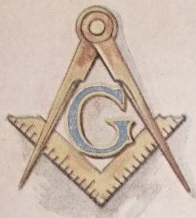
Pertaining to, or resembling, the institutions or the practices of freemasons; as, a freemasonic signal.
The institutions or the practices of freemasons.
Freemasonry
Encyclopedia Britannica
FREEMASONRY(Fr. Franc-maçonnerie, Ger. Freimaurerei), is the name given to that system of ritual and rules which Freemasons observe. It may also be applied to the masonic art, or the practice of masonic ritual and rule. The institution is not older than the beginning of the 18th century, but it has been lately said to include more than 10,000 lodges and more than 1,000,000 members. Before considering the history and actual position of the modern society itself, however, a few words are due to the really interesting and much-debated question of its origin and antecedents. It is, of course, easy to point out vague analogies between Freemasonry and the great secret organizations having social aims, which existed in antiquity. The Pythagoreans, the Eleusinians, the Essenes, and the Carmathites and Fedavi (the mystic Rationalists of Islam) have all been appealed to by uncritical masonic writers in the hope of giving to their craft the doubtful authority and prestige of ancient descent. If the resemblances were more numerous and striking than they are, they would not prove an historical connexion between organizations so widely removed from one another in time, and they would admit of explanation by the general doctrine of psychical identity, one of the most important results of anthropological science. Besides this, the superficial resemblances are accompanied by radical differences. The mere conception of Freemasonry implies cosmopolitan brotherhood, and was therefore impossible in the ancient world. If indeed the genuine legends of the craft were followed, its origin would be traced to the creation, the flood, or at least the building of Solomon’s temple. Accordingly, one of the most popular and voluminous masonic writers of the 19th century, the Rev. George Oliver, ...informs the world that Moses was a grand master, Joshua his deputy, and Aholiab and Bezaleel grand wardens. Again, a likeness, sometimes real and sometimes fanciful, between the sets of symbols and ceremonies used has led many writers to see an organic connexion between Freemasonry and the Assassins, the Rosicrucians, the Templars, the Illuminati, the Carbonari, and the Hetairia, and other social and political secret societies, old and young, of the most widely differing aims. It is possible that Freemasonry copied an older ritual, which was again imitated by younger societies, who also endeavoured to utilize masonic lodges as stations for proselytizing work. But these facts themselves show discontinuity of life. The true historical precursors of the modern fraternity of Freemasons were the mediaeval building corporations. Of these the most distinctive type is to be found in the stone masons {Steinmetzen) of Germany. It is a further and more difficult question what were the relations between these mediaeval societies and the Roman collegia not struck at by the law De Collegiis Illicitis, D. 47, 22. Krause in his Die drei ältesten Kunsturkunden der Freimaurerbrüderschaft points out that these collegia had an exchequer, an archive, patrons, religious ceremonies, an oath, a benefit and burial fund, and a register. They had such officers as magistri, decuriones, tabularii, censores, and they instructed their apprentices to a certain extent in secret. No doubt such sodalitia existed for centuries in Gaul and Britain, and they may have deposited in the civilization of these countries some of their ideas and habits. Again, at a later period, there was a distinct invitation sent from the West to the building corporations of Byzantium; the movement westward was increased by the iconoclasm of Leo. But the European building societies were undoubtedly distinct growths. The caementarii or liberi muratores at first grouped themselves round the monasteries, especially of the Benedictine order. The abbots were in many cases the architects who employed the masons on ecclesiastical buildings and repairs. As architecture developed, and with increasing wealth the church gradually undertook larger and nobler works, these societies of craftsmen also assumed a more definite and more durable form. The taste and science of Gothic architecture were to a large extent the possession of the Bauhütten, or wooden booths where the stone-cutters during the progress of the work kept their tools, worked, held their meetings, and probably also took their meals and slept. In the 12th century there are distinct traces of a general association of Bauhütten throughout Germany, acknowledging one set of Ordnungen or craft laws, one set of secret signs and ceremonies {Heimlichkeiten) and to a certain extent one central authority in the Haupthütte of Strasburg. Albertus Magnus (1205-1280) is supposed to have introduced many of the Jewish and Arabian symbols which were popular in the craft. The privileges which a Bauhütte was able to give to its masters, parlierer (speakers), and journeymen, were chiefly “a share in the administration of justice, in the election of officers, in the banquets, and in works of charity.” The trade customs and symbolic forms of these associations have been described by Fallou in his Mysterien der Freimaurer (1859), Winzer in his Deutschen Brüderschaften des Mittelalters (1859), and Fort, Early History and Antiquities of Freemasonry (Philadelphia, 1877). The initiation is said to be copied from a Benedictine consecration. Instruction was given to all apprentices in both architecture and its allegory. When he had served his time and finished his “Wanderjähre,” every man was entitled, if of good character, to receive the Wortzeichen or der Gruss. He took the oath of secrecy on the Bible, the compass, and the square, and drank the Willkommen. The three great lights, the hammer or gavel, the gold, azure, and white colours, the sacred numbers 3, 5, 7, and 9, and the interlaced cords, all had their traditional meaning. The obligation to secrecy, however, probably applied to the apprentice even before initiation. See the Constitutions of Masonry (Halliwell’s edition, 1. 279-282)—
“The prevystye of the chamber telle he no mon, Ne yn the logge whatsever they done;
Whatsever thou heryst, or syste hem do, Tell hyt no mon, whersever thou go.”
It has been observed by Brentano, that the working arrangements of the building trades at this time differed when a cathedral or palace was being built, the architect being then master of the lodge with foremen under him; and when a dwelling-house was built, the owner then engaging both masters and workmen. There was thus a nearer approach to the modern factory system; and in fact the well-known English statutes against combinations, congregations, and chapters of workmen (34 Edw. III. c. 9, and 3 Hen. VI. c. 1) were directed against the excessive wages of journeymen. The separate interests of this class found expression in the contemporary French institution of Compagnonnage. The atmosphere of these societies seems, even at an early date, to have been favourable to liberty of thought and religious toleration. Hence they were prohibited by the council of Avignon in 1326. Tlιe authority of the Haupthütte was recognized at the great assemblies of Ratisbon and Strasburg in 1459, the statutes of which received imperial confirmation. It was legally destroyed by an edict of 1731, long before which time its practical vitality had ceased. England imported much of her lodge organization and learning from Germany. The York charter, on which she based her claim to a native system in the time of Athelstan, is a much later document. This charter contains the famous legend of the craft which derives the seven liberal sciences (masonry being a part of geometry) from the family of Lamech. This science, preserved on a stone pillar from the flood, was taught by Euclid to the Egyptians, and carried by Israel to the building of the temple. Maymus Graecus brought it to Charles Martel and to England. The early history of the English mason lodges has been illustrated by the works of Wm. J. Hughan,— Constitutions of the Freemasons, History of Freemasonry at York, &c. The first instance of a gentleman or amateur being “accepted” is that of the antiquary Elias Ashmole (afterwards Windsor Herald under Charles II.) who, along with Colonel Manwaring, was entered at Warrington in 1646. The causes which led to the introduction of a new class of members, and gradually converted operative into speculative masonry, are well stated by Findel, the learned editor of the German masonic journal Die Bauhütte, whose History of Freemasonry (translated into English in 1869) is by far the most scientific and complete work upon the subject. In the first place the old secrets of Gothic masonry were rendered less valuable by the spread of Augustan and Renaissance architecture, which Inigo Jones and his patron Lord Pembroke had been studying on the Continent. Jones was patron of the Freemasons from 1607 to 1618. He invited several Italian artists to join the body. Then the disorder of the civil wars prevented meetings and broke up the masonic connexion. Again the growing spirit of the Reformation in religion gave men a freedom of speech which superseded the marks and caricatures in which the old masons exposed the vices of the church. Toleration was soon a political fact. Science, too, took a new departure from the time of Bacon. The interrogation of nature was preferred to legend and allegory. At the same time a perfectly distinct current of ideas was originated by the Arabian mysticism of Paracelsus and Rosenkreuz, which, after being popularized on the Continent by one of its most decided opponents, Valentine Andreae, was preached to the people of England by Robert Fludd in his Tractatus Theologico Philosophicus. Works like Bacon’s New Atlantis and Dupuy’s “History of the Condemnation of the Templars” (in his Traitez concernant P Histoire de France, 1651) fostered the idea of a new humanitarian society, and at the same time suggested the adoption of ancient symbols of fellowship. The same thing is seen in the Pantheisticon of Toland. It was under the impulse thus communicated that a general assembly of masons was held in 1663, at which the old catechisms were revised, and a series of new statutes passed. The reconstruction of London after the fire, the building of St Paul’s, and the patronage of Sir Christopher Wren, kept up the interest in the movement; and at last a formal resolution was passed that the masonic privileges should no longer be confined to operative masons.
England.— Modern or speculative masonry may be said to have begun in London on June 24, 1717, “the high noon of the year, the day of light and of roses,” when the four London lodges,having erected themselves into a grand lodge, named their first grand master. The leading spirits in this revival were Desaguliers, the well-known popularizer of natural science, and James Anderson, a Scotch Presbyterian minister, who compiled the Book of Constitutions, containing the ancient regulations and charges of the craft. This book is quite uncritical. It is said that the mechanical tastes and the Huguenot principles of Desaguliers are both traceable in the subsequent organization of the society. From this time new lodges could be formed only by warrant from the grand lodge, but they were empowered to create masters and fellow crafts. In 1721 the duke of Montagu was elected grand warden. He was the first noble who obtained that office. In the strange society of Gormogones, subject to the “sub-oecumenical volgi” at Rome, it is supposed that the Jesuits made a final effort to secure English Freemasonry as a channel for their political influence. At this time, also, the committee of charity was formed, which has since raised and expended very large sums for the relief of distressed brethren, and built the boys’ and girls’ masonic schools at Battersea Rise and Tottenham. Provincial grand masters were appointed, and charters granted to many foreign lodges. In the latter part of the 18th century the ancient York Lodge, backed by several old masons who had been indulging in irregular initiations, put forward a rival claim to be grand lodge or supreme authority. This claim was rested on the fable of an assembly at York in the year 926. The York people had also a new ritual, described in the Book of Laws or Ahiman Rezon, and also in Jachin and Boaz, The three distinct Knocks, and Hiram Adonham or the Grand Master Key (1762). On the orthodox or London side appeared the well-known Illustrations of Masonry, by Preston, the pupil of Ruddiman. The schismatics introduced the red colour of the royal arch degree, which they represented as something more exalted than the blue degrees of St John. It belongs to the order of Templars, the legend referring to the second building of the temple. Another branch of Templarism, the grand chapter of Harodim, was founded in London in 1787. Just at the end of the century the publication of Abbé BarrueΓs Mémoires pour servir à l'histoire du Jacobinisme, translated into English by Clifford (who applied his author’s principles to the United Irishmen and other Corresponding Societies of the time) and of Professor Robinson’s Proofs of a Conspiracy, translated into French and German, made Freemasonry the subject of considerable suspicion. The Act of 1799 directed against seditious societies, however, makes an exception in favour of the masonic lodges, which, according to the Act, meet chiefly for benevolent purposes. In 1813 a union was at lust brought about by the dukes of Sussex, Kent, and Athole between the rival grand lodges of London and York, henceforth known as the United Grand Lodge of England. This patronage of aristocratic blood gave an impetus to Freemasonry, and in 1832 Mr Crucefix, the editor of the Freemason's Quarterly Review, succeeded in founding the Freemason’s Asylum. The brotherhood showed their good sense in deciding about this time that Jews might become members of the craft. They also built a hall, established their archaeological institute and “The London Literary Union,” and started the Freemason's Magazine and the Freemason, in which periodicals a record may be found of the most recent masonic opinion and history. Besides 60 provincial grand lodges and 1200 lodges, England has a grand chapter for the royal arch degree, a grand lodge for the mark masters, a grand conclave of the knights templars, and a superior grand council of the ancient and accepted rite of the 33 degrees.
Ireland.— The first Irish lodge of speculative masonry seems to have been opened at Dublin in 1730. The English constitutions were adopted wholesale. Nothing of interest occurs in the Irish history. A characteristic liking is shown for the most sonorous of the high degrees :—the knights of the sword, the east, and the sun, the rosicrucian or mason prince, the kadosh or philosophical mason, and the grand general inspector. Power to grant these degrees was absurdly enough obtained from “Mother Kilwinning,” a Scotch lodge which has always laid claim to a fabulous antiquity. The disputes between the grand chapter and grand consistory of Dublin have been frequent and violent. Ireland has now 350 lodges. The grand lodge, which supports two orphan schools, has an in come of about £4000. A statement of the Ultramontane argument in modern Ireland will be found in Gargano’s Irish and English Freemasons, Dublin, 1878, which is largely founded on Mgr. Dupanloup’s Study of Freemasonry and Secret Warfare against Church and State. Gargano strongly urges the injustice done by the secret preference given by masons to one another in the ordinary civil and commercial relations of life. His book also contains an explanation of the pass-grip and real-grip for the three ordinary degrees, and for the mark master, the royal arch, and the knight templar, and a minute description of the modern initiation, with the text of the oaths.
Scotland.— Tn Scotland the history of Freemasonry closely resembles what took place in England. Before the 16th century there is not much trace of special legislation about masons. Like the other crafts they enjoyed, under the Act of 1424, the right of nominating their own deacon or master-man. The deacon gave place to the warden, who represented rather the public than the trade interest. In 1493 the masons and wrights are denounced as oppressors of the lieges, because they had agreed that “they sail have fee alsweill for the halie day as for the wark day,” and “that quair ony be-giennis ane mannis warke ane uther sail not end it.” A severe blow was struck against their privileges by an Act of 1540, which rendered legal the employment of unfree-men builders, but Queen Mary restored the jurisdiction from the trade visitors to the deacons, and confirmed their ancient right of self-regulation. In 1598-9 we have the celebrated statutes and ordinances to be observed “by all master masons, set down by William Shaw, master of work to his majesty, and general warden of the craft.” These documents, one of which was preserved in the charter chest of the Eglinton family, are printed in Mr Murray Lyon’s learned History of Freemasonry in Scotland, Edin., 1873. They are confined to trade regulation, and do not deal with benefits. They fix the number of apprentices, the examination on entrance, the subscription to the box, the election of officers, provision for the safety of craftsmen, &c. The “Old Buik” of the Kilwinning Lodge was not really a Scotch document. It was a version of the English masonic legend and charges. The ceremony of initiation was at this time very simple; but the speaking plack, the dinner, and the pitcher of ale were exacted. The system of degrees was not developed. There was probably a pass-word, such as the squaremen word used in the “brithering” of the wrights and slaters. The individual “marks” chosen by entrants were carefully registered, but they did not indicate status. The mark degree, revived in 1869, and made the subject of a conference in 1871, was not known before 1789. In fact, the apprentices were originally present at and concurred in most of the business of the lodge. This word “lodge” occurs for the first time in a “statute anent the government of the master mason of the College Kirk of St Giles,” 1491, which is to be found in the burgh records of Edinburgh. It would appear that the deacon of the civil trade incorporation was often ex officio head of the lodge. The quarter-master and the intender or instructor were also officers in the old lodge. Cowans, i.e t , strangers, were stringently provided for in Shaw’s Statutes. The traces of female membership are explained by the custom of the widows and daughters of freemen being admitted, at least to finish the contracts of the deceased. The Hay MSS. in the Advocates’ Library contain two charters or letters of jurisdiction, dated in 1601 and 1628, by the freemen masons and hammermen in favour of the St Clairs of Rosslyn, in virtue of which the head of that family for a long time acted as the patron, protector, and judge of the early masonic lodges. This has sometimes been inaccurately represented as a heritable conveyance of a grand mastership. As in England, there are traces of amateurs or non-operative members being gradually admitted to full privileges even in the 17th century, though such persons were charged higher entrance fees. This was called the theorie or geomatic as opposed to the domatic or operative element. Boswell of Auchinleck was a member so early as 1600. The first years of the 18th century were marked by movements of insubordination among the journeymen, who considered themselves entitled to a larger share of control over the common purse. The original theory of the lodge was that only masters, and not fellowcrafts or apprentices, were members. In 1721 the enthusiastic Desaguliers appeared in Edinburgh; and on November 30, 1736, the first general assembly of symbolical masons was held, and a grand lodge for Scotland formed. The representative of the St Clair family then resigned his hereditary office and was elected first grand master. St Andrew’s day was substituted for the day of St “John the Baptist. Provincial grand masters were soon added, and there was a general adhesion of Scotch lodges to the new organization. The subsequent history of the brotherhood is not eventful. In Scotland they have been more remarkable for conviviality, or “refreshment,” as it is technically called, than for comprehensive charity. Their gloves, aprons, sashes, and jewels are well known in festival or funeral processions. Their political relations have been peaceful. In 1757 the Associate Synod excommunicated all persons taking the secret oath, but this was only a part of the general defiance which Cameronianism gives to civil duty. In 1800, when intercourse with some Irish regiments had introduced the templar degrees to some of the Ayrshire lodges, an attempt was made by the law officers of the crown to convict certain templars at Maybole of sedition and the administration of unlawful oaths. The case only resulted in the disclosure of the extremely absurd ceremonies connected with the two degrees of this royal order, viz., Heredom of Kilwinning and Rosy Cross. One of them consisted in drinking porter out of a human skull. Again, when political feeling ran high at the beginning of the present century, the authority of the grand lodge was seriously shaken by the revolt of...
9th ed. Encyclopædia Britannica, vol. 9, p. 747 — signed W. C. S.
[5,589 words — estimated reading time: 35 minutes]
[5,589 words — estimated reading time: 35 minutes]
Party Roget’s Thesaurus §712
N. party, faction, side, denomination, communion, set, crew, band, horde, posse, phalanx, family, clan, &c. 166, team, tong, council, community, body, fellowship, sodality, solidarity, confraternity, familistere, familistery, brotherhood, sisterhood, knot, gang, clique, ring, circle, group, crowd, in-crowd, coterie, club, casino|, machine, tammany, tammany hall, corporation, corporate body, guild, establishment, company, copartnership, partnership, firm, house, joint concern, joint-stock company, cahoot, combine, trust, society, association, institute, institution, union, trades union, league, syndicate, alliance, verein, bund, zollverein, combination, turnverein, league offensive and defensive, alliance offensive and defensive, coalition, federation, confederation, confederacy, junto, cabal, camarilla, camorra, brigue|, freemasonry, party spirit, confederates, conservatives, democrats, federalists, federals, freemason, knight templar, kuklux, kuklux klan, kkk, liberals, luddites, republicans, socialists, tories, whigs &c. staff, dramatis personae
V. unite, join, club together, cement a party, form a party, associate, enleague, federalize, go cahoots
Adj. in league, in partnership, in alliance, bonded together, banded together, linked - together, embattled, confederated, federative, joint
Adv. hand in hand, side by side, shoulder to shoulder, en masse, in the same boat
No Bible verses found for "Freemason".