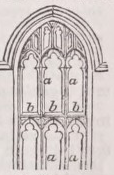
1. In Scottish, a snuff-box, made of the small end of a horn.
2. Dust. [Not in use.]
MULL, an island of Scotland, county of Argyll, and the largest of the Inner Hebrides, is bounded W. by the Atlantic, N. by Loch Sunart, N.E. by the Sound of Mull, and S.E. by the Firth of Lorn. Its area comprises about 235,000 acres, of which only about 13,000 are arable. It is triangular in shape, its greatest length being about 24 miles, and its greatest breadth about 30 miles. Lochs Na-Keal and Scridain form deep indentations on its western coast, and there are a large number of smaller inlets. The coast-line is rocky, and especially on the west there are numerous caverns and horizontal terraces of basalt. The prevailing rock is Old Red Sandstone, but the valleys are filled up with Miocene rocks, consisting chiefly of lava flows and ashes of great terrestrial volcanoes. There is an intrusion of granite towards the south, and also a narrow belt of limestone. The surface is for the most part rugged and mountainous, Ben More rising to the height of 3185 feet. Sheep and black cattle are kept, and barley, oats, and potatoes are grown. Herring fishing is prosecuted at Tobermory, where is one of the best and safest of the western harbours of Scotland. There are several ancient castles, the principal being those of Duart and Aros. The population of the island in 1881 was only 5229.
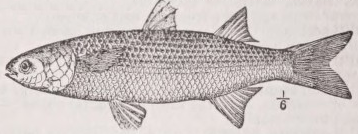
MULLET. This name is applied to two very different kinds of fishes, which are distinguished as Red Mulléts and Grey Mullets. Red Mullets (genus Mullus, the name given by the ancient Romans) are marine fishes, with two short dorsal fins remote from each other: the first is composed of feeble spines, the second of branched rays; the anal fin is similar to the second dorsal. The body is covered with large thin scales. The form of the head is quite peculiar and characteristic; its anterior profile slopes downwards to the small mouth, which has but very small and feeble teeth, and from which two cylindrical barbels are suspended. These organs of touch are generally laid backwards and hidden in a groove between the branches of the lower jaw, but can be erected and called into action independently of each other. About forty different species of Red Mullets are known, chiefly from the tropical and sub-tropical parts of the Indo-Pacific Ocean. In the Atlantic the species are much less numerous, the most celebrated being the European Mullus barbatus (see vol. xii. p. 638, fig. 10), which is abundant in the Mediterranean, and tolerably common on the coasts of England and Ireland. Formerly a second species, Mullus surιnuletus, was believed to exist in the European seas, but ichthyologists now incline more and more to the belief that this is only the female of Μ. barbatus....
Red Mullets do not attain to any considerable size, the largest of the tropical species weighing only two or three pounds. They are ground-feeders, evidently using their barbels in discovering their food, which consists of animalcules, worms, and, in the larger species, of small fishes; that they feed on putrid flesh is not borne out by the evidence drawn from their feeble jaws and dentition, but it is very probable that they are attracted to a decomposing body by the presence of the small crustaceans which feast upon it. Although the colours of these fishes are very brilliant, they are simple and evanescent; only a few of the tropical species exhibit ornamentations in the form of black spots or bands. In many, as also in the European species, red colour prevails, and its preservation after death is considered to enhance the fitness of the fish for the table, and consequently its value for the market. To produce the intensity of this red colour, fishermen scale the red mullet immediately before its death, a process by which the red pigment-cells or chromatophores are excited to expand; fishes which are allowed to die in the water show but little red, and therefore red mullets caught by the trawl are less valuable than those obtained in a trammel-net, by which the majority of the fish are secured alive. All the species of Red Mullets seem to be esteemed as food; but none equal in this respect the European species, which was held in exaggerated esteem by the gourmands of the corrupt period of the Roman empire. They exhibited the living fish and allowed them to die at the table immediately before they were consigned to the cook; they kept them in large reservoirs until they were wanted, and paid fabulous prices for fishes somewhat above the average size. In our times red mullets have justly maintained their value as a delicacy for the table; and from a commercial point of view their cultivation in suitable enclosed waters cannot be too strongly recommended to pisciculturists. Unfortunately, very little is known about their habits; during the winter they retire into deep water, late in spring and during the summer they approach the coasts and enter even brackish water, but the state of their sexual organs shows clearly that these fishes do not come towards the shore in order to breed; in fact nothing is known of their propagation.
The Grey Mullets, like the Red Mullets, belong to the spiny-rayed fishes, but form a widely-different and distinct family, Mugilïdae. They are not exclusively marine, but freely enter brackish water, live always close to the shore, and some of the tropical forms inhabit the pure fresh water of streams and rivulets, without, however, penetrating far inland. Their body is elegantly formed, wedge-shaped, and covered with scales of moderate size, firmly adherent to the skin. The two short dorsal fins are remote from each other, and the anterior is composed of four stiff spines. The anal fin is similar to the second dorsal; the caudal fin strong and bilobed. The form of the snout is very peculiar and characteristic; the mouth narrow, transverse in the true Mugil, and without, or with but feeble, teeth.
About seventy different species are known, from almost every coast of the temperate and tropical zones; they swim in small schools and are abundant wherever they occur. Four species are found on the British coasts— Mugil septentrionalis, Mugil capito, Mugil octoradiatus, and Mugil auratus, the first two being about equally and generally distributed, whilst the others are scarcer. Some of the freshwater Grey Mullets of the tropics, especially those of the West Indian and Indo-Pacific islands, have the mouth more lateral or have distinct, though very minute, teeth; they therefore have been formed into separate genera, Agonostoma and Myxus.
Grey Mullets, at least some of the species, grow to a weight of 10 or 12 lb; but the fish which usually come into the market rarely exceed half that weight. Those in which distinct teeth are developed feed principally on small aquatic animals, whilst the diet of those without teeth consists of animalcules or minute organic substances mixed with the mud or sand which they swallow in large quantities; also confervoid growths to which small shells adhere are freely taken. To prevent the gills from being clogged by sand or mud, a peculiar apparatus separates these organs from the pharynx. Each branchial arch is provided on each side, in its whole length, with a series of closely-set gill-rakers, each series fitting into the series of the adjoining arch; they constitute together a sieve admirably fitted to permit the passage of the water, and to retain at the same time every other substance in the cavity destined for mastication. Also the structure of the intestinal tract is adapted in a remarkable manner to the peculiar diet of these fishes. One portion of the stomach is globular and surrounded by a thick mass of muscles, the cavity being small and coated with a tough epithelium. In fact this structure reminds us of the stomach of birds, in which it also serves for the trituration of hard substances. The intestine itself is long, six or seven times as long as the fish. Grey Mullets are very plainly coloured, generally greenish on the upper parts and more or less silvery on the side. They are wholesome food, well flavoured when taken out of clean water. As young fish bear transport easily, and rapidly grow to a marketable size in suitable enclosed waters, their cultivation deserves every attention on the part of pisciculturists. Indeed, in the fishfarms of Western Italy, grey mullets,besides eels, red mullets, flat-fish, are the principal fish cultivated.
MULLINGAR, a market-town of Ireland, capital of Westmeath, is situated near the Brosna and on the Royal canal, 44 miles west by north of Dublin. The principal buildings are the parish church with tower and spire, the Roman Catholic church, the court-house, the barracks, and the infirmary. Tanning, brewing, and the manufacture of coarse woollens are carried on. The population in 1881 was 4787. Mullingar was one of the ancient palatinate towns. It possessed an Augustine convent founded in 1227, and a Dominican convent founded in 1239, but both were dissolved by Elizabeth. The town was the headquarters of William III. before the siege of Athlone. It formerly returned two members to parliament, but was disfranchised at the Union.
MÜLLER, Johann (1436-1476). See Regiomontanus....
MÜLLER, Johann von (1752-1809), an eminent Swiss historian, was born on 3d January 1752 at Schaffhausen, where his father was a clergyman and rector of the gymnasium. In 1769 he went to the university of Göttingen in order to study theology; but, under the influence of Schlözer, he devoted himself chiefly to historical research. Having passed his theological examination, he was made professor of Greek at the Schaffhausen gymnasium in 1772; and in the same year he published his first work, Bellum Cimbricum. By the advice of Bonstetten, his most intimate friend, he went in 1774 to Geneva, where he acted for some time as a tutor in the house of a councillor of state. At Schaffhausen he had begun to study carefully the sources of Swiss history, and at Geneva he continued his investigations with increasing ardour. Lectures on universal history which he delivered during this period formed the basis of his Vierundzwanzig Bücher allgemeiner Geschichten, one of his most brilliant writings. In 1780 appeared the first volume of his Geschichte der Schweizer, a work which placed him immediately in the front rank of the historical writers of his day. During a visit to Berlin he had an interview with Frederick the Great, from whom he hoped to receive an appointment worthy of his genius and reputation. Disappointed in this expectation, he accepted the professorship of the science of statistics at Cassel, where he wrote his Reisen der Päpste. In 1786, having spent two years partly at Bonstetten’s country seat and partly in Bern, he entered the service of the elector of Mainz, by whom he was rapidly promoted to important offices in the state. He was also ennobled and made a knight of the empire (Reichsritter). At Mainz he issued several books, besides the second volume of his History of the Swiss Confederation. When Mainz was occupied by the French in 1792 Müller settled in Vienna, where he remained for twelve years, being connected with the imperial library from 1800. Failing to receive the promotion to which he thought he was entitled, and being forbidden after the appearance of the third volume of his Swiss History to continue the publication of the work, he went in 1804 to Berlin, where he became historiographer and a councillor of war. In Berlin he finished the fourth volume of his Geschichte der Schweizer, edited the works of Herder, and wrote various treatises for the Academy, including one über die Geschichte Friedrich's II. Up to this time Müller had been an enthusiastic advocate of free institutions, but he now modified his convictions; and in 1807 he accepted from Napoleon the office of secretary of state in the kingdom of Westphalia. Early in 1808 he was transferred at his own request to the office of director-general of public instruction. On 29th May 1809 he died at Cassel.
The value of Muller’s contributions to history is maιτed by the occasional extravagance and obscurity of his style, and by his inadequate appreciation of the tests of historic credibility; but his learning, his generous sympathies, his grasp of great principles, and his power of vividly presenting some aspects of characteι∙ secure for his writings an enduring place in German literature. An edition of his Sämmtliche Werke, in 40 vols, (published originally in 27 vols, in 1810 to 1819) was issued in 1831 to 1835. Biographies of Müller were compiled by Döring and other writers.
MÜLLER, Johannes (1801 -1858), one of the most distinguished physiologists of Germany, was born at Coblentz on 14th July 1801. He became a privat-docent in the university of Bonn in 1824. In 1826 he was appointed extraordinary professor of physiology in the same university, and he became the ordinary professor in 1830. In 1833 he was removed to the university of Berlin, where he filled the chair of anatomy and physiology with great distinction until his death on 28th April 1858. Müller made numerous researches in various departments of physiology, and in particular he extended knowledge as to the mechanism of voice and speech and of hearing, and as to the chemical and physical properties of lymph, chyle, and blood. It was, however, less as an original investigator than as a deep and far-seeing thinker that Müller made his mark on physiological science. From about 1740, when Haller flourished, numerous contributions to physiological science had been made by Whytt, Cullen, John Hunter, Spallanzani, Prochaska, Bichat, Charles Bell, Berzelius, Magendie, and others, but in 1830, when Müller may be said to have begun his labours, it was necessary to reduce these facts to order, to educe general principles, and to direct physiologists into new lines of research indicated by the brilliant discoveries made in physics and in chemistry since the beginning of the century. This Müller did, and he may therefore be regarded as the founder of modern physiology. The appearance of his Elements of Physiology between 1837 and 1840 (translated into English by Dr William Baly, and published in London in 1842) was the beginning of a new period. In this work Müller shows remarkable power both in marshalling facts and in philosophical reasoning. As a rule he not merely states and criticizes the labours of others but also contributes the results of his own observations. Whilst he is cautious in the acceptance of theories, he always places them before the reader in an original and suggestive light. The most important portion of the work is that dealing with nervous action and with the mechanism of the senses. Here he states the fruitful principle, not before recognized, that the kind of sensation following irritation of a sensory nerve does not depend on the mode of irritation but upon the nature of the sense-organ. Thus light, pressure, or mechanical irritation acting on the retina and optic nerve invariably produce luminous impressions. This is sometimes termed the law of specific nervous energy. As a teacher Müller exercised a powerful influence, and the great majority of the distinguished physiologists, such as Helmholtz, Du Bois Reymond, Ludwig, Volkmann, and Vierordt, who have made Germany famous in physiological science during the past thirty years, owe much to the germinating ideas of their great teacher.
Besides editing for many years a periodical entitled Archiv f. Anatomie, Physiologie, u. wissenschaftl. Mcdicin, to which he also contributed papers, he published the text-book on physiology above alluded to, and various important memoirs. For a list of these see Poggendorff, Biog. -Litter. Handwörterbuch, vol. ii.
Two men of the same name, Johannes Müller, have been celebrated in science: (1) John Müller (1699-1784), a professor of artillery and fortification at Woolwich, who wrote a mathematical treatise published in 1737; (2) Johannes Müller (born 1806), a writer on pharmacy and physiological chemistry, who published many memoirs from 1840 to 1850.
MÜLLER, Karl Otfried (1797-1840), an eminent writer on ancient Greece, was born at Brieg in Silesia on 28th August 1797. His father was a chaplain in the Prussian army. Müller was educated partly in Breslau, partly in Berlin, where his enthusiasm in the study of Greek literature, art, and history was fostered by the influence of Boeckh. In 1817, after the publication of his first work, Aegineticorum Liber, he received an appointment at the Magdaleneum in Breslau; and in 1819 he was made a professor of the university of Göttingen, his subject being the archaeology of art. His aim was to form a vivid conception of Greek life as a whole; and for this object he carried on a series of profound researches, setting forth the results in his lectures, which produced a great impression on his students, and in numerous works, which marked an epoch in the development of Hellenic studies. Müller’s position at Göttingen being rendered unpleasant by the political troubles which followed the accession of Ernest Augustus to the throne of Hanover in 1837, he applied for permission to travel; and in 1839 he left Germany. In April of the following year he reached Greece, having spent the winter in Italy. He carefully investigated the remains of ancient Athens, visited many places of interest in the Peloponnesus, and finally went to Delphi, where he began with his usual zeal to conduct excavations. While engaged in this work he was attacked by intermittent fever, of which he died at Athens on 1st August 1840.
Müller combined, with astonishing industry a penetrating critical judgment and an almost unrivalled power of appreciating Greek modes of thought and feeling. Among his historical works the foremost place belongs to his Geschichte hellenischen Stämme und Staaten, which includes Orchomenos und die Minyer (1820), and Die Dorier (1824). He wrote also Über die Wohnsitze, Abstammung, und ältere Geschichte des macedonischen Volles (1825); and by his maps he introduced a new standard of accuracy in the treatment of the geography of ancient Greece. In 1828 he published Die Etrusker. His Prolegomenon zu einer wissenschaftlichen Mythologie (1825) prepared the way for the scientific investigation of myths; and the study of ancient art he promoted by his Handbuch der Archäologie der Kunst (1830), and by Denkmäler der alten Kunst (1832), which he wrote in association with Österley. In 1840 appeared in England his History of the Literature of Ancient Greece, and the original German work from which it had been translated— Geschichte der griechischen Literatur bis auf das Zeitalter Alexander’s — was issued in Germany by the author’s brother in 1841. Amid the labours to which Müller especially devoted himself he found time to write an admirable translation of the Eumenides of Aeschylus (1833), to prepare new editions of Varro (1833) and Festus (1839), and to contribute many articles to the Commentationes societatis regiae scientiarum Gottingensis, the Göttinger gelehrten Anzeigen, and other periodicals. In 1841 the facts of his life were recorded by Lücke in Erinnerungen an Otfried Müller.
MÜLLER, William James (1812-1845), English landscape and figure painter, was born at Bristol on 28th June 1812, and was the son of a Prussian gentleman, a writer on scientific subjects and curator of the Bristol Museum. He received a careful education, being especially trained in botany and natural history, and it was intended that he should become an engineer; but his leanings towards art were too definite to be resisted, and he was placed under J. B. Pyne to receive his first instructions as a painter. His early subjects deal mainly with the scenery of Gloucestershire and Wales, and he learned much from his study of Claude, Ruysdael, and the other earlier landscape-painters. In 1833 he figured for the first time in the Royal Academy with his Destruction of Old London Bridge—Morning, and next year he made a tour through France, Switzerland, and Italy. Four years later he visited Athens, extending his travels to Egypt, and in the sketches executed during this period and the paintings produced from them the power and individuality of the artist are first apparent. Shortly after his return he left Bristol and settled in London, where he exhibited regularly, and found purchasers, at moderate sums, for his pictures. In 1840 he again visited France, where he executed a series of sketches of Renaissance architecture, twenty-five of which were lithographed and published in 1841, in a folio entitled The Age of Francis I. of France. He was anxious again to visit the East, and in 1843 he accompanied, at his own request and his own charges, the Government expedition to Lycia, where he produced an extensive collection of masterly sketches of scenes unfamiliar to the art of his time. They were exhibited in London; their merit was fully recognized by the British public, and the artist received numerous commissions for finished pictures. But his health was seriously impaired, he was suffering from heart-disease and from continued nasal haemorrhage; and, returning to his native city, he died there on 8th September 1845.
The works of Müller are distinguished by much power and originality, by great speed and directness of execution, by the vigour and emphasis which mark the born sketcher, and by brilliant power of splendid and sharply-contrasting colour. The qualities of tenderness, gradation, and mystery, in which they are commonly wanting, might have been within the reach of the artist had his life been longer. Since his death, and especially since the Gillott sale of 1872, his works have commanded very large prices. The ChessPlayers at Cairo, for which Müller received £25, has since sold for upwards of £4000. The print room of the British Museum possesses, through the bequest of Mr John Henderson, a very rich collection of Muller’s sketches. His biography by N. Neal Solly was published in 1875.