
SIG , a Saxon word signifying victory. is used in names, as in Sigbert, bright victory. In answers to the Greek vix in Nicander, and the Latin vic, in Victorinus.
Word of the Day: Catachrestical
Sigalon
Encyclopedia Britannica
SIGALON, Xavier (1788-1837), French painter, born at Uzès (Gard) towards the close of 1788, was one of the few leaders of the romantic movement who cared for treatment of form rather than of colour. The son of a poor rural schoolmaster, he had a terrible struggle before he was able even to reach Paris and obtain admission to Guérin’s studio. But the learning offered there did not respond to his special needs, and he tried to train himself by solitary study of the Italian masters in the gallery of the Louvre. The Young Courtesan (Louvre), which he exhibited in 1822, at once attracted attention and was bought for the Luxembourg. The painter, however, regarded it as but an essay in practice and sought to measure himself with a mightier motive; this he did in his Locusta (Nîmes), 1824, and again in Athaliah’s Massacre (Nantes), 1827. Both these works showed incontestable power; but the Vision of St Jerome (Louvre), which appeared at the salon of 1831, together with the Crucifixion (Issengeaux), was by far the most individual of all his achievements, and that year he received the cross of the Legion of Honour. The terrors and force of his pencil were not, however, rendered attractive by any charm of colour; his paintings remained unpurchased, and Sigalon found himself forced to get a humble living at times by painting portraits, when Thiers, then minister of the interior, recalled him to Paris and entrusted him with the task of copying the Sistine fresco of the Last Judgment for a hall in the Palace of the Fine Arts. On the exhibition, in the Baths of Diocletian at Rome, of Sigalon’s gigantic task, in which he had been aided by his pupil Numa Boucoiran, the artist was visited in state by Gregory XVI. But Sigalon was not destined long to enjoy his tardy honours and ...the comparative ease procured by a small Government pension; returning to Rome to copy some pendants in the Sistine, he died there of cholera on 9th August 1837.
9th ed. Encyclopædia Britannica, vol. 22, p. 46
[365 words — estimated reading time: 3 minutes]
[365 words — estimated reading time: 3 minutes]
Pertaining to Sigault, a French physician. See Symphyseotomy.
Same as
A single deep respiration; a long breath; the inhaling of larger quantity of air than usual, and the sudden emission of it. This is an effort of nature to dilate the lungs and give vigor to the circulation of the blood, when the action of the heart and arteries is languid from grief, depression of spirits, weakness or want of exercise. Hence sighs are indications of grief of debility.
2. To express by sighs. The gentle swain-sighs back her grief.
1. To inhale a larger quantity of air than usual, and immediately expel it; to make a deep single audible respiration, especially as the result or involuntary expression of fatigue, exhaustion, grief, sorrow, or the like.
3. To make a sound like sighing.
4. A deep and prolonged audible inspiration or respiration of air, as when fatigued or grieved; the act of sighing.
5. Figuratively, a manifestation of grief; a lan/ent.
1. To exhale (the breath) in sighs.
3. To express by sighs; to utter in or with sighs.
One that sighs.
One who sighs.
The act of suffering a deep respiration, or taking a long breath.
Suffering a deep respiration; taking a long breath.
1. The act of seeing; perception of objects by the eye; view; as, to gain sight of land; to have a sight of a landscape; to lose sight of a ship at sea. A cloud received him out of their sight Acts 1:9 .
2. The faculty of vision, or of perceiving objects by the instrumentality of the eyes. It has been doubted whether moles have sight Milton lost his sight The sight usually fails at of before fifty years of age. O loss of sight of thee I most complain.
3. Open view; the state of admitting unobstructed vision; a being within the limits of vision. The harbor is in sight of the town. The shore of Long Island is in sight of New Haven. The White mountain is in plain sight at Portland, in Maine; a mountain is or is not within sight; an engagement at sea is within sight of land.
4. Notice from seeing; knowledge; as a letter intended for the sight of one person only.
5. Eye; the instrument of seeing. From the depth of hell they lift their sight
6. An aperture through which objects are to be seen; or something to direct the vision; as the sight of a quadrant; the sight of a fowling piece or a rifle.
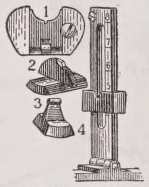
7. That which is beheld; a spectacle; a show; particularly, something wonderful. They never saw a sight so fair. Moses said, I will now turn aside and see the great sight why the bush is not burned. Exodus 3:3 . Fearful sights and great signs shall there be from heaven. To take sight to take aim; to look for purpose of directing a piece of artillery, etc.
To take aim by a sight.
1. The act of seeing; perception of objects by the eye; view; as, to gain sight of land.
2. The power of seeing; the faculty of vision, or of perceiving objects by the instrumentality of the eyes.
3. The state of admitting unobstructed vision; visibility; open view; region which the eye at one time surveys; space through which the power of vision extends; as, an object within sight.
4. A spectacle; a view; a show; something worth seeing.
5. The instrument of seeing; the eye.
6. Inspection; examination; as, a letter intended for the sight of only one person.
7. Mental view; opinion; judgment; as, in their sight it was harmless.
8. A small aperture through which objects are to be seen, and by which their direction is settled or ascertained; as, the sight of a quadrant.
9. A small piece of metal, fixed or movable, on the breech, muzzle, center, or trunnion of a gun, or on the breech and the muzzle of a rifle, pistol, etc., by means of which the eye is guided in aiming.
10. In a drawing, picture, etc., that part of the surface, as of paper or canvas, which is within the frame or the border or margin. In a frame or the like, the open space, the opening.
11. A great number, quantity, or sum; as, a sight of money.
12. To get sight of; to see; as, to sight land; to sight a wreck.
13. To look at through a sight; to see accurately; as, to sight an object, as a star.
A hole for looking through; a peephole.
Engaged in, or given to, seeing sights; eager for novelties or curiosities.
The act of seeing sights; eagerness for novelties or curiosities.
One given to seeing sights or noted things, or eager for novelties or curiosities.
Distance to which the sight can reach or be thrown.
In composition only, having sight, or seeing in a particular manner; as long-sighted, seeing at a great distance; short-sighted, able to see only at a small distance; quick-sighted, readily seeing, discerning or understanding; sharp-sighted, having a keen eye or acute discernment.
Having sight, or seeing, in a particular manner; -- used in composition; as, long-sighted, short-sighted, quick-sighted, sharp-sighted, and the like.
Easily or clearly seen; distinctly visible; perspicuous.
Clearness of sight. [Not in use.]
The state of being sightful; perspicuity.
Sighting
Webster's Dictionary 1913
a. & n. from Sight, v. t.
2. Offensive or unpleasing to the eye; as sightless stains. [Not well authorized.]
1. Wanting sight; without sight; blind.
2. That can not be seen; invisible.
3. Offensive or unpleasing to the eye; unsightly; as, sightless stains.
Comely; having an appearance pleasing to the sight.
The state of being sightly; comeliness; conspicuousness.
No thesaurus entries found for "Sig".
King James Bible KJV Bible
Berean Standard Bible BSB Bible
586 KJV and 452 BSB verses contain “Sig” — showing the first 20. Show all 719 verses (searchable)
And God said, Let there be lights in the firmament of the heaven to divide the day from the night; and let them be for signs, and for seasons, and for days, and years:
And God said, “Let there be lights in the expanse of the sky to distinguish between the day and the night, and let them be signs to mark the seasons and days and years.
And out of the ground made the LORD God to grow every tree that is pleasant to the sight, and good for food; the tree of life also in the midst of the garden, and the tree of knowledge of good and evil.
Out of the ground the LORD God gave growth to every tree that is pleasing to the eye and good for food. And in the middle of the garden were the tree of life and the tree of the knowledge of good and evil.
The earth also was corrupt before God, and the earth was filled with violence.
Now the earth was corrupt in the sight of God, and full of violence.
And God said, This is the token of the covenant which I make between me and you and every living creature that is with you, for perpetual generations:
And God said, “This is the sign of the covenant I am making between Me and you and every living creature with you, a covenant for all generations to come:
And ye shall circumcise the flesh of your foreskin; and it shall be a token of the covenant betwixt me and you.
You are to circumcise the flesh of your foreskin, and this will be a sign of the covenant between Me and you.
And said, My Lord, if now I have found favour in thy sight, pass not away, I pray thee, from thy servant:
“My lord,” said Abraham, “if I have found favor in your sight, please do not pass your servant by.
Behold now, thy servant hath found grace in thy sight, and thou hast magnified thy mercy, which thou hast shewed unto me in saving my life; and I cannot escape to the mountain, lest some evil take me, and I die:
And God said unto Abraham, Let it not be grievous in thy sight because of the lad, and because of thy bondwoman; in all that Sarah hath said unto thee, hearken unto her voice; for in Isaac shall thy seed be called.
But God said to Abraham, “Do not be distressed about the boy and your maidservant. Listen to everything that Sarah tells you, for through Isaac your offspring will be reckoned.
And he said, What meanest thou by all this drove which I met? And he said, These are to find grace in the sight of my lord.
“What do you mean by sending this whole company to meet me?” asked Esau. “To find favor in your sight, my lord,” Jacob answered.
And Jacob said, Nay, I pray thee, if now I have found grace in thy sight, then receive my present at my hand: for therefore I have seen thy face, as though I had seen the face of God, and thou wast pleased with me.
But Jacob insisted, “No, please! If I have found favor in your sight, then receive this gift from my hand. For indeed, I have seen your face, and it is like seeing the face of God, since you have received me favorably.
And the thing which he did displeased the LORD: wherefore he slew him also.
What he did was wicked in the sight of the LORD, so He put Onan to death as well.