1. The bark of the oak, etc. bruised and broken by a mill for tanning hides. It bears this name before and after it has been used. tan after being used in tanning, is used in gardening for making hotbeds; and it is also made into cakes and used as fuel.
1. In the arts, to convert animal skins into leather by steeping them in an infusion of oak or some other bark, by which they are impregnated with tannin, an astringent substance which exists in several species of bark, and thus rendered firm, durable, and in some degree, impervious to water.
2. To make brown; to imbrown by exposure to the rays of the sun; as, to tan the skin.
2. The bark of the oak, and some other trees, bruised and broken by a mill, for tanning hides; -- so called both before and after it has been used. Called also tan bark.
3. A yellowish-brown color, like that of tan.
4. A brown color imparted to the skin by exposure to the sun; as, hands covered with tan.
5. To convert (the skin of an animal) into leather, as by usual process of steeping it in an infusion of oak or some other bark, whereby it is impregnated with tannin, or tannic acid (which exists in several species of bark), and is thus rendered firm, durable, and in some degree impervious to water.
6. To make brown; to imbrown, as by exposure to the rays of the sun; as, to tan the skin.
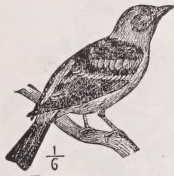
Any one of numerous species of bright-colored singing birds belonging to Tanagra, Piranga, and allied genera. The scarlet tanager (Piranga erythromelas) and the summer redbird (Piranga rubra) are common species of the United States.
TANAGER, a word adapted from the quasi-Latin Tanagra of Linnaeus, which again is an adaptation, perhaps with a classical allusion, of Taηgara, used by Brisson and Buffon, and said by Marcgrave (fHst. Ker. Nat. Brasiliae, p. 214) to be the Brazilian name of certain birds found in that country. From them it has since been extended to a great many others mostly belonging to the southern portion of the New World, now recognized by ornithologists as forming a distinct Family of Oscines, and usually considered to be allied to the FringiUidae (cf. Finch, vol. ix. p. 191); but, as may be inferred from Prof. Parker’s remarks in the Zoological Transactions (x. pp. 252, 253, and 267), the Tanagridae are a “feebler” form, and thereby bear out the opinion based on the examination of many types both of Birds and Mammals as to the lower morphological rank of the Neotropical Fauna as a whole (cf. Birds, vol. iii. p. 743)....
The Tanagers are a group in which Mr Sclater has for many years interested himself, and his latest treatment of them is contained in the British Museum Catalogue (xi. pp. 49-307). Therein he admits the existence of 375 species, which he arranges in 59 genera, forming six Subfamilies, Procniatinae, Euphoniinae, Tanagrinae, Lamprotinae, Phoenicophilinae, and Pitylinae. These are of very unequal extent, for, while the first of them consists of but a single species, Procnias tersa,— the position of which may be for several reasons still open to doubt,—the third includes more than 200. Nearly all are birds of small size, the largest barely exceeding a Song-Thrush. Most of them are remarkable for their gaudy colouring, and this is especially the case in those forming the genus called by Mr Sclater, as by most other authors, Calliste, a term inadmissible through preoccupation, to which the name of Tanagra of right seems to belong, while that which he names Tanagra should probably be known as Thraupis. The whole Family is almost confined to the Neotropical Region, and there are several forms peculiar to the Antilles; but not a tenth of the species reach even southern Mexico, and not a dozen appear in the northern part of that country. Of the genus Pyranga, which has the most northern range of all, three if not four species are common summer immigrants to some part or other of the United States, and two of them, P. rubra and P. aestiva,— there known respectively as the Scarlet Tanager and the Summer Redbird, — reach even the Dominion of Canada, visiting as well, though accidentally, Bermuda. P. aestiva has a western representative, P. cooperi, which by some authors is not recognized as a distinct species. The males of all these are clad in glowing red, P. rubra having, however, the wings and tail black. The remaining species, P. ludoviciana, the males of which are mostly yellow and black, with the head only red, does not appear eastward of the Missouri plains, and has not so northerly a range. Another species, P. hepatica, has just shewn itself within the limits of the United States. In all these the females are plainly attired; but generally among the Tanagers, however bright may be their coloration, both sexes are nearly alike in plumage. Little has been recorded of the habits of the species of Central or South America, but those of the north have been as closely observed as the rather retiring nature of the birds renders possible, and it is known that insects, especially in the larval condition, and berries afford the greater part of their food. They have a pleasing song, and build a shallow nest, in which the eggs, generally 3 in number and of a greenish-blue marked with brown and purple, are laid.
On a whole the Tanagridae, may perhaps be considered to hold the same relation to the FringiUidae as the Icteridae do to the Sturnidae and the Mniotiltidae to the Sylviidae or Turdidae, in each case the purely New-World Family being the “feebler” type. (a. n.)
9th ed. Encyclopædia Britannica, vol. 23, p. 45 [677 words — estimated reading time: 4 minutes]
TANCRED (d. 1112), son of the marquis Odo the Good and Emma the sister of Robert Guiscard, one of the most famous heroes of the first crusade. See Crusades, vol. vi. p. 624 sq.
TANCRED, the last Norman king of Sicily, reigned 1189-1194. See Sicily, vol. xxii. p. 26.
9th ed. Encyclopædia Britannica, vol. 23, p. 45 [34 words — estimated reading time: 1 minute]
Tandem[Adverb and adjective]Webster's Dictionary 1913
One after another; -- said especially of horses harnessed and driven one before another, instead of abreast.
4. A projecting part of an object by means of which it is secured to a handle, or to some other part; anything resembling a tongue in form or position.
5. The part of a knife, fork, file, or other small instrument, which is inserted into the handle.
6. The projecting part of the breech of a musket barrel, by which the barrel is secured to the stock.
7. The part of a sword blade to which the handle is fastened.
TANGANYIKA, a lake in East Central Africa, called Msaga (“tempestuous”) by the Wakawendi and Kimana by the Warungu. The meaning of the name Tanganyika is, according to Cameron, nothing more than “the mixing place.” It is the longest freshwater lake in the world, being about 75 miles longer than Lake Michigan. Although the Arabs had long known of the existence of the lake, the first Europeans who discovered it were Speke and Burton in 1858. It has since been visited by Livingstone, Cameron, Stanley, Thomson, and Hore, who have all added to our knowledge of it. Tanganyika, which is situated some 600 miles as the crowflies from the east coast of Africa, extends from 3° 16' S. lat. to 8° 48' S. lat., and lies between 29° 10' E. long, and 32° 30' E. long. Its length is 420 miles, and its breadth varies from 10 to 50 miles. Its area is 12,650 square miles, and its altitude may be taken as 2700 feet above sea-level (Cameron, 2710; Stanley, 2770; Hore, 2750; Popelin, 2665). It has a coast-line of 900 miles in extent. Its greatest depth has not yet been determined, but Hore states that a 168-fathom rope often failed to reach the bottom. Tanganyika may be described as an enormous crevasse. It is bordered on all sides by hills and mountains, some of which rise to from 5000 to 10,000 feet above its waters. The scenery is marked by exceptional grandeur, and is well calculated to impress the traveller. Burton says :—...
“It filled us with admiration, with wonder, and delight. Beyond the short foreground of rugged and precipitous hill-fold, down which the footpath painfully zigzags, a narrow plot of emerald green shelves gently towards a ribbon of glistening yellow sand, here bordered by sedgy rushes, there clear and cleanly cut by the breaking wavelets. Farther in front stretches an expanse of the lightest, softest blue, from 30 to 35 miles in breadth, and sprinkled by the east wind with crescents of snowyfoam. It is bounded on the other side by tall and broken walls of purple hill, flecked and capped with pearlymist, or standing sharply pencilled against the azure sky. To the south lie high bluff headlands and capes; and as the eye dilates it falls on little outlying islets, speckling a sea horizon. Villages, cultivated lands, the frequent canoes of the fishermen, give a something of life, of variety, of movement to the scenery.”
Tanganyika is fed by numerous rivers and streamlets which flow from the surrounding hills, the yearly rainfall being about 27 inches, but the rainy seasons vary extremely in different years, altering the surface area of the lake accordingly. Hore found that between March 1879 and August 1880 the waters had fallen 10 feet 4∣ inches, as marked by a water-gauge he had erected at Ujiji, and he also saw evident signs of the receding of the waters all round the shores of the lake—belts of dead timber and bleached rock. Some 120 rivers and streams flow into the lake; the most important river is the Malagarasi, near Ujiji. Just below the rapids its width is 500 feet, and the average depth 5 feet. For many years Tanganyika was a riddle to African explorers,—Livingstone, Baker, and others believing that it belonged to the Nile system, and that it was connected w ith the Albert Nyanza. That this theory is incorrect was proved when Livingstone and Stanleyexplored the north end of the lake in November 1871, finding no outlet. It was Cameron, in March 1874, who first solved the riddle, and found that the outlet of Tanganyika was the river Lukuga, at about the centre of the western shore of the lake, 5° 52' 45" S. lat. In 1876 this outlet was visited by Stanley, who found that there was no apparent outflow, and doubt was thrown upon Cameron’s observations, which, however, have been proved to be correct by Hore, who in 1880 found a strong current setting unequivocally out of the lake. Not only so, but he obtained good views of the river, which gradually widens soon after the rapids near the lake are passed. He followed the river to 5° 50' S. lat., and, from an altitude of 1100 feet above the river, he saw it flowing far away to the westward. The question is therefore settled that Lake Tanganyika belongs to the Congo system, but it is only an occasional tributary to that mighty river, its contribution depending upon the rainfall. The lake is subject to frequent storms, especially from the S.S.E. and S.W., lasting sometimes for two or three days, and leaving a heavy swell, which proves a great hindrance to navigation. Hore says —“I have never witnessed such wondrous cloud-scenery and majestic effects of thunder and lightning as on Tanganyika.”
The shores and water of the lake abound in animal life,—crocodiles, the hippopotamus, otters, and many kinds of fish being found in its waters. Flocks of waterfowl abound in the river mouths: gulls, divers, herons, kingfishers, eagles, fish-hawks, and black ibis are very numerous. The shores are very fertile,—rice, manioc, kaffre corn, two kinds of ground nuts, maize, uleysi, pumpkins, sweet potatoes, sugar-cane, castor-oil tree, tamarind, cotton, tomato, and cucumber growing luxuriantly. The oil palm grows at Ujiji, Urundi, and at the south end of the lake, the borassus near the Malagarasi river, the screw palm in Uguha, and the raphra in several localities. The tzetse fly is found on the shores of the lake from Ujiji round the southern end as far as Ubwari on the west coast. Amongst the useful timber trees may be noticed the gigantic mbule, the mininga, lignum vitae, and ebony. The people inhabiting the countries on the borders of the lake form ten distinct tribes, with separate national peculiarities and customs. They live in well-organized villages, in which considerable social order is maintained. They have also learnt, to some extent at any rate, to utilize the products of their country: they work their own iron and copper; salt is prepared for barter; palm oil is collected; and in some places there are large pottery works. Their fishing industry is extensive, and dried fish is exported; boatbuilding is carried on to a small extent; cotton cloth is manufactured at several places, and at others the famous grass or palm-fibre cloth; whilst the dairy farms of Uhha export packages of butter. There are several London Missionary Society stations on Lake Tanganyika, also one belonging to the Roman Catholics; and a station of the African International Association is situated at Karema. Ujiji, an Arab town of some importance, stands on the eastern shore of the lake.
9th ed. Encyclopædia Britannica, vol. 23, p. 45 [1,133 words — estimated reading time: 7 minutes]
Tanged[Imperfect tense and past participle]Webster's Dictionary 1913
In geometry, a right line which touches a curve, but which when produced, does not cut it. In trigonometry, the tangent of an arc, is a right line touching the arc at one extremity, and terminated by a second passing through the other extremity.
2. meeting a curve or surface at a point and having at that point the same direction as the curve or surface; -- said of a straight line, curve, or surface; as, a line tangent to a curve; a curve tangent to a surface; tangent surfaces.
A tangent line curve, or surface; specifically, that portion of the straight line tangent to a curve that is between the point of tangency and a given line, the given line being, for example, the axis of abscissas, or a radius of a circle produced. See Trigonometrical function, under Function.
And when all the captains of the armies, they and their men, heard that the king of Babylon had made Gedaliah governor, there came to Gedaliah to Mizpah, even Ishmael the son of Nethaniah, and Johanan the son of Careah, and Seraiah the son of Tanhumeth the Netophathite, and Jaazaniah the son of a Maachathite, they and their men.
When all the commanders of the armies and their men heard that the king of Babylon had appointed Gedaliah as governor, they came to Gedaliah at Mizpah—Ishmael son of Nethaniah, Johanan son of Kareah, Seraiah son of Tanhumeth the Netophathite, and Jaazaniah son of the Maacathite, as well as their men.
Then they came to Gedaliah to Mizpah, even Ishmael the son of Nethaniah, and Johanan and Jonathan the sons of Kareah, and Seraiah the son of Tanhumeth, and the sons of Ephai the Netophathite, and Jezaniah the son of a Maachathite, they and their men.
they came to Gedaliah at Mizpah—Ishmael son of Nethaniah, Johanan and Jonathan the sons of Kareah, Seraiah son of Tanhumeth, the sons of Ephai the Netophathite, and Jezaniah son of the Maacathite—they and their men.
Send therefore to Joppa, and call hither Simon, whose surname is Peter; he is lodged in the house of one Simon a tanner by the sea side: who, when he cometh, shall speak unto thee.
Therefore send to Joppa for Simon, who is called Peter. He is a guest in the home of Simon the tanner, by the sea.’
Until ye come beyond Tanis and Memphis, and to all the inhabitants of Egypt, until ye come to the borders of Ethiopia.
This site uses cookies to remember your display preferences (search sources and editions, Bible version, auto-link, images, light/dark theme). No personal data whatsoever is collected. Privacy Policy