
1. A limit; a bound or boundary; the extremity of any thing; that which limits its extent.
2. Corruption is a reciprocal to generation, and they two are as nature's two terms or boundaries.
3. The time for which any thing lasts; any limited time; as the term of five years; the term of life.
4. In geometry, a point or line that limits. A line is the term of a superficies, and a superficies is the term of a solid.
5. In law, the limitation of an estate; or rather the whole time or duration of an estate; as a lease for the term of life, for the term of three lives, for the term of twenty one years.
6. In law, the time in which a court is held or open for the trial of causes. In England, there are four terms in the year; Hilary term from January 23d to February 12th; Easter term from Wednesday, fortnight after Easter, to the Monday next after Ascension day; Trinity term from Friday next after Trinity Sunday to the Wednesday, fortnight after; and Michaelmas term from November 6th to the 28th. These terms are observed by the courts of king's bench, the common pleas and exchequer, but not by the parliament, the chancery or by inferior courts. The rest of the year is called vacation. In the United States, the terms to be observed by the tribunals of justice, are prescribed by the statutes of congress and of the several states.
7. In universities and colleges, the time during which instruction is regularly given to students, who are obliged by the statutes and laws of the institution to attend to the recitations, lectures and other exercises.
8. In grammar, a word or expression; that which fixes or determines ideas.
9. In painting, the greatest beauties cannot be always expressed for want of terms.
10. In the arts, a word or expression that denotes something peculiar to an art; as a technical term
11. In logic, a syllogism consists of three terms, the major, the minor, and the middle. The predicate of the conclusion is called the major term because it is the most general, and the subject of the conclusion is called the minor term because it is less general. These are called the extremes; and the third term introduced as a common measure between them, is called the mean or middle term Thus in the following syllogism.
15. Combustible is the predicate of the conclusion, or the major term; every tree is the minor term; vegetable is the middle term
16. In architecture, a kind of statues or columns adorned on the top with the figure of a head, either of a man, woman or satyr. Terms are sometimes used as consoles, and sustain entablatures; and sometimes as statues to adorn gardens.
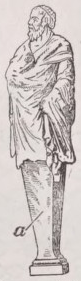
17. Among the ancients, terms, termini miliares, were the heads of certain divinities placed on square land-marks of stone, to mark the several stadia on roads. These were dedicated to Mercury, who was supposed to preside over highways.
18. In algebra, a member of a compound quantity; as a, in a+b; or ab, in ab+cd.
19. Among physicians, the monthly courses of females are called terms.
20. In contracts, terms, in the plural, are conditions; propositions stated or promises made, which when assented to or accepted by another, settle the contract and bind the parties. A engages to build a house for B for a specific sum of money, in a given time; these are his terms. When B promises to give to A that sum for building the house, he has agreed to the terms; the contract is completed and binding upon both parties.
21. TERM s of proportion, in mathematics, are such numbers, letters or quantities as are compared one with another.
22. To make terms, to come to an agreement.
23. To come to terms, to agree; to come to an agreement.
24. To bring to terms, to reduce to submission or to conditions.
1. That which limits the extent of anything; limit; extremity; bound; boundary.
2. The time for which anything lasts; any limited time; as, a term of five years; the term of life.
3. In universities, schools, etc., a definite continuous period during which instruction is regularly given to students; as, the school year is divided into three terms.
6. The limitation of an estate; or rather, the whole time for which an estate is granted, as for the term of a life or lives, or for a term of years.
7. A space of time granted to a debtor for discharging his obligation.
8. The time in which a court is held or is open for the trial of causes.
9. The subject or the predicate of a proposition; one of the three component parts of a syllogism, each one of which is used twice.
10. A word or expression; specifically, one that has a precisely limited meaning in certain relations and uses, or is peculiar to a science, art, profession, or the like; as, a technical term.
11. A quadrangularpillar, adorned on the top with the figure of a head, as of a man, woman, or satyr; -- called also terminal figure. See Terminus, n., 2 and 3.
12. A member of a compound quantity; as, a or b in a + b; ab or cd in ab - cd.
TERM (from the Latin terminus) in English law is used in two senses, the idea common to both being that of a limited and certain period of time.
(1) It denotes (or rather did denote) a fixed time during which the courts are open for legal proceedings. Terms in this sense affected only what used to be called the superior courts,—that is, the Queen’s Bench, Common Pleas, and Exchequer. They were originally the leisure seasons of the year which were not occupied by great feasts or fasts of the church or by agriculture. Their origin is no doubt to be traced back to the legislation of the early Christian emperors, the principle being adopted in England through the influence of ecclesiastical judges, and still surviving in the universities and Inns of Court. Terms were regulated by many Acts of parliament, the effect of which was to confine to a comparatively short period the time during which the courts could sit in banco,— that is, for the decision of questions of law as distinguished from the decision of questions of fact. There were four terms, Hilary, Easter, Trinity, and Michaelmas, the average duration of each being about three weeks. All legislation on the subject previous to 1873 is now merely of historical interest, for by the Judicature Act of that year the division of the year into terms was abolished so far as related to the administration of justice....
(2) It denotes the time during which an interest in an estate for life or for years is enjoyed, also the interest itself, because such an interest must determine at a definite time. If the interest be for life, it is an estate of freehold; if for years, only a personal interest in real estate, and so personalty, even though the length of the term—for instance, 1000 years—may far exceed in duration any possible life estate. A term of years is of two kinds,—the first that created by an ordinary lease reserving a rent, as of a house or a building lease; the second that created by a settlement or a will, usually without rent reserved, for the purpose of securing payment of money, such as portions to younger children, by the owner of the land. Both kinds have been considerably affected by recent legislation. For instance, the Conveyancing Act, 1881, enables a mortgagor or mortgagee in possession to make certain leases. Before 1845 provision was always made in conveyances for keeping on foot a term to attend the inheritance, as it was called,—that is, for assigning the remainder of a term to trustees for the protection of the owner of the property against rent-charges or other incumbrances created subsequently to the term, although the term had been satisfied,—that is, the purpose for which the term had been created had been fulfilled. By 8 and 9 Vict. c. 112 the assignment of satisfied terms was rendered unnecessary. The Conveyancing Acts, 1881 and 1882, give power to enlarge the unexpired residue of a long term in certain cases into the fee simple.
In Scotland terms are the days at which rent or interest is payable. They are either legal or conventional: the legal are Whitsunday and Martinmas; the conventional are fixed by agreement between the parties. A recent Act (44 and 45 Vict. c. 39) makes uniform the law as to removal terms in burghs. Terms as times of court sittings were defined by 6 Anne c. 53, which fixed four terms— Martinmas, Candlemas, Whitsuntide, and Lammas—for the now obsolete Court of Exchequer. By 19 and 20 Vict. c. 56, s. 26, the winter and summer sittings of the Court of Session are to be held to correspond with the Exchequer terms.
9th ed. Encyclopædia Britannica, vol. 23, p. 188 [628 words — estimated reading time: 4 minutes]
1. An imaginary being supposed by the Christians to be a Mohammedan deity or false god. He is represented in the ancient moralities, farces, and puppet shows as extremely vociferous and tumultous.
1. Of or pertaining to the end or extremity; forming the extremity; as, a terminal edge.
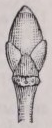
2. Growing at the end of a branch or stem; terminating; as, a terminal bud, flower, or spike.
3. That which terminates or ends; termination; extremity.
4. Either of the ends of the conducting circuit of an electrical apparatus, as an inductorium, dynamo, or electric motor, usually provided with binding screws for the attachment of wires by which a current may be conveyed into or from the machine; a pole.
1. The act of limiting or setting bounds; the act of ending or concluding.
2. Bound; limit in space or extent; as the termination of a line.
3. End in time or existence; as the termination of the year or of life; the termination of happiness.
4. In grammar, the end or ending of a word; the syllable or letter that ends a word. Words have different terminations to express number, time and sex.
V. end, close, finish, terminate, conclude, be all over, expire, die, come to a close, draw to a close, have run its course, run out, pass away, bring to an end, put an end to, make an end of, determine, get through, achieve, stop, shut up shop, hang up one's fiddle
Adj. ending, final, terminal, definitive, crowning, last, ultimate, hindermost, rear, caudal, vergent, conterminate, conterminous, conterminable, ended, at an end, settled, decided, over, played out, set at rest, conclusive, penultimate, last but one, last but two, &c. unbegun, uncommenced, fresh
Adv. finally, in fine, at the last, once for all
Phr. "as high as heaven and as deep as hell", deficit omne quod nascitur, en toute chose il faut considerer la fin, finem respice, ultimus romanorum
N. time, duration, period, term, stage, space, span, spell, season, the whole time, the whole period, space-time, course, snap, intermediate time, while, interim, interval, pendency, intervention, intermission, intermittence, interregnum, interlude, respite, era, epoch, time of life, age, year, date, decade, moment, &c. (instant) 113, glass of time, sands of time, march of time, father time, ravages of time, arrow of time, river of time, whirligig of time, noiseless foot of time, scythe
V. continue last endure, go on, remain, persist, intervene, elapse, hold out, take time, take up time, fill time, occupy time, pass time, pass away time, spend time, while away time, consume time, talk against time, tide over, use time, employ time, seize an opportunity, waste time
Adj. continuing, on foot, permanent
Adv. while, whilst, during, pending, during the time, during the interval, in the course of, at that point, at that point in time, for the time being, day by day, in the time of, when, meantime, meanwhile, in the meantime, in the interim, ad interim, pendente lite, de die in diem, from day to day, from hour to hour &c, hourly, always, for a time, for a season, till, until, up to, yet, as far as, by that time, so far, hereunto, heretofore, prior to this, up to this point, the whole time, all the time, all along, throughout, for good &c. (diuturnity) 110, hereupon, thereupon, whereupon, then, anno domini, a, d, ante christum, a, c, before christ, b, c, anno urbis conditae, a, u, c, anno regni, a, r, once upon a time, one fine morning, one fine day, one day, once
Phr. time flies, tempus fugit, time runs out, time runs against, race against time, racing the clock, time marches on, time is of the essence, "time and tide wait for no man", ad calendas groecas, "panting time toileth after him in vain", "'gainst the tooth of time and razure of oblivion", "rich with the spoils of time", tempus edax rerum, "the long hours come and go", "the time is out of joint", "time rolls his ceaseless course", "time the foe of man's dominion", "time wasted is existence, used is life", truditur dies die, volat hora per orbem, carpe diem
V. name, call, term, denominate designate, style, entitle, clepe, dub, christen, baptize, characterize, specify, define, distinguish by the name of, label, be -called, take the name of, bean the name of, go by the name of, be known by the name of, go under the name of, pass under the name of, rejoice in the name of
N. property, possession, suum cuique, meum et tuum, ownership, proprietorship, lordship, seignority, empire, interest, stake, estate, right, title, claim, demand, holding, tenure, vested interest, contingent interest, beneficial interest, equitable interest, use, trust, benefit, legal estate, equitable estate, seizin, seisin, absolute interest, paramount estate, freehold, fee tail, fee simple, estate in fee, estate in tail, estate tail, estate in tail male, estate in tail female, estate in tail general, limitation, term, lease, settlement, strict settlement, particular estate, estate for life, estate for years, estate pur autre vie, remainder, reversion, expectancy, possibility, dower, dowry, jointure, appanage, inheritance, heritage, patrimony, alimony, legacy, falcidian law, paternal estate, thirds, assets, belongings, means, resources, circumstances, wealth, money, what one is worth, what one will cut up for, estate and effects, landed property, landed real estate property, realty, land, lands, tenements, hereditaments, corporeal hereditaments, incorporeal hereditaments, acres, ground, acquest, messuage, toft, territory, state, kingdom, principality, realm, empire, protectorate, sphere of influence, manor, honor, domain, demesne, farm, plantation, hacienda, allodium, fief, fieff, feoff, feud, zemindary, dependency, arado, merestead, ranch, free lease-holds, copy lease-holds, folkland, chattels real, fixtures, plant, heirloom, easement, right of common, right of user, personal property, personal estate, personal effects, personalty, chattels, goods, effects, movables, stock, stock in trade, things, traps, rattletraps, paraphernalia, equipage, parcels, appurtenances, impedimenta, luggage, baggage, bag and baggage, pelf, cargo, lading, rent roll, income, maul and wedges, patent, copyright, chose in action, credit, debt
V. possess, be the possessor of, own, have for one's own, have for one's very own, come in for, inherit, savor of the realty, be one's property, belong to, appertain to, pertain to
Adv. to one's credit, to one's account, to the good, to one and his heirs for ever, to one and the heirs of his body, to one and his heirs and assigns, to one and his executors administrators and assigns
And Abraham hearkened unto Ephron; and Abraham weighed to Ephron the silver, which he had named in the audience of the sons of Heth, four hundred shekels of silver, current money with the merchant.
Abraham agreed to Ephron’s terms and weighed out for him the price he had named in the hearing of the Hittites: four hundred shekels of silver, according to the standard of the merchants.
According to the sentence of the law which they shall teach thee, and according to the judgment which they shall tell thee, thou shalt do: thou shalt not decline from the sentence which they shall shew thee, to the right hand, nor to the left.
according to the terms of law they give and the verdict they proclaim. Do not turn aside to the right or to the left from the decision they declare to you.
ThenJephthah went with the elders of Gilead, and the people made him head and captain over them: and Jephthah uttered all his words before the LORD in Mizpeh.
So Jephthah went with the elders of Gilead, and the people made him their leader and commander. And Jephthah repeated all his terms in the presence of the LORD at Mizpah.
Thou shalt no more be termed Forsaken; neither shall thy land any more be termed Desolate: but thou shalt be called Hephzi-bah, and thy land Beulah: for the LORD delighteth in thee, and thy land shall be married.
No longer will you be called Forsaken, nor your landnamedDesolate; but you will be called Hephzibah, and your land Beulah; for the LORD will take delight in you, and your land will be His bride.
And I will give the men that have transgressed my covenant, which have not performed the words of the covenant which they had made before me, when they cut the calf in twain, and passed between the parts thereof,
And those who have transgressed My covenant and have not fulfilled the terms of the covenant they made before Me, I will treat like the calf they cut in two in order to pass between its pieces.
But if our unrighteousness commend the righteousness of God, what shall we say? Is God unrighteous who taketh vengeance? (I speak as a man)
But if our unrighteousness highlights the righteousness of God, what shall we say? That God is unjust to inflict His wrath on us? I am speaking in human terms.
I speak after the manner of men because of the infirmity of your flesh: for as ye have yielded your members servants to uncleanness and to iniquity unto iniquity; even so now yield your members servants to righteousness unto holiness.
I am speaking in human terms because of the weakness of your flesh. Just as you used to offer the parts of your body in slavery to impurity and to escalating wickedness, so now offer them in slavery to righteousness leading to holiness.
Until the land had enjoyed her sabbaths, the whole time of her desolation shall she rest, until the full term of seventy years.
This site uses cookies to remember your display preferences (search sources and editions, Bible version, auto-link, images, light/dark theme). No personal data whatsoever is collected. Privacy Policy