
3. Why so pale and wan fond lover?
Word of the Day: Catachrestical
Won.
To grow wan; to become pale or sickly in looks.
Wan-chow-fu
Encyclopedia Britannica
WAN-CHOW-FU, a prefectural city in the Chinese province of Chĕ-keang, and one of the ports opened by treaty to foreign trade, is situated (28° 1' N. lat. and 120° 31' E. long.) on the south bank of the river Gow, about 20 miles from the sea. The site is said to have been chosen by Kwo P’oh (276-324 a.d.), a celebrated antiquary who recognized in the adjacent mountain peaks a correspondence with the stars in the constellation of the Great Bear, from which circumstance the town was first known as the Tow, or Great Bear, city. Subsequently, however, the appearance in its vicinity of a white deer carrying a flower in its mouth was deemed to be so favourable an omen as to more than justify the change of its name to Lull, or Deer, city. Its present name, which signifies the “mild district,” and which is correctly descriptive of the climate, though not of the inhabitants, was given to it during the last dynasty (1368-1644). The walls, which were built in the 10th century, are about 6 miles in circumference, 35 feet in height, and 12 feet broad at the top. The gates, seven in number, were put up in 1598. Wăn-chow is about 1563 miles by road from Peking and 600 from Hankow. The country in the neighbourhood of the town is hilly and pretty, while opposite the north-west gate “Conquest Island” forms a picturesque object. The island is, however, more beautiful than healthy. The port, which was opened to foreign trade in 1876, has not justified the great expectations which were formed of its probable success as a commercial centre....
In 1886 the imports (excluding treasure) were valued at £118,710, and the exports at £25,751; 44 vessels entered, of which one only was British, and 45 cleared. A noticeable feature in the year’s return is the falling off in the quantity of opium imported,—only 25 piculs, 62 per cent. less than the average of the previous three years. The principal item of import is cotton goods, which showed an increase of 12 per cent. over the same average. Kerosene oil, matches, window-glass, sugar, dates, and old iron are among the chief goods imported; while among the exports kittysols or umbrellas, timber, oranges, and tea figure prominently.
9th ed. Encyclopædia Britannica, vol. 24, p. 342
[394 words — estimated reading time: 3 minutes]
[394 words — estimated reading time: 3 minutes]
1. A small stick; a rod. If a child runs away, a few strokes of a wand will bring him back.
2. A staff of authority; as a silver wand
3. A rod used by conjurers or diviners.
1. A small stick; a rod; a verge.
2. A staff of authority.
3. A rod used by conjurers, diviners, magicians, etc.
1. To rove; to ramble here and there without any certain course or object in view; as, to wander over the fields; to wander about the town, or about the country. Men may sometimes wander for amusement or exercise. Persons sometimes wander because they have no home and are wretched, and sometimes because they have no occupation.
2. They wandered about in sheep-skins and goat-skins. Hebrews 11:37 .
3. He wandereth abroad for bread. Job 15:23 .
4. He was wandering in the field. Genesis 37:1 .
5. To leave home; to depart; to migrate.
6. When God caused me to wander from my fathers house-- Genesis 20:13 .
7. To depart from the subject in discussion; as, to wander from the point.
9. O let me not wander from they commandments. Psalms 119:10 .
10. To be delirious; not to be under the guidance of reason; as, the mind wanders.
1. To travel over without a certain course.
2. Wandring many a famous realm. [Elliptical.]
1. To ramble here and there without any certain course or with no definite object in view; to range about; to stroll; to rove; as, to wander over the fields.
One who wanders; a rambler; one who roves; hence, one who deviates from duty.
1. Peregrination; a traveling without a settled course.
3. A roving of the mind or thoughts from the point or business in which one ought to be engaged.
4. The roving of the mind in a dream.
6. Uncertainty; want of being fixed.
Wandering jew
Encyclopedia Britannica
WHATEVER definition of the word “army” (see Army) be adopted, the fact that it is a body of men organized for the effective employment of arms is the essence of it. Hence the nature of the most effective organization and employment of armies in active warfare at any given period has always turned upon the nature of the arms in use at the time. The laboratory and workshops of science in recent years have in fact produced and forced on a change in the nature of fighting, of a kind which it is safe to say never entered the mind of any one of the inventors whose skill made it necessary. And yet the change is of such a kind that, though due to the development of very material things, as, for instance, the greater rapidity of fire, the greater range of weapons, and the like, it is much more remarkable in its effect on the spirit of armies and the nature of fighting discipline than in almost any other aspect....
In all periods of war, under all conditions of arms, the moral forces which affect armies have been the great determining factors of victory and defeat. From a date much earlier than the day when Caesar, defeated at Dyrrachium, gained the empire of the world by so acting as to restore the morale of his army before the great contest at Pharsalia, it has been on this nice feeling of the moral pulse of armies that the skill of great commanders has chiefly depended. In that respect there is nothing new in the modern conditions of war. But the sequence by which the development of arms has changed the moral pivot of military power in our own times is so remarkable that it deserves to receive a somewhat careful historical statement at the outset of this article. Unless it is understood the lessons of modern fighting cannot be learnt; for there has not yet occurred a modern war in which the principles of modern fighting, as they are now universally understood among the most thoughtful soldiers of all nations, have been deliberately applied to action, after those principles have been realized and worked out in practice during peace time. And yet it is among the first of these principles that for success in our days careful peace practice, adapted to the actual conditions of fighting, must precede the entry on a campaign. When letters from the seat of war in 1866 brought home to Europe the effect which the breech-loader was producing in determining the contest, the first impression was that of simple consternation. It was supposed that Prussia, by the possession of that weapon alone, had made herself mistress of Europe. Gradually it came to be known that the secret of Prussian power lay, not in her breech-loader alone, but at least as much in her perfect organization. In 1870 her scarcely less startling successes tended for a time to produce an effect almost as blinding upon the eyes of those who watched them. There was a disposition to assume that whatever had been done in the war by the Prussians was, by the deliberate choice and determination of the best and most successful soldiers in Europe, shown to be the best thing that could be done under the circumstances. The exhaustive statement of facts contained in the Prussian official narrative and in the regimental histories, and the evidence of eye-witnesses innumerable, have, however, gradually made it evident that, valuable as the experiences of the 1870 campaign unquestionably are for soldiers of all nations, the Γrussian successes were certainly not due to the carrying out of what are now regarded by the best Prussian officers themselves as the principles of action which ought to determine practice in future wars. But during the course of the war itself the Prussian army, prepared by the soundest peace training to adapt itself to whatever conditions it met with, was continually and progressively modifying its practice under the experience of conditions which it had been impossible fully to anticipate.
It is upon the surface of the facts that the extreme loss of life suddenly occasioned at particular points by the effectiveness of the fire of the new weapons, both of artillery and infantry, compelled the gradual abandonment of close formations of men, massed together in dense columns or even in closed lines, and the gradual adoption of what are known as “skirmishing” or open order formations. In other words, when the French fire fell upon the solid columns of the advancing Prussians, the column instinctively scattered. The officers and non-commissioned officers were often lost in very large proportion, and during the actual course of the fighting, without any preconceived idea on the subject, a method of attack was adopted which proceeded by successive swarms of dispersed men taking advantage of such shelter as the ground permitted. The noise of the rapid breech-loader, and the crash of an artillery able to fire much more frequently than in former campaigns, and, moreover, accumulated in much greater masses than had ever been the case before, made words of command inaudible at a distance. Hence it came to pass that small parties of men, once launched into an infantry fight, were virtually beyond all control on the part of superior officers. All that these could do to influence the action was to determine the direction and object of the first attack of each fraction, and then to furnish it with fresh supports at the proper moment, sending them forward in such a way as to cause their blows to be delivered in the most telling direction.
Here then was the great change which had come about, produced, as has been said, by the efficiency of the new weapons, but rendered possible by those changes in the characteristics of the men of whom armies are composed, which had arisen from altogether different circumstances, such as the high educational standard of the Prussian nation, and the introduction into the ranks of highly cultivated classes. The army, at all events in battle, was and could be no longer a mere mechanical weapon in the hands of its commander. If this latter could not infuse into it a spirit of hearty willing co-operation and intelligent subordination, chaos and chaos only must ensue. For the very essence of the old forms of fighting in battle, as they had been inherited from the time of Frederick the Great, and, though modified by Napoleon, had yet in this respect remained the same, was that battle movements were led up to and prepared for by an elaborate system of drill, so arranged that by the issue of predetermined words of command the officer leading at least a division of an army could decide precisely the formation it was to assume and the movements it was to make in battle. Now, though no doubt many of the preliminary movements could still be accomplished in accordance with the old drill, yet, for at least the very mile and a half over which the issue had actually to be fought out, drill had vanished, as far at all events as the infantry were concerned. All effective movements and co-operation depended on perfect organization, and on a training which made every officer and every man know almost instinctively what to do and what decisions to form as each emergency arose. The Germans had in the largest sense perfected their organization, not merely in its form, itself a matter of no small importance, but in its preparedness for battle action. This had been done chiefly by keeping and training together much larger units of command than had ever been organically worked together before. By “organic working” we specifically mean such work as leads each man to know by long habit what the part assigned to him is, and how to contribute his share in bringing about the result desired by his general. In the article Army will be found an exhaustive statement of the successive forms which army organization has assumed at different periods of history. With regard to these forms, representing as they do the condition of an army in a state of rest, suffice it to say that the ancient proverb about new wine and old bottles applies perfectly. It would not have been possible for the Germans to have secured a complete correspondence of working, a unity amid great diversity, without having devised a form of organization which assigned to every man an adequate share of work and of responsibility, by bringing a limited number of men at each step under the authority of one, those so placed in authority being themselves at the next stage, in limited number, also under one man’s authority. But the very idea of organization implies more than this mere perfection of form. It implies also, as animating the whole body, a spirit developed by careful training, a mutual reliance on the certainty of the adherence of all to known principles of action.
The essential change, then, which appears to have come over modern war may be stated thus. Under the conditions of the past, the general in command of an army relied upon its perfection in drill and in formal manoeuvres for enabling him to direct it with success against the weak points of an adversary. Now he must depend instead upon the perfection of its organization and of a training adapted to make each man ready when required to apply sound principles in every emergency, and, above all, as soon as possible voluntarily to place himself under authority again so as to secure unity of action. To summarize this statement in a single sentence, and employing the word organization in the larger sense explained above, the change consists in the substitution of organization for drill as a means of battle-action. In other words, a living organism must take the place of a mechanical instrument.
It will be seen at once that the perfection aimed at, involving as it does not merely a mechanical learning, by rote and drill-sergeant, of required changes of position, is of a much higher order both for the individual man and for the whole body than was the case under the old conditions. On the other hand, it is not possible that the practical performance should so nearly approach the ideal as happened formerly. Hence, great as was the excellence of the Prussian army in 1870 as a whole, yet the more thoroughly that campaign is studied the more manifest will be the mistakes in point of details committed by subordinate actors. It is in the nature of things impossible that this should ever be otherwise under the conditions of war which are now established. When the choice of action in detail is left to so many hands the possibilities of error are multiplied indefinitely.
It is clear from what has been said that a change of the most complete character has come over the very principle by which armies are held together. It is by no means surprising, therefore, that a few soldiers should have arrived at the conclusion that, because of the importance of this change, all past experience of fighting has ceased to be of any importance to him who would understand the principles of war as they exist to-day. On the other hand, others of far higher authority have declared it to be certain that change has only affected that branch of the art of war which is called tactics, and that the other branch, or strategy, is in no way affected. We are not able to subscribe absolutely to either of these statements. But before stating our views it will be convenient to define the terms employed. By strategy we understand “the art of rightly directing the masses of troops towards the object of the campaign.” Of modern tactics no better definition perhaps has ever been given than that of Sir Edward Hamley. After defining the limits of either subject thus—“the theatre of war is the province of strategy, the field of battle is the province of tactics,” he describes the manoeuvres of a modern battle-field as “the quick orderly change of highly trained and flexible masses of men from one kind of formation to another, or their transference from point to point of a battle-field for purposes which become suddenly feasible in the changing course of action.”
It is necessary, in discussing the application of past experience to modern war, to make intelligible the distinction between these two fields of experience, because undoubtedly the changes wrought by time affect the two great parts of the art of war in very different ways and in a very different degree. But in fact there are many parts of the study of tactics which are not strictly included within its province when that is limited to the field of battle. The distinction between the two provinces having been understood as a general idea, it will be seen at once how it has happened that in the varied incidents of warfare it has become necessary to apply the terms “tactics” and “strategy” to other matters. For no army can determine for itself or know beforehand absolutely what will be a field or a day of battle. Hence it is necessary throughout almost the entire course of a campaign to take those precautions and to take into account those considerations which apply properly to the period of actual combat. Thus, though an enemy may in fact be many marches distant, it is necessary to provide against his possible attack, by having some troops always on the alert whilst others are marching with all the ease and security which the protection of these procures for them. It is necessary also in a similar manner to have protection for the repose of an army, and to detail troops for this purpose. All the questions, then, which concern the fixing of “advanced guards” and “rear guards,” which protect the front and rear of an advancing army, and the “outposts,” which protect an army at rest, are usually included in the study of tactics, though in many instances they may have nothing to do with a battle-field. But again, though the campaign —the large field of war which concerns the marches and movements of armies striving against one another to obtain positions of vantage for the actual combat—is the province of strategy, yet it may well happen that on the actual battle-field it is necessary to take account, not only of those circumstances which will help to secure victory in the fight, but of the effect which victory or defeat will have upon the campaign. All these considerations we necessarily regard as “strategical,” even though they occupy our minds on a battle-field.
For it must be emphatically asserted that there does not exist, never has existed, and never, except by pedants, of whom the most careful students of war are more impatient than other soldiers, has there ever been supposed to exist, an “art of war” which was something other than the methodic study of military history. Those who have most assisted in making the study sufficiently methodic to enable it to be of practical profit in their own profession to soldiers for future use, or to historical students in watching the play of mind between great commanders, have been invariably the most emphatic in denouncing all attempts to formulate a systematic series of “rules of war.” Among generals, Mack, the unfortunate Austrian who surrendered at Ulm to Napoleon, and in our own time Count Palikao, who had made himself the laughingstock of the English staff during the advance on Peking, and who was afterwards responsible for bringing about the catastrophe of Sedan, have been the great sticklers for the “rules of war.” At least once Count Palikao, in China, came without his sword to look on at the success of operations which he had denounced as “contrary to every maxim of war.” On the other hand, Sir Edward Hamley, who has done more than any other Englishman to make known to English officers the value of a methodical treatment of the study of campaigns, has most vigorously denounced such talk as this.
“Nothing is more common,” he writes “than to find in writings on military matters reference to the ‘rules of war,’ and assertions such as that some general ‘violated every principle of war,’ or that some other general owed his success to ‘ knowing when to dispense with the rules of war.’ It would be difficult to say what these rules are, or in what code they are embodied; and an inquirer, who is somewhat puzzled, perhaps, to understand how the highest proficiency can be displayed in a science by defiance of its principles, had better resolve to base his own conclusions upon fact and reason alone, when he will probably discover that such criticisms have only very vague ideas for their foundation.”
Jomini, a very eminent authority in his day, though not a little disposed to somewhat exact definition, and perhaps sometimes to over-pedantic statement, has with very little difference expressed the same view. Clausewitz, probably the most profound of all military students, has even more emphatically declared that the theory of the art of war is valuable, just in so far as it assists to guide a man through the vast labyrinth of military experience, and to prepare his mind to be ready to act for itself under the emergencies of actual war; but, he adds, “it must renounce all pretension to accompany him on to the field of battle.” Both he and Jomini agree in asserting that it must have become with him an instinct, almost absorbed into his blood, to be of any value to him. “The wise teacher,” says Clausewitz, “restricts himself to the work of directing and assisting the mental development of his pupil, and does not try to keep him in leading-strings throughout his career.” Thus from all countries those who have come to be accepted as authorities on the study of war, the very men who, if any, ought to be tempted to magnify their office, have cried aloud against the abuse of such study. It is not from them, but from non-military writers like Macaulay, that the notion of some formal code of the rules of war has been derived. Macaulay’s expression about Peterborough winning battles by violating the rules of war cannot be characterized otherwise than as worthless rhetoric, not only unsupported, but absolutely contradicted by fact. So thoroughly reasoned and so entirely worked out on a principle were Peterborough’s campaigns that they have in our own day served to guide one of the most brilliant of English soldiers in the conduct of one of his most successful wars. The campaigns by which Colonel Gordon saved China were largely assisted in their conception by his careful study of Peterborough’s generalship in Spain.
On the other hand, it is not from writers on war, but from the greatest generals, that the most emphatic statements have come as to the paramount importance to a soldier of the careful study of past campaigns. The classical instance of the most authoritative dictum on this subject is surrounded by circumstances of dramatic interest. Napoleon in 1813, sitting after dinner surrounded by his marshals, between the first and the second battle of Dresden, was drawn to speak on this subject by Marmont, the one who, in Napoleon’s own judgment and that of others, had himself the most complete knowledge of war as an art. Marmont, observing how difficult it was, during the continued strain of war itself, to improve in its practice, maintaining that rather in peace than in war could war be best studied, said to Napoleon that he thought that Napoleon’s own first campaign in Italy was the most brilliant in its conception of any that he had ever fought; so that sixteen years of high command had hardly made his knowledge of war as an art more perfect. Napoleon at once admitted the truth of this, and in reply said, “Yes; Turenne was the only one of us all who constantly improved in the management of his campaigns as he advanced in years.” This reply is especially remarkable, because Napoleon was not only the greatest captain of his own age, but he was by far the most careful student that the world has known of the great generals of all ages. It is an unanswerable assertion that only by study of the past experience of war has any great soldier ever prepared himself for commanding armies.
It must, however, be always a question how far the circumstances of our own time have so changed as to limit the period within which it is worth while to devote very careful study to the wars of the past. On the one hand, the greater number of officers in any army will never find time exhaustively to study all the great campaigns...
9th ed. Encyclopædia Britannica, vol. 24, p. 343
[32,300 words — estimated reading time: 3.1 hours]
[32,300 words — estimated reading time: 3.1 hours]
In a wandering or unsteady manner.
In a wandering manner.
The act of wandering, or roaming.
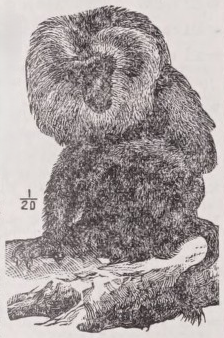
1. Decrease of the illuminated part of the moon, to the eye of a spectator.
2. Decline; failure; diminution; decrease; declension.
3. You are cast upon an age in which the church is in its wane
1. To be diminished; to decrease; particularly applied to the illuminated part of the moon. WE say, the moon wanes, that is, the visible or illuminated part decreases.
2. Waning moons their settled periods keep.
3. To decline; to fail; to sink; as the waning age of life.
4. You saw but sorrow in its waning form.
5. Land and trade ever will wax and wane together.
To cause to decrease.
1. The decrease of the illuminated part of the moon to the eye of a spectator.
2. Decline; failure; diminution; decrease; declension.
3. An inequality in a board.
1. To be diminished; to decrease; -- contrasted with wax, and especially applied to the illuminated part of the moon.
2. To decline; to fail; to sink.
To cause to decrease.
A sharp or uneven edge on a board that is cut from a log not perfectly squared, or that is made in the process of squaring. See Wany, a.
1. The jaw, jaw-bone or cheek bone. [Little used or vulgar.]
A jaw-tooth.
Achromatism Roget’s Thesaurus §429
N. achromatism, decoloration, discoloration, pallor, pallidness, pallidity, paleness, etiolation, neutral tint, monochrome, black and white
V. lose color, fade, fly, go, become colorless, turn pale, pale, deprive of color, decolorize, bleach, tarnish, achromatize, blanch, etiolate, wash out, tone down
Adj. uncolored &c. (see color ), colorless, achromatic, aplanatic, etiolate, etiolated, hueless, pale, pallid, palefaced, tallow-faced, faint, dull, cold, muddy, leaden, dun, wan, sallow, dead, dingy, ashy, ashen, ghastly, cadaverous, glassy, lackluster, discolored, light-colored, fair, blond, white, pale as death, pale as ashes, pale as a witch, pale as a ghost, pale as a corpse, white as a corpse
Dejection Roget’s Thesaurus §837
N. dejection, dejectedness, depression, prosternation|, lowness of spirits, depression of spirits, weight on the spirits, oppression on the spirits, damp on the spirits, low spirits, bad spirits, drooping spirits, depressed spirits, heart sinking, heaviness of heart, failure of heart, heaviness, infestivity, gloom, weariness, taedium vitae, disgust of life, mal du pays, anhedonia, melancholy, sadness, il penseroso, melancholia, dismals, blues, lachrymals, mumps, dumps, blue devils, doldrums, vapors, megrims, spleen, horrors, hypochondriasis, pessimism, la maladie sans maladie, despondency, slough of despond, disconsolateness, hope deferred, blank despondency, voiceless woe, prostration of soul, broken heart, despair, cave of despair, cave of trophonius demureness, gravity, solemnity, long face, grave face, hypochondriac, seek sorrow, self-tormentor, heautontimorumenos, malade imaginaire, medecin tant pis, croaker, pessimist, mope, mopus, affliction, sorry sight, memento mori, damper, wet blanket, job's comforter
V. be dejected, grieve, mourn, take on, give way, lose heart, despond, droop, sink, lower, look downcast, frown, pout, hang down the head, pull a long face, make a long face, laugh on the wrong side of the mouth, grin a ghastly smile, look blue, look like a drowned man, lay to heart, take to heart, mope, brood over, fret, sulk, pine, pine away, yearn, repine, despair, refrain from laughter, keep one's countenance, be grave, look grave, repress a smile, depress, discourage, dishearten, dispirit, damp, dull, deject, lower, sink, dash, knock down, unman, prostrate, break one's heart, frown upon, cast a gloom, cast a shade on, sadden, damp one's hopes, dash one's hopes, wither one's hopes, weigh on the mind, lie heavy on the mind, prey on the mind, weigh on the spirits, lie heavy on the spirits, prey on the spirits, damp the spirits, depress the spirits
Adj. cheerless, joyless, spiritless, uncheerful, uncheery, unlively, unhappy, melancholy, dismal, somber, dark, gloomy, triste, clouded, murky, lowering, frowning, lugubrious, funereal, mournful, lamentable, dreadful, dreary, flat, dull, dull as a beetle, dull as ditchwater, depressing, "melancholy as a gib cat", oppressed with melancholy, a prey to melancholy, downcast, downhearted, down in the mouth, down in one's luck, heavy-hearted, in the dumps, down in the dumps, in the suds, in the sulks, in the doldrums, in doleful dumps, in bad humor, sullen, mumpish, dumpish, mopish, moping, moody, glum, sulky, out of sorts, out of humor, out of heart, out of spirits, ill at ease, low spirited, in low spirits, a cup too low, weary, discouraged, disheartened, desponding, chapfallen, chopfallen, jaw fallen, crest fallen, sad, pensive, penseroso, tristful, dolesome, doleful, woebegone, lacrymose, lachrymose, in tears, melancholic, hypped, hypochondriacal, bilious, jaundiced, atrabilious, saturnine, splenetic, lackadaisical, serious, sedate, staid, stayed, grave as a judge, grave as an undertaker, grave as a mustard pot, sober, sober as a judge, solemn, demure, grim, grim-faced, grim-visaged, rueful, wan, long-faced, disconsolate, unconsolable, inconsolable, forlorn, comfortless, desolate, desole, sick at heart, soul sick, heart sick, au desespoir, in despair, lost, overcome, broken down, borne down, bowed down, heartstricken, cut up, dashed, sunk, unnerved, unmanned, down fallen, downtrodden, broken-hearted, careworn
Adv. with a long face, with tears in one's eyes, sadly
Phr. the countenance falling, the heart failing, the heart sinking within one, "a plague of sighing and grief", "thick-ey'd musing and curs'd melancholy", "the sickening pang of hope deferred"
King James Bible KJV Bible
Berean Standard Bible BSB Bible
114 KJV and 242 BSB verses contain “WAN” — showing the first 20. Show all 332 verses (searchable)
Until thy brother’s anger turn away from thee, and he forget that which thou hast done to him: then I will send, and fetch thee from thence: why should I be deprived also of you both in one day?
until your brother’s rage against you wanes and he forgets what you have done to him. Then I will send for you and bring you back from there. Why should I lose both of you in one day?”
And she said unto her, Is it a small matter that thou hast taken my husband? and wouldest thou take away my son’s mandrakes also? And Rachel said, Therefore he shall lie with thee to night for thy son’s mandrakes.
And a certain man found him, and, behold, he was wandering in the field: and the man asked him, saying, What seekest thou?
a man found him wandering in the field and asked, “What are you looking for?”
And Jacob their father said unto them, Me have ye bereaved of my children: Joseph is not, and Simeon is not, and ye will take Benjamin away: all these things are against me.
Their father Jacob said to them, “You have deprived me of my sons. Joseph is gone and Simeon is no more. Now you want to take Benjamin. Everything is going against me!”
And when a stranger shall sojourn with thee, and will keep the passover to the LORD, let all his males be circumcised, and then let him come near and keep it; and he shall be as one that is born in the land: for no uncircumcised person shall eat thereof.
If a foreigner resides with you and wants to celebrate the LORD’s Passover, all the males in the household must be circumcised; then he may come near to celebrate it, and he shall be like a native of the land. But no uncircumcised man may eat of it.
For Pharaoh will say of the children of Israel, They are entangled in the land, the wilderness hath shut them in.
For Pharaoh will say of the Israelites, ‘They are wandering the land in confusion; the wilderness has boxed them in.’
And your children shall wander in the wilderness forty years, and bear your whoredoms, until your carcases be wasted in the wilderness.
Your children will be shepherds in the wilderness for forty years, and they will suffer for your unfaithfulness until the last of your bodies lies in the wilderness.
And if a stranger sojourn with you, or whosoever be among you in your generations, and will offer an offering made by fire, of a sweet savour unto the LORD; as ye do, so he shall do.
And for the generations to come, if a foreigner residing with you or someone else among you wants to prepare an offering made by fire as a pleasing aroma to the LORD, he is to do exactly as you do.
And the LORD’S anger was kindled against Israel, and he made them wander in the wilderness forty years, until all the generation, that had done evil in the sight of the LORD, was consumed.
The anger of the LORD burned against Israel, and He made them wander in the wilderness forty years, until the whole generation who had done evil in His sight was gone.
And they came near unto him, and said, We will build sheepfolds here for our cattle, and cities for our little ones:
Then the Gadites and Reubenites approached Moses and said, “We want to build sheepfolds here for our livestock and cities for our little ones.
Then we turned, and took our journey into the wilderness by the way of the Red sea, as the LORD spake unto me: and we compassed mount Seir many days.
Then we turned back and headed for the wilderness by way of the Red Sea, as the LORD had instructed me, and for many days we wandered around Mount Seir.