1. A thick, viscid, tenacious substance, collected by bees, or excreted from their bodies, and employed in the construction of their cells; usually called bees wax Its native color is yellow, but it is bleached for candles, etc.
1. preterit tense waxed.; participle passive waxed or waxen. [G., Latin , Gr.]
2. To increase in size; to grow; to become larger; as the waxing and the waning moon.
3. To pass from one state to another; to become; as, to wax strong; to wax warm or cold; to wax feeble; to wax hot; to wax old; to wax worse and worse.
1. A fatty, solid substance, produced by bees, and employed by them in the construction of their comb; -- usually called beeswax. It is first excreted, from a row of pouches along their sides, in the form of scales, which, being masticated and mixed with saliva, become whitened and tenacious. Its natural color is pale or dull yellow.
2. Hence, any substance resembling beeswax in consistency or appearance.
1. To increase in size; to grow bigger; to become larger or fuller; -- opposed to wane.
2. To pass from one state to another; to become; to grow; as, to wax strong; to wax warmer or colder; to wax feeble; to wax old; to wax worse and worse.
WAX is a solid fatty substance of animal and vegetable origin, allied both in sources and constitution to the fixed oils and fats. From fats or solid oils wax differs principally in its greater hardness and higher melting-point; but in the strictly chemical sense, while oils and fats are glycerides, a true wax contains no glycerin, but is a combination of fatty acids with certain solid monatomic alcohols. Of wax from animal sources there are in commerce beeswax, which forms wax par excellence, Chinese insect wax, and spermaceti. The more important vegetable waxes are Japanese wax, myrtle-berry wax, carnauba wax, and palm wax.
Beeswax is secreted by all honey bees, and by them formed into the cell walls, &c., of their comb. It is separated by draining the honey, melting the drained comb in boiling water, and collecting the wax which solidifies on the top as the water cools. In this state it is formed into cakes of raw or yellow wax, good examples of which are of a light yellow colour, translucent, with a faint pleasant odour of honey. At ordinary temperatures it breaks with a granular fracture; and in thin flakes or pellets it softens with the heat of the hand, and can be kneaded between the fingers. Its specific gravity is 0⋅960; it melts at about 62° C., and solidifies just under its melting-point without evolution of heat. It is soluble in hot ether, essential and fixed oils, benzol, bisulphide of carbon, and chloroform, and to some extent in boiling alcohol, but it is unaffected by water and cold alcohol. In chemical constitution it contains 10 per cent. of cerin, an ether of cerotic acid and ceryl alcohol, 27 ¾ 3 2 1 0, and 90 per
10 r , 31 - π - > O. Yellow wax, on account of the colouring
½0 il 61 ‘
matter and other contaminations it contains, is unfit for many uses. The chief of these is candle-making. To remove soluble matter it is first melted over boiling water; and for bleaching it is formed into thin shreds and strips so as to expose the greatest possible surface. So prepared, it is spread out and frequently watered and turned in the direct sunlight, a slow but effective process. To hasten the bleaching action the wax may be mixed with about one-sixth of pure spirit of turpentine; and this preparation, on exposure, by its copious production of ozone, effects in four or five days a bleaching which otherwise would occupy three or four weeks. When the bleaching is complete all trace of turpentine oil will have disappeared. Bleaching may also be effected by chlorine, permanganate of potash, and other chemicals, but these injuriously affect the wax, in some cases forming substitution products which cannot be removed, and which in burning give off deleterious fumes. Wax is obtained in all parts of the world where there is vegetation sufficient to support bees; but it is most largely forthcoming from tropical and subtropical regions. It is subject to extensive adulteration from powdered mineral substances, flour, cheaper waxes, paraffin, &c. Its uses are multifarious; but it is most largely consumed in making candles for the religious services of Roman Catholic and Orthodox Greek Christians, and for wax figures and models (see Wax Figures). Chinese Insect Wax, or Be La, is a secretion deposited by an insect, Coccus ceriferus, Fabr., in the twigs of a species of ash, Fraxinus chinensis, Roxb. The wax is, in its origin and the functions it performs in the insect economy, closely related to the lac produced by the allied species of Coccus (see Lac, vol. xiv. p. 181). When separated from the twigs which it encrusts, and purified, it is a hard translucent white crystalline body, similar to spermaceti. It melts at from 82° to 86° C., and in composition consists of cerin, one of the constituents of beeswax. It is little known in European commerce, but forms a highly important article of trade in China and Japan, where it is largely used for candlemaking and for medicinal purposes.
Japanese Wax is a hard wax-like fat which now forms an important export from Japan, principally to London. It is obtained from the small stone fruits of several species of Rhus cultivated in Japan. For the extraction of the wax, which is present to the extent of about 20 per cent., the fruits are ground and treated by either of three methods—(1) heating and pressure, (2) boiling in water, and (3) maceration with ether or bisulphide of carbon. The wax is subsequently bleached, and as it comes into the market consists of yellowish hard cakes, covered often with a fine white powderyefflorescence. It has a resinous unpleasant rancid odour. It melts at about 54° C., and solidifies from melting at 41° C. with evolution of heat which raises the temperature about 5° C. Japanese wax becomes translucent about 12° C. under its melting-point, and when it has newly solidified from melting it can again be liquefied at 42° C., from which the melting-point rises by slow degrees with the lapse of time till it reaches the normal. It is not a true wax, but consists principally of the glyceridepalmitin with small proportions of stearin and disseminated crystals of free palmitic acid. It is largely mixed with and used as a substitute for beeswax, excepting for uses where its rancidity renders it objectionable.
Myrtle-Berry Wax is obtained from the fruit of several species of Myrica in the United States, New Granada, Venezuela, the Cape of Good Hope, and other regions. It is a hard greenish substance, with a pleasant balsamic odour. Its melting-point is about 45° C., and it consists principally of free palmitic acid with a little stearic acid and myristic acid,—a very small proportion of these being combined as glycerides. It is consumed principally in the United States in combination with beeswax for candles; and it is said the Hottentots eat it like cheese.
Carnauba Wax is an exudation on the surface of the growing leaves of the carnauba palm, Corypha cerifera, L., which flourishes in tropical South America. The wax is obtained by cutting off and drying the young leaves, from which it is then shaken as fine dust, and caked by melting either over an open fire or in boiling water. It is a true wax, consisting of ethers of myricyl alcohol and ceryl alcohol with cerotic acid, and its melting-point ranges from 85° to 90° C. Carnauba wax is a substance of considerable commercial importance in Brazil, whence large quantities are sent to Europe for use in the candle-trade and otherwise as a substitute for beeswax.
Palm-Tree Wax is an exudation formed on the stems of two South American palms, Ceroxylon andicola, H. and K., and Klop- stockia cerifera, Kars. As scraped from the trees and compacted by melting it is a mixture of resin and wax, having a melting-point as high as 102° to 105° C. The pure wax may be separated by digesting with boiling spirit, when it is obtained with a melting-point of 72° C. and a composition analogous to carnauba wax, like which it is used for candles. Palm-tree wax is little seen in European commerce.
For the compound called Sealing Wax, see vol. xxi. p. 586.
9th ed. Encyclopædia Britannica, vol. 24, p. 459 [1,252 words — estimated reading time: 8 minutes]
דונג, Psalm xxii, 14; lxviii, 2; xcvii, 5; Micah i, 4. Thus the LXX. throughout, κηρὸς, and vulgate _cera_; so there is no room to doubt but this is the true meaning of the word: and the idea of the root appears to be soft, melting, yielding, or the like, which properties are not only well known to belong to wax, but are also intimated in all the passages of Scripture in which this word occurs.
WAX FIGURES. Beeswax is possessed of properties which render it a most convenient medium for preparing figures and models, either by modelling or by casting in moulds. At ordinary temperatures it can be cut and shaped with facility; it melts to a limpid fluid at a low heat; it mixes with any colouring matter, and takes surface tints well; and its texture and consistency may be modified by the addition of earthy matters and oils or fats. When molten, it takes the minutest impressions of a mould, and it sets and hardens at such a temperature that no ordinary climatic influences affect the form it assumes, even when it is cast in thin laminae. The facilities which wax offers for modelling have been taken advantage of from the remotest times. Figures in wax of their deities were used in the funeral rites of the ancient Egyptians, and deposited among other offerings in their graves; many of these are now preserved in museums. That the Egyptians also modelled fruits can be learned from numerous allusions in early literature. Among the Greeks during their best art period, wax figures were largely used as dolls for children; statuettes of deities were modelled for votive offerings and for religious ceremonies, and wax images to which magical properties were attributed were treasured by the people. Wax figures and models held a still more important place among the ancient Romans. The masks (effigies or imagines) of ancestors, modelled in wax, were preserved by patrician families, this jus imaginum being one of the privileges of the nobles, and these masks were exposed to view on ceremonial occasions, and carried in their funeral processions. The closing days of the Saturnalia were known as Sigillaria on account of the custom of making, towards the end of the festival, presents ...of wax models of fruits and waxen statuettes which were fashioned by the Sigillarii or manufacturers of small figures in wax and other media. The practice of wax modelling can be traced through the Middle Ages, when votive offerings of wax figures were made to churches, and the memory and lineaments of monarchs and great personages were preserved by means of wax masks as in the days of Roman patricians. In these ages malice and superstition found expression in the formation of wax images of hated persons, into the bodies of which long pins were thrust, in the confident expectation that thereby deadly injury would be induced to the person represented; and this belief and practice continued till the 17th century. Indeed the superstition still holds a place in the Highlands of Scotland, where within the last few years a clay model of an enemy was found in a stream, having been placed there in the belief that, as the clay was washed away, so would the health of the hated one decline. With the renaissance of art in Italy, modelling in wax took a position of high importance, and it was practised by some of the greatest of the early masters. The bronze medallions of Pisano and the other famous medallists owe their value to the art qualities of wax models from which they were cast by the cire perdue process; and indeed all early bronzes and metal work were cast from wax models. The Tète de cire in the Wicar collection at Lille, the work of a Florentine artist of the 15th century, is one of the most lovely creations of that fertile era. From that period till towards the close of the 18th century modelling of medallion portraits and of relief groups, the latter frequently polychromatic, was in considerable vogue throughout Europe. About the end of the 18th century Flaxman executed in wax many portraits and other relief figures which JosiahWedgwood translated into pottery for his jasper ware. The modelling of the soft parts of dissections, &c., for teaching illustrations of anatomy was first practised at Florence, and is now very common. Such preparations formed part of a show at Hamburg in 1721, and from that time wax-works, on a plane lower than art, have been popular attractions. These exhibitions consist principally of images of historical or notorious personages, made up of waxen masks on lay figures in which sometimes mechanism is fitted to give motion to the figure. Such an exhibition of wax-works with mechanical motions was shown in Germany early in the 18th century, and is described by Steele in the Tatler. The most famous modern wax-work exhibition is that of Madame Tussaud in London. This collection was originated in Paris, during the Revolution, by that lady, who, having modelledCharlotte Corday, Marat, and other well-known persons of that bloody period, settled in London with her collection early in the present century.
9th ed. Encyclopædia Britannica, vol. 24, p. 460 [793 words — estimated reading time: 5 minutes]
A species of palm, the Ceroxylon andicola, a native of the Andes, the stem of which is covered with a secretion, consisting of two thirds resin and one third wax.
Any one of numerous species of finchlike birds belonging to Estrelda and allied genera, native of Asia, Africa, and Australia. The bill is large, conical, and usually red in color, resembling sealing wax. Several of the species are often kept as cage birds.
Any one of several species of small birds of the genus Ampelis, in which some of the secondary quills are usually tipped with small horny ornaments resembling red sealing wax. The Bohemian waxwing (see under Bohemian) and the cedar bird are examples. Called also waxbird.
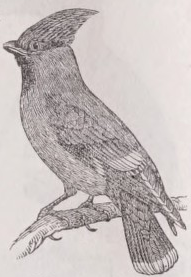
WAXWING, a bird first so-called apparently by Selby in 1825 (Illustr. Brit. Ornithology, p. 87), having been before known as the “Silk-tail” (Philos. Transactions, 1G85, p. 1161)—a literal rendering of the German Seidenschwanz— or “Chatterer ”—the prefix “German,” “Bohemian,” or “Waxen” being often also applied. Selby’s convenient name has now been generally adopted, since the bird is readily distinguished from almost all others by the curious expansion of the shaft of some of its wingfeathers at the tip into a flake that looks like scarlet sealing-wax, while its exceedingly silent habit makes the name “Chatterer” wholly inappropriate, and indeed this last arose from a misinterpretation of the specific term garrulus, meaning a Jay (from the general resemblance in colour of the two birds), and not referring to any garrulous quality. It is the Ampelis garrulus of Linnaeus and of more recent ornithologists....
The Waxwing is a bird that for many years excited vast interest. An irregular winter-visitant, sometimes in countless hordes, to the whole of the central and some parts of southern Europe, it was of old time looked upon as the harbinger of war, plague, or death, and, while its harmoniouscoloration and the grace of its form were attractive, the curiosity with which its irregular appearances were regarded was enhanced by the mystery which enshrouded its birthplace, and until the summer of 1856 defied the searching of any explorer. In that year, however, all doubt was dispelled, through the successful search in Lapland, organized by the late John Wolley, as briefly described by him to the Zoological Society (Proceedings, 1857, pp. 55, 56, pl. cxxii.). In 1858 Mr Dresser found a small settlement of the species on an island in the Baltic near Uleåborg, and with his own hands took a nest. It is now pretty evident that the Waxwing, though doubtless breeding yearly in some parts of northern Europe, is as irregular in the choice of its summer-quarters as in that of its winter-retreats. Moreover, the species exhibits the same irregular habits in America. Mr Drexler on one occasion, in Nebraska, saw it in “millions.” In 1861 Kennicott found it breeding on the Yukon, and later Mr MacFarlane had the like good fortune on the Anderson River.
Beautiful as is the bird with its drooping crest, its cinnamon-brown plumage passing in parts into grey or chestnut, and relieved by black, white, and yellow—all of the purest tint—the external feature which has invited most attention is the “sealing-wax” (already mentioned) which tips some of the secondary or radial quills, and occasionally those of the tail. This is nearly as much exhibited by the kindred species, A. cedrorum— the well-known Cedar-bird of the English in North America—which is easily distinguished by its smaller size, less black chin-spot, the yellower tinge of the lower parts, and the want of white on the wings. In the A. phoenicopterus of south-eastern Siberia and Japan, the remiges and rectrices are tipped with red in the ordinary way without dilatation of the shaft of the feathers.
Both the Waxwing and Cedar-bird seem to live chiefly on insects in summer, but are marvellously addicted to berries during the rest of the year, and will gorge themselves if opportunity allow. Hence they are not pleasant cage-birds, though quickly becoming tame. The erratic habits of the Waxwing are probably due chiefly to the supplies of food it may require, prompted also by the number of mouths to be fed, for there is some reason to think that this varies greatly from one year to another, according to season. The flocks which visit Britain and other countries outside the breeding range of the species naturally contain a very large proportion of young birds.
The systematic position of the genus Ampelis is very doubtful. It can hardly be said to have any near ally, for neither of the Neotropical and Antillean genera, Ptilogonys and Myiodectes (often erroneously spelt Myiadestes), can as yet be safely declared of kin to it, as has been alleged. (a. n.)
9th ed. Encyclopædia Britannica, vol. 24, p. 460 [686 words — estimated reading time: 4 minutes]
1. Work made of wax; especially, a figure or figures formed or partly of wax, in imitation of real beings.
2. An American climbingshrub (Celastrus scandens). It bears a profusion of yellow berrylike pods, which open in the autumn, and display the scarlet coverings of the seeds.
V. be converted into, become, get, wax, come to, turn to, turn into, evolve into, develop into, turn out, lapse, shift, run into, fall into, pass into, slide into, glide into, grow into, ripen into, open into, resolve itself into, settle into, merge into, emerge as, melt, grow, come round to, mature, mellow, assume the form of, assume the shape of, assume the state of, assume the nature of, assume the character of, illapse|, begin a new phase, assume a new phase, undergo a change, convert into, resolve into, make, render, mold, form, remodel, new model, refound, reform, reorganize, assimilate to, bring to, reduce to
And the famine was over all the face of the earth: and Joseph opened all the storehouses, and sold unto the Egyptians; and the famine waxed sore in the land of Egypt.
When the famine had spread over all the land, Joseph opened up all the storehouses and sold grain to the Egyptians; for the famine was severe in the land of Egypt.
And Moses besought the LORD his God, and said, LORD, why doth thy wrath wax hot against thy people, which thou hast brought forth out of the land of Egypt with great power, and with a mighty hand?
But Moses sought the favor of the LORD his God, saying, “O LORD, why does Your anger burn against Your people, whom You brought out of the land of Egypt with great power and a mighty hand?
And it came to pass, as soon as he came nigh unto the camp, that he saw the calf, and the dancing: and Moses’ anger waxed hot, and he cast the tables out of his hands, and brake them beneath the mount.
As Moses approached the camp and saw the calf and the dancing, he burned with anger and threw the tablets out of his hands, shattering them at the base of the mountain.
If thy brother be waxen poor, and hath sold away some of his possession, and if any of his kin come to redeem it, then shall he redeem that which his brother sold.
If your brother becomes impoverished and sells some of his property, his nearest of kin may come and redeem what his brother has sold.
And if thy brother be waxen poor, and fallen in decay with thee; then thou shalt relieve him: yea, though he be a stranger, or a sojourner; that he may live with thee.
Now if your countryman becomes destitute and cannot support himself among you, then you are to help him as you would a foreigner or stranger, so that he can continue to live among you.
And if a sojourner or stranger wax rich by thee, and thy brother that dwelleth by him wax poor, and sell himself unto the stranger or sojourner by thee, or to the stock of the stranger’s family:
If a foreigner residing among you prospers, but your countryman dwelling near him becomes destitute and sells himself to the foreigner or to a member of his clan,
And I have led you forty years in the wilderness: your clothes are not waxen old upon you, and thy shoe is not waxen old upon thy foot.
For forty years I led you in the wilderness, yet your clothes and sandals did not wear out.
This site uses cookies to remember your display preferences (search sources and editions, Bible version, auto-link, images, light/dark theme). No personal data whatsoever is collected. Privacy Policy