1. A winged horse fabled to have sprung from the body of Medusa when she was slain. He is noted for causing, with a blow of his hoof, Hippocrene, the inspiring fountain of the Muses, to spring from Mount Helicon. On this account he is, in modern times, associated with the Muses, and with ideas of poetic inspiration.
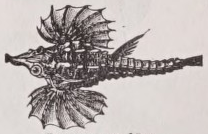
3. A genus of small fishes, having large pectoral fins, and the body covered with hard, bony plates. Several species are known from the East Indies and China.
PEGASUS, a famous horse of Greek fable, was said to have sprung from the trunk of the GorgonMedusa when her head was cut off by Perseus. Bellerophon caught him as he drank of the spring Peirene on the Acrocorinthus at Corinth, or (according to another version) received him tamed and bridled at the hands of Athene. Mounted on Pegasus, Bellerophonslew the Chimaera and overcame the Solymi and the Amazons, but when he tried to fly to heaven on his back the horse threw him and continued his heavenward course. Arrived in heaven, Pegasus served Zeus, fetching for him his thunder and lightning. Hence some have thought that Pegasus is a symbol of the thundercloud. In later legend he is the horse of Eos, the Morning. Pindar and later poets represent him as winged. The name is from πηγός, “compact,” “stout.” The erroneous derivation from πηyη, “a spring of water,” may have given birth to the legends which connect Pegasus with water, as that his father was Poseidon, that he was born at the springs of Ocean (like the fabulous Indian horse Uccaihs-ravas, prototype of horses, produced at the churning of Ocean), and that he had the power of making springs gush from the ground by a blow of his hoof. This was said to have been the origin of Hippocrene (Horse-spring), the fountain of the Muses on Mount Helicon, as well as of another spring of the same name at Traezen. But there are facts that speak for an independent mythological connexion between horses and water, e.g., the sacredness of the horse to Poseidon, the epithets Hippios and Equester applied to Poseidon and Neptune, the Greek fable of the origin of the first horse (produced by Poseidon striking the ground with his trident), and the custom in Argolis of sacrificing horses to Poseidon by drowning them in a ...well. (The Illyrians similarly sacrificed horses by drowning.) From his connexion with Hippocrene Pegasus has come to be regarded as the horse of the Muses and hence as a symbol of poetry. But this is a modern attribute of Pegasus, not known to the ancients, and dating only from the Orlando Innarnorato of the Italian poet Boiardo.
9th ed. Encyclopædia Britannica, vol. 18, p. 468 [369 words — estimated reading time: 3 minutes]
This site uses cookies to remember your display preferences (search sources and editions, Bible version, auto-link, images, light/dark theme). No personal data whatsoever is collected. Privacy Policy