1. That which rolls; that which turns on its own axis; particularly, a cylinder of wood, stone or metal, used in husbandry and the arts. Rollers are of various kinds and used for various purposes.
3. One of series of long, heavy waves which roll in upon a coast, sometimes in calm weather.
4. A long, belt-formed towel, to be suspended on a rolling cylinder; -- called also roller towel.
5. A cylinder coated with a composition made principally of glue and molassess, with which forms of type are inked previously to taking an impression from them.
6. A long cylinder on which something is rolled up; as, the roller of a man.
7. A small wheel, as of a caster, a roller skate, etc.
8. ANy insect whose larva rolls up leaves; a leaf roller. see Tortrix.
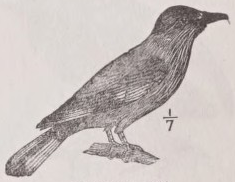
9. Any one of numerous species of Old World picarian birds of the family Coraciadae. The name alludes to their habit of suddenly turning over or "tumbling" in flight.
10. Any species of small ground snakes of the family Tortricidae.
ROLLER a very beautiful bird so called from its way of occasionally rolling or turning over in its flight, somewhat after the fashion of a Tumbler-Pigeon. It is the Coracias garruius of ornithology, and is widely though not very numerously spread over Europe and Western Asia in summer, breeding so far to the northward as the middle of Sweden, but retiring to winter in Africa. It occurs almost every year in some part or other of the British Islands, from Cornwall to the Shetlands, while it has visited Ireland several times, and is even recorded from St. Kilda. But it is only as a wanderer that it comes hither, since there is no evidence of its having ever attempted to breed in Great Britain; and indeed its conspicuous appearance—for it is nearly as big as a Daw and very brightly coloured—would forbid its being ever allowed to escape the gun of the always ready murderers of stray birds. Except the back, scapulars, and tertials, which are bright reddish-brown, the plumage of both sexes is almost entirely blue—of various shades, from pale turquoise to dark ultra-marine—tinted in parts with green. The bird seems to be purely insectivorous. The genus Coracias, for a long while placed by systematists among the Crows, has really no affinity whatever to them, and is now properly considered to belong to the heterogeneous group of Birds in this work called Pixariae (Ornithology, vol. xviii. p. 41), in which it forms the type of the Family Coraciidae·, and its alliance to the Bee-eaters, Meropidae, and King-fishers (vol. xiv. p. 81), Alcedinidae, is very evident. Some eight other species of the genus have been recognized, one of which, C. leuco-cephalus or C. abyssinus, is said to have occurred in Scotland. India has two species, C. indiens and C. affînis, of which ...thousands upon thousands are annually destroyed to supply the demand for gaudy feathers to bedizen ladies’ dresses. One species, C. temmincki, seems to be peculiar to Celebes and the neighbouring islands, but otherwise the rest are natives of the Ethiopian or Indian Regions. Allied to Coracias is the genus Eurystomus with some half dozen species, of similar distribution, but one of them, E. jιacificus, has a wider range, for it inhabits Australia and reaches Tasmania. Madagascar has four or five very remarkable forms which have often been considered to belong to the Family Coraciidae ; and, according to Professor A. Milne-Edwards, no doubt should exist on that point. Yet if any may be entertained it is in regard to one of them, Lepto-somus discolor, which on account of its zygodactylous feet some authorities place among the Cuculidae, while others have considered it the type of a distinct Family Lepto-somatidae. The genera Brachypteraxias and Atelornis present fewer structural differences from the Rollers, and perhaps may be rightly placed with them; but the species of the latter have long tarsi, and are believed to be of terrestrial habit, which Rollers generally certainly are not. These very curious and in some respects very interesting forms, which are peculiar to Madagascar, are admirably described and illustrated by a series of twenty plates in the great work of MM. Grandidier and A. Milne-Edwards on that island (Oiseaux, pp. 223-250), while the whole Family Coraciidae is the subject of a monograph by Mr Dresser, as a companion volume to his monograph on the ∖∣ PPCiiuπPρ I A "N" I
9th ed. Encyclopædia Britannica, vol. 20, p. 627 [581 words — estimated reading time: 4 minutes]
Son of man, I have broken the arm of Pharaoh king of Egypt; and, lo, it shall not be bound up to be healed, to put a roller to bind it, to make it strong to hold the sword.
“Son of man, I have broken the arm of Pharaoh king of Egypt. See, it has not been bound up for healing, or splinted for strength to hold the sword.
This site uses cookies to remember your display preferences (search sources and editions, Bible version, auto-link, images, light/dark theme). No personal data whatsoever is collected. Privacy Policy