
1. TIE
2. TIE D
TIECK, Ludwig (1773-1853), the most conspicuous figure of the German romantic school of literature, was born at Berlin on 31st May 1773. His father, a ropemaker, was dry, sarcastic, and matter-of-fact; his mother, gentle and pious, with a leaning to mysticism. Tieck partook of both characteristics: half his work and half his genius seem a sceptical commentary on the other half. He emancipated himself from the prosaic influence of his father’s house by a passionate study of Shakespeare. After a brilliant career at school he repaired in 1792 to the university at Halle, and, returning to Berlin in 1794, devoted himself to authorship, in which he had already made experiments. As is so commonly the case with young writers of genius, his first tales (Abdallah, William Lovell) partook too largely of the melodramatic, and have little permanent value. But the romantic school of Germany, a movement comparable to the Lake school of England, was already in the air, and Tieck was deeply sensitive to its influence. He was strongly fascinated by two of its aspects in particular—the reaction in favour of German mediaeval art and the revived interest in fairy tales and folk-lore in general. Inspired by his friend Wackenroder, a youth of pious ardour and most pious simplicity, he wrote his unfortunately unfinished romance Stembalds Travels, a very gospel for the artist, at once the complement and the antitype of Wilhelm Meister. His studies in popular literature resulted in the entertaining adaptation of Blue Beard entitled Peter Lebrecht and several kindred works. Fair Eckbert, his masterpiece, and the masterpiece of all romantic fiction, came to him, he said, by inspiration. He may well be believed: no artifice could have created the pervading sensation of dreamy solitude or the ...intense thrill of the catastrophe. The happy idea of dramatizing popular legend led to the production of a greatly improved Blue Beard, and subsequently of Puss in Boots, a satire on Kotzebue and Iffland, such an alliance of broad humour and dainty irony as we might expect to find in the lost Middle Comedy of Athens.
It might almost have been better if Tieck had continued to walk in his own way. His was a susceptible nature, too sensitive for perfect independence. In 1798 he made the acquaintance of the Schlegels, and was drawn into their circle. Novalis, undoubtedly the greatest genius of the romantic school, was for a time a compensation to him for the death of Wackenroder, whose essays on art he edited with additions of his own. But Novalis himself soon died, and the influence of the Schlegel circle, with its bickerings and its “chopping and changing of ribs,” was not wholly salutary either in a moral or a literary point of view. August Schlegel inspired Tieck with a passion for the Spanish drama. He also spent much time on a translation of Don Quixote, certainly a masterpiece, and rendered Ben Jonson’s Silent Woman, having previously adapted Volpone. One important production of his own nevertheless belongs to this period, the romantic drama of Genoveva, enthusiastically admired by so clear-headed and impartial a judge as Bishop Thirlwall. He also produced his delightful miniature drama of Little Ped Puling Hood, and was working with great spirit on The Emperor Octavian when he was suddenly attacked by rheumatic gout, which tormented him more or less for the remainder of his life. Between pain and unpleasant literary disputes his activity was long greatly impeded. The narrowness of his means also troubled him. He had married the daughter of Pastor Alberti, and, although he was an amiable man and nothing is alleged against his wife, his household does not seem to have been entirely comfortable. He lived alternately in Jena, Berlin, and Dresden, where he became very intimate with Steffens, and wrote his powerful but dismal tale, The Runenberg. The Emperor Octavian was completed in 1804, with less success than had been hoped. In the following year Tieck repaired to Italy, nominally to visit the baths of Pisa; but he made this medical injunction the plea for a long stay in the country. The effect of Italian scenery, plastic art, and new impressions in general was to wean him from much of the mysticism in which he had hitherto indulged, and to direct him to the criticism of life. The transition to his new manner is indicated by the additions to his former tales and dramas, which, after several years spent in wandering and in sickness, he published in 1812. The Elves, The Philtre, and The Goblet are tales, distinguished, the last two more especially, by brilliant colouring and elaborate art. Fortunatus, a drama in two parts, added in 1816, wants the spirit of its predecessors, but is pervaded by a quiet sarcastic humour exceedingly enjoyable. Plays and stories were set in a framework of aesthetic conversation, and the entire collection was entitled Phantasus. By this publication Tieck settled accounts with the romantic school, and could no more be regarded as its leader.
Tieck’s power of original composition failed him for some years. He devoted himself especially to antiquarian and dramatic studies. In pursuance of the latter he visited England, saw Kemble and Kean on the stage, and renewed acquaintance with Coleridge, whom he had known in Italy. The friendship of Solger was highly important to him, and helped him to the clear definite principles of composition and criticism in which he had previously been deficient. The period of reflexion gradually worked itself into a period of productiveness, beginning with his charming novelette of The Pictures, translated by Thirlwall. It was followed by a series of similar works extending over nearly twenty years, very unequal in value, but in their best examples belonging to a very high class of art. Their great peculiarity is the blending of narrative with disquisition and comment, so thoughtful and ingenious that, interesting as the action commonly is, the interruption is not resented. They have usually a strongly marked ironical element, as though the writer were only half in earnest, a self-criticism of which a great creative genius would have been incapable, but which bestows unusual piquancy on productions of the second order. The Pictures, already mentioned, is a fine instance of the masterly conduct of a story, and contains a very original figure, the shrewd, sottish, graceless old painter Eulenböck, who, with talent enough to have made a name and a fortune, gains a precarious livelihood by forging old masters. The Betrothal, also translated by Thirlwall, is a severe satire on hypocritical pietism. Among the best of the other novelettes in this style may be mentioned The Travellers, one of the most perfect specimens of the author’s irony; Luck brings Brains, a fine study of the power of a weak character to rise to its opportunities when elevated by a sense of responsibility; and The Superfluities of Life, an anecdote delightfully told. The Old Book and The Scarecrow, two of the most fantastically imaginative, resolve themselves into literary satire. The motive of the latter was borrowed by Hawthorne in his Mother Rigby’s Pipe. Of fictions with an historical basis, the most popular are those derived from the lives of poets— A Poet’s Life, of which Shakespeare is the hero, and A Poet’s Death, relating the sad history of Camoens. The Revolt in the Cevennes is an historical romance of Considerable compass; but Tieck’s masterpiece in this department is his Witches’ Sabbath, a tale almost unparalleled in literature for its delineation of heart-breaking, hopeless misery. The Young Carpenter (1836, but commenced much earlier) can hardly be assigned to any of these classes. It has a strong affinity to Wilhelm Meister, and may be compared with Sternbald, both for its resemblance and its contrast. Finally, in Vittoria Accorambona (1840) Tieck takes yet another new departure, indicating affinities with the modern French school of fiction. The novel has been translated into English, but is probably best known to English readers by Mrs Carlyle’s half-earnest half-mocking admiration of the hero Bracciano, a Blue Beard on the highest principles, and her wish that she could have lived two hundred years before, “to have been—his mistress, not his wife.”
These novels were all written at Dresden, where Tieck had settled in 1819. He enjoyed especial favour at court, took an active part in the direction of the royal theatre, and gained a new description of celebrity by his semipublic readings from dramatic poets in the court circle. According to the almost unanimous testimony of his hearers, he was the finest dramatic reader of his age. His daughter Dorothea, who united her father’s literary talent to her grandmother’s mystic piety, was of great assistance to him, especially in the translation of Shakespeare which passes under his name. Schlegel had translated seventeen plays. Tieck had undertaken to translate the remainder, and it has been generally supposed that he kept his word. In fact the translation was almost entirely executed by Dorothea Tieck and Count Wolf Baudissin, Tieck contributing hardly anything but his advice and his name. The truth slips out quite innocently in the pages of his biographer Köpke, and is fully told by Gustav Freytag (Im Neuen Reich, January 1880). During his residence at Dresden he collected his critical writings, produced his excellent translation of the English dramatists anterior to Shakespeare, and edited the works of Novalis, Kleist, Lenz, and other contemporaries. In 1842 he accepted the invitation of Frederick William IV. to settle in Berlin, where he had already been to conduct the representation of the Antigone with Mendelssohn’s music. He found himself but little in his element in the city of his birth, and the dramatic representations directed by him, including revivals of some of his own plays, were rarely successful. In 1851 his health failed entirely, and he withdrew altogether from the world. He died on 28th April 1853.
Though not a writer of the highest rank, Tieck is nevertheless a most original genius, very unjustly neglected by his countrymen. The best of his compositions in the taste of the romantic school are absolute masterpieces; and his later productions, if imperfect, occupy a unique position in literature. He may be compared to Wieland, whom he decidedly surpasses, and to Ariosto, whom he would have more than rivalled if he had been capable of a great sustained effort. His susceptibility and self-distrust checked his genius, but at the same time gave it that peculiar ironic flavour which constitutes its special distinction. He is like an exquisite side dish, not sufficiently substantial for a full meal. The attempts to extract a moral significance from the stories in Phantasus seem entirely thrown away; the purpose of his later writings, when there is any, is always definite. Perhaps the soundest criticism upon him, at bottom, is Heine’s in his Romantic School, though written at a time when it was his cue to show the works of that school as little quarter as possible. Carlyle’s criticism is excellent, but only refers to the Phantasus.
The principal contribution to Tieck’s biography is the delightful book of Rudolf Köpke (Leipsic, 1855), chiefly drawn from his oral communications and containing his opinions on a number of subjects. Particulars of his residence at Dresden, more especially of his connexion with the theatre, are given in the memoirs of Friesen (Weimar, 1871). Tales from Phantasus have been translated in Carlyle’s Specimens of German Romance, and are reprinted in his miscellanies. A greatly inferior version, in some places unscrupulously altered from Carlyle, was published in 1845 with an elaborate preface signed by J. A. F., who does not, however, appear to have been the translator. Several of Tieck’s other works have been translated into English, but the only remarkable rendering is Bishop Thirlwall’s of The Pictures and The Betrothal. A complete chronological list of his writings is appended to Köpke’s work.
TIEDEMANN, Friedrich (1781-1861), German anatomist and physiologist, the son of a philosopher and psychologist of considerable repute, was born at Cassel on 23d August 1781. He graduated in medicine at Marburg in 1804, but soon abandoned practice owing to disappointment at his failure to check his father’s last illness. Repelled on the one hand by the brilliant but unsubstantial discourses of Schelling on the “Naturphilosophie,” and attracted on the other hand by the practical skill and intelligence of the surgical anatomist Sömmering, he returned to the study of natural science. He betook himself to Paris, and became an ardent follower of Cuvier. On his return to Germany he maintained the claims of patient and sober anatomical research against the prevalent speculations of the school of Oken (see 0ken and Morphology), whose foremost antagonist he was long reckoned. His manifold labours in the field of Cuvierian anatomy cannot be recorded here; but his remarkable studies of the development of the human brain, as correlated with his father’s studies on the development of intelligence, may be mentioned. He spent most of his life (from 1816) as professor of anatomy and physiology at Heidelberg, and died at Munich on 22d January 1861.
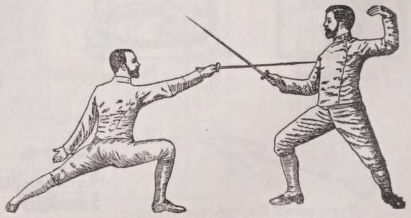
TIERNEY, George (1761-1830), an English Whig politician, was born at Gibraltar on 20th March 1761, being the son of a wealthy merchant resident in Spain. He was sent to Peterhouse, Cambridge, where he took the degree of LL.D, in 1784, and was called to the bar; but, having inherited an ample fortune, he abandoned law and plunged into politics. He contested Colchester in 1788, when both candidates received the same number of votes, but Tierney was declared elected. He was, however, defeated in 1790. He sat for Southwark from 1796 to 1806, and then represented in turn Athlone (1806-7), Bandon (1807-12), Appleby (1812-18), and Knaresborough (1818- 30). When Fox seceded from the House of Commons, Tierney became a prominent, if not the leading, opponent of Pitt’s policy. It was perhaps for this reason that he was disliked by Fox. In 1797—such was the height of politica! passion at this epoch—Wilberforce noted in his diary that Tierney’s conduct was “truly Jacobinical”; and in May 1798 Pitt accused him of want of patriotism. As the words were not withdrawn, a duel ensued at Putney Heath on Sunday, 27th May 1798; but neither combatant was injured. In 1803 Tierney, partly through gratitude for the peace which had been ratified with France and partly because Pitt was out of office, joined the ministry of Addington as treasurer of the navy, and was created a privy councillor; but this ill-advised step alienated many of his supporters among the middle classes, and offended most of the influential Whigs. On the death of Fox he joined (1806) the Grenville ministry as president of the board of control, with a seat in the cabinet, and thus brought himself once more into line with the Whigs. After the death of Ponsonby in 1817 Tierney became the recognized leader of the ...opposition in the House of Commons. In the neutral ministry of Canning, the place of master of the mint was held by him, and when Lord Goderich succeeded to the lead Tierney was admitted to the cabinet; but he was already suffering from ill-health and took little part in its deliberations. He died suddenly at Savile Row, London, on 25th January 1830.
Tierney was a shrewd man of the world, with a natural aptitude for business. His powers of sarcasm were a cause of terror to his adversaries, and his presence in debate was much dreaded. His arguments were félicitons, and, though he never aimed at the highest flights of eloquence, his choice of language was the theme of constant admiration. Lord Lytton, in his poem of St Stephen’s, alludes to “Tierney’s airy tread,” and praises his “light and yet vigorous” attack, in which he inflicted, “with a placid smile,” a fatal wound on his opponent.
TIERRA DEL FUEGO, a large archipelago at the southern extremity of South America, from which it is separated by Magellan Strait, at the Narrows and other points scarcely a mile wide. The group lies between 52° 40' and 55° 59' S. lat. and 63° 30' and 74° 35' W. long, stretching nearly in a line with the Patagonian Andes for over 400 miles north-west and south-east, between Capes Pillar and Horn, and for about 270 miles west and east from Cape Pillar to Cape Espiritu Santo (Catherine Point) in the north; southwards it tapers to 120 miles between Capes Horn and St Diego, the latter being continued eastwards to Staten Island, which is not usually included in the group. Although on ordinary maps this region presents to the eye a hopelessly confused aggregate of islands, channels, and fjord-like inlets, as if it had been submerged sufficiently to convert its deep valleys and gorges into marine passages, bays, and bights, it is nevertheless clearly disposed in three main sections, -which may be conveniently named East, West, and South Fuegia....
East Fuegia consists of the single island of King Charles’s South Land (eastern Tierra del Fuego), which is very much larger than all the rest of the group together, being considerably over 200 miles long from north to south. It obviously forms a southern extension of the Patagonian pampas, which it greatly resembles in its physical constitution, climate, flora, and fauna. The low-lying, flat or slightly rolling plains are covered with a rich growth of tali herbage, which is frequented by the rhea, guanaco, and other animals common to the adjoining mainland, and also peopled by a branch of the same Tehuelche (Patagonian) family. In the south a long peninsula projects westwards to the Pacific. This western limb assumes a mountainous character, Mount Darwin (6800 feet) being situated about midway on its south side and Mount Sarmiento (6900, or perhaps 7000 feet), the culminating point of the archipelago, much nearer the Pacific. Although generally supposed to be volcanic, this peak presents such extremely precipitous, in fact, almost vertical flanks that John Ball considers it more probably “a portion of the original rock skeleton that formed the axis of the Andean chain during the long ages that preceded the great volcanic outbursts that have covered the framework of the western side of South America.” This is altogether an alpine region with numerous snow-clad summits and glaciers descending down to the sea (Darwin).
Along the south side of East Fuegia flows Beagle Channel, about 55° S. lat., separating it from South Fuegia, which comprises the islands of Hoste, Navarin, Gordon, Londonderry, Stewart, Wollaston, and numerous islets, disposed in triangular form with the base on Beagle Channel and the apex at the rocky headland of Cape Horn. At its western end Beagle Channel takes the name of Darwin Sound, which leads to the Pacific at Londonderry and Stewart Islands. North of these lies Brecknock Peninsula, the westernmost extension of East Fuegia, cutting off South Fuegia from Clarence Island and Desolation Land, which with Dawson Island and numerous rocks and islets constitute West Fuegia. Desolation Land, so named by Cook, who supposed it to form a continuous mass stretching from the western entrance of Magellan Strait to Cockburn Channel, really consists of at least three, and possibly more islands, separated from each other by very narrow channels flowing between the Pacific and the western branch of Magellan Strait. The name Desolation has been reserved for the northern member of the group terminating at Cape Pillar; the one next to it has been called Santa Inez; the other or others are still unnamed. When Ball passed through the strait, he was shown one of the narrow sounds “which have lately been ascertained to penetrate entirely through what used to be considered a single island” (op. cit., p. 241).
Lying almost in a line with the main Andean axis, both West and South Fuegia are essentially highland regions, conforming in their general characteristics to the intervening western extension of East Fuegia. As compared λvith the great mass of the latter, they are everywhere extremely rugged and mountainous, having a mean elevation of not less than 3000 feet, a much moister climate, and arboreal instead of grassy vegetation. The isothermals of 32° Fahr, for July (winter) and 50° Fahr, for January (summer), with a mean annual temperature of 42° Fahr., show that tolerably mild winters are followed by cool summers, both seasons being accompanied by overcast skies, constant and sudden changes from fair to foul weather; whilst fogs, mists, rains, snows, and high winds (prevailing throughout the year) endanger the navigation of the intricate inland channels, and render· the archipelago one of the dreariest regions on the globe.
A botanical parting line seems to be constituted by the range of hills running back of Punta Arenas along the east side of Brunswick Peninsula (which, although attached by a narrow neck of land to Patagonia, belongs physically to the insular domain), and terminating at Cape Froward (53° 54' S. lat.), the southernmost point of the American mainland. West and south of this line the pampas are replaced by lofty mountains clothed with a dense forest vegetation from the water’s edge to heights of 1000 and 1200 feet, above which stretches a zone of peaty soil with stunted alpine plants as far as the snow line (3000 to 3500 feet). The forest species are chiefly an evergreen beech {Fagu,s antarctwa, S.) and the winter bark (Winteria aromatica), also evergreen, with tall smooth stem and glossy leaves like the laurel. Wild celery, cress, cochlearia, and other anti-scorbutic plants occur on both sides of Magellan Strait, and the beech nourishes a large yellow mushroom, which, with the berries of a dwarf shrub, is the only vegetable food of the natives.
In West and South Fuegia the fauna is restricted mainly to two species of fox, a bat, rats, mice, the sea otter, the penguin and other aquatic birds, and various cetaceans in the surrounding waters.
To the three geographical divisions correspond three well-marked ethnical groups,—the Onas of East, the Yaghans of South, and the Alacalufs of West Fuegia. The first are estimated to number 2000, the others 3000 each, making a total population of some 8000 for the whole archipelago. The Onas are Patagonians who have crossed the strait. The Alacalufs are also immigrants from the mainland, but probably they came at an earlier date, and from the western uplands, being apparently a branch of the Auca (Araucanian) race of the Patagonian and Chilian Cordilleras. They differ altogether in speech both from the Onas, with whom they come scarcely anywhere in contact, and from the Yahgans, who are the true aborigines of the archipelago. These last are in exclusive possession of South Fuegia, and also occupy the north side of Beagle Channel about Mount Darwin and further west. To them alone missionary enterprise has hitherto been extended, and the English station of Ushiwaya on Beagle Channel has for some years been the only centre of civilizing influences in the archipelago. As Lieutenant Bove of the Italian Antarctic expedition has made a special study of this branch, they are much better known than either of the neighbouring races. If they represent an earlier Araucanian immigration than that of the Alacalufs, their extremely low social state, on which all observers are unanimous, may be regarded as the result of degradation from a higher condition during their long sojourn in their present inhospitable environment. But it seems more probable that they are the direct descendants of the primitive race by which the archipelago has been occupied from a vastly remote period, as is shown by the very great number of kitchen-middens recently discovered on the coast. Although taller than the Negritoes of the eastern hemisphere (4 feet 10 inches to 5 feet 4 inches), the Yahgans present in some respects a more debased type, characterized by low brows, prominent zygomatic arches, large tumid lips, flat nose, loose wrinkled skin (“pelle grinzosa e cadente,” says Bove), black restless eyes very wide apart, coarse black unkempt hair, and head and chest disproportionately large compared with the extremely slender and outwardly curved legs, conveying an impression of top-heaviness like that of the Akkas of equatorial Africa. Their mental qualities are on the same low level, as is indicated by the almost total absence of clothing under such inclement skies, by the brutal treatment of their women, who when old and useless are often eaten, by the lack of human affections or love of offspring, who in rough weather are thrown overboard (Dr Fenton), either as a peace offering to the spirits of the storm or to lighten the canoe, and by many repulsive practices connected with their food and social habits. The tribal organization has not yet been reached, each family circle living apart and combining only in small groups against some common enemy, but recognizing no hereditary chief or even any temporary leader. Yet the missionaries, who have reduced the language to writing (Gospel of St Luke, London, 1881), assert that it contains no less than 30,000 words, although the numerals stop at five, already a compound form {cu-pash-pa), and although the same word expresses both hand and finger. But they have obviously failed to distinguish between distinct terms and the endless grammatical intricacies in which this, like so many other rude forms of speech, is still involved.
Since 1881 the eastern portion of Fuegia (with Staten Island) has belonged to the Argentine Republic and the western to Chili. The boundary line, which is purely conventional, runs from Cape Espiritu Santo due south to Beagle. Channel. Neither power has hitherto occupied any part of Fuegia, except Punta Arenas (Sandy Point) on the Patagonian side of Magellan Strait, where the Chilians have for some years maintained a convict and coaling station.
Fuegia was discovered by Magellan in 1520, when he sailed through the strait named after him, and called this region the “Land of Fire,” either from now extinct volcanic flames, or much more probably from the fires kindled by the natives along parts of his course. In 1578 Drake first sighted the point which in 1616 was named Cape Hoorn (Anglicized Horn) by the Dutch navigators Lemaire and Schouten. In 1619 the brothers Nodal first circumnavigated the archipelago, which was afterwards visited at intervals by Wood and Narborough (1670), Gennes and Froger (1696), Byron (1764), Wallis and Carteret (1767), Cook (1768), and Weddell (1822). But no systematic exploration was attempted until the British Admiralty undertook a thorough survey of the whole group by King (1826-28) and Fitzroy (1831-36). The latter expedition {Voyage of the “Beagle") was accompanied by Charles Darwin, then a young man. To these admirable surveys is due most of the present geographical terminology of the archipelago. Since then the work of exploration has been continued and nearly completed by Dumont d’Urville (1837), Charles Wilkes (1839), Parker Snow (1855), Bove (1883), and various English, American, and Roman Catholic missionaries.
Bibliography.— De Brosses, Histoire des Navigations aux Terres Australes, Paris, 1756; J. Burney, History of Voyages and Discoveries in the South Sea, London, 1803-17; J. weddell, A Voyage towards the South Pole and to Tierra del Fuego, London, 1825; Charles Darwin, Journal of Researches, &c., during the Voyage of the “Beagle " round the World, London, 1845; W. Parker Snow, A Two Years' Cruise off Tierra del Fuego, London, 1857; G. Marguin, “La Terre de Feu," in Bull, de la Soc. de Géogr., November 1875; J. G. Kohl, Gesch. d. Entdeckungsreisen, &c., zur Magellan's Strasse, Berlin, 1877; “La Terre de Feu et ses Habitants,” in Journal des Missions Évangéliques, August 1876; D. Lovisato, Appunti Etnografici con Accenni Geologici sulla Terra del Fuoco, Turin, 1884; John Ball, Notes of a Naturalist in South America, London, 1887; R. W. Coppinger, Cruise of the “Alert," London, 4th ed. 1885; G. Sergi, Antropologia Fisica della Fuegia, Rome, 1887; Ramon Lista, “East Fuegia,” in Petermann's Mitteilungen, May 1887; and the works already mentioned.