
A verse or verses. See Verse.
Word of the Day: Catachrestical
Vers de societe
Webster's Dictionary 1913
See Society verses, under Society.
1. VERSABIL'ITY ,
The quality or state of being versable.
Capable of being turned.
Aptness to be turned round. [Not used.]
Versailles
Encyclopedia Britannica
VERSAILLES, a town of France, chef-lieu of the department of Seine-et-Oise and an episcopal see, lies 11 miles west-south-west of Paris, with which it is connected by railways on both banks of the Seine and by a tramway. The town owes its existence to the palace (460 feet above the sea) built by Louis XIV. The fresh healthy air and the nearness of the town to Paris have attracted many residents, and the interest attaching to the place draws crowds of visitors. The population in 1881 was 48,012; in 1886 it was 49,514 (commune 49,852), including about 10,000 military....
The three avenues of St Cloud, Paris, and Sceaux converge in the Place d’Armes. Between them stand the former stables of the palace, now occupied by the artillery and engineers. To the south lies the quarter of Satory, the oldest part of Versailles, with the cathedral of St Louis, and to the north the new quarter, with the church of Notre Dame. To the west a gilded iron gate and a stone balustrade shut off the great court of the palace from the Place d’Armes. On either side are allegorical groups, besides statues of the statesmen Suger, Sully, Richelieu, and Colbert, the soldiers Duguesclin, Bayard, Turenne, and Condé, the sailors Duquesne, Tourville, Duguay-Trouin, and Suffren, and the marshals Jourdan, Masséna, Lannes, and Mortier. At the highest point of the court there is an equestrian statue in bronze of Louis XIV., and to the right and left of this stretch the long wings of the palace, while behind it stand the central buildings one behind the other as far as the Marble Court. Here all the lines of construction meet, and here were the rooms of Louis XIV. To the north the Chapel Court and to the south the Princes Court, with vaulted passages leading to the gardens, separate the side from the central buildings. On the latter is the inscription “À toutes les gloires de la France,” which Louis Philippe justified by forming a collection of five thousand works of art (valued at £1,000,000), commemorating the great events and persons of French history. The palace chapel (1696-1710), the roof of which can be seen from afar rising above the rest of the building, was the last work of Mansard. Opposite the altar is the king’s gallery, which communicates with the rooms on the first floor of the palace. The ground-floor of the north wing on the garden side contains eleven halls of historical pictures from Clovis to Louis XIV., and on the side of the interior courts a gallery of tombs, statues, busts of kings and celebrities of France for the same period. The Halls of the Crusades open ofl'
this gallery, and are decorated with the arms of crusaders, kings, princes, lords, and knights, and with those of the grand-masters and knights of the military religious orders. On the first floor of the north wing on the garden side are ten halls of pictures commemorating historical events from 1795 to 1855; on the court side is the gallery of sculpture which contains the Joan of Arc of the Princess Marie of Orleans; and there are seven halls chiefly devoted to French campaigns and generals in Africa, Italy, the Crimea, and Mexico, with some famous war pictures by Horace Vernet. The second story has a portrait gallery. In the north wing is also the theatre built under Louis XV. by Gabriel, which was first used on the 16th of May 1770 on the marriage of the dauphin (afterwards Louis XVI.) and Marie Antoinette. Here, on 2d October 1789, the celebrated banquet was given to the Gardes du Corps, the toasts at which provoked the riots that drove the royal family from Versailles; and here the national assembly met from 10th March 1871 till the proclamation of the constitution in 1875, and the senate from 8th March 1876 till the return of the two chambers to Paris in 1879. The central buildings of the palace project into the garden. On the ground floor are the halls of celebrated warriors (once the anteroom of Madame de Pompadour), marshals, constables, and admirals. The Great Dauphin (son of Louis XIV. ), the duke and duchess of Berri, the dauphin (son of Louis XV.), Madame de Montespan, Madame de Pompadour, and the daughters of Louis XV. all lived in this part of the palace. The gallery of Louis XIII., decorated with historical pictures of his and Louis XIV.’s time, leads to the halls surrounding the Marble Court. One of these contains many plans of battles, and at its door Louis XV. was wounded by Damiens in 1757. The lobbies of the ground floor are full of busts, statues, and tombs of kings and celebrated men. The famous state rooms are on the first floor. On the garden side, facing the north, are a series of seven halls,—among them that of Hercules, till 1710 the upper half of the old chapel, where the dukes of Chartres, Maine, and Burgundy were married, and Bossuet, Massillon, and Bourdaloue preached; the Hall of Mercury, where the coffin of Louis XIV. stood for eight days after his death; and the Hall of Apollo, or throne room. To the front of the palace, facing the west, are the Galleries of War and Peace, with allegorical pictures, and the Glass Gallery, built by Mansard in 1678 (240 feet long, 34 wide, and 43 high), having 34 arches, 17 of which are filled with windows looking on the gardens and 17 with large mirrors. The gallery is overloaded with ornament, and the pictures by Lebrun, the trophies and figures of children by Coysevox, and the inscriptions attributed to Boileau and Racine all glorify Louis XIV. This gallery was used by him as a throne room on state occasions. Here the king of Prussia was proclaimed emperor of Germany on 16th January 1871. Connected with the Gallery of Peace is the queen's room, occupied successively by Marie Thérèse, Marie Leczinska, and Marie Antoinette, where the duchess of Angoulême was born, the duchess of Burgundy died, and Marie Antoinette was almost assassinated on 6th October 1789. The Coronation Hall is so called from David’s picture of Napoleon’s coronation, which is regarded as the artist’s masterpiece. This hall opens on the marble, or queen’s, staircase. Behind the Glass Gallery on the side of the court are the rooms of Louis XIV. The Oeil de Boeuf, named from its oval window, was the anteroom where the courtiers waited till the king rose. In it is a picture representing Louis XIV. and his family as Olympian deities; and it leads to the bedroom in which Louis XIV. died, after using it from 1701, and which Louis XV. occupied from 1722 to 1738. To the north of the Marble Court are the “petits appartements” of Louis XV. and to the south those of Marie Antoinette. Among the former is the Porcelain Gallery, where every year under Louis XVI. the best work made at Sèvres was displayed. On the second floor of the buildings surrounding the Stags Court Madame du Barry lived, and Louis XVI. afterwards worked at lockmaking. Marie Thérèse and Marie Leczinska had previously used the “petits appartements” of Marie Antoinette, one of the rooms of which is ornamented with woodwork of her time. In this part of the palace Madame de Maintenon and the duke of Burgundy had rooms, those of the latter being afterwards occupied by Cardinal de Fleury and the duke of Penthièvre. In the south wing of the palace, on the ground floor, are the Imperial Galleries (the first rooms of which were used by the duke and duchess of Bourbon under Louis XIV.) and the rooms occupied by the president of congress when the two legislative bodies meet together at Versailles. A sculpture gallery contains busts of celebrated scholars, artists, generals, and public men from the time of Louis XVI. onwards. In the south wing is also the room where the chamber of deputies met from 1876 till 1879, and where the congress has since sat to revise the constitution of 1875 and to elect the president of the republic. The first floor is almost entirely occupied by the Battle Gallery (394 feet long and 43 wide), opened in 1836 on the site of rooms used by Monsieur the brother of Louis XIV. and the duke and duchess of Chartres. It is lighted from above, and the walls are hung with pictures of French victories. In the window openings are the names of soldiers killed while fighting for France, with the names of the battles in which they fell, and there are more than eighty busts of princes, admirals, constables, marshals, and celebrated warriors who met a similar death. Another room is given up to the events of 1830 and the accession of Louis Philippe, and a gallery contains the statues and busts of kings and celebrities from Philip VI. to Louis XVI. In the rooms of the second story are portraits (mostly modern), sea-pieces, pictures of royal residences, and some historical pictures of the time of Louis Philippe.
The gardens of Versailles were planned by Le Nôtre. The best view is obtained from a balcony of the Glass Gallery. The ground falls away on every side from a terrace adorned with ornamental basins, statues, and bronze groups. Westwards from the palace extends a broad avenue, planted with large trees, and having along its centre the grass of the “Tapis Vert”; it is continued by the Grand Canal, 200 feet wide and 1 mile long. On the south two splendid staircases of 103 steps, 66 feet wide, lead past the Orangery to the Swiss Lake, 1312 feet long and 460 wide, beyond which is the wood of Satory. On the north an avenue, with twenty-two groups of three children, each group holding a marble basin, from which a jet of water rises, slopes gently down to the Basin of Neptune, remarkable for its fine sculptures and abundant water. The Orangery (built in 1685 by Mansard) is the finest piece of architecture at Versailles; the central gallery is 508 feet long and 42 wide, and each of the side galleries is 375 feet long. There are twelve hundred orange-trees, one of which is said to be 465 years old, and three hundred other kinds of trees. The alleys of the parks are ornamented with statues, vases, and regularly-cut yews, and bordered by hedges surrounding the shrubberies. Between the central terrace and the Tapis Vert is the Basin of Latona or the Frogs, with a white marble group of Latona with Apollo and Diana. Beyond the Tapis Vert is the large Basin of Apollo, who is represented in his chariot drawn by four horses; there are three jets of water, one 60, the others 50 feet in height. The Grand Canal is still used for nautical displays; under Louis XIV. it was covered with Venetian gondolas and other boats, and the evening entertainments usually ended with a display of fireworks. Around the Tapis Vert are numerous groves, the most remarkable being the Ballroom or Rockery, with a waterfall; the Queen’s Shrubbery, the scene of the intrigue of the diamond necklace; that of the Colonnade, with thirty-two marble columns and a group of Pluto carrying off Proserpine, by Girardon; the King’s Shrubbery, laid out in the English style by Louis Philippe; the beautiful Grove of Apollo, with a group of that god and the nymphs, by Girardon; and the Basin of Enceladus, with a jet of water 75 feet high. Among the chief attractions of Versailles are the fountains and waterworks made by Louis XIV. in imitation of those he had seen at Fouquet’s chateau of Vaux. Owing to the scarcity of water at Versailles, the works at Marly-le-Roi ( q.v.) were constructed in order to bring water from the Seine; but part of the supply thus obtained was diverted to the newly-erected château of Marly. Vast sums of money were spent and many lives lost in an attempt to bring water from the Eure, but the work was stopped by the war of 1688. At last the waters of the plateau between Versailles and Rambouillet were collected and led by channels (total length 98 miles) to the gardens, the soil of which covers innumerable pipes, vaults, and aqueducts. The total volume of water annually brought to Versailles is about 175,000,000 cubic feet, of which two-fifths supply the town and the rest the park.
Beyond the present park, but within that of Louis XIV., are the two Trianons. The Grand Trianon was originally erected as a retreat for Louis XIV. in 1670, but in 1687 Mansard built a new palace on its site. Louis XV., after establishing a botanic garden, made Gabriel build in 1766 the small pavilion of the Petit Trianon, where the machinery is still shown by which his supper-table came up through the floor. It was a favourite residence of Marie Antoinette, who had a garden laid out in the English style, and lived an imaginary peasant-life. The Grand Trianon is a one-storied building with two wings, and has been occupied by Monsieur (Louis XIV.’s brother), by the Great Dauphin, the duke of Burgundy, the duchess of Orleans, Napoleon I., and Louis Philippe and his court. The duke and duchess of Orleans lived in the Petit Trianon. The gardens of the Grand Trianon are in the same style as those of Versailles, and there is a museum with a curious collection of state carriages, old harness, &c.
Apart from the palace, there are no buildings of interest in Versailles, the church of Notre Dame, built by Mansard, the cathedral of St Louis, built by his grandson, the Protestant church, and the English chapel being in no way remarkable. The celebrated tennis-court is now used as a museum. The large and sumptuous palace of the prefecture was built during the second empire, and was a residence of the president of the republic from 1871 to 1879. The library consists of 60,000 volumes; and the military hospital formerly accommodated 2000 people in the service of the palace. There are a statue of General Hoche and one of Abbé de 1’ Épée in the town. A school of horticulture was founded in 1874, attached to an excellent garden, near the Swiss Lake.
Versailles is the seat of a school of artillery and of a school for non-commissioned officers of the artillery and engineers.
History. —Louis XIII. often hunted in the woods of Versailles, and built a small pavilion at the corner of what is now the Rue de La Pompe and the avenue of St Cloud. In 1627 he entrusted Lemercier with the plan of a château, and in 1632 bought the land from François de Gondi, first archbishop of Paris, for £2640. In 1661 Levau made some additions, and in 1682 Louis XIV. took up his residence at Versailles, and gave Mansard orders to erect the great palace in which the original buildings disappeared. Fabulous sums were spent on the palace, gardens, and works of art, the accounts for which were destroyed by the king. Till his time the town was represented by a few houses to the south of the present Place d’Armes; but land was given to the lords of the court and new houses sprang up, chiefly in the north quarter. Under Louis XV. the parish of St Louis was formed to the south for the increasing population, and new streets were built to the north on the meadows of Clagny, where in 1674 Mansard had built at Louis XIV.’s orders a chateau for Madame de Montespan, which was now pulled down. Under Louis XVI. the town extended to the east and received a municipality; in 1802 it gave its name to a bishopric. In 1783 the peace by which England recognized the independence of the United States was signed at Versailles. The states-general met here on 5th May 1789, and on 20th June took the solemn oath by which they bound themselves never to separate till they had given France a constitution, and which led to the riots of 5th and 6th October. Napoleon, Louis XVIII., and Charles X. merely kept up Versailles, but Louis Philippe restored its ancient splendour at the cost of £1,000,000. In 1870 and 1871 the town was the headquarters of the German army besieging Paris. After the peace Versailles was the seat of the French national assembly while the commune was triumphant in Paris, and of the two chambers till 1879, being declared the official capital of France. Versailles was the birthplace of Hoche, Abbé de l’Epée, Philip V. of Spain, Louis XV., Louis XVI., Louis XVIII., Charles X., Count de Maurepas, Prince de Polignac, Marshal Berthier (Prince of Wagram), Houdon the sculptor, Ducis the poet, Callet the mathematician, and Ferdinand de Lesseps.
9th ed. Encyclopædia Britannica, vol. 24, p. 176 — signed G. ME.
[2,870 words — estimated reading time: 17 minutes]
[2,870 words — estimated reading time: 17 minutes]
VERSAL , for universal. [Not used or very vulgar.]
Universal.
Familiar; conversant.
The slope of a side of a mountain chain; hence, the general slope of a country; aspect.
1. That may be turned round; as a versatile boat or spindle.
2. Liable to be turned in opinion; changeable; variable; unsteady; as a man of versatile disposition.
3. Turning with ease from one thing to another; readily applied to a new task, or to various subjects; as a man of versatile genius.
4. In botany, a versatile anther is one fixed by the middle on the point of the filament, and so poised as to turn like the needle of a compass; fixed by its side, but freely movable.
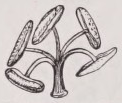
1. Capable of being turned round.
2. Liable to be turned in opinion; changeable; variable; unsteady; inconstant; as versatile disposition.
3. Turning with ease from one thing to another; readily applied to a new task, or to various subjects; many-sided; as, versatile genius; a versatile politician.
2. The faculty of easily turning one's mind to new tasks or subjects; as the versatility of genus.
The quality or state of being versatile; versatileness.
2. In poetry, a line, consisting of a certain number of long and short syllables, disposed according to the rules of the species of poetry which the author intends to compose. Verses are of various kinds, as hexameter, pentameter, and tetrameter, etc. according to the number of feet in each. A verse of twelve syllables is called an Alexandrian or Alexandrine. Two or more verses form a stanza or strophe.
3. Poetry; metrical language.
4. Virtue was taught in verse
5. VERSE embalms virtue.
6. A short division of any composition, particularly of the chapters in the Scriptures. The author of the division of the Old Testament into verses, is not ascertained. The New Testament was divided into verses by Robert Stephens.
7. A piece of poetry.
8. A portion of an anthem to be performed by a single voice to each part.
10. Blank verse poetry in which the lines do not end in rhymes.
11. Heroic verse usually consists of ten syllables, or in English, of five accented syllables, constituting five feet.
1. To tell in verse; to relate poetically.
2. Playing on pipes of corn, and versing love.
3. To be versed, [Latin vesor.] to be well skilled; to be acquainted with; as, to be versed in history or in geometry.
1. A line consisting of a certain number of metrical feet (see Foot, n., 9) disposed according to metrical rules.
2. Metrical arrangement and language; that which is composed in metrical form; versification; poetry.
3. A short division of any composition.
5. One of the short divisions of the chapters in the Old and New Testaments.
6. A portion of an anthem to be performed by a single voice to each part.
7. A piece of poetry.
To tell in verse, or poetry.
Versecz
Encyclopedia Britannica
VERTEBRATA, the name of a great branch or phylum of the Animal Kingdom which comprises those animals having bony “vertebrae ”, or pieces of bone jointed so as to form a spinal column. The first recognition of the group is due to Lamarck (1797), who united the four highest classes of Linnaeus’s system as “animaux à vertèbres,” whilst distinguishing the rest of the animal world as “animaux sans vertèbres.” The same union of the four Linnaean classes had been previously made by Batsch in 1788, who, however, proposed for the great division thus constituted the name “Knochenthiere.” The significance of Lamarck’s classification was materially altered, and the foundation laid of our present attempts to represent by our classifications the pedigree of the animal kingdom, when Cuvier propounded his doctrine of “types,” and recognized the Vertebrata as one of four great types or plans of structure to be distinguished in the animal world (I )....
The Vertebrata of Lamarck and Cuvier included beasts, birds, reptiles, and fishes, and until recently the group was considered as one of the most sharply limited in the animal kingdom. The progress of anatomical studies very soon rendered it clear that all Vertebrata did not possess bony vertebrae; for, besides the commoner sharks and skates, with their purely cartilaginous skeletons, naturalists became acquainted with the structure of fishes, such as the sturgeons and the lampreys, which possess no vertebrae at all, but merely a continuous elastic rod (the notochord) in the place of the jointed spinal column. The muscles and their skeletal septa were seen in these fishes to be arranged in a series of segments attached to the sides of this continuous rod; and hence the structural character of bony vertebrae, as distinguishing the Vertebrata, gave place to the character of segmental arrangement of the muscles of the body-wall, such muscles being supported by a skeletal axis which might be itself unsegmented (notochord), or replaced by segmental cartilaginous or bony vertebrae. The studies of embryologists furnished a sound foundation for this conception by demonstrating that in the embryos of Vertebrata with true vertebrae these structures are preceded by an unsegmented continuous notochord. The inquiry into the structural characteristics of Vertebrata led further to the recognition of several additional points of structure, the combination of which was present only in the group which had been recognized by Lamarck on superficial grounds. It was found that all Vertebrata possess laterally-placed passages leading from the pharynx to the exterior, serving in the aquatic forms as the exits for water taken in by the mouth, and provided with vascular branchial processes, whilst in the embryos of the higher air-breathing classes they appear only as temporary structures. It was further established that the great mass of nervous tissue lying dorsally above the spinal column, and known as the cerebro-spinal nerve-centre or brain and spinal cord, is in all cases a tube, and originates as part of the dorsal surface of the embryo, which becomes depressed in the form of a long groove and finally closed in by the adhesion of its opposite edges, thus forming a tube or canal. The three structures,—notochord, gill-slits, and tubular dorsal nerve-cord,—were more than twenty years ago recognized as characterizing, together with the metameric segmentation of the musculature of the body-wall, all Vertebrata at some one or other period of their existence.
The establishment by Darwin of the doctrine of organic evolution in 1859 led naturalists consciously to make the attempt to determine the genetic affinities and the probable ancestry of the various groups of animals, and enabled them to recognize in the classifications by “type”, and other such conceptions of earlier systematists, the unconscious striving after genealogical representation of the relationships of organic beings. The question naturally arose in regard to the Vertebrata, as in regard to other great divisions of the animal kingdom, What were the characters of the earliest forms, the ancestors of those now living? Then came the further questions as to whether any surviving Vertebrata closely resemble the ancestral form, and whether any animals are still in existence which retain the general characters of those primeval forms which were the common ancestors at once of Vertebrates and of other large and equally well-marked phyla or branches of the animal kingdom, such as the Molluscs, the , &c. This fascinating subject of inquiry received its most important impulse from the embryological investigations of the Russian naturalist Kowalewsky, and has been for nearly a quarter of a century the fertile source of speculation and its indispensable accompaniments, new observation and research. Kowalewsky published in 1866 an account of the embryology of the lowest and simplest of then recognized Vertebrates, the lancelet (Amphioxus lanceolatus), in which he attempted to trace, cell for cell from the fertilized egg-cell, the origin of the characteristic Vertebrate organs of this animal (2 ). This work alone would not have acquired historic importance, although it is the starting-point of what may be called strict cellular embryology, as compared with the less severely histological works of previous students. But it was accompanied by an account (3 ) of the development of Ascidia mamillata, one of the so-called Tunicate Molluscs, in which it was demonstrated by Kowalewsky, not only that this supposed Mollusc possesses when first hatched from its egg-envelope a notochord, pharyngeal gill-slits, and a tubular dorsal nerve-cord and brain, but that these three characteristically Vertebrate features of organization originate from the same cell-layers of the embryo, and in essentially the same way as in Amphioxus, whilst the cell-layers themselves originate from the egg-cell in the two animals by precisely similar movements of cell division and invagination (see figs. 1 and 2). Kowalewsky’s discoveries established once for all that the Ascidian tadpole is identical in three very special and distinct features of structure with the frog’s tadpole. No classification which pretended to set forth the genetic affinities of animals could henceforth separate the Ascidian from the Vertebrata, and with it the Ascidian brought the whole series of Tunicata.
The admission of Tunicata as a group of Vertebrata was proposed by the present writer as long ago as 1877 (4 ); but it required the intermediate proposition by Balfour of a group Chordata, to comprise the two divisions Tunicata and Vertebrata, in order to render the final admission of Tunicata to their proper association with the Vertebrata of Cuvier palatable to systematists. As an objection to the simple inclusion of Tunicata in the great phylum Vertebrata it has been urged that Tunicata do not possess vertebrae,—a proposition which is equally true of Amphioxus and of some Fishes. Shifting the objection, some writers have maintained that the vertebration of the Vertebrata may be understood as having reference to the segmentation of the muscles of the body-wall, which is exhibited by all Cuvier’s Vertebrata without exception, inclusive of Amphioxus, though not by Tunicata. To this it may be replied that the Ascidian tadpole, and more clearly the free-swimming Tunicate Appendicularia (see fig. 9), do exhibit a segmentation of the muscles of the hinder part of the body-wall similar to and identical with that of Amphioxus, whilst no such strict application of a name in its original descriptive sense is desirable in systematic nomenclature. All Gastropoda (it has been pointed out) are not gastropodous; all Arthropoda are not arthropodous; and many Echinoderma are not echinodermous. It is, in the present writer’s opinion, better to retain an historic and familiar name for the great branch of the animal pedigree to which it has become necessary to admit forms whose affinities therewith were at one time unsuspected rather than to sacrifice historical significance to a futile striving after etymological accuracy.
The admission of Tunicata to association with Cuvier’s Vertebrata has been followed by a further innovation. The remarkable marine worm Balanoglossus— originally described by Della Chiaje at the end of the 18th century— was shown in 1866 by Kowalewsky (5) to possess a series of pharyngeal gill-slits similar to those of Tunicata and Amphioxus. Later researches by Bateson (ό) have demonstrated that Balanoglossus develops in embryonic life a short notochord, whilst its nerve-cord is, in part at least, tubular, and similar in position and relations to the median epidermal tract by the infolding of which the nerve-tube of Tunicata and the other Vertebrata is formed. Hence it seems impossible to exclude Balanoglossus from a place in the phylum Vertebrata. The possession of pharyngeal gill-slits alone might not justify the association; but, when this is combined with the presence of the notochord, though rudimentary and with a special condition and position of the main nerve-centre, it becomes impossible to ignore Balanoglossus in our conception of the Vertebrate phylum. The recent discoveries of Harmer (7 ) with regard to Cephalodiscus will hereafter render it necessary to associate that form, and in all probability Rhabdopleura also, with Balanoglossus in the Vertebrate phylum. The further consequences of such an association in regard especially to the affinities of Polyzoa and of Gephyraea open up a large field of speculation and of consequent embryological and anatomical research.
The Cuvierian Vertebrata, Amphioxus, Tunicata, and Balanoglossus being thus indisputably connected by a remarkable combination of structural points, which admit of no explanation consistent with the principles of evolutional morphology except that of the genetic relationship of the forms thus enumerated, we are at once confronted by those questions as to the ancestral history of Vertebrata which have been already mentioned above as stimulated by Kowalewsky’s discoveries. Undoubtedly Amphioxus is lower and simpler in structure than any Fish, Tunicata as low as or lower than Amphioxus, and Balanoglossus, in some respects, more archaic than either Amphioxus or the Ascidian tadpole. The first tendency arising from the discovery of the affinities of these simpler forms with the Cuvierian Vertebrata was to see in them the representatives of the ancestors of all Vertebrata. Amphioxus has been pointed to by authorities in morphology as the living presentation of our common Vertebrate ancestor; a similar position corresponding to an earlier stage of development has been admitted by no less an authority than Darwin for the Ascidian. It appears, nevertheless, that all such simple solutions of the problem of Vertebrate ancestry are without warrant. They arise from a very common tendency of the mind, against which the naturalist has to guard himself,—a tendency which finds expression in the very widespread notion that the existing anthropoid apes, and more especially the gorilla, must be looked upon as the ancestors of mankind, if once the doctrine of the descent of man from ape-like forefathers is admitted. A little reflexion suffices to show that any given living form, such as the gorilla, cannot possibly be the ancestral form from which man was derived, since ex hypothesi that ancestral form underwent modification and development, and in so doing ceased to exist. The same considerations apply to the question of the ancestry of Vertebrata. Probably no existing low form of Vertebrate closely represents the ancestral form by the modification of which higher forms have been developed. We have no justification for assuming that such low forms do more than present to us a collateral branch of the family, and that collateral branch must, in all probability, have experienced its own special series of modifications of structure. Not only this, but we have no sufficient ground for assuming that, even in respect of the simplicity of their structure, any given animal forms at present existing exhibit a mere survival of a corresponding degree of simplicity in their remote ancestors. Such an assumption was almost universally made, until a more correct view was pressed on the attention of naturalists by Dr Anton Dohrn, the founder of the zoological station of Naples (8 ). So far from its being the case that simplicity of organization necessarily implies the continuous hereditary transmission of a low stage of structural development from remote ancestors, there are numerous instances in which it is certain that the existing simplicity of structure is due to a process of degeneration, and that an existing form of simple structure is thus descended from ancestors of far higher complexity of organization than itself. Such are various parasitic worms and Crustacea. The evidence in favour of the occurrence of progressive simplification of structure or degeneration, in place of progressive elaboration, depends (1) upon the comparison of the adult structure of the degenerate organism with that of its nearest allies, by which it is often rendered clear that the ensemble of the organization of the simpler organism cannot be explained on the hypothesis that it represents an ancestral or archaic condition common to it and its more elaborate congeners, and (2) on the direct evidence of individual development or life-history. The latter evidence is conclusive, when we find, as in the case of Cirrhipede Crustaceans and of Ascidian Tunicates, that the embryo on its way to the adult condition passes through-stages of development presenting a higher degree of organization than that ultimately reached, so that, as in the Cirrhipede larva and the Ascidian tadpole, the young form resembles allied organisms of a higher stage of development, and subsequently degenerates from the point of progressive elaboration to which it had attained, and becomes greatly simplified in the final stage of its growth. Conclusive as such evidence is, there is no law of development which necessitates its preservation. If it be an advantage to the organism, the full force of heredity has play, and what are called the “recapitulative phases” of ancestral development are passed through by the individual in the course of development from the egg. But with remorseless thoroughness all such hereditary tendencies may be removed when such removal is an advantage to the organism, and the development from the egg may proceed directly to the adult degenerate form. Such is the case with many Tunicata, the young of which never exhibit notochord and tadpole form; indeed, were it not for the preservation of a few exceptional cases, like that of the Ascidian section of the group, we should have no direct evidence of the degeneration of Tunicata from tadpole-like ancestry.
The general result of the considerations which have been urged with regard to degeneration is this, that it is prima facie as legitimate an hypothesis, that any existing animal has developed by progressive simplification from more elaborate ancestors, as it is that such an animal has developed by a continuous and unbroken progress in elaboration from simpler ancestors; and we are specially called upon to apply the hypothesis of degeneration where the animal under consideration is likely from its mode of life to have undergone that process. Such modes of life, tending to degeneration, are parasitism, sessile or adherent habit, burrowing in the sea-bottom, and diffuse feeding. The animal which pursues living prey, and contends with other organisms for the dominion of the regions of earth and water that are flooded with light and richly supplied with oxygen gas, is the animal which represents the outcome of a longer or shorter period of progressive elaboration. It is worth while noting in parenthesis that in all cases the “whirligig of time” has probably brought its revenges, and that the ancestry of a form evolved through a long period of progressive elaboration was at an antecedent period subject to simplification and degeneration, whilst in the past records of the present exemplars of the latter process there must certainly have been long stretches of continuous elaboration.
Applying these considerations to the construction of the genealogical tree of Vertebrata, we find that the task is by no means simplified. We cannot with the earliest evolutionists adopt a scale or ladder-like series, placing the simplest form on the lowest step ; nor can we be satisfied with a tree-like arrangement, in which the forms at the ends of the branches are always more elaborate than those nearer the trunk. Our genealogical tree will more strictly conform to that of a parvenu human family, if we take worldly prosperity in the latter case as corresponding to elaboration of structure in the former. The strict family genealogist will include in the successive ramifications of the tree the five sons of the founder of the family, one of whom remained an agricultural labourer, whilst two became brewers and two emigrated. The cousins in the next generation will be set forth in place, the sons of one brewer becoming paupers, whilst those of the other advance to the position of Government employes, and one to the peerage. Thus in successive branchings of the family history there may be alternate progress and degeneration. And so it must be in the genealogical trees constructed by the naturalist: the fact that a branch is later in origin will not imply that it is higher in elaboration than those below it, and accordingly we must not expect to draw our tree so as to be able to trace all simpler forms to lower off-sets of the tree.
The structural features of those animals which must be admitted to the Vertebrate phylum in consequence of possessing notochord, pharyngeal gill-slits, and dorsal nerveplate, tubular or unrolled, are such as enable us very readily to group them in four great divisions, which appear to be equally distinct from one another. As to what may be the genetic relations to one another of these four groups we will inquire subsequently; for the present we term these groups “branches.” They are as follows :— [table]
The Vertebrata thus limited may be defined as Ccelomate Enterozoa (Metazoa) with well-developed coelom. In all, with the exception of the more degenerate members of Urochorda, an elastic skeletal rod—the notochord—is developed dorsally by an outgrowth of cells forming the wall of the primitive archenteron; the notochord may or may not persist in adult life. Pharyngeal gill-slits, which may or may not persist in adult life, are developed in all Vertebrates. In all, except in certain Urochorda, the chief nerve-centre has the form of a dorsal, median, elongate tract, derived from the epiblast, which becomes sunk below the surface and invaginated so as to form a tube. In all there is a tendency to metameric repetition of parts, which may find its expression in a strongly-marked segmentation of the musculature of the body-wall and its skeleton, or may be recognizable only in a limited degree, as exhibited by the successive gill-slits or successive gonads.
We shall now examine the distinctive features of each of these large groups, and form an estimate of their relations to one another, and of their probable ancestry, this being the task to which we must limit ourselves in the brief space here afforded.
The Craniata.
The Craniata are Vertebrata in which the tubular cerebro-spinal nerve-mass is swollen anteriorly to form a brain, consisting primarily of three successive vesicles, in connexion with the anterior of which the special nerves of the olfactory organs and of the eyes originate. The notochord, whilst extending posteriorly to the extremity of the body, does not reach quite so far forward anteriorly as the termination of the nerve-tube. A cartilaginous cranium or brain-case develops round the anterior extremity of the nerve-cord, and rises up laterally so as to enclose and protect the brain (hence Craniata). Cartilage is developed in other parts of the body as a skeletal substance, though it may be subsequently replaced in the cranium, as elsewhere, by bone. The longitudinal muscles of the body-wall are divided by transverse fibrous septa into a series of segments, varying in the adult from ten to one hundred or more in number. Cartilaginous neural arches, corresponding in number and position to the fibrous septa, and resting on the notochord, are developed so as to protect the nerve-cord. Cartilaginous bars also pass outwards, with a direction at first horizontal and then ventral, from the sides of the notochord into the intermuscular fibrous septa. Very generally, but not always, a tubular cartilaginous sheath forms round the notochord; this sheath with rare exceptions becomes segmented to form a series of vertebral bodies, which lie in the planes of the fibrous intersegmental septa, and, increasing in thickness by encroaching upon the substance of the notochord, finally obliterate it almost entirely.
The pharyngeal slits follow closely upon the mouth, and in existing Craniata never number more than eight pairs (see fig. 3). They are separated from one another and their apertures strengthened by a series of cartilaginous hoops, the first of which, that between the mouth and the first gill-slit, forms the primitive upper and lower jaw in all but the small and degenerate group Cyclostoma. The gill-slits when functional are generally protected by an opercular fold of the body-wall, which overhangs them and corresponds to the epipleural fold of Amphioxus, the collar of Balanoglossus, and doubtfully to the wall of the atrial chamber of Urochorda. The extension of this fold along the sides of the middle third of the body (between the pharyngeal region and the anus) acquired in ancestral Craniata the function of a continuous right and left lateral fin (see fig. 4). At the...
9th ed. Encyclopædia Britannica, vol. 24, p. 178
[10,684 words — estimated reading time: 1.1 hours]
[10,684 words — estimated reading time: 1.1 hours]
1. Acquainted or familiar, as the result of experience, study, practice, etc.; skilled; practiced.
2. Turned.
Same as Versemonger.
A writer of verses; especially, a writer of commonplace poetry; a poetaster; a rhymer; -- used humorously or in contempt.
A verse.
A little verse. [Not used.]
A little verse; especially, a short verse or text said or sung in public worship by the priest or minister, and followed by a response from the people.
VERS'ICOLOR ,
Having various colors; changeable in color.
Alt. of Versicolored
No thesaurus entries found for "Vers".
King James Bible KJV Bible
Berean Standard Bible BSB Bible
1 KJV and 3 BSB verses contain “Vers”
And for that the dream was doubled unto Pharaoh twice; it is because the thing is established by God, and God will shortly bring it to pass.
Moreover, because the dream was given to Pharaoh in two versions, the matter has been decreed by God, and He will carry it out shortly.
Such as found out musical tunes, and recited verses in writing: