BAR, a tow n of Russian Poland, in the government c.f Podolia, 50 miles N.E. of Kaminetz. It is situated on the River Ilov, an affluent of the Bug, and was formerly called by that name itself. Its present designation was bestowed in memory of Bari in Italy, by Bona Sforza, the consort of Sigismund I. of Poland, who had rebuilt the town after itβ destruction in 1452 by the Tatars. From 1672 to 1699 it remained in possession of the Turks. In 1678 a conspiracy of the Polish nobles, Pulaski, Krasinski, and others, against the Russians was formed in the town, which was shortly after taken by storm, but did not become finally united to Russia till the partition of 1793. Eleven fairs are held every year, but the trade of the place is not very great. Population, 8077.
BAR-COCHEBAS, or Bar-cochab{Son of a Star), a celebrated Jewish leader in the insurrection against Hadrian, 131-135 A.D., whose real name was Simeon. The events of his life belong to the history of the Jews.
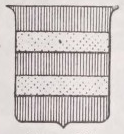
BAR-HEBRAeUS. See Abulfaragius, vol. i. p. 60. i BAR-LE-DUC, or Bar-sur·Ornain, the chief town of the department of Meuse in France. It occupies the declivity and base of a hill, in lat. 48° 46' 8* N., long. 5° 9' 47" E,, f on the River Ornain, a tributary of the Marne, 125 miles E. of Paris, and consists of an upper and lower town, the latter being the more modern and respectable of the two. It is a railway station on the Paris-and-Strasburg line, and the Marne-and-Rhine canal passes in the immediate vicinity. A college, a normal school, a society of agriculture and arts, and a public library, are among its educational institutions. The only building of mark is the church of St Pierre, which contains a curious figure of a half decayed body in white marble, originally forming part of the mausoleum of René of Chalons, Prince of Orange. The castle, which formed the nucleus of the upper town, was built by Frederick I., duke of Lorraine, in the 10th century. Louis XI. got possession of the place and caused it to be fortified in 1474. It was dismantled under Louis XIV. in 1670, but retains a few relics of the ancient works. An extensive traffic is maintained in wood, wine, and wool; and the manufactures of cotton stuffs, hats, hosiery, leather, and confections, are considerable, the last-mentioned article being especially celebrated. Population in 1872, 15,175. The district of Bar was governed by a series of counts from 959 to 1354, when it was raised to a duchy, which.in 1419 was ceded to René of Anjou, and henceforward followed the fortunes of Lorraine. The motto of the dukes, which has been adopted by the town, was Plus penser que dire. Their coins were usually distinguished by two barbels.
BAR-SUR-AUBE, the chief town of an arrondissement in the department of Aube, in France. It is a station on the Paris-and-Mulhouse line, and is situated on the right bank of the River Aube, at the foot of Sainte-Germaine, in a picturesque district, the wine of which is much esteemed. It is a pretty little town, with a few remains of its ancient fortifications. There are several churches of considerable antiquity—the most remarkable being Saint Maclou. In 1814 Bar-sur-Aube was the scene of several conflicts between Oudinot and the Allied Army, in which the latter ultimately gained the victory. Population in 1872, 4453. Long. 4° 44' E., lat. 48° 1 3' N.
BAR-SUR-SEINE, the chief town of an arrondissement in the department of the Aube, in France. In the Middle Ages Bar-sur-Seine was a place of considerable importance, and, according to Froissart, contained no fewer than 900 “hôtels” or mansions. It was devastated in 1359 by marauders from Lorraine, and suffered greatly in the religious wars of the 16 th and 17th centuries. A battle was fought here in 1814 between the French and the Allies. Long. 4° 24' E,, lat. 48° 5' N. Population in 1872, 2798.
the father of Zacharias, mentioned Matt. xxiii, 35, as slain between the temple and the altar. There is a great diversity of opinions concerning the person of this Zacharias, the son of Barachias. Some think him to be Zacharias, the son of Jehoiada, who was killed by the orders of Joash, between the temple and the altar, 2 Chron. xxiv, 21. Campbell thinks, with Father Simon, that Jehoiada had two names, Barachias and Jehoiada. See ZACHARIAS.
BARAHAT, a town of northern Hindustan, situated in the Himâlayas, and within the native state of Garhwâl, in 30° 43' N. lat. and 78° 29' E. long. The town was almost destroyed in 1803 by an earthquake—a calamity greatly aggravated by the houses having been built of large stones, with slated roofs. From its central position, it maintains a free communication with all parts of the hills, and those who make the pilgrimage to Gangotri generally halt here and lay in a stock of provisions for the journey. In the neighbourhood stands a curious trident in honour of Siva. The pedestal is of copper, the shaft of brass about 12 feet, and the forks about 6 feet in length. There is no tradition to show the origin of this curious relic; and although it bears a legible inscription, no one has as yet deciphered it. The temple in which it was formerly enclosed was destroyed by the earthquake of 1803.
son of Abinoam, chosen by God to deliver the Hebrews from that bondage under which they were held by Jabin, king of the Canaanites, Judges iv, 4, 5, &c. He refused to obey the Lord’s commands, signified to him by Deborah, the prophetess, unless she consented to go with him. Deborah accompanied Barak toward Kedesh of Naphtali; and, having assembled ten thousand men, they advanced to mount Tabor. Sisera, being informed of this movement, marched with nine hundred chariots of war, and encamped near the river Kishon. Barak rapidly descended from mount Tabor, and the Lord having spread terror through Sisera’s army Barak easily obtained a complete victory. Sisera was killed by Jael. Barak and Deborah composed a hymn of thanksgiving; and the land had peace forty years from A. M. 2719 to 2759, B. C. 1245.
BARANTE, Amable Guillaume Prosper, Baron de Brugière, an eminent French statesman, and the learned historian of the dukes of Burgundy, was the son of an advocate, and was born at Riom, June 10, 1782. At the age of sixteen he entered the Ecole Polytechnique at Paris, and at twenty obtained his first appointment in the civil service. His abilities secured him rapid promotion, and in 1806 the post of auditor to the council of state was given to him. After being employed in several political missions in Germany, Poland, and Spain, during the next two years, he became prefect of Vienne. At the time of the return of Napoleon I. he held the prefecture of Nantes, and this post he immediately resigned. About this period he married. On the second restoration of the Bourbons he was named councillor of state and Secretary-general of the Ministry of the Interior. About the same time he was elected to the Chamber of Deputies for the two departments of Puy-de-Dôme and Loire Inférieure; [but in the following year, in consequence of being under the legal age of a deputy, as required by a new law, he lost his seat. After filling for several years the post of Director-general of Indirect Taxes, he was created, in 1819, a peer of France, and took an active and prominent part as a member of the opposition in the debates of the Upper Chamber. During the same period the leisure hours which he could spare from his political engagements were devoted to literary studies. After the revolution of July 1830, Μ. de Barante was appointed ambassador to Turin; whence, five years later, he was transferred in the same capacity to St Petersburg. Throughout the reign of Louis Philippe he remained a supporter of the Government; and after the fall of the monarchy in February 1848, he withdrew from ...political affairs and retired to his country seat in Auvergne. Shortly before his retirement he had been made Grand Cross of the Legion of Honour. As a scholar his opus magnum, is the Histoire des Dues de Bourgogne de la Maison de Valois, which appeared in a series of volumes between 1824 and 1828. It procured him immediate admission among the Forty of the French Academy; and its great qualities of scholarship, impartiality, accuracy, and purity of style, have given him a place among the greatest French historians. Amongst the other literary works of Μ. de Barante are a Tableau de la Littérature Française au dixlιuitieme Siècle, of which several editions were published; Des Communes et de V Aristocratie (1821); a French translation of the dramatic works of Schiller; Questions Constitutionelles (1850); Histoire de la Convention Nationale, which appeared in six volumes between 1851 and 1853; Histoire du Directoire de la République Française (1855); Études Historiques et Biographiques (1857); La Vie Politique de Μ. Royer-Collard (1861). The version of Hamlet for Μ. Guizot’s Shakespeare was the work of Μ. de Barante. He spent the last eighteen years of his life in retirement in Auvergne, and died there on November 22, 1866.
BARANYA, a province in the kingdom of Hungary, extending over 1960 square miles. It lies in the angle formed at the junction of the Danube and the Drave, is traversed by offshoots of the Styrian Alps, and contains one city, 13 market-towns, and 341 villages. The inhabitants number about 283,500, and consist of Magyars, Germans, Croatians, and Servians, a large proportion being Roman Catholics. The greater part of the land is fertile, but a portion of it is marshy and unhealthy. The chief products are corn, wine, flax, tobacco, asparagus, and potash. Warm springs are found at Tapolcza, ι Sikl0s, and Harkany. There are some valuable quarries of marble and millstones, and numerous coal-mines. The rearing of sheep and swine is largely engaged in. The province is subdivided into six circles. The capital is Fünfkirchen, with a population of 23,863.
BARANZANO, Jean Antoine, surnamed Redemptus, an eminent natural philosopher and mathematician, was born in Piedmont in 1590, and died at Montargis in 1622. He was a Barnabite monk, and was for a time professor of philosophy and mathematics at Annecy. His principal works are Uranos copia (1617), De Novis Opinionibus Physicis (1619), Campus Philosophicus (1620). He was greatly esteemed by Lord Bacon, with whom he corresponded. Bacon’s letter to him (Spedding, Letters and Life of Bacon, vii. 374-6) shows that he thoroughly appreciated the new philosophy, and could see its weak as well as its strong points.
BARATIÈRE, or Barettier, John Philip, a very remarkable instance of precocious genius, was born at Schwabach near Nuremberg on the 10th January 1721. His early education was most carefully conducted by his father, Francis Baratière, pastor of the French church at Schwabach, and so rapid was his progress that by the time he was five years of age he could speak French, Latin, and Dutch with ease, and read Greek fluently. He then engaged in the study of Hebrew, and in three years was able to translate the Hebrew Bible into Latin or French, or to retranslate these versions into the original Hebrew. From his reading he collected materials for a dictionary of rare and difficult Hebrew words, with critical and philological observations; and when he was about eleven years old translated from the Hebrew Tudela’s Itinerarium. In his fourteenth year he was admitted Master of Arts at Halle, and received into the Royal Academy at Berlin. The last years of his short life he devoted to the study of history and antiquities, and had collected materials for histories of the Thirty Years’ War and of Antitrinitarianism, and for an Inquiry concerning Egyptian A ntiqyities. His health, which had always been weak, gave way completely under these labours, and he died on the 5th October 1740, aged 19 years and 8 months. He had published eleven separate works, and left a great quantity of manuscript materials.
BARATYNSKI, Jewgenij Abramovitch, a distinguished Russian poet, was born in 1792. He was educated at the royal school at St Petersburg, and then entered the army. He served for eight years in Finland, and appears to have got into disgrace on account of some foolish pranks which he had played. During these years he composed his first poem, Eva, which bears very manifest traces of his residence in Finland. Through the interest of friends he obtained leave from the Czar to retire from the army, and settled near Moscow. There, so far as his broken health would allow him, he devoted his time to poetry, and completed his chief work, The Gipsy, which has been spoken of by critics as the best poem of its kind in the Russian language, and as fully equal, if not superior, to the finest productions of Pouschkin. This was his only work cf any extent; his health gave way completely, and he died in 1844 at Naples, whither he had gone for the sake of the milder climate. A collected edition of his poems appeared at St Petersburg, in 2 vols., in 1835.
BARBACENA, a town of Brazil, in the province of Minas-Geraes, situated, at the height of about 3500 feet above the sea, in the Sierra Mantiqueira, 150 miles N.W. of Rio de Janeiro. It has low houses and broad streets, and contains a town-hall, a prison, a hospital, founded in 1852 by Antonio Ferreira Armond, and a “school of intermediate instruction,” in which French history and geometry are taught. The trade is principally in gold-dust, cotton, and coffee. Population of town and district, 14,000.