
The lower extremity of the face below the mouth; the point of the under jaw.
Word of the Day: Catachrestical
1. The lower extremity of the face below the mouth; the point of the under jaw.
2. The exterior or under surface embraced between the branches of the lower jaw bone, in birds.
Chin cough
Webster's Dictionary 1913
A contagious disease, often epidemic among children. It increases for some weeks, is attended with a difficulty of breathing, and in its worst stage, with a degree of convulsion. From a particular noise made in coughing, it is also called hooping cough.
Chin-hae
Encyclopedia Britannica
CHIN-HAE, or Ching-hai, a district town of China, in the province of Che-keang, at the mouth of the Yung-keang River, 12 miles N.E. of Ningpo, in 29° 58' N. lat. and 121° 45' E. long. It lies at the foot of a hill on a tongue of land, and is partly protected from the sea on the N. by a dike about three miles long, composed entirely of large blocks of hewn granite. The walls are 20 feet high and 3 miles in circumference. The defences were formerly of considerable strength, and included a well-built but now dismantled citadel on a precipitous cliff, 250 feet high, at the extremity of the tongue of land on which the town is built. In the neighbourhood an engagement took place between the English and Chinese in 1841.
9th ed. Encyclopædia Britannica, vol. 5, p. 674
[140 words — estimated reading time: 1 minute]
[140 words — estimated reading time: 1 minute]
A species of earthern ware made in china and so called from the country; called also china ware and porcelain. [ See Porcelain .]
1. A country in Eastern Asia.
2. China ware, which is the modern popular term for porcelain. See Porcelain.
China
Encyclopedia Britannica
CHINA
THE account of this great empire of Eastern Asia may fitly commence with a brief notice, lst , of China as known to the ancients (the land of Since or Seres), and, 2d , of China as known to mediaeval Europe (Cathay). China as known to the Ancients.
The spacious seat of ancient civilization which we call China has loomed always so large to Western eyes, and has, in spite of the distance, subtended so large an angle of vision, that, at eras far apart, we find it to have been distinguished by different appellations, according as it was reached by the southern sea-route, or by the northern landroute traversing the longitude of Asia.
In the former aspect the name has nearly always been some form of the name Sin, Chin, Since, China. In the latter point of view the region in question was known to the ancients as the land of the Seres, to the Middle Ages as the empire of Cathay.
The name of Chin has been supposed (doubtfully) to be derived from the dynasty of Thsin, which a little more than two centuries before our era enjoyed a brief but very vigorous existence, uniting all the Chinese provinces under its authority, and extending its conquests far beyond those limits to the south and the west....
The mention of the Chinas in ancient Sanskrit literature, both in the laws of Manu and in the Mahâbhârat, has often been supposed to prove the application of the name long before the predominance of the Thsin dynasty. But the coupling of that name with the Daradas, still surviving as the people of Dardistan, on the Indus, suggests it as more probable that those Chinas were a kindred race of mountaineers, whose name as Shinas in fact likewise remains applied to a branch of the Dard races. Whether the Sinim of the prophet Isaiah should be interpreted of the Chinese is probably not at present susceptible of any decision; by the context it appears certainly to indicate a people of the extreme east or south.
The name probably came to Europe through the Arabs, who made the China of the further east into Sin, and perhaps sometimes into Thin. Hence the Thin of the author of the Periplus of the Erythraean Sea, who appears to be the first extant writer to employ the name in this form (i.e., assuming Müller’s view that he belongs to the 1st century); hence also the Since and Thince of Claudius Ptolemy.
It has often indeed been denied that the Sinae of Ptolemy really represented the Chinese. But if we compare the statement of Marcianus of Heraclea (a mere condenser of Ptolemy), when he tells us that the “nations of the Sinae lie at the extremity of the habitable world, and adjoin the eastern Terra Incognita,” with that of Cosmas, who says, in speaking of Tzinista, a name of which no one can question the application to China, that “beyond this there is neither habitation nor navigation,”—we cannot doubt the same region to be meant by both. The fundamental error of Ptolemy’s conception of the Indian Sea as a closed basin rendered it impossible but that he should misplace the Chinese coast. But considering that the name of Sin has come down among the Arabs from time immemorial as applied to the Chinese, considering that in the work of Ptolemy this name certainly represented the furthest known East, and considering how inaccurate are Ptolemy’s configurations and longitudes much nearer home, it seems almost as reasonable to deny the identity of his India with ours as to deny that his Sinae were Chinese.
If we now turn to the Seres we find this name mentioned by classic authors much more frequently and at an earlier date, for the passages of Eratosthenes (in Strabo), formerly supposed to speak of a parallel passing through Thinoe — διά Θιrωv, are now known to read correctly διΑΛ/νών. The name Seres indeed is familiar to the Latin poets of the Augustan age, but always in a vague way, and usually with a general reference to Central Asia and the further East. We find, however, that the first endeavours to assign more accurately the position of this people, which are those of Mela and Pliny, gravitate distinctly towards China in its northern aspect as the true idea involved. Thus Mela describes the remotest east of Asia as occupied by the three races (proceeding from south to north), Indians, Seres, and Scyths; just as in a general way we might say still that Eastern Asia is occupied by the Indies, China, and Tartary.
Ptolemy first uses the names of Sera and Serιce, the former for the chief city, the latter for the country of the Seres, and as usual defines their position with a precision far beyond what his knowledge justified,—the necessary result of his system. Yet even his definition of Serice is most consistent with the view that this name indicated the Chinese empire in its northern aspect, for he carries it eastward to the 180th degree of longitude, which is also, according to his calculation, in a lower latitude the eastern boundary of the Sinae.
Ammianus Marcellinus devotes some paragraphs to a description of the Seres and their country, one passage of which is startling at first sight in its seeming allusion to the Great Wall, and in this sense it has been rashly interpreted by Lassen and by Reinaud. But Ammianus is merely converting Ptolemy’s dry tables into fine writing, and speaks only of an encircling rampart of mountains within which the spacious and happy valley of the Seres lies. It is true that Ptolemy makes h;s Serice extend westward to Imaus, i.e., to Pamir. But the Chinese empire did so extend at that epoch, as it did twenty years ago, and we find Lieut. John Wood in 1838 speaking of “ China” as lying immediately beyond Pamir, just as the Arabs of the 8th century spoke of the country beyond the Jaxartes as “Sin,” and as Ptolemy spoke of “Series ” as immediately beyond Imaus.
If we fuse into one the ancient notices of the Seres and their country, omitting anomalous statements and manifest fables, the result will be something like the following :— “The region of the Seres is a vast and populous country, touching on the east the Ocean and the limits of the habitable world, and extending west to Imaus and the confines of Bactria. The people are civilized, mild, just, and frugal, eschewing collisions with their neighbours, and even shy of close intercourse, but not averse to dispose of their own products, of which raw silk is the staple, but which include also silk-stuffs, fine furs, and iron of remarkable quality.” That is manifestly a definition of the Chinese.
That Greek and Roman knowledge of the true position of so remote a nation should at best have been somewhat hazy is nothing wonderful. And it is worthy of note that the view entertained by the ancient Chinese of the Roman empire and its inhabitants, under the name of Τadhsin t had some striking points of analogy to those views of the Chinese which are indicated in the classical descriptions of the Seres. There can be no mistaking the fact that in this case also the great object was within the horizon of vision, yet the details ascribed to it are often far from being true characteristics, being only the accidents of its outer borders.
China as known to Mediaeval Europe. Cathay is the name by which the Chinese empire was known to mediaeva] Europe, and is in its original form {Kitai) that by which China is still known in Russia, and to most of the nations of Central Asia. West of Russia the name has long ceased to be a geographical expression, but it is associated with a remarkable phase in the history of geography and commerce, of which we purpose under this head to give some account.
The name first became known to Europe in the 13th century, when the vast conquests of Jenghiz and his house drew a new and vivid attention to Asia. For some three centuries previously the northern provinces of China had been detached from indigenous rule, and subject to northern conquerors. The first of these foreign dynasties was of a race called Khitán, issuing from the basin of the Sungari River, and supposed (but doubtfully) to have been of the blood of the modern Tunguses. The rule of this race endured for two centuries, and originated the application of the name Khitat or Khitdi to Northern China. The dynasty itself, known in Chinese history as Liao, or “Iron,” disappeared from China 1123, but the name remained attached to the territory which they had ruled.
The Khitán were displaced by the Nyûchá or Chdrclιe race, akin to the modern Manchus who now rule China. These reigned, under the title of Kin, or “Golden,” till Jenghiz and his Mongols invaded them in turn. In 1234 the conquest of the Kin empire was completed, and the dynasty extinguished under Okkodai, the son and successor of Jenghiz Khán. Forty years later, in the reign of Kublaï, grandson and ablest successor of Jenghiz, the Mongol rule was extended over Southern China (1276), which till then had remained under a native dynasty, the Sung, holding its royal residence in a vast and splendid city, now known as Hang-chow, but then as Ling-ngan, or more commonly as Kingsze, i.e., the Court. The southern empire was usually called by the conquerors Mantzi (or as some of the old travellers write, Mangï), a name which Western Asiatics seem to have identified with Mðxhvn (from the Sanskrit Mahaxhin), one of the names by which China was known to the traders from Persian and Arabian ports.
The conquests of Jenghiz and his successors had spread not only over China and the adjoining East, but westward also over all Northern Asia, Persia, Armenia, part of Asia Minor, and Russia, threatening to deluge Christendom. Though the Mongol wave retired, as it seemed almost by an immediate act of Providence, when Europe lay at its feet, it had levelled or covered all political barriers from the frontier of Poland to the Yellow Sea, and when Western Europe recovered from its alarm, Asia lay open, as never before or since, to the inspection of Christendom. Princes, envoys, priests,—half-missionary half-envoy—visited the court of the great Khán in Mongolia; and besides these, the accidents of war, commerce, or opportunity carried a variety of persons from various classes of human life into the depths of Asia. “ ’Tis worthy of the grateful remembrance of all Christian people,” says an able missionary friar of the next age (Ricold of Monte Croce), “that just at the time when God sent forth into the Eastern parts of the world the Tartars to slay and to be slain, He also sent into the West his faithful and blessed servants, Dominie and Francis, to enlighten, instruct, and build up in the faith.” Whatever on the whole may be thought of the world’s debt to Dominic, it is to the two mendicant orders, but especially to the Franciscans, that we owe a vast amount of information about mediaeval Asia, and, among other things, the first mention of Cathay. Among the many strangers who reached Mongolia were (1245-47) John de Plano Carpini (see Carpini) and (1253) William of Rubruk (Rubruquis) in French Flanders, both Franciscan friars of high intelligence, who happily have left behind them reports of their observations.
Carpini, after mentioning the wars of Jenghiz against the Kitai, goes on to speak of that people as follows :— “Now these Kitai are heathen men, and have a written character of their own. . . . They seem, indeed, to be kindly and polished folks enough. They have no beard, and in character of countenance have a considerable resemblance to the Mongols” [are Mongoloid, as our ethnologists would say], “but are not so broad in the face. They have a peculiar language. Their betters as craftsmen in every art practised by man are not to be found in the whole world. Their country is very rich in com, in wine, in gold and silver, in silk, and in every kind of produce tending to the support of mankind.” The notice of Rubruk, shrewder and more graphic, runs thus :—“Further on is Great Cathay, which I take to be the country which was anciently called the Land of the Seres. For the best silk stuffs are still got from them. . . . The sea lies between it and India. Those Cathayans are little fellows, speaking much through the nose, and, as is general with all those Eastern people, their eyes are very narrow. They are first-rate artists in every kind, and their physicians have a thorough knowledge of the virtues of herbs, and an admirable skill in diagnosis by the pulse. . . . The common money of Cathay consists of pieces of cotton-paper, about a palm in length and breadth, upon which certain lines are printed, resembling the seal of Mangu Khán. They do their writing with a pencil, such as painters paint with, and a single character of theirs comprehends several letters, so as to form a whole word.” Here we have not only what is probably the first European notice of papermoney, but a partial recognition of the peculiarity of Chinese writing, and a perception that puts to shame the perverse boggling of later critics over the identity of these Cathayans with the Seres of classic fame.
But though these travellers saw Cathayans in the bazaars of the Great Khan’s camps, the first actual visitors of Cathay itself were the Polo family (see Polo, Marco), and it is to the book of Marco’s recollections mainly that Cathay owed the growing familiarity of its name in Europe during the 14th and 15 th centuries. It is, however, a great mistake to suppose, as has often been assumed, that the residence of the Polos in that country remained an isolated fact. They were but the pioneers of a very considerable intercourse, which endured till the decay of the Mongol dynasty in Cathay, τ.e., for about half a century.
We have no evidence that either in the 13th or 14th century Cathayans, i.e., Chinese, ever reached Europe, but it is possible that some did, at least, in the former century. For, during the campaigns of Hulaku in Persia (1256-1265), and the reigns of his successors, Chinese engineers were employed on the banks of the Tigris, and Chinese astrologers and physicians could be consulted at Tabriz. Many diplomatic communications passed between the Hulakuid Ilkhans and the princes of Christendom. The former, as the great Khan’s liegemen, still received from him their seals of state; and two of their letters which survive in the archives of France exhibit the vermilion impressions of those seals in Chinese characters,—perhaps affording the earliest specimen of that character which reached Western Europe.
Just as the Polos were reaching their native city (1295), after an absence of quarter of a century, the forerunner of a new series of travellers was entering Southern China by way of the Indian seas. This was John of Monte Corvino, another Franciscan who, already some fifty years of age, was plunging single-handed into that great ocean of Paganism to preach the gospel according to his lights. After years of uphill and solitary toil converts began to multiply; coadjutors joined him. The Papal See became cognizant of the harvest that was being reaped in the far East. It made Friar John Archbishop in Cambaluc (or Peking), with patriarchal authority, and sent him batches of suffragan bishops and preachers of his own order. The Roman Church spread; churches and Minorite houses were established at Cambaluc, at Zayton or Tswan-chow in Fuh-keen, at Yang-chow, and elsewhere; and the missions flourished under the smile of the Great Khan, as the Jesuit missions did for a time under the Manchu emperors three centuries and a half later. Archbishop John was followed to the grave, about 1328, by mourning multitudes of Pagans and Christians alike. Several of the bishops and friars who served under him have left letters or other memoranda of their experience, e.g., Andrew, bishop of Zayton, John of Cora, afterwards archbishop of Sultania in Persia, and Odoric of Pordenone, whose fame as a pious traveller won from the vox populi at his funeral a beatification which the church was fain to seal. The only ecclesiastical narrative regarding Cathay, of which we are aware, subsequent to the time of Archbishop John, is that which has been gathered from the recollections of John de’ Marignolli, a Florentine Franciscan, who was sent by Pope Benedict XII. with a mission to the Great Khan, in return for one from that potentate which arrived at Avignon from Cathay in 1338, and who spent four years (1342-46) at the court of Cambaluc as legate of the Holy See. These recollections are found in a singular position, dispersed incoherently over a chronicle of Bohemia which the traveller wrote by order of the emperor Charles IV., whose chaplain he was after his return.
But intercourse during the period in question was not confined to ecclesiastical channels. Commerce also grew up, and flourished for a time even along the vast line that stretches from Genoa and Florence to the marts of Chĕ-keang and ¢uh-keen. The record is very fragmentary and imperfect, but many circumstances and incidental notices show how frequently the remote East was reached by European traders in the first half of the 14th century,— a state of things which it is very difficult to realize when we see how all those regions, when reopened to knowledge two centuries later, seemed to be discoveries as new as the empires which, about the same time, Cortes and Pizarro were conquering in the West.
This commercial intercourse probably commenced about 1310-1320. Monte Corvino, writing in 1305, says it was twelve years since he had heard any news from Europe; the only Western stranger who had arrived in all that time being a certain Lombard chirurgeon (probably one of the Patarini who got hard measure at home in those days), who had spread the most incredible blasphemies about the Roman Curia and the order of St Francis. Yet even on his first entrance to Cathay Friar John had been accom panied by one Master Peter of Lucolongo, whom he describes as a faithful Christian man and a great merchant, and who seems to have remained many years at Peking. The letter of Andrew, bishop of Zayton (1326), quotes the opinion of Genoese merchants at that port regarding a question of exchanges. Odoric, who was in Cathay about 1323-1327, refers for confirmation of the wonders which he related of the great city of Cansay (z.e., King-sze, hod. Hang-chow), to the many persons whom he had met at Venice since his return, who had themselves been witnesses of those marvels. And John Marignolli, some twenty years later, found attached to one of the convents at Zayton, in Fuh-keen, a fondaco or factory for the accommodation of the Christian merchants.
But by far the most distinct and notable evidence of the importance and frequency of European trade with Cathay, of which silk and silk goods formed the staple, is to be found in the commercial hand-book (circa 1340) of Francesco Balducci Pegolotti, a clerk and factor of the great Florentine house of the Bardi, which was brought to the ground about that time by its dealings with Edward III. of England. This book, called by its author Libro di diυisamenti di Paesi, is a sort of trade-guide, devoting successive chapters to the various ports and markets of his time, detailing the nature of imports and exports at each, the duties and exactions, the local customs of business, weights, measures, and money. The first two chapters of this work contain instructions for the merchant proceeding to Cathay; and it is evident, from the terms used, that the road thither was not unfrequently travelled by European merchants, from whom Pegolotti had derived his information. The route which he describes lay by Azoff, Astrakhan, Khiva, Otrar (on the Jaxartes), Almálik (Gulja in Hi), Kan∙chow (in Kansuh), and so to Hang-chow and Peking. Particulars are given as to the silver ingots which formed the currency of Tartary, and the paper-money of Cathay. That the ventures on this trade were not insignificant is plain from the example taken by the author to illustrate the question of expenses on the journey, which is that of a merchant investing in goods there to the amount of some <£12,000 (⅛.e., in actual gold value, not as calculated by any fanciful and fallacious equation of values).
Of the same remarkable phase of history that we are here considering we have also a number of notices by Mahometan writers. The establishment of the Mongol dynasty in Persia, by which the Great Khan was acknowledged...
9th ed. Encyclopædia Britannica, vol. 5, p. 626
[63,357 words — estimated reading time: 6.1 hours]
[63,357 words — estimated reading time: 6.1 hours]
The sweet orange, said to have been originally brought from China.
The root of a species Smilax, brought from the East Indies, of a pale reddish color, with no smell, and very little taste.
See Quinaldine.
A native of China; a Chinese.
See Chinquapin.
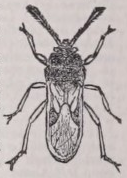
A genus of insects, resembling the feather-wing moths. These insects live in the flowers of plants, and wander from flower to flower, but prefer those which are sweetest.
Chincha islands
Encyclopedia Britannica
CHINCHA ISLANDS, three small islands in the Pacific Ocean, about 12 miles from the coast of Peru, opposite the town of Pisco, and 106 miles distant from Callao, in 13° 38' S. lat. and 76° 28' W. long. The largest of the group, known as the North Island or Isla del Norte is only four-fifths of a mile in length, and about a third in breadth; and their whole importance is due to their immense deposits of guano. They are of granitic formation, and rise from the sea in precipitous cliffs, worn out into countless caves and hollows, which furnish convenient resting-places for the sea-fowl. Their highest points attain an elevation of 113 feet, which was increased about 90 feet by the guano-bed. The name of the islands, and of the town and valley of Chincha on the mainland, is derived from an ancient Indian race which has left some interesting relics of its sojourn. A stone idol and two water-pots of grotesque construction were discovered under 62 feet of guano; and a number of wooden idols, two regal emblems, and a curious stone slab have also been found. That these must be of very great antiquity is obvious; but the rate of increase in the guano deposits is too much a matter of conjecture to furnish even an approximate date. Mr George Peacock, of the Pacific Steam Navigation Company, calculated the quantity of guano in the islands in 1846 at 18,250,000 tons; and, according to the survey of the Peruvian Government in 1853, they then still contained 12,376,100. The supply is now practically exhausted; and the foreign export which had begun in 1841 was brought to a close in 1872. Between 1853 and 1872, 8,000,000 tons were obtained from the North and Middle Islands. The former was still visited by 35 Peruvian vessels in 1873, and furnished 11,634 tons. Its population in 1874 was ...only 105 persons, and the other islands were quite deserted; whereas in 1868 the total population amounted to 6000, who consisted partly of Peruvians, partly of Chinese coolies, and partly of Peruvian convicts. In 1853-4 the Chincha Islands were the chief object in the contest known as the Guano War between President Echenique and General Castilla; and in 1864 they were taken possession of by the Spanish rear-admiral Pinzon in order to bring the Peruvian Government to apologize for its treatment of the immigrants from Biscay.
9th ed. Encyclopædia Britannica, vol. 5, p. 673
[415 words — estimated reading time: 3 minutes]
[415 words — estimated reading time: 3 minutes]
Penuriousness.
Chinchew
Encyclopedia Britannica
CHINCHEW, or Chinchu, is the name usually given in English charts to an ancient and famous port of China in the province of Fuh-keen, of which the Chinese name is Chwanchow-foo, or Tswanchaw-foo (by French scholars written Thdiοuan-chxοu-fοu). It stands in 24° 57' N. lat. and 118° 35' E. long. It is described by Martini (in the 17 th century) as pleasantly situated on a tongue of land between two branches of the river which forms the harbour, and these so deep that the largest (Chinese) ships could come up to the walls. The city, though now occasionally visited by missionaries and others, is not one of the treatyports, and modern information about it is not abundant. But large junks still come close to the city. The walls have a circuit of 7 or 8 miles, but embrace much vacant ground. The chief exports are tea and sugar, tobacco, china-ware, nankeens, &c. There are still to be seen the remains of a fine mosque, founded by the Arab traders who resorted thither. The English Presbyterian Mission has had a chapel in the city since about 1862. Beyond the northern branch of the river (which is several miles from the city) there is a suburb called Loyang, which is approached by the most celebrated bridge in China.
Chwanchow was in the Middle Ages the great port of Western trade with China, and was known to the Arabs and to Europeans as Zaitûn or Zaytοn, the name under which it appears in Abulfeda’s Geography, and in the Mongol history of Rashîduddîn, as well as in Ibn Batuta, Marco Polo, and other mediaeval travellers (see China, p. 628). Marco Polo calls it ,, one of the two greatest commercial havens in the world;” Ibn Batuta, “the greatest seaport in the world.”...
Some argument has of late been alleged against the identity of Zayton with Chwanchow, and in favour of its being rather Chang chow (a great city 60 miles W.S.W. of Chwanchow), or a port on the river of Changchow near Amoy. It is possible that the name “Port of Zayton” covered a good deal, and may have embraced the great basin called Amoy Harbour, the chief part of which lies within the Fοο or department of Chwanchow; but there is hardly room for doubt that the Zayton of Marco Polo and Abulfeda was the Chwanchow of the Chinese.
Ibn Batuta informs us that a rich silk texture made here was called Zaitûniya ; and there can be little doubt that this is the real origin of our word Satin, — Zettani in mediaeval Italian, Aceytuni in Spanish.
With the question already indicated is connected a singular ambiguity. The name Chinchew is now applied as we have defined; but the Chincheo or Chinchew of old English books, and of the Spaniards and Portuguese to this day, is, as Mr G. Phillips has lately pointed out, not Chwanchow but Changchow. The province of Fuh-keen is often called Chincheoby the Jesuits of the 16th and 17th centuries. Changchow, and its dependencies seem to have constituted the port of Fuh-keen with which Macao and Manilla chiefly communicated at that period, and where the Portuguese had at one time a factory; and hence they seem to have applied the same name to the port and the province, though Changchow has never been the official capital of Fuh-keen. How English mariners and maps came to transfer the name to Chwanchow is obscure. (See«7owmaZ R. Geοg. Sοc., vol. xliv.; Yule’s Marco Polo, 2d ed., 1875, vol ii., &c.) (h. y.)
9th ed. Encyclopædia Britannica, vol. 5, p. 673
[612 words — estimated reading time: 4 minutes]
[612 words — estimated reading time: 4 minutes]
1. A small rodent (Chinchilla lanigera), of the size of a large squirrel, remarkable for its fine fur, which is very soft and of a pearly gray color. It is a native of Peru and Chili.
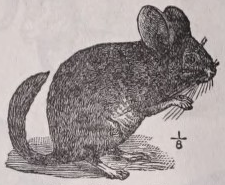
2. The fur of the chinchilla.
Chinchilla
Encyclopedia Britannica
CHINCHILLA, a city of Spain, in the province of Murcia, picturesquely situated on an abrupt hill ten miles south-east of Albacete, in the immediate neighbourhood of the junction of the railway lines from Cartagena and Valencia to the capital. It is surrounded by walls rebuilt in 1837, and defended by a citadel; and in the principal church there are reservoirs capable of furnishing the city with water for several months. Earthenware and crucibles, coarse linen, and woollen cloths are manufactured. Population, 3500....
CHINCHILLA(Chinchilla lanigera), a small Mammal belonging to the order Rodentia, inhabits the eastern slopes of the Andes in Chili, Bolivia, and Peru, where it has a vertical range of from 8000 to 12,000 feet. It is very similar in size to the common squirrel,being about 10 inches long exclusive of the tail, and in the form of its head it resembles a rabbit. It is covered with a dense soft fur three-fourths of an inch long on the back, and upwards of an inch in length on the sides, of a slate-grey colour, darkly mottled on the upper surface, and of a dusky white beneath; its ears are long and broad and thinly covered with hair. It lives in burrows, and these subterranean dwellings undermine some parts of the Chilian Andes to such an extent as to cause considerable inconvenience and even danger to travellers on horseback. Chinchillas live in communities, forming their burrows among loose rocks, and coming out to feed only in the early morning and towards sunset. They feed chiefly on roots and grasses, in search of which they often travel a considerable distance from their homes; and when eating they sit on their haunches, holding their food in their fore paws. The Indians in hunting them employ a weasel (Galictis vittata), which is trained to enter the crevices of the rocks, where the chinchillas often lie concealed during the day in order to avoid the sunshine, and drive them out, when they are readily killed. The fur of this rodent was prized by the ancient Peruvians, who made coverlets and other articles with the skin, and at the present day they are exported in large numbers to Europe—134,000 skins having been imported into London during 1874— where they are made into muffs, tippets, and trimmings for ladies’ dresses. That they have not under such circumstances become rare, if not altogether extinct, is doubtless owing to their extraordinary fecundity, the female usually producing five or six young twice a year. They are exceedingly docile in disposition and cleanly in their habits, and are thus well fitted for domestication, and in this state, owing to the value of their furs, might no doubt be profitably reared.
9th ed. Encyclopædia Britannica, vol. 5, p. 673
[83 words — estimated reading time: 1 minute]
[83 words — estimated reading time: 1 minute]
No thesaurus entries found for "Chin".
King James Bible KJV Bible
Berean Standard Bible BSB Bible
6 KJV and 9 BSB verses contain “Chin”
Then the priest shall see the plague: and, behold, if it be in sight deeper than the skin; and there be in it a yellow thin hair; then the priest shall pronounce him unclean: it is a dry scall, even a leprosy upon the head or beard.
the priest shall examine the infection, and if it appears to be deeper than the skin and the hair in it is yellow and thin, the priest must pronounce him unclean; it is a scaly outbreak, an infectious disease of the head or chin.
And from the plain to the sea of Chinneroth on the east, and unto the sea of the plain, even the salt sea on the east, the way to Beth-jeshimoth; and from the south, under Ashdoth-pisgah:
as well as the Arabah east of the Sea of Chinnereth to the Sea of the Arabah (the Salt Sea), eastward through Beth-jeshimoth, and southward below the slopes of Pisgah.
And in the valley, Beth-aram, and Beth-nimrah, and Succoth, and Zaphon, the rest of the kingdom of Sihon king of Heshbon, Jordan and his border, even unto the edge of the sea of Chinnereth on the other side Jordan eastward.
and in the valley, Beth-haram, Beth-nimrah, Succoth, and Zaphon, with the rest of the kingdom of Sihon king of Heshbon (the territory on the east side of the Jordan up to the edge of the Sea of Chinnereth).
And the fenced cities are Ziddim, Zer, and Hammath, Rakkath, and Chinnereth,
The fortified cities were Ziddim, Zer, Hammath, Rakkath, Chinnereth,