
A title of honor equivalent to master; used by Shakspeare, Prior, etc., but now obsolete.
Word of the Day: Catachrestical
1. A title of honor equivalent to master, or sir.
Dan
Encyclopedia Britannica
DAN, a town of ancient Judea, near the head-waters of the Jordan, inhabited at the time of the Israelitish conquest by a peaceful and commercial population whose name for their city was Laish, or Leshem. It appears to have been even at this early period a sacred city, and hence it was naturally chosen long after by Jeroboam as the seat of one of his golden calves. The Jewish name, which it derived from the tribe to whose lot it fell, became proverbial in the expression “from Dan to Beersheba.” The town was plundered by Benhadad of Damascus, and appears from that time to have gradually declined. Its site is probably marked by the mound called Tell-el-Kady, “the hill of the judge,” or “the hill of Dan.”
9th ed. Encyclopædia Britannica, vol. 6, p. 796
[130 words — estimated reading time: 1 minute]
[130 words — estimated reading time: 1 minute]
Dan
Watson's Biblical & Theological Dictionary
the fifth son of Jacob, Gen. xxx, 1–6. Dan had but one son, whose name was Hushim, Gen. xlvi, 23; yet he had a numerous posterity; for, on leaving Egypt, this tribe consisted of sixty-two thousand seven hundred men able to bear arms, Num. i, 38. Of Jacob’s blessing Dan, see Gen. xlix, 16, 17. They took Laish, Judges xviii, 1; Joshua xix, 47. They called the city Dan, after their progenitor. The city of Dan was situated at the northern extremity of the land of Israel: hence the phrase, “from Dan to Beersheba,” denoting the whole length of the land of promise. Here Jeroboam, the son of Nebat, set up one of his golden calves, 1 Kings xii, 29; and the other at Bethel.
Watson's Biblical & Theological Dictionary
[125 words — estimated reading time: 1 minute]
[125 words — estimated reading time: 1 minute]
Dana
Encyclopedia Britannica
DANA, the name of an American family of which several members have attained eminence. Richard Dana (1699-1772) was a leading barrister of Boston, and a prominent opponent of the Stamp Act. His son, Francis Dana, born in Charlestown in 1743, also began life as a barrister. In 1774 he was chosen to represent Cambridge in the first provincial congress of Massachusetts; and in the following year he visited England, bearing letters to Dr Franklin from several of the patriot leaders. From 1776 to 1780 he was a member* of the Massachusetts council; and in 1777 and 1778 he represented Massachusetts in the National Congress. He was also one of the committee appointed tn administer military affairs, In 1779 he was appointed secretary of legation to John Adams, the ambassador to England; and for two years (1781-83) he was envoy to St Petersburg. He took an active part in politics till 1791, when, being appointed chief-justice of Massachusetts, he devoted himself to his judicial duties. He died at Cambridge, April 25,1811. Francis Dana was the father of Richard Henry Dana, born in 1787, the author of The Buccaneer and other Poems, and a number of essays, many of which first appeared in the North American Review, of which Dana was one of the founders. His son, also named Richard Henry Dana, is an authority on maritime law, and the author of the popular novel Two Years before the Mast, which is founded on personal experience, and of The Seaman’s Friend, or The Seaman’s Manual.
9th ed. Encyclopædia Britannica, vol. 6, p. 796
[259 words — estimated reading time: 2 minutes]
[259 words — estimated reading time: 2 minutes]
Danae
Encyclopedia Britannica
DANAE, in Greek legend, is known only in connection with her son Perseus (Iliad, xiv. 319), and in particular from the circumstances of his birth. Her father Acrisius, king of Argos, having been warned by an oracle that his daughter would bear a son who would put him to death and rule in his stead, sought to prevent this by confiping Danae in an underground chamber lined with bronze like the underground treasuries still visible at Mycenae. But Zeus descended to her in a shower of gold, and she gave birth to Perseus, upon which Acrisius placed her and her infant in a wooden box and consigned them to the sea. After long floating about they were picked up by Dictys, a fisherman who lived with his brother Polydectes on the small island of Seriphus. There she remained till her son had grown up and returned from his expedition of cutting off Medusa’s head, when, finding his mother persecuted by Polydectes, Perseus first turned her tormentor and those with him into stone by exhibiting Medusa’s head, and then set out with her for Argos. From this point she has no more part in the Greek legend. In Latin legend she goes to Italy and marries Pilumnus or Picumnus. It has been pointed out that Perseus was a solar hero, and his birth in the dark chamber has been compared with the birth of Apollo from Leto, a goddess of the darkness of night. The wooden box in which mother and son floated safely is also compared with the boat of Helios, and the golden rain of Zeus may be the beams of sunlight.
9th ed. Encyclopædia Britannica, vol. 6, p. 797
[275 words — estimated reading time: 2 minutes]
[275 words — estimated reading time: 2 minutes]
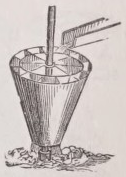
A water wheel having a vertical axis, and an inner and outer tapering shell, between which are vanes or floats attached usually to both shells, but sometimes only to one.
A cobaltiferous variety of arsenopyrite.
A mineral occuring in octahedral crystals, also massive, of a reddish color. It is a silicate of iron, zinc manganese, and glucinum, containing sulphur.
Danaus
Encyclopedia Britannica
DANAUS, in Greek legend, was the founder of Argos and of the race of Danai, by which name the Argives are designated in Homer. A local feature of Argos was the drought which in summer sealed its numerous small springs, and with this feature Danaus was identified as having made the first well, while his fifty daughters (Danaides), seem to represent the many springs of the district. In the lower world they had to carry water in broken vases. It was in searching for water that his daughter Amymone was pursued by a satyr and rescued by Poseidon, the god of that element, who struck out a spring for her with his trident. But while the legend of Danaus thus seems to have been of native Argive origin, he was, in accordance with the tendency at one time of tracing genealogies to Egypt, described as a son of Belus, king of Egypt, and Anchirrhoe, a daughter of the Nile, having a brother jEgyptus. This brother had fifty sons, while Danaus had fifty daughters, and because the latter would not marry their cousins, they were obliged to escape from Egypt with their father Danaus. The sons of JEgyptus pursued them to Argos and besieged them there, till it was agreed by Danaus that they should marry his daughters. But to each of his daughters he gave a knife with injunctions to slay her husband on the marriage night. Except Hypermnestra they all obeyed, and it was for this that they had to carry water in the lower world. Afterwards he gave them in marriage to the noblest youths of the district who could prove their claims by the greatest speed in the race course.
9th ed. Encyclopædia Britannica, vol. 6, p. 797
[283 words — estimated reading time: 2 minutes]
[283 words — estimated reading time: 2 minutes]
Danbury
Encyclopedia Britannica
DANBURY, a town of the United States, in Fairfield county, Connecticut, situated on the Still river, a tributary of the Housatonic, about 53 miles N.N.E. of New York, with which it is connected by rail. Besides the county buildings, it has two national banks, nine churches, a public library, and a high school capable of accommodating 600 pupils. There is a monument, erected in 1854 to the memory of General Wooster, who was mortally wounded in 1777, when the town was burned by the English under General Tryon, and another, of more recent date, to commemorate the other citizens who perished on the same occasion. The principal industry is the manufacture of hats, which was introduced in 1780, and is carried on by ten separate companies; shirts are also largely produced, and sewing machines are constructed. The town, which was incorporated in 1696, had in 1870 a population of 8753, Its Indian name was Pahquioque.
9th ed. Encyclopædia Britannica, vol. 6, p. 797
[157 words — estimated reading time: 1 minute]
[157 words — estimated reading time: 1 minute]
Danby
Encyclopedia Britannica
DANBY, Francis (1793-1861), a painter of poetical landscape, who possesses some significance and importance in the English school, was born in the south of Ireland, November 16, 1793. His father farmed a small property he owned near Wexford, and Francis began life in the country, but the death of his father caused the family to remove to Dublin, while he was still a schoolboy, and there his bias to art very quickly developed itself, and superseded any other education. He began to practise drawing at the Royal Dublin Society’s schools; and under a Mr O’Connor, an erratic youth of his own age with national peculiarities, he began painting landscape. The capital of Ireland has never shown very much interest in the arts, but there was a youth then rising who afterwards made his mark in archaeology, if not in his profession of landscape painting, George Petrie, with whom Danby formed an acquaintance; and all three left for London together in 1813. This expedition, undertaken with very inadequate funds, and no aid, quickly came to an end and they had to get home again by walking all the way. At Bristol they made a pause, and Danby finding he could get trifling sums for water-colour drawings, remained there working diligently and sending to the London exhibitions pictures of importance. There his large pictures in oil quickly attracted attention. They were very powerful in effect and imaginative in invention; and, had his Upas Tree and the Delivery of the Israelites from Egypt been produced before a greater man, John Martin, had shown the way to express multitude, vastness, and fabulous wonders in architecture, Danby would be properly considered one of the great men in modern painting. The Upas Tree (1820), his most independent and original picture, is, however, a very ...noble work, not only in invention but in execution; the poison tree, surrounded by the remains of slaves who have been sent to gather its gum, grows alone in a valley of rocks lit by a ghastly moonlight, which is itself a triumph of art. The Delivery of the Israelites (1825) is much more strictly a derivation from Martin. The Royal Academy, however, elected him into their body on the strength of it, thinking by his means to checkmate that master, who did not aspire to Academic honours. He now left Bristol for London, and in 1828 exhibited his Opening of the Sixth Seal at the British Institution, receiving from that body an honorary premium of 200 guineas; and this picture, which was admirably painted, was followed by two others from the Apocalypse, both productions of surprising power, though certainly indebted to the works of a similar species of invention appearing a few years earlier. These were the last of his important and large pictures. He suddenly left London, declaring that he would never live there again, and that the Academy, instead of aiding him, had, somehow or other, used him badly. Some insurmountable domestic difficulty overtook him also, and for eleven or twelve years he lived on the Lake of Geneva, a Bohemian with boat-building fancies, painting only now and then. He returned to England in 1841, when his sons James and Thomas, who have both followed the art with considerable advantage, were growing up. The only additional pictures it is necessary to mention are the Golden Age, and the Evening Gun, the first begun before he left England, the second painted after his return, when he had taken up his abode at Exmouth, where he died February 9, 1861, in his sixty-eigh th year. His Upas Tree is now i n the South Kensington National Collection by the Townshend bequest, and is held in general respect, but such of his other works as have been lately seen have not maintained his reputation. They have the hot tone and opacity of bronze, and reveal the secret that they have been produced in a darkened studio, and irrespective of the facts and even of the sentiment of living nature. Notwithstanding these drawbacks they must be always interesting from their imaginative motives, and undoubtedly play a noticeable part in the history of English landscape art.
9th ed. Encyclopædia Britannica, vol. 6, p. 797
[698 words — estimated reading time: 4 minutes]
[698 words — estimated reading time: 4 minutes]
1. In general sense, a leaping and frisking about. Appropriately, a leaping or stepping with motions of the body adjusted to the measure of a tune, particularly by two or more in concert. A lively brisk exercise or amusement, in which the movements of the persons are regulated by art, in figure, and by the sound of instruments, in measure.
1. Primarily, to leap or spring; hence, to leap or move with measured steps, regulated by a tune, sung or played on a musical instrument; to leap or step with graceful motions of the body, corresponding with the sound of the voice or an instrument.
2. There is a time to mourn, and a time to dance
5. To dance attendance, to wait with obsequiousness; to strive to please and gain favor by assiduous attentions and officious civilities; as, to dance attendance at court.
1. To move with measured steps, or to a musical accompaniment; to go through, either alone or in company with others, with a regulated succession of movements, (commonly) to the sound of music; to trip or leap rhythmically.
Dance
Encyclopedia Britannica
DANCE. The term dancing in its widest sense includes three things :—(1) the spontaneous activity of the muscles under the influence of some strong emotion, such as social joy or religious exultation; (2) definite combinations of graceful movements performed for the sake of the pleasure which the exercise affords to the dancer or to the spectator; (3) carefully trained movements which are meant by the dancer vividly to represent the actions and passions of other people. In the highest sense it seems to be for prose-gesture what song is for the instinctive exclamations of feeling. Pantomime in the emphatic form of dancing scarcely exists in this century, but it has had an important history. Regarded as the outlet or expression of strong feeling, dancing does not require much discussion, for the general rule applies that such demonstrations for a time at least sustain and do not exhaust the flow of feeling. The voice and the facial muscles and many of the organs are affected at the same time, and the result is a high state of vitality which among the spinning Dervishes or in the ecstatic worship of Bacchus and Cybele amounted to something like madness. Even here there is traceable an undulatory movement which, as Mr Spencer says, is “habitually generated by feeling in its bodily discharge.” But it is only in the advanced or volitional stage of dancing that we find developed the essential feature of measure, which has been said to consist in “the alternation of stronger muscular contractions with weaker ones,” an alternation which, except in the cases of savages and children, “is compounded with longer rises and falls in the degree of muscular excitement.” In analyzing the state of mind which this measured dancing produces, we must first of all allow for the ...pleasant glow of excitement caused by the excess of blocd sent to the brain. But apart from this, there is an agreeable sense of uniformity in the succession of muscular efforts, and in the spaces described, and also in the period of their recurrence. If the steps of dancing and the intervals of time be not precisely equal, there is still a pleasure depending on the gradually increasing intensity of motion, on the undulation which uniformly rises in order to fall. As Florizel says to Perdita, “When you do dance, I wish you a wave of the sea” (Winter's Tale, iv. 3). The mind feels the beauty of emphasis and cadence in muscular motion, just as much as in musical notes. Then, the figure of the dance is frequently a circle or some more graceful curve or series of curves,—a fact which satisfies the dancer as well as the eye of the spectator. But all such effects are intensified by the use of music, which not only brings a perfectly distinct set of pleasurable sensations to dancer and spectator, but by the control of dancing produces an inexpressibly sweet harmony of sound and motion. This harmony is further enriched if there be two dancing together on one plan, or a large company of dancers executing certain evolutions, the success of which depends on the separate harmonies of all the couples. The fundamental condition is that throughout the dance all the dancers,keep within their bases of gravity. This is not only required for the dancers’ own enjoyment, but, as in the famous Mercury on tiptoe, it is essential to the beautiful effect for the spectator. The idea of much being safely supported by little is what proves attractive in the modern posturing ballet. But this is merely one condition of graceful dancing, and if it be made the chief object, the dancer sinks into the acrobat. These psychological principles have still to be applied to the phenomena presented by the dances of different nations. (See Read’s Characteristic National Dances, 1853).
We shall first consider the varieties of dance which without any apparent mimetic object seem to be suggested by the mere pleasure of movement felt by the performer or by the spectator. In Tigre the Abyssinians dance the chassee step in a circle, and keep time by shrugging their shoulders and working their elbows backwards and forwards. At intervals the dancers squat on the ground, still moving the arms and shoulders in the same way. The Bushmen dance in their low-roofed rooms supporting themselves by sticks; one foot remains motionless, the other dances in a wild irregular manner, while the hands are occupied with the sticks. The Gonds, a hill-tribe of Hindustan, dance generally in pairs, with a shuffling step, the eyes on the ground, the arms close to the body, and the elbows at an angle with the closed hand. Advancing to a point, the dancer suddenly erects his head, and wheels round to the starting point. The women of the Pultooah tribe dance in a circle, moving backwards and forwards in a bent posture. The Santal women, again, are slow and graceful in dance; joining hands, they form themselves into the arc of a circle, towards the centre of which they advance and then retire, moving at the same time slightly towards the right, so as to complete the circle in an hour. The Kukis of Assam have only the rudest possible step, an awkward hop with the knees very much bent. The national dance of the Kamchadale is one of the most violent known, every muscle apparently quivering at every moment. But there, and in some other cases where men and women dance together, there is a trace of deliberate obscenity; the dance is, in fact, a rude representation of sexual passion. It has been said that some of the Tasmanian corrobories have a phallic design. The Yucatan dance of naual may also be mentioned. The Andamans hop on one foot and swing the arms violently backwards and forwards. The Veddahs jump with both feet together, patting their bodies, or clapping their hands, and make a point of bringing their long hair down in front of the face. In New Caledonia the dance consists of a series of twistings of the body, the feet being lifted alternately, but without change of place. The Fijians jump half round from side to side with their arms akimbo. The only modulation of the Samoan dance is one of time—a crescendo movement, which is well-known in the modern ball-room. The Javans are perhaps unique in their distinct and graceful gestures of the hand and fingers. At a Mexican feast called Huitzilopochtli, the noblemen and women danced tied together at the hands, and embracing one another, the arms being thrown over the neck. This resembles the dance variously known as the Greek Bracelet or Brawl, ’Opp.os, or Bearsfeet; but all of them probably are to a certain extent symbolical of the relations between the sexes. Actual contact of the partners, however, is quite intelligible as matter of pure dancing ; for, apart altogether from the pleasure of the embrace, the harmony of the double rotation adds very much to the enjoyment. In a very old Peruvian dance of ceremony before the Inca, several hundreds of men formed a chain, each taking hold of the hand of the man beyond his immediate neighbour, and the whole body moving forwards and backwards three steps at a time as they approached the throne. In this, as in the national dance of the Coles of Lower Bengal, there was perhaps a suggestion of “l’union fait le force.” In Yucatan stilts were occasionally used r or dancing.
It seldom happens that dancing takes place without accompaniment, either by the dancer or by others. This is not merely because the feelings which find relief in dancing express themselves at the same time in other forms; in some cases, indeed, the vocal and instrumental elements largely predominate, and form the ground-work of the whole emotional demonstration. Whether they do so or not will of course depend on the intellectual advancement of the nation or tribe, and upon the particular development of their aesthetical sensibility. A striking instance occurs among the Zulus, whose grand dances are merely the accompaniment to the colloquial war and hunting songs, in which the women put questions which are answered by the men. So also in Tahiti there is a set of national ballads and songs, referring to many events in the past and present lives of the people. The fisherman, the woodsman, the canoe-builder, has each his trade song, which on public occasions at least is illustrated by dancing. But the accompaniment is often consciously intended, by an appeal to the ear, to regulate and sustain the excitement of the muscles. And a close relation will be found always to exist between the excellence of a nation’s dancing and the excellence or complexity of its music and poetry. In some cases the performer himself sings or marks time by the clanking of ornaments on his person. In others the accompaniment consists sometimes of a rude chant improvised by those standing round, or of music from instruments, or of mere clapping of the hands, or of striking one stick against another or on the ground, or of “marking time,” in the technical sense. The Tasmanians beat ou a rolled up kangaroo-skin. The Kamchadales make a noise like a continuous hiccough all through the dance. The Andamans use a large hollow dancing-board, on which one man is set apart to stamp. Sometimes it is the privilege of the tribal chief to sing the accompaniment while his people dance. The savages of New Caledonia whistle and strike upon the hip.
The rude imitative dances of early civilisation are of extreme interest. In the same way, the dances of the Ostyak tribes (Northern Asiatic) imitate the habitual sports of the chase and the gambols of the wolf and the bear and other wild beasts, the dancing consisting mainly of sudden leaps and violent turns which exhaust the muscular powers of the whole body. The Kamchadales, too, in dancing, imitate bears, dogs, and birds. The Kru dances of the Coast Negroes represent hunting scenes; and on the Congo, before the hunters start, they go through a dance imitating the habits of the gorilla and its movements when attacked. The Damara dance is a mimic representation of the movements of oxen and sheep, four men stooping with their heads in contact, and uttering harsh cries. The canter of the baboon is the humorous part of the ceremony. The Bushmen dance in long irregular jumps, which they compare to the leaping of a herd of calves, and the Hottentots not only go on all-fours to counterfeit the baboon, but they have a dance in which the buzzing of a swarm of bees is represented. The Kennowits in Borneo introduce the mi as and the deer for the same purpose. The Australians and Tasmanians in their dances called corrobories imitate the frog and the kangaroo (both leaping animals). The hunt of the emu is also performed, a number of men passing slowly round the fire and throwing their arrows about so as to imitate the movements of the animal’s head while feeding. The Gonds are fond of dancing the bison hunt, one man with skin and horns taking the part of the animal. Closely allied to these are the mimic fights, almost universal among tribes to which war is one of the great interests of life. The Bravery Dance of the Dahomans and the Hoolee of the Bhil tribe in the Vindhya Hills are illustrations. The latter seems to have been reduced to an amusement conducted by professionals w ho go from village to village,— the battle being engaged in by women with long poles on the one side, and men with short cudgels on the other. There is here an element of comedy, which also appears in the Fiji club-dance. This, although no doubt originally suggested by war, is enlivened by the presence of a clown covered with leaves and wearing a mask. The monotonous song accompanying the club-dance is by way of commentary or explanation. So also, in Guatemala there is a public baile or dance, in which all the performers, wearing the skins and heads of beasts, go through a mock battle, which always ends in the victory of those wearing the deer’s head. At the end the victors trace in the sand with a pole the figure of some animal; and this exhibition is supposed to have some historical reference. But nearly all savage tribes have a regular war-dance, in which they appear in fighting costume, handle their weapons, and go through the movements of challenge, conflict, pursuit or defeat. The women generally supply the stimulus of music. There is one very picturesque dance of the Natal Kaffirs, which probably refers to the departure of the warriors for the battle. The women appeal plaintively to the men, who slowly withdraw, stamping on the ground and darting their short spears or assegais towards the sky. In Madagascar, when the men are absent on war, the women dance for a great part of the day, believing that this inspires their husbands with courage. In this, however, there may be some religious significance. These wardances are totally distinct from the Institution of military drill, which belongs to a later period, when social life has become less impulsive and more reflective. There can be little doubt that some of the characteristic movements of these primitive hunting and war-dances survive in the smooth and ceremonious dances of the present day. But the early mimetic dance was not confined to these two subjects; it embraced the other great events of savage life— the drama of courtship and marriage, the funeral dance, the consecration of labour, the celebration of harvest or vintage; sometimes,too, purely fictitious scenes of dramatic interest, while other dances degenerated into games. For instance, in Yucatan one man danced in a cowering attitude round a circle, while another followed, hurling at him bohordos or canes, which were adroitly caught on a small stick. Again, in Tasmania, the dances of the women describe their “clamber for the opossum, diving for shellfish, digging for roots, nursing children, and quarrelling with husbands.” Another dance, in which a woman by gesture taunts a chieftain with cowardice, gives him an opportunity of coming forward and recounting his courageous deeds in dance. The funeral dance of the Todas (another Indian hill tribe), consists in walking backwards and forwards, without variation, to a howling tune of u ha! hoo !” The meaning of this is obscure, but it can scarcely be solely an outburst of grief. In Dahomey the blacksmiths, carpenters, hunters, braves, and bards, with their various tools and instruments, join in a dramatic dance. We may add here a form of dance which is almost precisely equivalent to the spoken incantation. It is used by the professional devil-dancer of the wild Veddahs for the cure of diseases. An offering of eatables is put on a tripod of sticks, and the dancer, decorated with green leaves, goes into a paroxysm of dancing, in the midst of which he receives the required information. This, however, rather belongs to the subject of religious dances.
It is impossible here to enumerate either the names or the forms of the sacred dances which formed so prominent a part of the worship of antiquity. A mystic philosophy found in them a resemblance to the courses of the stars. This Pythagorean idea was expanded by Sir John Davies, in his epic poem Orchestra, published in 1596. They were probably adapted to many purposes,—to thanksgiving, praise, supplication, and humiliation. It is only one striking illustration of this wide-spread practice, that there was at Rome a very ancient order of priests especially named Salii, who struck their shields and sang assamenta as they danced. The practice re-appeared in the early church, special provision being made for dancing in the choir. Scaliger, who astonished Charles V. by his dancing powers, says the bishops were called Pr ae sules, because they led the dance on feast days. According to some of the fathers, the angels are always dancing, and the glorious company of apostles is really a chorus of dancers. Dancing, however, fell into discredit with the feast of the Agap ae . St Augustine says, “Melius est fodere quam saltare;” and the practice was generally prohibited for some time. No church or sect has raged so fiercely against the cardinal sin of dancing as the Albigenses of Languedoc and the Waldenses, who agreed in calling it the devil's procession. After the middle of the 18th century, there were still traces of religious dancing in the cathedrals of Spain, Portugal, and Roussillon,—especially in the Mussarabian Mass of Toledo. An account of the numerous secular dances, public and private, of Greece and Rome will be found in the classical histories, and in Mr Weaver’s Essay towards a History of Dancing, London, 1712, which, however, must be revised by more recent authorities. The Pyrrhic (derived from the Memphitic) in all its local varieties, the Bacchanalia, and the Hymensea were among the more important. The name of Lycurgus is also associated with the Trichoria. Among the stage dances of the Athenians, which formed interludes to the regular drama, one of the oldest was the Delian dance of the Labyrinth, ascribed to Theseus, and called Τ έρα vos, from its resemblance to the flight of cranes, and one of the most powerful was the dance of the Eumenides. A farther development of the art took place at Rome, under Augustus, when Pylades and Bathyllus brought serious and comic pantomime to great perfection. The subjects chosen were such as the labour of Hercules, and the surprise of Venus and Mars by Vulcan. The state of public feeling on the subject is well shown in Lucian’s amusing dialogue De Saltatione. Before this Rome had only very inferior buffoons, who attended dinner parties, and whose art traditions belonged not to Greece, but to Etruria. Apparently, however, the Romans, though fond of ceremony and of the theatre, were by temperament not great dancers in private. Cicero says, “Nemo fere saltat sobrius, nisi forte insanit.” But the Italic Dance of the imperial theatre, supported by music and splendid dresses, supplanted for a time the older dramas. It was the policy of Augustus to cultivate other than political interests for the people; and he passed laws for the protection and privilege of the pantomimists. They were freed from the jus virgarum, and they used their freedom against the peace of the city. Tiberius and Domitian oppressed and banished them; Trajan and Aurelius gave them such titles as decurions and priests of Apollo; but the pantomime stage soon yielded to the general corruption of the empire.
The modern ballet seems to have been first produced on a considerable scale in 1480, at Tortona, before Duke Galeazzo of Milan. It soon became a common amusement on great occasions at the European courts. The ordinary length was five acts, each containing several entrees, and each entree containing several quadrilles. The accessories of painting, sculpture, and movable scenery were employed, and the representation often took place at night, The allegorical, moral, and ludicrous ballets were introduced to France by Baϊf in the time of Catherine de’ Medici. Balthasar of Beaujeu appears also as a director of court ballets, in which amusement the royal families of France continued for long to take an active part. The complex nature of these exhibitions may be gathered from the title of one played at Turin in 1634— La verita nemica della apparenza, sollevata dal tempo. Of the ludicrous, one of the best known was the Venetian ballet of La verita raminga. Now and then, however, a high political aim may be discovered, as in the “Prosperity of the Arms of France,” danced before Richelieu in 1641, or “Religion uniting Great Britain to the rest of the World,” danced at London on the marriage of Princess Elizabeth to the Elector Frederick. Outside the theatre, the Portuguese revived an ambulatory ballet which was played on the canonization of Carlo Borromeo, and to which they gave the name of the Tyrrhenic Pomp. During this time also the ceremonial ball (with all its elaborate detail of courante, minuet, and saraband) was cultivated. The fathers of the church assembled at Trent gave a ball in which they took a part. Masked balls, too, resembling in some respects the Roman Saturnalia, became common towards the end of the 17th century. In France a ball was sometimes diversified by a masquerade, carried on by a limited number of persons in character-costume. Two of the most famous were named “au Sauvage” and “des Sorciers.” In 1715 the regent of France started a system of public balls in the opera-house, which did not succeed. Dancing, also, formed a leading element in the Opéra Fran ç ais introduced by Quinault. His subjects were chiefly marvellous, drawn from the classical mythologies; and the choral dancing was not merely divertissement, but was intended to assist and enrich the dramatic action of...
9th ed. Encyclopædia Britannica, vol. 6, p. 798 — signed W. C. S.
[4,399 words — estimated reading time: 30 minutes]
[4,399 words — estimated reading time: 30 minutes]
One who practices dancing, or is skilful in the performance.
One who dances or who practices dancing.
A female dancer.
Deeply indented; having large teeth; thus, a fess dancette has only three teeth in the whole width of the escutcheon.
from Dance.
Dancing
Watson's Biblical & Theological Dictionary
It is still the custom in the east to testify their respect for persons of distinction by music and dancing. When Baron Du Tott, who was sent by the French government to inspect their factories in the Levant, approached an encampment of Turcomans, between Aleppo and Alexandretta, the musicians of the different hordes turned out, playing and dancing before him all the time he and his escort were passing by their camp. Thus, it will be recollected, “the women came out of all the cities of Israel, singing and dancing, to meet King Saul, with tabrets, with joy, and with instruments of music,” when he returned in triumph from the slaughter of the Philistines. In the oriental dances, in which the women engage by themselves, the lady of highest rank in the company takes the lead, and is followed by her companions, who imitate her steps, and if she sings, make up the chorus. The tunes are extremely gay and lively, yet with something in them wonderfully soft. The steps are varied according to the pleasure of her who leads the dance, but always in exact time. This statement may enable us to form a correct idea of the dance, which the women of Israel performed under the direction of Miriam, on the banks of the Red Sea. The prophetess, we are told, “took a timbrel in her hand, and all the women went out after her, with timbrels and dances.” She led the dance, while they imitated her steps, which were not conducted according to a set, well-known form, as in this country, but extemporaneous. The conjecture of Mr. Harmer is extremely probable, that David did not dance alone before the Lord, when he brought up the ark, but, as being the highest in rank, and more skilful than any of the people, he led the religious dance of the males.
Watson's Biblical & Theological Dictionary
[312 words — estimated reading time: 2 minutes]
[312 words — estimated reading time: 2 minutes]
One who teaches the art of dancing.
A school in which the art of dancing is taught.
Dancourt
Encyclopedia Britannica
DANCOURT, Florent Carton (1661-1725), French dramatist and actor, was born at Fontainebleau on the 1st November 1661. He belonged to a family of rank, and his parents intrusted his education to Father De la Rue, a Jesuit, who made earnest but fruitless efforts to induce him to join the order. Preserving his freedom he studied law, became an advocate, and engaged for a short time in the practice of his profession. His marriage to the daughter of the celebrated comedian La Thorilli&re led him to adopt the career of an actor, and in 1685, in spite of the strong opposition of his family, he appeared on the stage of the Theatre Frangais. His power of facial expression, vivacity of manner, and fluency of utterance gave him immediate and marked success, both with the public and with his fellow actors. The latter chose him for their spokesman on occasions of state, and in this capacity he frequently appeared before Louis XIV., who treated him with great favour. As a dramatic author Dancourt was exceedingly prolific, and as an almost necessary consequence somewhat unequal. His first play, Le Notaire obligeant, produced in 1685, was so well received as to lead its author speedily to repeat the experiment. La Desolation des Jouenses (1686) was still more successful; and Le Chevalier d la Mode (1687) is generally regarded as his best work, though his claim to original authorship in this and some other cases has been disputed. These were followed by others in constant succession till 1718, when he terminated his career both as an actor and as an author. Retiring to a chateau at Courcelles le Roi, in Berry, he employed himself in making a poetical translation of the psalms and in writing a sacred tragedy. He died on the 6th December 1725, and was buried in a tomb he had caused to be ...constructed during his lifetime in the chapel of his chateau. The plays of Dancourt are true in the main to nature. The characters have a vraisemblance that has led to his being styled the Teniers of comedy. He is most successful in his delineation of low life, and especially of the peasantry. The dialogue is sparkling, witty, and natural. Many of the incidents of his plots were derived from actual occurrences in the “fast” and scandalous life of the period, and several of his characters were drawn from well-known personage of the day. Most of the plays incline to the type of farce rather than of pure comedy.
The complete works of Dancourt were published in 1760 (12 vols. 12mo). An edition of his (Euvres Choisies in 5 vols. appeared in 1810.
9th ed. Encyclopædia Britannica, vol. 6, p. 802
[446 words — estimated reading time: 3 minutes]
[446 words — estimated reading time: 3 minutes]
No thesaurus entries found for "Dan".
King James Bible KJV Bible
Berean Standard Bible BSB Bible
226 KJV and 184 BSB verses contain “Dan” — showing the first 20. Show all 245 verses (searchable)
And Rachel said, God hath judged me, and hath also heard my voice, and hath given me a son: therefore called she his name Dan.
Then Rachel said, “God has vindicated me; He has heard my plea and given me a son.” So she named him Dan.
And the sons of Dan; Hushim.
The son of Dan: Hushim.
Dan shall judge his people, as one of the tribes of Israel.
Dan shall provide justice for his people as one of the tribes of Israel.
And Miriam the prophetess, the sister of Aaron, took a timbrel in her hand; and all the women went out after her with timbrels and with dances.
Then Miriam the prophetess, Aaron’s sister, took a tambourine in her hand, and all the women followed her with tambourines and dancing.
And I, behold, I have given with him Aholiab, the son of Ahisamach, of the tribe of Dan: and in the hearts of all that are wise hearted I have put wisdom, that they may make all that I have commanded thee;
Moreover, I have selected Oholiab son of Ahisamach, of the tribe of Dan, as his assistant. I have also given skill to all the craftsmen, that they may fashion all that I have commanded you:
And it came to pass, as soon as he came nigh unto the camp, that he saw the calf, and the dancing: and Moses’ anger waxed hot, and he cast the tables out of his hands, and brake them beneath the mount.
As Moses approached the camp and saw the calf and the dancing, he burned with anger and threw the tablets out of his hands, shattering them at the base of the mountain.
And he hath put in his heart that he may teach, both he, and Aholiab, the son of Ahisamach, of the tribe of Dan.
And the LORD has given both him and Oholiab son of Ahisamach, of the tribe of Dan, the ability to teach others.
And with him was Aholiab, son of Ahisamach, of the tribe of Dan, an engraver, and a cunning workman, and an embroiderer in blue, and in purple, and in scarlet, and fine linen.
With him was Oholiab son of Ahisamach, of the tribe of Dan, an engraver, designer, and embroiderer in blue, purple, and scarlet yarn and fine linen.
And the Israelitish woman’s son blasphemed the name of the LORD, and cursed. And they brought him unto Moses: (and his mother’s name was Shelomith, the daughter of Dibri, of the tribe of Dan:)
The son of the Israelite woman blasphemed the Name with a curse. So they brought him to Moses. (His mother’s name was Shelomith daughter of Dibri, of the tribe of Dan.)
And I will give peace in the land, and ye shall lie down, and none shall make you afraid: and I will rid evil beasts out of the land, neither shall the sword go through your land.
And I will give peace to the land, and you will lie down with nothing to fear. I will rid the land of dangerous animals, and no sword will pass through your land.
Of Dan; Ahiezer the son of Ammishaddai.
from Dan, Ahiezer son of Ammishaddai;
Of the children of Dan, by their generations, after their families, by the house of their fathers, according to the number of the names, from twenty years old and upward, all that were able to go forth to war;
From the sons of Dan, according to the records of their clans and families, counting the names of all those twenty years of age or older who could serve in the army,
Those that were numbered of them, even of the tribe of Dan, were threescore and two thousand and seven hundred.
those registered to the tribe of Dan numbered 62,700.
The standard of the camp of Dan shall be on the north side by their armies: and the captain of the children of Dan shall be Ahiezer the son of Ammishaddai.
On the north side, the divisions of Dan are to camp under their standard:
And his host, and those that were numbered of them, were threescore and two thousand and seven hundred.
The leader of the Danites is Ahiezer son of Ammishaddai, and his division numbers 62,700.
All they that were numbered in the camp of Dan were an hundred thousand and fifty and seven thousand and six hundred. They shall go hindmost with their standards.
The total number of men in the camp of Dan is 157,600; they shall set out last, under their standards.”