
1. In common language, the name of a vast multitude of insects, which infest houses and plants. In zoology, this word is applied to the insects arranged under the genus Cimex, of which several hundred species are described. Bugs belong to the order of hemipters. They are furnished with a rostrum or beak, with antennae longer than the thorax, and the winds are folded together crosswise. The back is flat, the throat margined, and the feet are formed for running. Some species have no wings. The house-bug, or bed-bug, is a troublesome and disgusting insect.
Word of the Day: Catachrestical
1. A bugbear; anything which terrifies.
Bug
Encyclopedia Britannica
BUG, a name common to all the species belonging to the Cimiddoe, a family of Hemipterous Insects, the best known example of which is the House Bug or Bed Bug (Cimex lectularius). This disgusting insect is of an oval shape, of a rusty red colour, and, in common with the whole tribe to which it belongs, gives off an offensive odour when touched; unlike the others, however, it is wingless. The bug is provided with a proboscis, which when at rest lies along the inferior side of the thorax, and through which it sucks the blood of man, the sole food of this species. It is nocturnal in its habits, remaining concealed by day in crevices of bed furniture, among the hangings, or behind the wall paper, and shows considerable activity in its nightly raids in search of food. The female deposits her eggs at the beginning of summer in crevices of wood and other retired situations, and in three weeks they emerge as small, white, and almost transparent larvae. These change their skin very frequently before undergoing metamorphosis, which in their case is “incomplete,” the pupa closely resembling the perfect insect, and attaining its full development in eleven weeks. Two centuries ago it was a rare insect in Britain, and probably owes its name, which is derived from a Celtic word signifying “ghost” or “goblin,”to the terrorwhich its attacks at first inspired. Other species of bugs suck the blood of many of the lower warm-blooded animals, but the majority, as in the genus Tingis, confine themselves to the juices of plants.
9th ed. Encyclopædia Britannica, vol. 4, p. 445
[264 words — estimated reading time: 2 minutes]
[264 words — estimated reading time: 2 minutes]
1. Something frightful, as a specter; anything imaginary that causes needless fright; something used to excite needless fear; also, something really dangerous, used to frighten children, etc.
2. Same as Bugaboo.
Bugen hagen
Encyclopedia Britannica
BUGEN HAGEN, Johann (1485-1558), surnamed Pomeranus, a German Reformer, was born at Wollin, in Pomerania, on the 24th June 1485. He was educated at the university of Greifswald, and gained high distinction as a classical scholar. In 1505 he was made rector of a school at Treptow, and was soon afterwards selected by the abbot of a neighbouring convent as one of the lecturers to the monks. In 1520 he received a copy of Luther’s work on the Babylonish captivity, which speedily wrought a change in his views. He warmly embraced the principles of the Reformation, and succeeded in bringing over the aged abbot and several others. He made his way to Wittenberg in the following year, was warmly received by Luther and Melanchthon, and quickly became a foremost man in the Reformation movement. He was specially qualified for organizing the new church, and his activity spread itself over a wide district. In 1528 he arranged the church affairs of Brunswick and Bamburg; in 1530 those of Lubeck and Pomerania. In 1537 he was invited to Denmark by king Christian III., and remained five years in that country, organizing the chuιch and schools. He passed the remainder of his life at Wittenberg, braving all the perils of war and persecution rather than desert the placethat was dear to him as the home of the Reformation. He died on the 20th April 1558. Among his numerous works is a history of Pomerania, which remained unpublished till 1728, Pomerania in IV. Libros Divisa,
9th ed. Encyclopædia Britannica, vol. 4, p. 445
[254 words — estimated reading time: 2 minutes]
[254 words — estimated reading time: 2 minutes]
The unnatural and detestable crime of carnal intercourse of man or woman with a beast; or of human beings unnaturally with each other.
Abounding with bugs.
1. A light one horse two-wheeled vehicle.
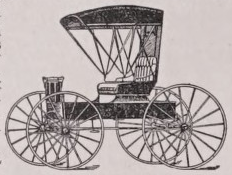
BU'GLE ,
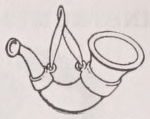
1. A hunting horn.
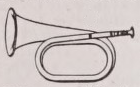
2. A military instrument of music.
4. A genus of plants, Ajuga, of several species.
5. A sort of wild ox.
1. A sort of wild ox; a buffalo.
2. A horn used by hunters.
3. A copper instrument of the horn quality of tone, shorter and more conical that the trumpet, sometimes keyed; formerly much used in military bands, very rarely in the orchestra; now superseded by the cornet; -- called also the Kent bugle.
4. An elongated glass bead, of various colors, though commonly black.
A plant, the lycopus virginicus, valued as a remedy for haemoptysis, or spitting of blood.
Ornamented with bugles.
A plant of the Mint family and genus Lycopus; esp. L. Virginicus, which has mild narcotic and astringent properties, and is sometimes used as a remedy for hemorrhage.
Sibilation Roget’s Thesaurus §409
N. sibilance, sibilation, zip, # hiss, sternutation, high note, goose, serpent, snake (animal sounds) 412, insect, bug, bee, mosquito, wasp, fly, tea kettle, pressure cooker, air valve, pressure release valve, safety valve, tires, air escaping from tires, punctured tire, escaping steam, steam, steam radiator, steam release valve
Uncleanness Roget’s Thesaurus §653
N. uncleanness, impurity, immundity, immundicity, impurity, defilement, contamination, defoedation|, soilure, soiliness|, abomination, leaven, taint, tainture|, fetor, decay, putrescence, putrefaction, corruption, mold, must, mildew, dry rot, mucor, rubigo|, slovenry, slovenliness &c
V. be unclean, become unclean, rot, putrefy, ferment, fester, rankle, reek, stink, mold, molder, go bad, render unclean, dirt, dirty, daub, blot, blur, smudge, smutch, soil, smoke, tarnish, slaver, spot, smear, smirch, begrease, dabble, drabble, draggle, daggle, spatter, slubber, besmear &c, bemire, beslime, begrime, befoul, splash, stain, distain, maculate, sully, pollute, defile, debase, contaminate, taint, leaven, corrupt, cover with dust, drabble in the mud, roil, wallow in the mire, slobber, slabber
Adj. dirty, squalor, filthy, dowdy, grimy, drab, unclean, slut, impure, malkin, soiled, slattern, not to be handled with kid gloves, sloven, dusty, slammerkin|, snuffy, slammock, smutty, slummock, sooty, scrub, smoky, draggle-tail, thick, mudlark, turbid, dust- man, dreggy, sweep, slimy, beast, mussy, dirt, slovenly, filth, untidy, soil, messy, slop, uncleanly, dust, unkempt, cobweb, sluttish, flue, dowdy, smoke, draggle-tailed, soot, uncombed, smudge, unscoured, smut, unswept, grit, unwiped, grime, unwashed, raff, unstrained, sossle, unpurified, sozzle, squalid, sordes, lutose, dregs, slammocky, grounds, slummocky, lees, sozzly, argol, nasty, sediment, coarse, settlement heeltap, foul, dross, offensive, drossiness, abominable, mother|, beastly, precipitate, reeky, scoriae, reechy, ashes, fetid, cinders, decayed, recrement, moldy, slag, musty, scum, mildewed, froth, rusty, hogwash, moth-eaten, ditchwater, mucid, dishwater, rancid, bilgewater, weak, rinsings, bad, cheeseparings, gone bad, sweepings, etercoral, offscourings, lentiginous, outscourings, touched, off scum, fusty, caput mortuum, effete, residuum, reasty, sprue, rotten, fecula, corrupt, clinker, tainted, draff, high, scurf, flyblown, scurfiness, maggoty, exuviae, putrid, morphea, putrefactive, fur, putrescent, furfur, putrefied, dandruff, saprogenic, tartar, saprogenous, riffraff, purulent, vermin, carious, louse, peccant, flea, fecal, bug, feculent, chinch, stercoraceous, mud, excrementitious, mire, scurfy, quagmire, scurvy, alluvium, impetiginous, silt, gory, sludge, bloody, slime, rotting, slush, rotten as a pear, slosh, rotten as cheese, sposh, crapulous, spawn, gross, offal, fimetarious, gurry, fimicolous, lientery, garbage, carrion, excreta, slough, peccant humor, pus, matter, suppuration, lienteria, faeces, feces, excrement, ordure, dung, crap, shit, sewage, sewerage, muck, coprolite, guano, manure, compost, dunghill, colluvies, mixen, midden, bog, laystall, sink, privy, jakes, toilet, john, head, cess, cesspool, sump, sough, cloaca, latrines, drain, sewer, common sewer, cloacina, dust hole, sty, pigsty, lair, den, augean stable, sink of corruption, slum, rookery
Phr. "they that touch pitch will be defiled"
No Bible verses found for "BUG".