
A genus of serpents, of the class Amphibia, the characters of which are, the belly and tail are furnished with scuta. It includes the largest species of serpent, the constrictor, sometimes 30 or 40 feet long.
Word of the Day: Catachrestical
1. A genus of large American serpents, including the boa constrictor, the emperor boa of Mexico (B. imperator), and the chevalier boa of Peru (B. eques).
2. A long, round fur tippet; -- so called from its resemblance in shape to the boa constrictor.
Boa
Encyclopedia Britannica
BOA, a name formerly applied to all large Serpents, which, devoid of poison fangs, killed their prey by constriction; but now confined to that section of them occurring in America, the Old World forms being known as Pythons. The true boas are widely distributed throughout tropical America, occurring most abundantly in Guiana and Brazil, where they are found in dry sandy localities, amid forests, on the banks of rivers and lakes, and in the water itself, according to the habits of the various species. They feed chiefly on the smaller quadrupeds, in search of which they often ascend trees, suspending, themselves from the branches by the tail, and thus awaiting motionless the approach of their victim. While so hanging they are partly supported by two spine-like hooks, situated one on each side of the vent, which are connected with several small bones concealed beneath the skin and attached to the main skeleton. These bones, terminating thus in an external claw, are characteristic of the family Boidoe, and are recognized by anatomists as the rudiments of those which form the hind limbs in all quadrupeds. The size of the boa’s prey often seems enormously beyond its apparent capacity for swallowing, a difficulty which disappears on acquaintance with the peculiar structure of the creature’s jaws. The bones composing these are not knit together as in Mammals, but are merely connected by ligaments, which can be distended at pleasure. The mouth of the boa can thus be made to open transversely as well as vertically; and in addition to this the two jaws are not connected directly as in other animals, but by the intervention of a distinct bone, which adds greatly to the extent of its gape. It has also the power of moving one half of the jaw independently of the other, and can ...thus keep a firm hold of its victim while gradually swallowing it. The boa possesses a double row of solid sharp teeth in the upper jaw, and a single row beneath, all pointing inwards, se that, its prey once caught, it would be well-nigh impossible even for the boa itself to release it. After feeding, boas, like all other reptiles, become inactive, and remain so while the process of digestion is going on, which, in the case of a full meal, may extend over a few weeks, and during this period they are readily killed. All the species are ovoviviparous. The Jiboya or Boa constrictor —the latter name having been loosely given to all the species—is an inhabitant of the dry and sandy districts of tropical America, and rarely exceeds 20 feet in length. Its food consists chiefly of the agoutis, capybaras, and ant-bears, which abound in those districts. It seeks to avoid man, and is not feared by the inhabitants, who kill it readily with a sharp blow from a stick. The Water-Boa or Anaconda (Eunxctens murinus) is a much more formidable creature, attaining, it is said, a length of 40 feet, and being thus probably the largest of living serpents. It inhabits the lakes, rivers, and marshes of Brazil and Guiana, and passes a considerable portion of its existence in the water. It is exceedingly voracious, feeding on fishes and on such animals as may come to the banks of the stream to drink, for which it lies in wait with only a small part of its head above the surface of the water. It also occasionally visits the farmyards, carrying off poultry and young cattle, and it has been known to attack man.
9th ed. Encyclopædia Britannica, vol. 3, p. 841
[596 words — estimated reading time: 4 minutes]
[596 words — estimated reading time: 4 minutes]
Boa constrictor
Webster's Dictionary 1913
A large and powerful serpent of tropical America, sometimes twenty or thirty feet long. See Illustration in Appendix.
Boadicea
Encyclopedia Britannica
BOADICEA, a British queen in the time of the Emperor Nero. She was wife of Prasutagus, king of the Iceni, a people inhabiting the eastern coast of Britain. On his deathbed, 60 A.D., Prasutagus named the emperor heir to his accumulated treasures conjointly with his own two daughters, in expectation of securing thereby Nero’s protection for his family and people; but he was no sooner dead than the emperor’s officers seized all. Boadicea’s opposition to these unjust proceedings was resented with such cruelty, that orders were given that she should be publicly whipped, and her daughters exposed to the brutality of the soldiers. The Britons took up arms, with Boadicea at their head, to shake off the Roman yoke; the colony of Camalodunum or Colchester was taken, and the Romans were massacred wherever they could be found. The whole province of Britain would have been lost to Rome, if Suetonius Paulinus had not hastened from the Isle of Mona, and at the head of 10,000 men engaged the Britons, who are said to have amounted to 230,000. A great battle was fought, which resulted in the complete defeat of the Britons (62 a.d.) Boadicea, who had displayed extraordinary valour, soon after despatched herself by poison. (Tac. Ann. xiv. Agric., 15-16; Dion Cass, lxii.)
9th ed. Encyclopædia Britannica, vol. 3, p. 841
[221 words — estimated reading time: 2 minutes]
[221 words — estimated reading time: 2 minutes]
Boanerges
Webster's Dictionary 1913
Boanerges
Watson's Biblical & Theological Dictionary
This word is neither Hebrew nor Syriac, and some have thought that the transcribers have not exactly copied it, and that the word was _benereen_, βενερεὲν, which expresses the sound of the Hebrew of the phrase, “sons of thunder.” Parkhurst judges the word to be the Galilean pronunciation of the Hebrew בנירעש expressed in Greek letters. Now, רעש properly signifies a violent trembling or commotion, and may therefore be well rendered by βροντὴ, _thunder_, which is a violent commotion in the air; so, _vice versâ_, any violent commotion is figuratively, and not unusually, in all languages, called thunder. When our Saviour named the sons of Zebedee, Boanerges, he perhaps had an eye to that prophecy of Haggai, “Yet once, and I will shake the heavens and the earth,” ii, 6; which is by the Apostle to the Hebrews, xii, 26, applied to the great alteration made in the economy of the Jews by the publication of the Gospel. The name Boanerges, therefore, given to James and John, imports that they should be eminent instruments in accomplishing the wondrous change, and should, like an earthquake or thunder, mightily bear down all opposition, by their inspired preaching and miraculous powers. That it does not relate to their _mode_ of preaching is certain; for that clearly appears to have been calmly argumentative, and sweetly persuasive--the very reverse of what is usually called a thundering ministry.
Watson's Biblical & Theological Dictionary
[232 words — estimated reading time: 2 minutes]
[232 words — estimated reading time: 2 minutes]
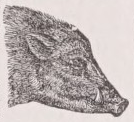
Boar
Encyclopedia Britannica
BOAR, Wild(Sus scrofa), an important species of Suidoe, a family of Pachydermatous Mammals, and generally regarded as the original stock of our domestic breeds of swine. In size it is equal to the largest of the domestic kinds, while exceeding them all in strength of body and in ferocity of disposition. It is of a greyish-black colour, covered with short woolly hair, thickly interspersed with coarse stiff bristles, which assume the form of a mane along the spine. The canine teeth are’ largely developed, forming two pairs of prism-shaped tusks, which thus become formidable weapons. In old age those tusks in the lower jaw gradually curve inwards and upwards over the snout until they are ren ere.l useless for purposes of attack, when, according to Darwin, they become serviceable for defence in the frequent fights which take place during the rutting season At the same time, the canines of the upper jaw begin to develop outwards and upwards, and these take the place of the lower ones as offensive weapons. The wild boar is a native of the temperate regions of Europe and Asia, where it inhabits the deepest recesses of forests and marshy grounds* Vambery, in his recent journey through Central Asia, found them in enormous numbers in the extensive swamps of Turkestan. They appear to have been denize113 of British forests at least till the reign of Henry IL, after which they are not heard of till the time of Charles I., when an attempt to restock the New Forest with them failed. In the reign of William the Conqueror any one killing a wild boar was liable to have his eyes put out. After reaching maturity the boar becomes a solitary animal, unless during the breeding season, when it seeks the female, and at this time they engage in fierce contests with each other, although these, ...it is said, seldom lead to fatal results, as they contrive to receive the bl0w3 on their tusks, or on the specially tough skin which covers their shoulders. The Indian Wild Boar (Sus indicus) is undoubtedly polygamous, and there are several facts which point to a similar habit in the European boar. Both species are nocturnal, issuing from their coverts at twilight in quest of food. This is chiefly of a vegetable nature, consisting of roots which it ploughs up by means of its broad muscular snout and of grain; although they are also known to devour the smaller mammals, birds, and eggs. The female is ordinarily a timid creature, but shows great courage and fierceness in defence of its young. It associates with other females for mutual protection against wolves. The wild boar was for many centuries a favourite beast of chase with the nobility of Europe. It was hunted on foot with the spear,—its great strength, and its ferocity when at bay, rendering the sport alike exciting and dangerous. The gun has now superseded the spear in European boar-hunting, but owing to the comparative scarcity of the boars it is now little practised. In India, however, where these animals abound in the jungles, it is still a favourite sport, the boar being pursued on horseback and speared The bristles of the boar are much used in the manufacture of brushes.
9th ed. Encyclopædia Britannica, vol. 3, p. 841
[547 words — estimated reading time: 4 minutes]
[547 words — estimated reading time: 4 minutes]
Boar
Watson's Biblical & Theological Dictionary
חזיר. The wild boar is considered as the parent stock of our domestic hog. He is smaller, but at the same time stronger and more undaunted, than the hog. In his own defence, he will turn on men or dogs; and scarcely shuns any denizen of the forests, in the haunts where he ranges. His colour is always an iron grey, inclining to black. His snout is longer than that of the common breed, and his ears are comparatively short. His tusks are very formidable, and all his habits are fierce and savage. It should seem, from the accounts of ancient authors, that the ravages of the wild boar were considered as more formidable than those of other savage animals. The conquest of the Erymanthian boar was one of the fated labours of Hercules; and the story of the Calydonian boar is one of the most beautiful in Ovid. The destructive ravages of these animals are mentioned in Psalm lxxx, 14. Dr. Pococke observed very large herds of wild boars on the side of Jordan, where it flows out of the sea of Tiberias; and saw several of them on the other side lying among the reeds by the sea. The wild boars of other countries delight in the like moist retreats. These shady marshes then, it should seem, are called in the Scripture, “woods;” for it calls these animals, “the wild boars of the woods.”
Watson's Biblical & Theological Dictionary
[236 words — estimated reading time: 2 minutes]
[236 words — estimated reading time: 2 minutes]
A spear used in hunting boars.
1. A piece of timber sawed thin and of considerable length and breadth, compared with the thickness, used for building and other purposes.
2. A table. The table of our rude ancestors was a piece of board perhaps originally laid upon the knees. 'Lauti cibum capiunt; separata singulis sedes, et sua cuique mensa.'
3. Entertainment; food; diet; as, the price of board is two, five, or seven dollars a week.
4. A table at which a council or court is held; hence a council, convened for business, or any authorized assembly or meeting; as a board of directors.
5. The desk of a ship; the interior part of a ship or boat; used in the phrase, on board aboard. In this phrase however the sense is primarily the side of the ship. To go aboard is to go over the side.
6. The side of a ship.
7. Now board to board the rival vessels row.
8. To fall over board that is, over the side; the mast went by the board
9. BOARD and board side by side.
10. The line over which a ship runs between tack and tack. To make a good board is to sail in a straight line, when close hauled.
11. To make short boards, is to tack frequently.
12. A table for artificers to sit or work on.
13. A table or frame for a game; as a chess board etc.
14. A body of men constituting a quorum in session; a court, or council; as a board of trustees; a board of officers.
To receive food or diet as a lodger or without lodgings, for a compensation; as, he boards at the moderate price of two dollars a week.
1. To lay or spread with boards; to cover with boards.
2. To enter a ship by force in combat, which answers to storming a city or fort on land.
4. To place at board for a compensation, as a lodger.
5. To furnish with food, or food and lodging, for a compensation; as, a man boards ten students.
1. A piece of timber sawed thin, and of considerable length and breadth as compared with the thickness, -- used for building, etc.
2. A table to put food upon.
3. Hence: What is served on a table as food; stated meals; provision; entertainment; -- usually as furnished for pay; as, to work for one's board; the price of board.
4. A table at which a council or court is held. Hence: A council, convened for business, or any authorized assembly or meeting, public or private; a number of persons appointed or elected to sit in council for the management or direction of some public or private business or trust; as, the Board of Admiralty; a board of trade; a board of directors, trustees, commissioners, etc.
5. A square or oblong piece of thin wood or other material used for some special purpose, as, a molding board; a board or surface painted or arranged for a game; as, a chessboard; a backgammon board.
6. Paper made thick and stiff like a board, for book covers, etc.; pasteboard; as, to bind a book in boards.
7. The stage in a theater; as, to go upon the boards, to enter upon the theatrical profession.
8. The border or side of anything.
9. The side of a ship.
10. The stretch which a ship makes in one tack.
11. To go on board of, or enter, as a ship, whether in a hostile or a friendly way.
12. To enter, as a railway car.
13. To furnish with regular meals, or with meals and lodgings, for compensation; to supply with daily meals.
14. To place at board, for compensation; as, to board one's horse at a livery stable.
To obtain meals, or meals and lodgings, statedly for compensation; as, he boards at the hotel.
1. To cover with boards or boarding; as, to board a house.
Wages allowed to servants to keep themselves in victuals.
That may be boarded, as a ship.
That can be boarded, as a ship.
Covered with boards; entered by armed men, as a ship; furnished with food for a compensation.
1. One who has food or diet and lodging in another's family for a reward.
2. One who boards a ship in action; one who is selected to board ships.
1. One who has food statedly at another's table, or meals and lodgings in his house, for pay, or compensation of any kind.
2. One who boards a ship; one selected to board an enemy's ship.
Covering with boards; entering a ship by force; furnishing or receiving board, as a lodger, for a reward.
1. The act of entering a ship, whether with a hostile or a friendly purpose.
2. The act of covering with boards; also, boards, collectively; or a covering made of boards.
3. The act of supplying, or the state of being supplied, with regular or specified meals, or with meals and lodgings, for pay.
A school, the scholars of which board with the teacher.
1. A Mediterranean fish (Capros aper), of the family Caproidae; -- so called from the resemblance of the extended lips to a hog's snout.
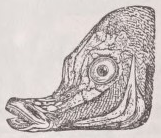
2. An Australian percoid fish (Histiopterus recurvirostris), valued as a food fish.
1. Expression of ostentation, pride or vanity; a vaunting.
2. Thou makest thy boast of the law. Romans 2:17
4. Trial by peers is the boast of the British nation.
1. To brag, or vaunt one's self; to make an ostentatious display, in speech, of one's own worth, property, or actions.
3. I boast of you to them of Macedonia. St. Paul. 2. Cor.9.
4. Usually, it is followed by of; sometimes by in.
5. To exalt one's self.
6. With your mouth you have boasted against me. Ezek.
1. To display in ostentatious language; to speak of with pride, vanity or exultation, with a view to self-commendation.
2. Lest men should boast their specious deeds.
4. They boast themselves in the multitude of their riches. Psalms 49:6 .
2. The cause of boasting; occasion of pride or exultation, -- sometimes of laudable pride or exultation.
1. To display in ostentatious language; to speak of with pride, vanity, or exultation, with a view to self-commendation; to extol.
2. To display vaingloriously.
3. To possess or have; as, to boast a name.
4. To dress, as a stone, with a broad chisel.
5. To shape roughly as a preparation for the finer work to follow; to cut to the general form required.
Clothing Roget’s Thesaurus §225
N. clothing, investment, covering, dress, raiment, drapery, costume, attire, guise, toilet, toilette, trim, habiliment, vesture, vestment, garment, garb, palliament|, apparel, wardrobe, wearing apparel, clothes, things, underclothes, array, tailoring, millinery, finery, full dress, garniture, theatrical properties, outfit, equipment, trousseau, uniform, regimentals, continentals, canonicals, livery, gear, harness, turn-out, accouterment, caparison, suit, rigging, trappings, traps, slops, togs, toggery, day wear, night wear, zoot suit, designer clothes, masquerade, dishabille, morning dress, undress, kimono, lungi, shooting-coat, mufti, rags, tatters, old clothes, mourning, weeds, duds, slippers, robe, tunic, paletot, habit, gown, coat, frock, blouse, toga, smock frock, claw coat, hammer coat, prince albert coat, sack coat, tuxedo coat, frock coat, dress coat, tail coat, cloak, pall, mantle, mantlet mantua, shawl, pelisse, wrapper, veil, cape, tippet, kirtle, plaid, muffler, comforter, haik, huke|, chlamys, mantilla, tabard, housing, horse cloth, burnoose, burnous, roquelaure, houppelande, surcoat, overcoat, great coat, surtout, spencer, mackintosh, waterproof, raincoat, ulster, p- coat, dreadnought, wraprascal, poncho, cardinal, pelerine, barbe, chudder, jubbah, oilskins, pajamas, pilot jacket, talma jacket, vest, jerkin, waistcoat, doublet, camisole, gabardine, farthingale, kilt, jupe, crinoline, bustle, panier, skirt, apron, pinafore, bloomer, bloomers, chaqueta, songtag, tablier, pants, trousers, trowsers, breeches, pantaloons, inexpressibles|, overalls, smalls, small clothes, shintiyan|, shorts, jockey shorts, boxer shorts, tights, drawers, panties, unmentionables, knickers, knickerbockers, philibeg, fillibeg, pants suit, culottes, jeans, blue jeans, dungarees, denims, levis, calvin klein, calvins, bonjour, gloria vanderbilt, headdress, headgear, chapeau, crush hat, opera hat, kaffiyeh, sombrero, jam, tam-o-shanter, tarboosh, topi, sola topi, pagri, puggaree, cap, hat, beaver hat, coonskin cap, castor, bonnet, tile, wideawake, billycock, wimple, nightcap, mobcap, skullcap, hood, coif, capote, calash, kerchief, snood, babushka, head, coiffure, crown, chignon, pelt, wig, front, peruke, periwig, caftan, turban, fez, shako, csako, busby, kepi, forage cap, bearskin, baseball cap, fishing hat, helmet, mask, domino, body clothes, linen, hickory shirt, shirt, sark, smock, shift, chemise, night gown, negligee, dressing gown, night shirt, bedgown, sac de nuit, underclothes, underpants, undershirt, slip, brassiere, corset, stays, corsage, corset, corselet, bodice, girdle, stomacher, petticoat, panties, under waistcoat, jock, athletic supporter, jockstrap, sweater, jersey, cardigan, turtleneck, pullover, sweater vest, neckerchief, neckcloth, tie, ruff, collar, cravat, stock, handkerchief, scarf, bib, tucker, boa, cummerbund, rumal, rabat, shoe, pump, boot, slipper, sandal, galoche, galoshes, patten, clog, sneakers, running shoes, hiking boots, high-low, blucher boot, wellington boot, hessian boot, jack boot, top boot, balmoral, arctics, bootee, bootikin, brogan, chaparajos, chavar, chivarras, chivarros, gums, larrigan, rubbers, showshoe, stogy, veldtschoen, legging, buskin, greave, galligaskin, gamache, gamashes, moccasin, gambado, gaiter, spatterdash, brogue, antigropelos, stocking, hose, gaskins, trunk hose, sock, hosiery, glove, gauntlet, mitten, cuff, wristband, sleeve, swaddling cloth, baby linen, layette, ice wool, taffeta, pocket handkerchief, hanky, hankie, clothier, tailor, milliner, costumier, sempstress, snip, dressmaker, habitmaker, breechesmaker, shoemaker, crispin, friseur, cordwainer, cobbler, hosier, hatter, draper, linen draper, haberdasher, mercer, diaper, nappy, disposable diaper, cloth diaper, luvs, huggies
V. invest, cover, envelope, lap, involve, inwrap, enwrap, wrap, fold up, wrap up, lap up, muffle up, overlap, sheath, swathe, swaddle, roll up in, circumvest, vest, clothe, array, dress, dight, drape, robe, enrobe, attire, apparel, accounter, rig, fit out, deck, perk, equip, harness, caparison, wear, don, put on, huddle on, slip on, mantle
Adj. invested, habited, dighted, barbed, barded, clad, costume, shod, chausse, en grande tenue, sartorial
Phr. "the soul of this man is his clothes"
King James Bible KJV Bible
Berean Standard Bible BSB Bible
118 KJV and 165 BSB verses contain “Boa” — showing the first 20. Show all 219 verses (searchable)
Two tenons shall there be in one board, set in order one against another: thus shalt thou make for all the boards of the tabernacle.
Two tenons must be connected to each other for each frame. Make all the frames of the tabernacle in this way.
And thou shalt make the boards for the tabernacle, twenty boards on the south side southward.
Construct twenty frames for the south side of the tabernacle,
And thou shalt make forty sockets of silver under the twenty boards; two sockets under one board for his two tenons, and two sockets under another board for his two tenons.
with forty silver bases under the twenty frames—two bases for each frame, one under each tenon.
And for the second side of the tabernacle on the north side there shall be twenty boards:
For the second side of the tabernacle, the north side, make twenty frames
And their forty sockets of silver; two sockets under one board, and two sockets under another board.
and forty silver bases—two bases under each frame.
And for the sides of the tabernacle westward thou shalt make six boards.
Make six frames for the rear of the tabernacle, the west side,
And two boards shalt thou make for the corners of the tabernacle in the two sides.
and two frames for the two back corners of the tabernacle,
And they shall be eight boards, and their sockets of silver, sixteen sockets; two sockets under one board, and two sockets under another board.
So there are to be eight frames and sixteen silver bases—two under each frame.
And five bars for the boards of the other side of the tabernacle, and five bars for the boards of the side of the tabernacle, for the two sides westward.
five for those on the other side, and five for those on the rear side of the tabernacle, to the west.
And the middle bar in the midst of the boards shall reach from end to end.
The central crossbar in the middle of the frames shall extend from one end to the other.
And thou shalt overlay the boards with gold, and make their rings of gold for places for the bars: and thou shalt overlay the bars with gold.
Overlay the frames with gold and make gold rings to hold the crossbars. Also overlay the crossbars with gold.
Hollow with boards shalt thou make it: as it was shewed thee in the mount, so shall they make it.
Construct the altar with boards so that it is hollow. It is to be made just as you were shown on the mountain.
One board had two tenons, equally distant one from another: thus did he make for all the boards of the tabernacle.
Two tenons were connected to each other for each frame. He made all the frames of the tabernacle in this way.
And he made boards for the tabernacle; twenty boards for the south side southward:
He constructed twenty frames for the south side of the tabernacle,