
An omnibus.
Word of the Day: Catachrestical
Busbecq
Encyclopedia Britannica
BUSBECQ, Augier Ghislen de (1522-1592), a Flemish diplomatist and traveller, was born at Commines in 1522, and was educated at the universities of Louvain, Paris, Venice, Bologna, and Padua. He was engaged in several important employments and negotiations, and in particular was twice sent as ambassador by the Emperor Ferdinand I. to the court of Soliman II. He made a collection of curious inscriptions and manuscripts; and in his second journey to Constantinople he carried with him an artist to make drawings of the rarest plants and animals. In 1562 he returned to Vienna, and was appointed tutor to the sons of the Emperor Maximilian II. Busbecq died at St Germain, near Rouen, October 28, 1592. He wrote a Discourse of the State of the Ottoman Kmpire, and a Relation of his Two Journeys to Turkey. A translation of the Travels in Turkey was published in Glasgow by Robert Urie in 1761.
9th ed. Encyclopædia Britannica, vol. 4, p. 574
[153 words — estimated reading time: 1 minute]
[153 words — estimated reading time: 1 minute]
A military headdress or cap, used in the British army. It is of fur, with a bag, of the same color as the facings of the regiment, hanging from the top over the right shoulder.
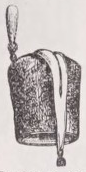
Busby
Encyclopedia Britannica
BUSBY, Richard (1606-1695), D.C.L., head-master of Westminster school, was born at Lutton in Lincolnshire in 1606. He was educated at the school which he afterwards superintended for so long a period, and first signalized himself by gaining a king’s scholarship. From Westminster he removed to Christ Church College, Oxford, where he graduated in 1628. In his thirty-third year he had already become renowned for the obstinate zeal with which he supported the falling dynasty of the Stuarts, and was rewarded for his services with the prebend and rectory of Cudworth, with the chapel of Knowle annexed, in Somersetshire. Next year he became head-master of Westminster school. His reputation as a teacher soon became so great that many of the noblest families entrusted their children to his care. He Jιimself once boasted that sixteen of the bishops who then occupied the bench had been birched with his “little rod.” No school in England has on the whole produced so many eminent men as Westminster did under the régime of Busby. Among the more illustrious of his pupils may be mentioned South, Dryden, Locke, Prior, and Bishop Atterbury. He wrote and edited many works for the use of his scholars. His original treatises (the best of which are his Greek and Latin grammars), as well as those which he edited, have, however, long since fallen into disuse. Busby died in 1695, in his ninetieth year, and was buried in Westminster Abbey, where his effigy is still to be seen.
9th ed. Encyclopædia Britannica, vol. 4, p. 574
[256 words — estimated reading time: 2 minutes]
[256 words — estimated reading time: 2 minutes]
Busca
Encyclopedia Britannica
BUSCA, a town of Italy, in the province of Cuneo, 9 miles from the city of that name, on the left bank of the Macra, a confluent of the Po. It contains a college, a hospital, and two botanic gardens. The inhabitants are engaged in the culture of the silkworm and the manufacture of leather and ironwares; and there are marble and alabaster quarries. It is the site of some Roman antiquities. Population, 9533.
9th ed. Encyclopædia Britannica, vol. 4, p. 574
[74 words — estimated reading time: 1 minute]
[74 words — estimated reading time: 1 minute]
One who searches for ores; a prospector.
2. An assemblage of branches interwoven.
3. A branch of a tree fixed or hung out as a tavern sign. Hence, since the branch has been discontinued, a coronated frame of wood hung out as a tavern sign, is so called. Hence the English proverb, 'Good wine needs no bush '
4. [I know not that this word is thus used in the U. States.]
5. A circle of metal let into the sheaves of such blocks as have iron pins, to prevent their wearing.
To furnish a block with a bush
1. A thicket, or place abounding in trees or shrubs; a wild forest.
2. A shrub; esp., a shrub with branches rising from or near the root; a thick shrub or a cluster of shrubs.
4. A shrub or branch, properly, a branch of ivy (as sacred to Bacchus), hung out at vintners' doors, or as a tavern sign; hence, a tavern sign, and symbolically, the tavern itself.
5. The tail, or brush, of a fox.
6. A lining for a hole to make it smaller; a thimble or ring of metal or wood inserted in a plate or other part of machinery to receive the wear of a pivot or arbor.
7. A piece of copper, screwed into a gun, through which the venthole is bored.
To branch thickly in the manner of a bush.
1. To set bushes for; to support with bushes; as, to bush peas.
2. To use a bush harrow on (land), for covering seeds sown; to harrow with a bush; as, to bush a piece of land; to bush seeds into the ground.
3. To furnish with a bush, or lining; as, to bush a pivot hole.
Bush
Watson's Biblical & Theological Dictionary
סנה. This word occurs in Exod. iii, 2, 4, and Deut. xxxiii, 16, as the name of the bush in which God appeared to Moses. If it be the χιονὸς mentioned by Dioscorides, it is the white thorn. Celsius calls it the _rubus fructicosus_. The number of these bushes in this region seems to have given the name to the mountain Sinai. The word נהללים, found only in Isa. vii, 19, and there rendered “bushes,” means _fruitful pastures_.
Watson's Biblical & Theological Dictionary
[78 words — estimated reading time: 1 minute]
[78 words — estimated reading time: 1 minute]
1. A dry measure, containing eight gallons, or four pecks. The standard English bushel by Stat.12 . Henry VII., contains eight gallons of wheat, each gallon eight pounds of wheat, troy weight, the pound, twelve ounces troy, the ounce, twenty sterlings, and the sterling, thirty two grains of wheat growing in the middle of the ear. The contents are 2145.6 solid inches, equivalent to 1131 ounces and 14 pennyweights troy.
2. The English bushel is used also in the U. States.
3. Bushel signifies both the quantity or capacity, and the vessel which will contain the quantity.
4. In popular language, a large quantity indefinitely.
5. The circle of iron in the nave of a wheel; in America, called a box. [ See Bush .]
1. A dry measure, containing four pecks, eight gallons, or thirty-two quarts.
2. A vessel of the capacity of a bushel, used in measuring; a bushel measure.
3. A quantity that fills a bushel measure; as, a heap containing ten bushels of apples.
4. A large indefinite quantity.
5. The iron lining in the nave of a wheel. [Eng.] In the United States it is called a box. See 4th Bush.
A duty payable on commodities by the bushel. [Not used in the U. States.]
A duty payable on commodities by the bushel.
A tailor's assistant for repairing garments; -- called also busheler.
One accustomed to bushfighting.
Fighting in the bush, or from behind bushes, trees, or thickets.
A hammer with a head formed of a bundle of square bars, with pyramidal points, arranged in rows, or a solid head with a face cut into a number of rows of such points; -- used for dressing stone.
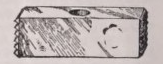
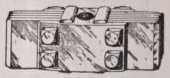
To dress with bushhammer; as, to bushhammer a block of granite.
1. The operation of fitting bushes, or linings, into holes or places where wear is to be received, or friction diminished, as pivot holes, etc.
Bushire
Encyclopedia Britannica
BUSHIRE, or Abuschehr, a town of Persia, in the province of Fars, situated in the Persian Gulf. The surrounding country is a parched and barren desert, consisting of brown sand or grey clay and rock, unenlivened by any kind of vegetation. The town, which is of a triangular form, occupies the extremity of a peninsula eleven miles long and four broad, and is encircled by the sea on all sides except the south. It is fortified on the land side by a mud wall with round towers. The houses being mostly built of white stone gives the city, when viewed from a distance, a rather clean and handsome appearance, but on closer inspection the streets are found to be narrow, irregular, ill-paved, and filthy. Almost the only handsome buildings arc the sheikh’s palace and the British residency. Ships of 300 tons are obliged to lie in the roads six miles from the town. The water immediately east of the town is deep, but its navigation is impeded by a bar, which can only be passed by vessels drawing not more than 8 or 9 feet of water, except at spring-tides, when there is a rise of from 8 or 10 feet. Bushire carries on a considerable trade, particularly with Calcutta, Bombay, and Java. Its imports are indigo, sugar, rice, spices, steel, cotton and woollen goods, coffee, <fcc.; and its principal exports artraw silk, opium, Kerman wool, shawls, silk goods, carpets, horses, dried fruits, wine, grain, copper, turquoises, pearls, asafoetida, and gall-nuts. The climate is excessively hot, particularly in the months of June, July, and August, The water is very bad; that fit for drinking requires to be brought in goat-skins from wells, distant 1∣ mile from the city walls. The population is variously estimated at from 10,000 to 20,000....
The importance of Bushire has muchincreased of late years. It is now not only the headquarters of the English naval squadron in the Persian Gulf, and the land terminus of the Indo-European line of telegraph, but it also forms the chief station in these seas of the British Indian Steam Navigation Company, which runs its vessels weekly between Bombay arid Bussorah, and it is further expected that, if our Foreign Jurisdiction Act should be applied to Persia, an appellate court will be formed at Bushire. In the meantime several European mercantile houses have been established in the town, and there can be no doubt that if the means of communication with the interior were improved, trade would rapidly increase, Notwithstanding, indeed, the drawbacks of bad roads, insufficient means of transport (wheeled carriages being unknown and beasts of burthen being few and dear), want of security, and illegal exactions, the annual value of the Bushire trade is now estimated at £600,000, of which one-quarter represents the exports and three-quarters the imports, the balance of trade against Persia at this single port thus amounting to about £300,000 a year, which is met by a constant drain of the precious metals to India. During the late war with Persia (1856-57) Bushire surrendered to a British force, and remained in our occupation for some months. The town yields a yearly revenue of about £15,000, mainly derived from customs, and is the chief place of a district, extending for 300 miles along the sea-coast from Dilem to Congoon, which is assessed in the Shiràz register at about £25,000 per annum. At Rishire, in the vicinity of Bushire, there are extensive ruins, among which bricks stamped with cuneiform legends have been found, showing that the place was a very old Elamite settlement under the kings of Susa. It continued also t<* flourish under the name of Riv-Ardeshir, during the Sassanian period, and only fell into decay after the Arab conquest, its place as the great emporium of trade being successively taken by SirAf (the modern Tâhiri), Kcis, and Ormuz. The British commercial factory was transferred from Gombroon (modern Bander AbbAss) to Bushire during the last century; but the duties of the B½sħire resident at present are exclusively political. (h. c. κ.)
9th ed. Encyclopædia Britannica, vol. 4, p. 574
[694 words — estimated reading time: 4 minutes]
[694 words — estimated reading time: 4 minutes]
Free from bushes; bare.
Journey Roget’s Thesaurus §266
N. travel, traveling, wayfaring, campaigning, journey, excursion, expedition, tour, trip, grand tour, circuit, peregrination, discursion|, ramble, pilgrimage, hajj, trek, course, ambulation, march, walk, promenade, constitutional, stroll, saunter, tramp, jog trot, turn, stalk, perambulation, noctambulation, noctambulism, somnambulism, outing, ride, drive, airing, jaunt, equitation, horsemanship, riding, manege, ride and tie, basophobia, roving, vagrancy, pererration|, marching and countermarching, nomadism, vagabondism, vagabondage, hoboism, gadding, flit, flitting, migration, emigration, immigration, demigration|, intermigration, wanderlust, plan, itinerary, guide, handbook, guidebook, road book, baedeker, bradshaw, murray, map, road map, transportation guide, subway map, procession, cavalcade, caravan, file, cortege, column, vehicle, automobile, train, bus, airplane, plane, autobus, omnibus, subway, motorbike, dirt bike, off-road vehicle, van, minivan, motor scooter, trolley, locomotive, legs, feet, pegs, pins, trotters, traveler, depot, railway station, station
V. travel, journey, course, take a journey, go a journey, take a walk, go out for walk, have a run, take the air, flit, take wing, migrate, emigrate, trek, rove, prowl, roam, range, patrol, pace up and down, traverse, scour the country, traverse the country, peragrate|, circumambulate, perambulate, nomadize, wander, ramble, stroll, saunter, hover, go one's rounds, straggle, gad, gad about, expatiate, walk, march, step, tread, pace, plod, wend, go by shank's mare, promenade, trudge, tramp, stalk, stride, straddle, strut, foot it, hoof it, stump, bundle, bowl along, toddle, paddle, tread a path, take horse, ride, drive, trot, amble, canter, prance, fisk, frisk, caracoler, caracole, gallop, embark, board, set out, hit the road, get going, get underway, peg on, jog on, wag on, shuffle on, stir one's stumps, bend one's steps, bend one's course, make one's way, find one's way, wend one's way, pick one's way, pick one's way, thread one's way, plow one's way, slide, glide, coast, skim, skate, march in procession, file on, defile, go to, repair to, resort to, hie to, betake oneself to
Adj. traveling, ambulatory, itinerant, peripatetic, roving, rambling, gadding, discursive, vagrant, migratory, monadic, circumforanean, circumforaneous, noctivagrant, mundivagrant, locomotive, wayfaring, wayworn, travel-stained
Int. come along
Vehicle Roget’s Thesaurus §272
N. vehicle, conveyance, carriage, caravan, van, common carrier, wagon, waggon, wain, dray, cart, lorry, truck, tram, cariole, carriole, limber, tumbrel, pontoon, barrow, wheel barrow, hand barrow, perambulator, bath chair, wheel chair, sedan chair, chaise, palankeen, palanquin, litter, brancard, crate, hurdle, stretcher, ambulance, black maria, conestoga wagon, conestoga wain, jinrikisha, ricksha, brett, dearborn, dump cart, hack, hackery, jigger, kittereen, mailstate, manomotor, rig, rockaway, prairie schooner, shay, sloven, team, tonga, wheel, hobbyhorse, go-cart, cycle, bicycle, bike, two-wheeler, tricycle, velocipede, quadricycle, equipage, turn-out, coach, chariot, phaeton, break, mail phaeton, wagonette, drag, curricle, tilbury, whisky, landau, barouche, victoria, brougham, clarence, calash, caleche, britzka, araba, kibitka, berlin, sulky, desobligeant, sociable, vis-a-vis, dormeuse, jaunting car, outside car, dandi, doolie, dooly, munchil, palki, roller skates, skate, runabout, ski, tonjon, vettura, post chaise, diligence, stage, stage coach, mail coach, hackney coach, glass coach, stage wagon, car, omnibus, fly, cabriolet, cab, hansom, shofle, four-wheeler, growler, droshki, drosky, dogcart, trap, whitechapel, buggy, four-in-hand, unicorn, random, tandem, shandredhan, char-a-bancs, motor car, automobile, limousine, car, auto, jalopy, clunker, lemon, flivver, coupe, sedan, two-door sedan, four-door sedan, luxury sedan, wheels, sports car, roadster, gran turismo, jeep, four-wheel drive vehicle, electric car, steamer, golf cart, electric wagon, taxicab, cab, taxicoach, checker cab, yellow cab, station wagon, family car, motorcycle, motor bike, side car, van, minivan, bus, minibus, microbus, truck, wagon, pick-up wagon, pick-up, tractor-trailer, road train, articulated vehicle, racing car, racer, hot rod, stock car, souped-up car, bob, bobsled, bobsleigh, cutter, double ripper, double runner, jumper, sled, sledge, sleigh, toboggan, train, accommodation train, passenger train, express trail, special train, corridor train, parliamentary train, luggage train, freight train, goods train, 1st class train, 2nd class train, 3rd class train, 1st class carriage, 2nd class carriage, 3rd class carriage, 1st class compartment, 2nd class compartment, 3rd class compartment, rolling stock, horse box, cattle truck, baggage car, express car, freight car, parlor car, dining car, pullman car, sleeping car, sleeper, dome car, surface car, tram car, trolley car, box car, box wagon, horse car, bullet train, shinkansen, cannonball, the wabash cannonball, lightning express, luggage van, mail, mail car, mail van, shovel, spool, spatula, ladle, hod, hoe, spade, spaddle, loy, spud, pitchfork, post hole digger, tractor, steamshovel, backhoe, fork lift, earth mover, dump truck, bulldozer, grader, caterpillar, trench digger, steamroller, pile driver, crane, wrecking crane
King James Bible KJV Bible
Berean Standard Bible BSB Bible
65 KJV and 25 BSB verses contain “Bus” — showing the first 20. Show all 77 verses (searchable)
And the water was spent in the bottle, and she cast the child under one of the shrubs.
When the water in the skin was gone, she left the boy under one of the bushes.
And it came to pass about this time, that Joseph went into the house to do his business; and there was none of the men of the house there within.
One day, however, Joseph went into the house to attend to his work, and not a single household servant was inside.
When a man hath taken a new wife, he shall not go out to war, neither shall he be charged with any business: but he shall be free at home one year, and shall cheer up his wife which he hath taken.
If a man is newly married, he must not be sent to war or be pressed into any duty. For one year he is free to stay at home and bring joy to the wife he has married.
And the men answered her, Our life for yours, if ye utter not this our business. And it shall be, when the LORD hath given us the land, that we will deal kindly and truly with thee.
“Our lives for your lives!” the men agreed. “If you do not report our mission, we will show you kindness and faithfulness when the LORD gives us the land.”
Then the five men departed, and came to Laish, and saw the people that were therein, how they dwelt careless, after the manner of the Zidonians, quiet and secure; and there was no magistrate in the land, that might put them to shame in any thing; and they were far from the Zidonians, and had no business with any man.
So the five men departed and came to Laish, where they saw that the people were living securely, like the Sidonians, tranquil and unsuspecting. There was nothing lacking in the land and no oppressive ruler. And they were far away from the Sidonians and had no alliance with anyone.
And there was no deliverer, because it was far from Zidon, and they had no business with any man; and it was in the valley that lieth by Beth-rehob. And they built a city, and dwelt therein.
And David said unto Ahimelech the priest, The king hath commanded me a business, and hath said unto me, Let no man know any thing of the business whereabout I send thee, and what I have commanded thee: and I have appointed my servants to such and such a place.
“The king has given me a mission,” David replied. “He told me no one is to know about the mission or charge. And I have directed my young men to meet me at a certain place.
Of the Izharites, Chenaniah and his sons were for the outward business over Israel, for officers and judges.
From the Izharites, Chenaniah and his sons had the outside duties as officers and judges over Israel.
And of the Hebronites, Hashabiah and his brethren, men of valour, a thousand and seven hundred, were officers among them of Israel on this side Jordan westward in all the business of the LORD, and in the service of the king.
From the Hebronites, Hashabiah and his relatives, 1,700 capable men, had charge of the affairs of Israel west of the Jordan for all the work of the LORD and for the service of the king.
But as for us, the LORD is our God, and we have not forsaken him; and the priests, which minister unto the LORD, are the sons of Aaron, and the Levites wait upon their business:
But as for us, the LORD is our God. We have not forsaken Him; the priests who minister to the LORD are sons of Aaron, and the Levites attend to their duties.
And he had much business in the cities of Judah: and the men of war, mighty men of valour, were in Jerusalem.
and kept vast supplies in the cities of Judah. He also had warriors in Jerusalem who were mighty men of valor.