
1. A bud. In botany, the bud or compendium of a plant, covered with scales to protect the rudiments from the cold of winter and other injuries; called the hybernacle or winter quarters of a plant.
Word of the Day: Catachrestical
3. To embellish with detached beauties.
1. A bud.
2. A precious stone of any kind, as the ruby, emerald, topaz, sapphire, beryl, spinel, etc., especially when cut and polished for ornament; a jewel.
3. Anything of small size, or expressed within brief limits, which is regarded as a gem on account of its beauty or value, as a small picture, a verse of poetry, a witty or wise saying.
1. To put forth in the form of buds.
The second part of the Talmud or commentary on the Jewish laws.
Gemara
Watson's Biblical & Theological Dictionary
This word signifies _complement_, _perfection_. The rabbins call the Pentateuch the law, without any addition. Next to this they have the Talmud, which is divided into two parts: the first is only an application of the law to particular cases, with the decision of the ancient rabbins, and is called _mishnah_, or “second law:” the other part, which is a more extensive application of the same law, is a collection of determinations by rabbins, later than the _mishnah_. This last is termed _gemara_, “perfection,” “finishing,” because they consider it as a conclusive explanation of the law, to which no farther additions can be made. There are two _gemaras_, or two Talmuds, that of Jerusalem, and that of Babylon. The former was compiled, according to the Jews, about the end of the second or third century, by a celebrated rabbin, called Jochanan; but father Morinus maintains that the _gemara_ was not finished till about the seventh century. Dr. Prideaux says that it was completed about A. D. 300. The Jews have little value for this Jerusalem Talmud, on account of its obscurity. The Babylonish _gemara_ is, as the rabbins say, more modern. It was begun by a Jewish doctor, named Asa, and continued by Marmar and Mar, his sons or disciples. The Jews believe that the _gemara_ contains nothing but the word of God, preserved in the tradition of the elders, and transmitted, without alteration, from Moses to rabbi Judah, the holy, and the other compilers of the Talmud; who did not reduce it to writing till they were afraid it would be corrupted by the several transmigrations and persecutions to which their nation was subjected.
Watson's Biblical & Theological Dictionary
[275 words — estimated reading time: 2 minutes]
[275 words — estimated reading time: 2 minutes]
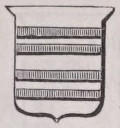
Coupled; paired.
1. One of the twins.
2. One of the barrulets placed parallel and closed to each other. Cf. Bars gemel, under Gemel, a.
Producing twins.
Producing twins.
A pair.
To double. [Little used.]
To double.
A doubling; duplication; repetition.
A doubling; duplication; repetition.
plural [Latin] Twins. In astronomy, a constellation or sign of the zodiac, representing Castor and Pollux. In the Britannic catalogue, it contains 85 stars.
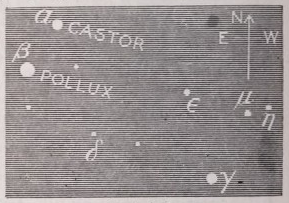
A constellation of the zodiac, containing the two bright stars Castor and Pollux; also, the third sign of the zodiac, which the sun enters about May 20th.
Geminiani
Encyclopedia Britannica
GEMINIANI, Francesco (c. 1680-1762), a celebrated violinist, born at Lucca about 1680. He received lessons in music from Alessandro Scarlatti, and studied the violin under Lunati, and afterwards under Corelli. In 1714 he arrived in London, where his performance and compositions attracted much attention. He was taken under the special protection of the earl of Essex. After visiting Paris and •residing there for some time, he returned to England in 1755. In 1761 he went to Dublin, where a servant robbed him of a musical manuscript on which he had •bestowed much time and labour. His vexation at this loss is said to have hastened his death, which took place at Dublin on 17th September 1762. He appears to have been a first-rate violinist, but most of his compositions are dry and deficient in melody. His Art of Playing the Violin is a good work of its kind, but his Guida Armonica is a miserable production. He published a number of solos for the violin, three sets of violin concertos, twelve violin trios, The Art of Accompaniment on the Harpsichord, Organ, &c., Lessons for the Harpsichord, and some other works. His musical opinions had no foundation in truth or principle.
9th ed. Encyclopædia Britannica, vol. 10, p. 136
[202 words — estimated reading time: 2 minutes]
[202 words — estimated reading time: 2 minutes]
Having the flowers arranged in pairs.
Double; in pairs.
Double; in pairs.
Twins; a pair; a couple.
Twins; a pair; a couple.
Gemistus
Encyclopedia Britannica
GEMISTUS, or PLETHO, Georgius, held high office under the Byzantine emperors during the first half of the 15th century, aud derived his name, which signifies the Replete, from the extraordinary amount of his erudition. He is, however, chiefly memorable for having been the first person who introduced Plato to the Western world. This took place upon his visit to Florence in 1438, as one of the deputies from Constantinople on occasion of the general council. Cardinal Bessarion became his disciple; he produced a great impression upon Cosmo de’ Medici; and though not himself making any very important contribution to the study of Plato, he effectually shook the exclusive domination which Aristotle had exercised over European thought for eight centuries. He promoted the union of the Greek and Latin Churches as far as possible, but his efforts in this direction bore no permanent fruit. He probably died before the capture of Constantinople. The most important of his published works are a treatise on the distinction between Plato and Aristotle as philosophers, and one on the religion of Zoroaster. In addition to these he compiled several volumes of excerpts from ancient authors, and wrote a number of works on geography, music, and other subjects, many of which still exist in MS. in various European libraries.
9th ed. Encyclopædia Britannica, vol. 10, p. 136
[213 words — estimated reading time: 2 minutes]
[213 words — estimated reading time: 2 minutes]
A division of birds including the true pigeons.
Goodness Roget’s Thesaurus §648
N. goodness, excellence, merit, virtue, value, worth, price, super-excellence, supereminence, superiority, perfection, coup de maitre, masterpiece, chef d'ouvre, prime, flower, cream, elite, pick, a1, nonesuch, nonpareil, creme de la creme, flower of the flock, cock of the roost, salt of the earth, champion, prodigy, tidbit, gem, gem of the first water, bijou, precious stone, jewel, pearl, diamond, ruby, brilliant, treasure, good thing, rara avis, one in a thousand, beneficence, good man
V. be beneficial, produce good, do good, profit, benefit, confer a benefit, be the making of, do a world of good, make a man of, produce a good effect, do a good turn, confer an obligation, improve, do no harm, break no bones, be good, excel, transcend, bear away the bell, stand the proof, stand the test, pass muster, pass an examination, challenge comparison, vie, emulate, rival
Adj. harmless, hurtless, unobnoxious, innocuous, innocent, inoffensive, beneficial, valuable, of value, serviceable, advantageous, edifying, profitable, salutary, favorable, propitious, fair, good, good as gold, excellent, better, superior, above par, nice, fine, genuine, best, choice, select, picked, elect, recherche, rare, priceless, unparagoned, unparalleled, superlatively, good, bully*, crackajack*, giltedged, superfine, superexcellent, of the first water, first-rate, first-class, high- wrought, exquisite, very best, crack, prime, tiptop, capital, cardinal, standard, inimitable, admirable, estimable, praiseworthy, pleasing, couleur de rose, precious, of great price, costly, worth its weight in gold, worth a jew's eye, priceless, invaluable, inestimable, precious as the apple of the eye, tolerable, up to the mark, unexceptionable, unobjectionable, satisfactory, tidy, in good condition, in fair condition, fresh, sound
Adv. beneficially, well
Phr. "jewels five words long", "long may such goodness live!", "the luxury of doing good"
Jewelry Roget’s Thesaurus §847a
N. jewel, jewelry, jewellery, bijoutry|, bijou, bijouterie, trinket, fine jewelry, costume jewelry, junk jewelry, gem, gemstone, precious stone, necklace, bracelet, anklet, earring, locket, pendant, charm bracelet, ring, pinky ring, carcanet, chain, chatelaine, broach, pin, lapel pin, torque, diamond, brilliant, rock, beryl, emerald, chalcedony, agate, heliotrope, girasol, girasole, onyx, plasma, sard, sardonyx, garnet, lapis lazuli, opal, peridot, tourmaline, chrysolite, sapphire, ruby, synthetic ruby, spinel, spinelle, balais, oriental, oriental topaz, turquois, turquoise, zircon, cubic zirconia, jacinth, hyacinth, carbuncle, amethyst, alexandrite, cat's eye, bloodstone, hematite, jasper, moonstone, sunstone, pearl, cultured pearl, fresh-water pearl, mother of pearl, coral, jeweler, gemologist, minerologist, lapidary, lapidarian, gemology, gemmology, minerology
V. shine like a diamond
Good Man Roget’s Thesaurus §948
N. good man, honest man, worthy, # good woman, perfect lady, madonna, model, paragon, good example, hero, heroine, demigod, seraph, angel, innocent, saint, benefactor, philanthropist, aristides, noble liver|, pattern, brick*, trump*, gem, jewel, good fellow, prince, diamond in the rough, rough diamond, ugly duckling|, salt of the earth, one in ten thousand, one in a million, a gentleman and a scholar, pillar of society, pillar of the community, a man among men
Phr. si sic omnes
King James Bible KJV Bible
Berean Standard Bible BSB Bible
6 KJV and 15 BSB verses contain “Gem”
And in cutting of stones, to set them, and in carving of timber, to work in all manner of workmanship.
to cut gemstones for settings, and to carve wood, so that he may be a master of every craft.
By the hand of Elasah the son of Shaphan, and Gemariah the son of Hilkiah, (whom Zedekiah king of Judah sent unto Babylon to Nebuchadnezzar king of Babylon) saying,
The letter was entrusted to Elasah son of Shaphan and Gemariah son of Hilkiah, whom Zedekiah king of Judah sent to King Nebuchadnezzar in Babylon. It stated:
When Michaiah the son of Gemariah, the son of Shaphan, had heard out of the book all the words of the LORD,
When Micaiah son of Gemariah, the son of Shaphan, heard all the words of the LORD from the scroll,
Nevertheless Elnathan and Delaiah and Gemariah had made intercession to the king that he would not burn the roll: but he would not hear them.